

Knesset panel working on death penalty bill mulls series of draconian amendments — report
Otzma Yehudit lawmaker said to suggest death by lethal injection within 90 days for all those guilty of killing Jews, or planning to kill Jews, without any room for appeal
 Add ToI as a Preferred Source on Google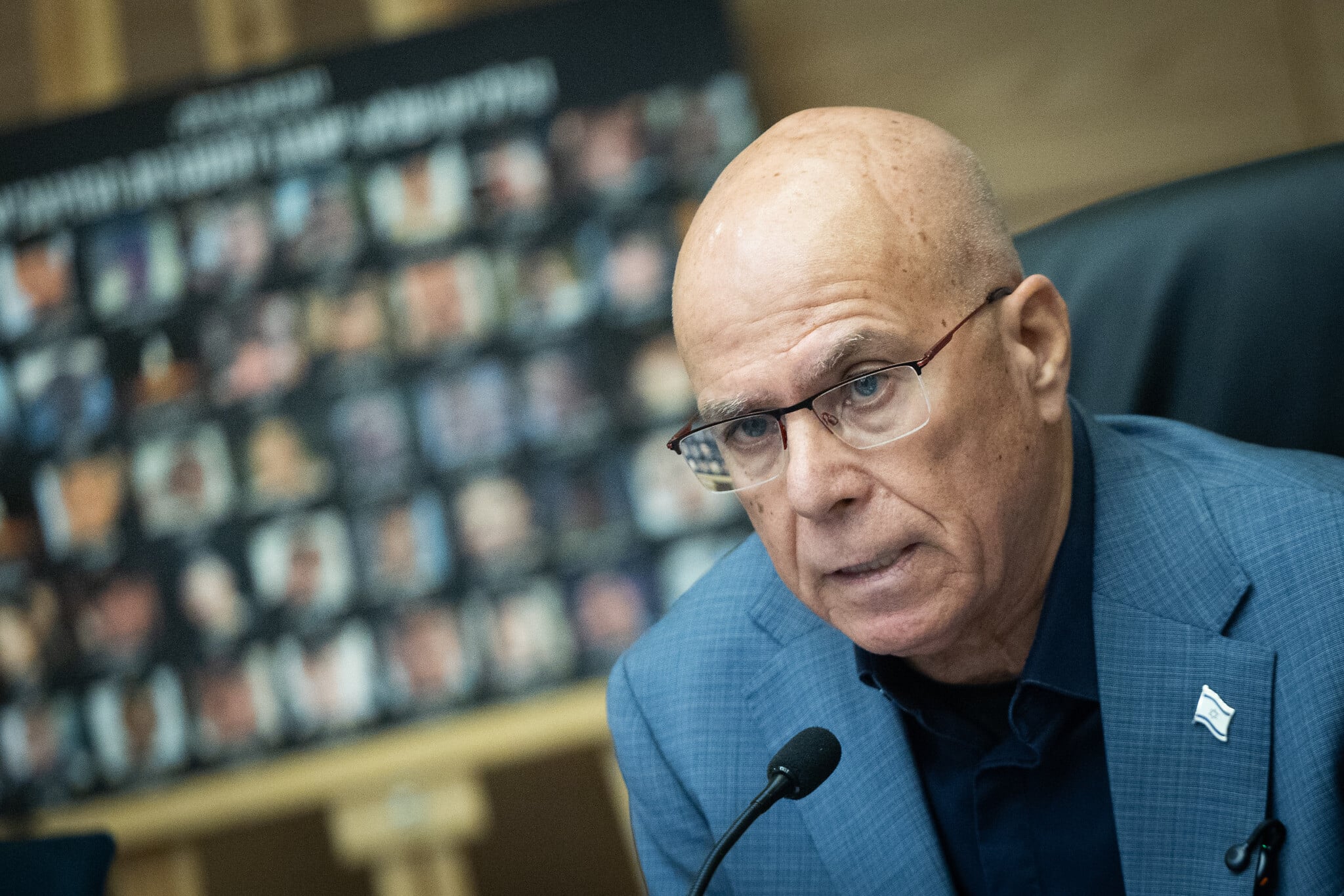
The Knesset committee tasked with preparing a bill imposing the death penalty on terrorists for further readings in parliament is mulling a series of amendments to the already controversial bill, including stipulating that after a death sentence is handed down, it must be enacted within 90 days, Hebrew media reported Tuesday.
The report, first published by Channel 12, cited a message allegedly sent to a WhatsApp group comprising members of the Knesset National Security Committee, which has been working to prepare the bill for its second and third readings after it was approved at a first reading last week.
The message, which suggested a series of draconian changes to the bill, was said to have baffled members of the opposition who sit on the committee, with one suggesting that it was perhaps sent to the wrong group.
The bill is being sponsored by MK Limor Son Har-Melech of the far-right Otzma Yehudit party.
The message, reportedly sent out by fellow Otzma Yehudit member Zvika Fogel, who chairs the committee, listed various aspects of the proposed capital punishment that had not been included in the earlier version.
The message stipulated that the death sentence would be mandatory for anyone who kills a Jewish person, as well as for those who send others to commit deadly attacks and those who are found to be planning attacks, Channel 12 reported.
Once handed down, there will be no possibility of appealing against the death sentence, and there will be no option of averting it through a plea bargain or a pardon, the message reportedly stated.
Prison authorities would carry out the sentence via lethal injection, and within 90 days of sentencing to prevent “any possibility of avoiding carrying out the sentence.”

Channel 12 assessed that the distribution of the bill text via WhatsApp was intended as a publicity stunt by far-right members of the committee and that the chances of the High Court of Justice allowing such a law to come into effect were low.
Opposition Yesh Atid party lawmaker Naor Shiri, who is on the committee, reportedly responded in the group: “I don’t understand the document.”
MK Gilad Kariv, of The Democrats, also an opposition lawmaker, similarly wrote he did not understand “the point of the document.”
“It seems to me you have mixed up the Otzma Yehudit group and the committee group,” Kariv reportedly responded.
Opponents of the bill have previously criticized that it would apply only to Arabs who kill Jews and not to Jewish terrorists.
Although the death penalty formally exists in Israeli law, it has only ever been used once, in 1962 — in the case of Nazi officer Adolf Eichmann, one of the architects of the Holocaust.
It is technically allowed in cases of high treason, as well as in certain circumstances under martial law that applies within the army and in the West Bank, but currently requires a unanimous decision from a panel of three judges, and has never been implemented.
In March 2023, lawmakers voted 55-9 in support of the bill in an initial reading, but it ultimately did not advance further despite having been part of the ruling Likud party’s coalition agreement with Otzma Yehudit, due to high-level opposition within the government and security services.
Then, after hundreds of hostages were abducted during the Hamas-led invasion of southern Israel on October 7, 2023, which triggered the Gaza war, officials feared that the passage of such a law would set back talks for the release of hostages in exchange for Palestinian terror convicts.
Flouting legal advice and a warning from the premier’s point man on the hostages, lawmakers in the Knesset National Security Committee voted in September to advance the bill. Late last month, following the release of the last remaining living hostages as part of a ceasefire deal that halted the war, Otzma Yehudit leader Itamar Ben Gvir gave Prime Minister Benjamin Netanyahu an ultimatum: advance the law to its first reading in three weeks or Otzma Yehudit will stop voting with the coalition.
Netanyahu subsequently gave his backing to the bill, paving the way for a first reading last week, where it passed 39-16 in favor.









The Times of Israel Community.