

Knesset passes bill allowing Israelis to expand reinforced rooms, add bathrooms
In wake of Oct 7 and multifront war, the Home Front Command will be introducing doors that can be locked to home shelters, as well as stronger windows
 Add ToI as a Preferred Source on Google
Sue Surkes is The Times of Israel's environment reporter

The Knesset on Wednesday approved a bill allowing residents in existing apartment blocks, or blocks not yet built whose plans have been deposited with the planning authorities, to enlarge their bomb shelters as well as add a bathroom.
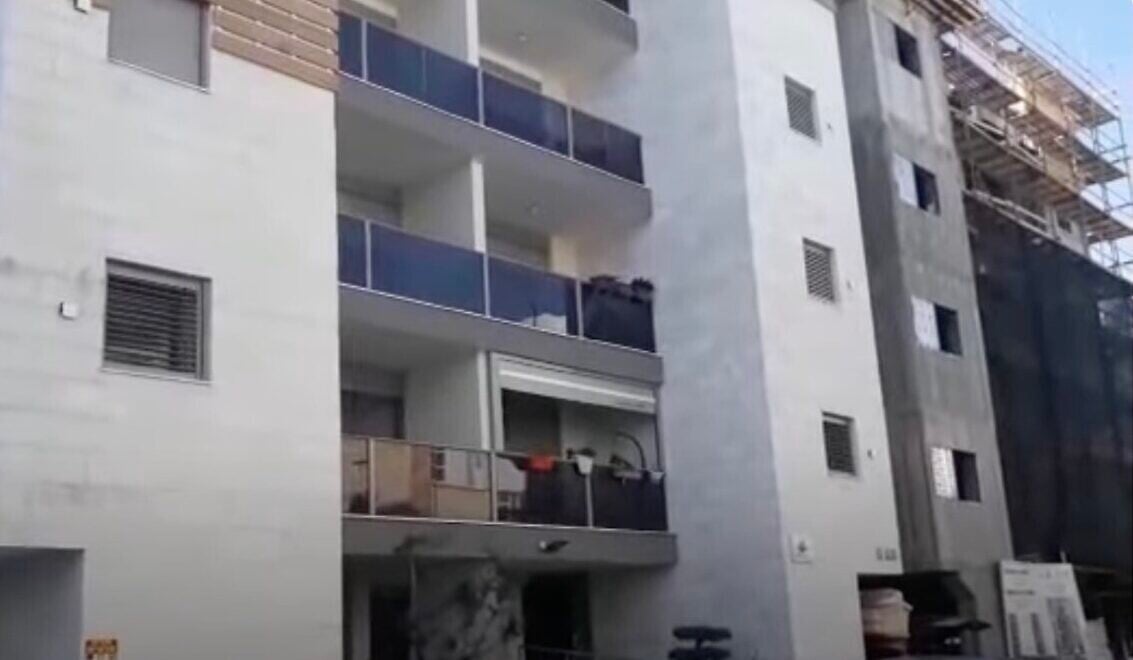
Since 1992, all new homes built in Israel have been mandated to include a reinforced room (mamad) for protection during rocket and missile attacks. Today, a fortified room in a house or apartment must measure nine square meters (96 square feet).
The change, to be applied nationwide, will allow residents to expand the protected room to 12 square meters (130 square feet) and to add a three-meter (9.8 square foot) bathroom, for a total maximum of 15 square meters.
The additions, relevant to apartment blocks of up to nine floors, will not incur betterment taxes.
Slightly different rules will apply to apartments that are smaller than 80 square meters (860 square feet), with the latter only permitted to add a bathroom.
The Home Front Command has been inundated with queries about home protection since the start of the war in Gaza on October 7, 2023, following which Israel has faced attacks from the Strip, Lebanon, Yemen and Iran, among others. Many felt new urgency to ensure their families’ safety following Israel’s 12-day war with the Islamic Republic last month, which saw unprecedented devastation of residential buildings in Israeli cities and towns as a result of Iranian ballistic missile barrages.
“Everyone wants protection today,” a source familiar with the matter told the Times of Israel. “It’s essential that they check with the Home Front Command that products and manufacturers are approved and meet Israeli standards.”
The IDF’s Home Front Command has been reviewing a range of lessons learned from recent attacks.
Prior to the 1991 Gulf War, Israelis would seek protection from rocket and missile attacks in communal bomb shelters. But after Iraq rained Scud missiles down on the country during that conflict, the new form of home shelter was introduced.

Additionally, in frontline communities, authorities have often installed portable outdoor concrete shelters to offer protected spaces for those caught outside during rocket and missile attacks.
But the in-home shelters in Israeli southern communities failed to offer significant protection on October 7, when Hamas gunmen overran neighborhoods and homes and forced open, shot, or blew up safe room doors to murder or kidnap those hiding inside. The rooms had been designed to defend against projectiles, not home invasions, and had specifically been built not to lock, to ensure that rescue services could easily gain entry after a home was hit.
This proved a fatal oversight for many during the onslaught, and countless stories emerged of struggles over door handles between the marauding terrorists and the terrified civilians hiding inside.
Additionally, the lack of toilet facilities proved difficult for those residents who hid for long hours inside the rooms, and some risked their lives for a quick bathroom break.
Still, the value of the reinforced rooms was once again underlined last month, when Tehran fired massive barrages of ballistic missiles at Israel’s urban centers, killing 28 people. Officials have assessed that the death toll would have been far higher had people not entered their shelters when alerts sounded.
During that conflict, rescue services demonstrated the ability to rescue people from protected rooms in buildings hit by missiles, even in cases in where access was initially hampered by collapsed masonry or other factors.
In light of the lessons learned, the Home Front Command has decided that the doors to reinforced rooms should be lockable.

It has also taken note of some confusion that resulted from a Home Front Command instruction during the war. In the case of older protected rooms, the windows have two parts — an outer, reinforced steel shutter and two inner sliding glass windows. Israelis were told to remove the glass section to prevent shockwaves from shattering the glass, potentially causing injuries, while leaving the steel part shut.
The new approach will involve single-pane windows that are resistant to shock waves and can be closed in the event of an attack. They will open inward on a hinge, allowing for 180-degree movement.
Given that most home shelters double as bedrooms or studies during peacetime, and that these require the entry of daylight, thought is also being given to making it easier to open and close the heavy steel shutters.
Today, for example, contractors are already being advised to install steel shutters with wheels on the top, because accumulated dirt can obstruct the movement of wheels situated on the bottom.
The Home Front Command also recently researched the optimal build for doors that can withstand both shockwaves and shooting attacks.
It then issued a call to companies specializing in protective building components to propose new products for doors, door locks, and windows. Those ideas were tested in May. Now, authorities will work with the Standards Institution of Israel to ensure that proposals that passed the test meet necessary standards.
The hope is that two new types of protective doors (one for most of the country and another for frontline communities) will be approved for market by the end of this year or the beginning of 2026, along with stronger windows.
To date, reinforced shutters and windows have been sold together. However, this often caused problems, with builders completing projects with the steel shutter only, while architects for individual homes needed to add the glass windows later. The new windows will be sold independently of the shutters.
The Home Front Command is also planning to review other aspects of the regulations governing the rooms, such as the thickness of the walls. Although the rooms can withstand most damage from a missile strike on a building, a direct hit can still be deadly. In the recent conflict with Iran, a few people were killed inside protected rooms in apartment buildings when missiles hit them directly.









The Times of Israel Community.