

Lacking private safe areas, Israelis find community and chaos in public shelters
With 56% of country’s homes unprotected, ballistic missile attacks from Iran are forcing many to seek safety in schools, train stations and public areas

 Add ToI as a Preferred Source on Google
Zev Stub is the Times of Israel's Diaspora Affairs correspondent.
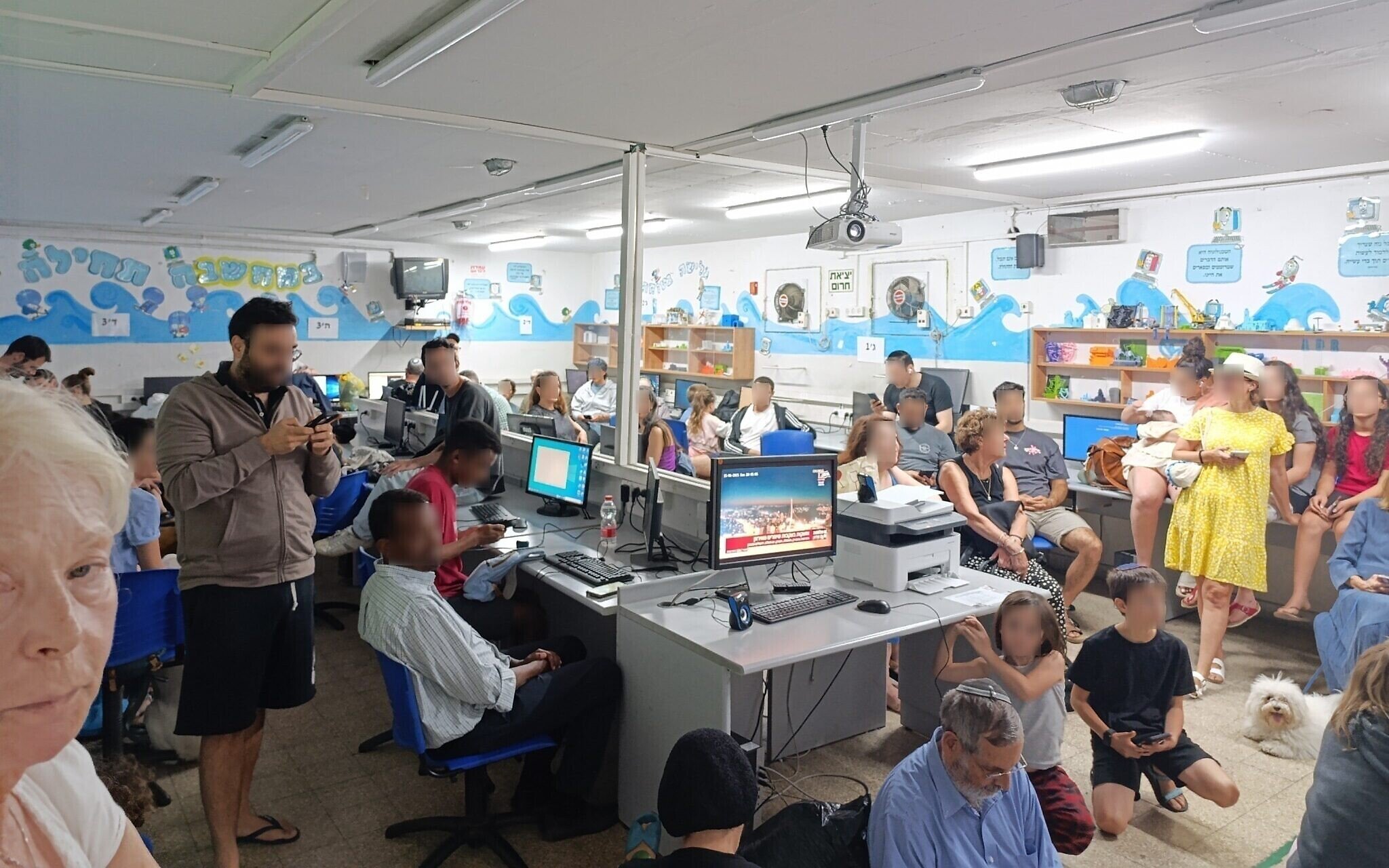
In the minutes after Israel’s Home Front Command told Israelis to remain close to shelters early Monday morning, nearly 100 residents of the Rehavia neighborhood in Jerusalem trickled into a public shelter at the Evelina de Rothschild School. A series of classrooms and a computer lab for students during regular times, the protected space suddenly bustled with neighbors in pajamas, pets, sleeping bags, and people desperately staring at their phone screens for updates.
In one room, lights were dimmed as several parents tried to comfort young children, while in a larger room adjacent, a large screen broadcast news updates in Hebrew. A quiet hum was occasionally interrupted by the sounds of dogs barking or a bathroom door slamming.
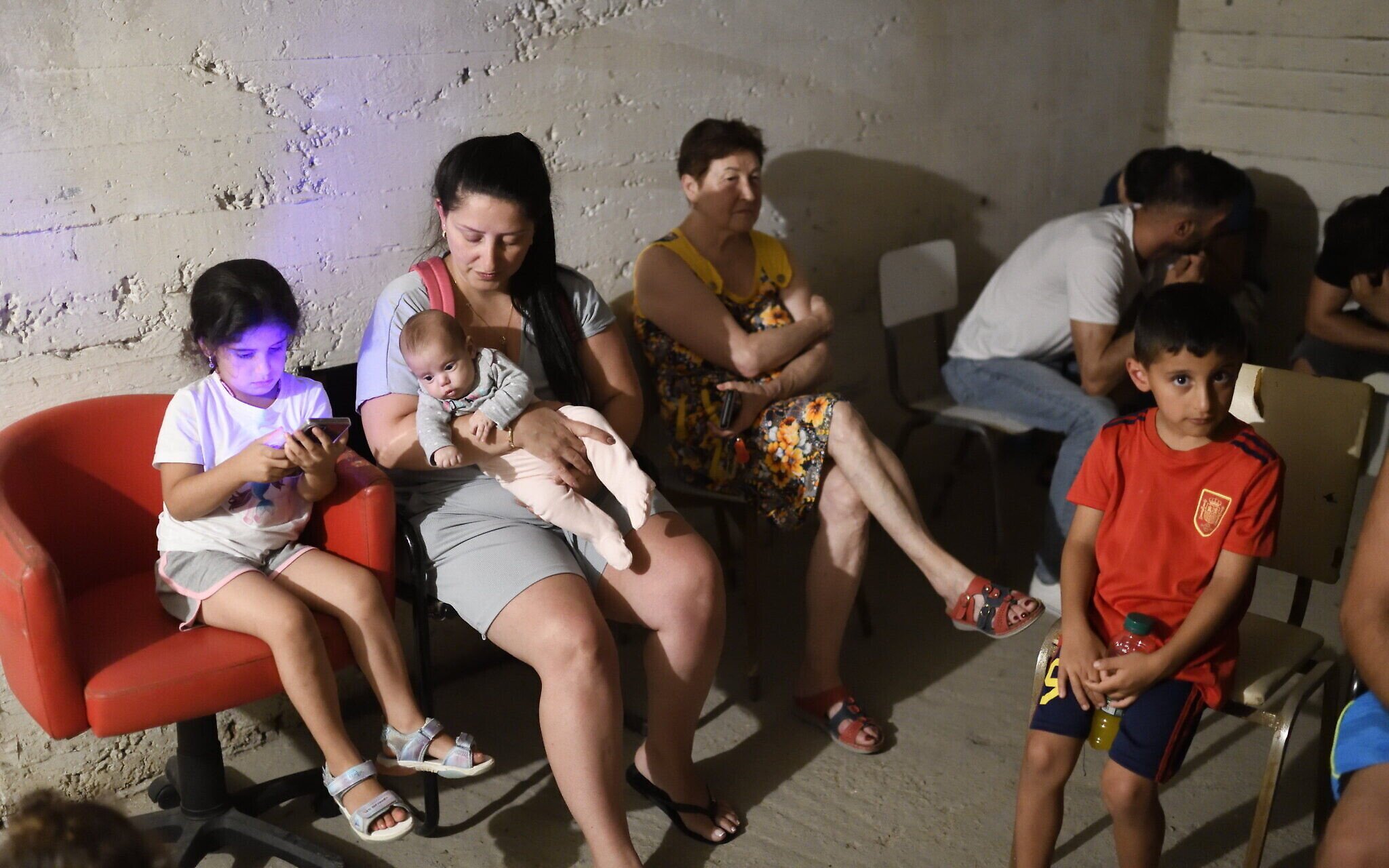
In scenes across the country reminiscent of British citizens sheltering in Underground stations during Germany’s bombing blitz in 1940-41, Israelis are sheltering in public miklatim, or protected areas, seeking protection from ballistic missiles fired from Iran in retaliation for Israel’s preemptive attack on the country’s nuclear facilities.
While Israelis have had rockets fired at them from Hamas and Hezbollah for years, the reach and destructive power of Iran’s missiles have made virtually every place in the country a potential target, and residents are complaining that the current protected infrastructure isn’t enough.
Some 24 people have been killed and nearly 600 injured in 30 sites hit since around the country since the current round of violence began Friday, according to data from the Prime Minister’s Office. The majority of those killed were not in shelters when their homes were hit, according to the Home Front Command.
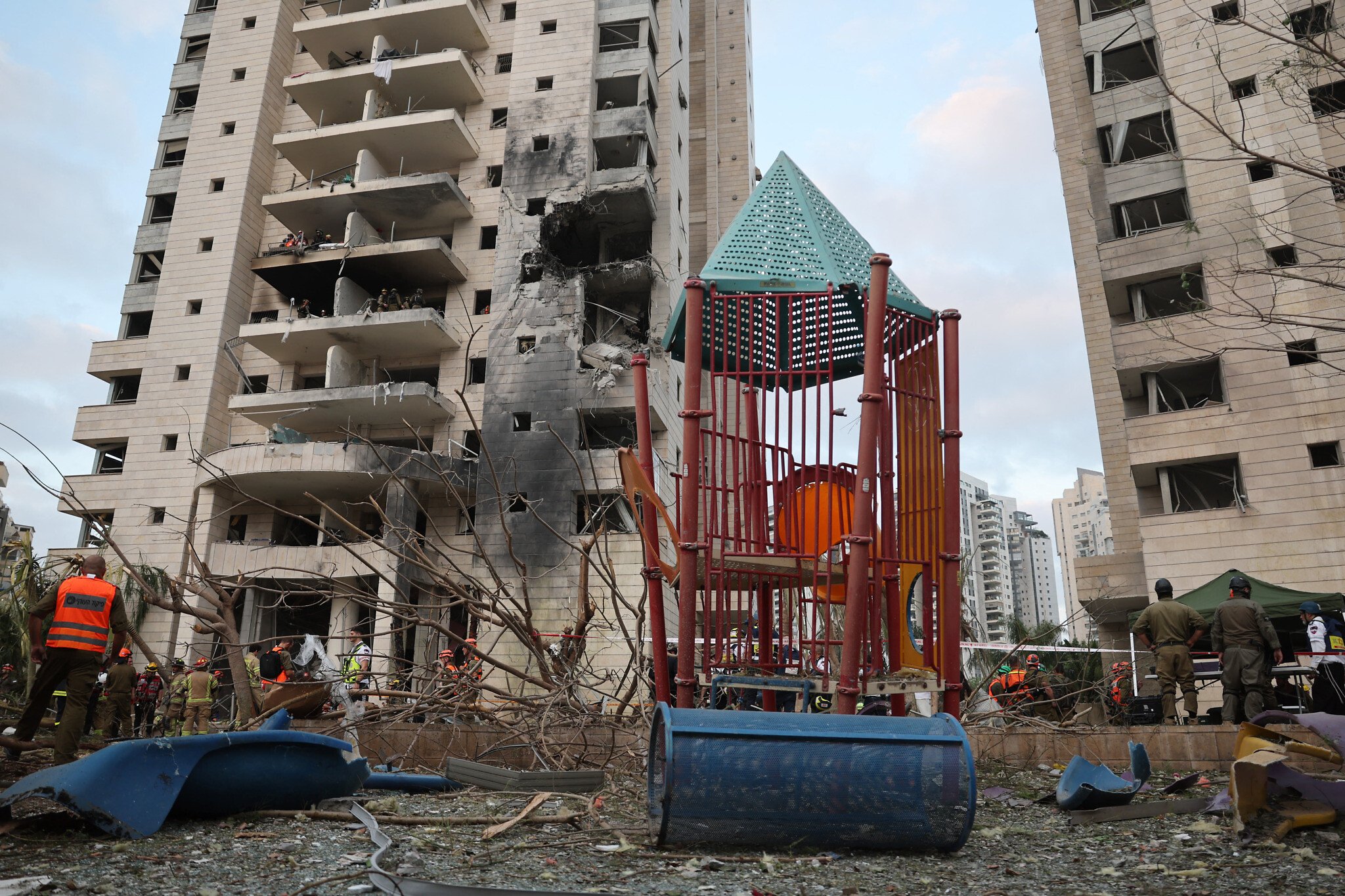
In the building in Bat Yam hit by a rocket early Sunday, for example, 180 civilians who were inside bomb shelters emerged unharmed, while all of the nine dead and nearly 200 wounded were outside of the shelters, the Home Front Command said.
For most people, the preferred option for sheltering is in a private protected room within the home (known in Hebrew as a Mamad). However, most homes do not have these, as contractors have only been required by law to provide them in new homes since 1993.
According to data from the Israel Builders Association, of an estimated 2.96 million homes across Israel, 56% (1.67 million) do not have a mamad as of the end of 2024. While mamads are everywhere in newer cities and neighborhoods, as well as homes that have undergone urban renewal, most residents lack access to a private shelter.
Most residential buildings do include shared residential shelters, usually in the basement, following building regulations introduced in 1969. In the 1970s and 1980s, many tall buildings began to include shared protected shelters on each floor of the building, known in Hebrew by the acronym mamak.
Without access to one of these, the next best option is a shared public shelter, such as those found in schools, municipal shelters, and underground train stations, according to the Home Front Command. If driving in a car, stop at an embankment inside a tunnel.

Most Jewish cities have abundant public shelters available for residents. Israel has been criticized for not building as many shelters in Arab cities. In the northern city of Tamra, where four residents were killed in a missile barrage Saturday night, there are no public shelters available, and only 40% of residents have access to private shelters, Hadash-Ta’al party chairman Ayman Odeh said Sunday.
A 2024 report by the Israel Democracy Institute found that Israel was not meeting its responsibilities to provide adequate protective structures in Arab cities, citing a 2018 State Comptroller report stating that only 11 out of 71 Arab local authorities examined had public shelters.
In the city of Jerusalem, meanwhile, there are 452 shelters in schools, 190 public shelters scattered throughout the city, 57 protected underground parking lots, and 18 accessible above-ground shelters for people with mobility disabilities, according to a spokesperson for the municipality.
Tel Aviv, likewise, lists hundreds of public shelters available on its website. Dog owners are encouraged to bring their animals as long as they are muzzled, the city’s website says.
It should be noted that not all parking lots are fit for sheltering. Those built without protective reinforcement are more dangerous than other spots, due to the risk of collapse.
If none of these can be reached in time, the Home Front Command suggests sheltering in a building’s internal stairwell without windows or exterior walls, ideally at least two floors below the top level. One should not shelter on the ground floor.
If even that is unavailable, one should shelter in an interior space, such as a hallway, surrounded by as many walls and as few windows and openings as possible. In such a case, it is best to sit close to an interior wall, below the level of the windows, and not facing the door. Kitchens and bathrooms containing ceramics, porcelain and glass should not be used.
The Home Front Command has implemented a new system to provide warnings to Israelis’ phones some 15-30 minutes before expected ballistic missile attacks from Iran, to allow people adequate time to reach bomb shelters.
Back in the Jerusalem shelter, as the all clear signal was given Monday morning, families gathered their stuff and prepared to leave, while others commiserated. “This is crazy,” one man muttered, putting on his backpack. “See you in a few hours,” his friend responded.









The Times of Israel Community.