

Live updates (closed)
 Add ToI as a Preferred Source on Google


The Times of Israel liveblogged Friday’s events as they unfolded.
Netanyahu: Minister who said Israel ‘racing to wipe out Gaza’ doesn’t represent the government
Breaking his silence over Heritage Minister Amichay Eliyahu’s declaration that Israel is advancing the destruction of Gaza to make the Strip totally Jewish, Prime Minister Benjamin Netanyahu insists that the far-right minister “does not speak for the government I lead.”
“He is not a member of the security cabinet that determines the conduct of the war,” Netanyahu says in a statement.
The prime minister does not announce any disciplinary action against Eliyahu who has a history of incendiary rhetoric against Palestinians.
Hamas ‘surprised’ by Witkoff rejection of its response, insists it’s still committed to making a deal
Hamas says it is “surprised” by US special envoy Steve Witkoff’s statement that rejected the terror group’s response to the latest Gaza ceasefire and hostage release deal proposal.
Hamas insists in a statement that it has engaged constructively in the negotiations and submitted a response that was well-received by other mediators.
Hours earlier, Witkoff issued his own statement in which he declared that the US had decided to recall its negotiating team from Doha due to Hamas’s response, “which clearly shows a lack of desire to reach a ceasefire in Gaza.”
“We are surprised by the negative statements made by US envoy Steve Witkoff regarding the movement’s position at a time when the mediators welcomed and expressed their satisfaction with [our] constructive and positive stance that opens the door to reaching a comprehensive agreement,” Hamas says in its statement.
The group says it remains committed to reaching a ceasefire agreement is working to overcome remaining obstacles.
A source involved in the mediation effort told The Times of Israel shortly before Witkoff’s statement that while Hamas’s response included a number of reservations to the latest hostage deal proposal, the gaps were still bridgeable.
Israel rejected half of the requests to transport aid on Wednesday, UN spokesperson says
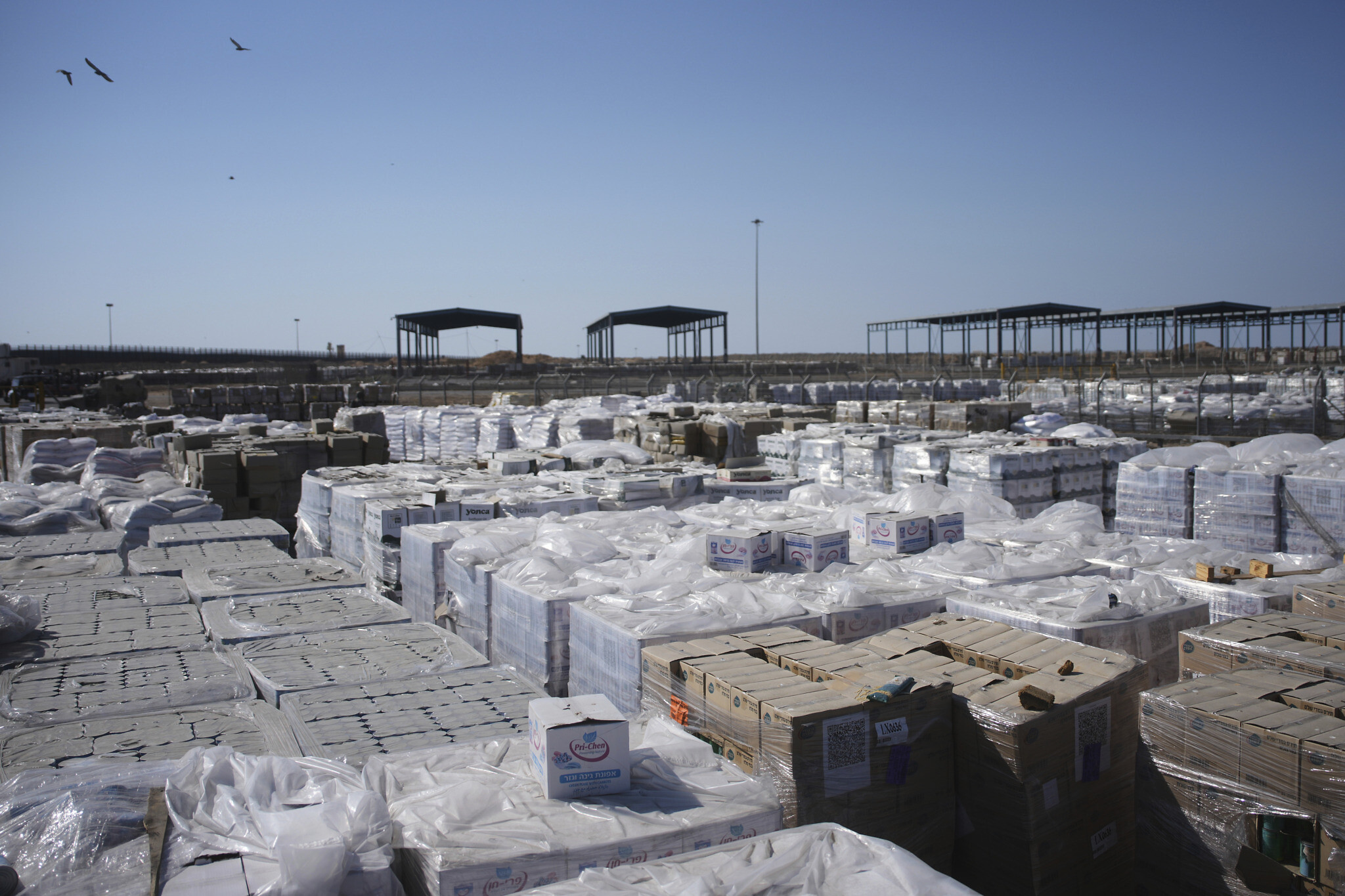
Piles of humanitarian aid packages wait to be picked up on the Palestinian side of the Kerem Shalom crossing in the Gaza Strip, July 24, 2025. during a media tour organized by the Israeli army. (AP/Ohad Zwigenberg)
Israel rejected half of the UN requests to transport humanitarian aid in Gaza on Wednesday, UN spokesperson Stephane Dujarric says.
Eight of the sixteen requests made by UN staff were rejected, Dujarric says during a press briefing. Two other requests were initially approved, but UN staff faced impediments on the ground. One denied request was for UN staff to pick up medical supplies that have been waiting on the Gazan side of the border.
Israel in recent days has intensified its assertion that the UN is to blame for the ongoing humanitarian crisis in Gaza, claiming that it is failing to pick up aid that is amassing at the border.
The UN in turn has contended that the hundreds of truckloads of aid sitting in a lot guarded by Israel are not readily accessible to humanitarian workers.
“Bureaucratic, logistical, administrative and other operational obstacles imposed by Israeli authorities; ongoing hostilities and access constraints within Gaza; and incidents of criminal looting, and more shooting incidents that have killed and injured people gathering to offload aid supplies along convoy routes” have hampered UN efforts to deliver aid, Dujarric says.
“Taken together, these factors have put people and humanitarian staff at grave risk and forced aid agencies on many occasions to pause the collection of cargo from crossings controlled by the Israeli authorities,” he adds.
The UN spokesperson also notes that Israel is trying to squeeze Gaza’s entire population into an area that makes up just 12 percent of the Strip.
“Meanwhile, the entry of shelter materials has been banned by the Israeli authorities for over 20 weeks, and the trickle of fuel now let in is also wholly insufficient,” Dujarric asserts.
A screening conducted earlier this month found that nearly 5,000 of the 56,000 Gazan children under the age of 5 were found to be acutely malnourished.
The nine percent rate is a uptick from 6 percent just a month earlier and from 2.4% in February.
Top Abbas aide thanks Macron for plan to recognize Palestinian state
Palestinian Authority President Mahmoud Abbas’s deputy Hussein al-Sheikh thanks French President Emmanuel Macron after the latter announced that he would recognize a Palestinian state at the UN General Assembly in September.
“This position reflects France’s commitment to international law and its support for the Palestinian people’s rights to self-determination and the establishment of our independent state,” Sheikh tweets.
Sheikh also thanks Saudi Arabia, which has been advancing the effort behind the scenes.
Siding with Israel in aid row, Huckabee accuses UN of being ‘a tool of Hamas’
Amid the ongoing trading of blame for the Gaza humanitarian crisis, US Ambassador to Israel Mike Huckabee takes Jerusalem’s side and accuses the UN of being “a tool of Hamas.”
Huckabee points to the large amount of aid that has been amassing on the Gaza side of the border.
The UN says Israel repeatedly denies requests for aid workers to pick up the assistance, while creating conditions that have made it unsafe for that aid to be transported.
“US-based GHF is actually delivering food FOR FREE and SAFELY. UN food is either looted by Hamas or rots in the sun!” Huckabee tweets.
UN food is also distributed for free, but has indeed endured more looting as it is being distributed beyond the militarized zones from which GHF operates.
Moreover, hundreds of Gazans have reportedly still been killed trying to reach the GHF sites over the past two months, as they have been forced to walk long distances, while crossing IDF lines in order to pick up boxes of food.
Here are photos of UN trucks & enough food to feed all of Gaza but it sits rotting! UN is a tool of Hamas! US based GHF is actually delivering food FOR FREE and SAFELY. UN food is either looted by Hamas or rots in the sun! Photos from yesterday. pic.twitter.com/syvtbhxYHJ
— Ambassador Mike Huckabee (@GovMikeHuckabee) July 24, 2025
IDF: We intercepted drone from Yemen; Sderot siren was false alarm
The IDF says it intercepted a UAV from Yemen, adding that no sirens were triggered, as there was no threat posed to civilians.
In a separate statement, the IDF says that sirens triggered after midnight Thursday-Friday in the Gaza border towns of Sderot and Ibim were false alarms.
Democratic senators demand probe of Palestinian-American killed by Israeli settlers

Sayfollah Musallet, a Palestinian-American who was allegedly beaten to death by settlers in the West Bank on July 11, 2025. (X, used in accordance with clause 27a of the copyright law)
More than half of the Democrats in the US Senate have called on US President Donald Trump’s administration to conduct an independent investigation into the death of Saif Musallet, an American citizen allegedly beaten to death by Israeli settlers in the West Bank.
Their request is unlikely to be met, though, as even the Democratic Biden administration refused to launch independent probes into the killings of Palestinian-Americans by Israelis in the West Bank, instead relying on Israeli authorities to investigate.
Senator Chris Van Hollen of Maryland leads other Democrats in a letter to Secretary of State Marco Rubio and Attorney General Pam Bondi seeking an investigation, adding to pressure from Washington for accountability in Musallet’s death.
The senators also note what they called the repeated lack of accountability in the deaths of other Americans killed in the West Bank since January 2022, and asked for updates on the status of investigations into those killings.
Musallet, 20, was allegedly severely beaten this month when he was visiting family in Sinjil. His family, who are from Florida, said medics failed to reach him for hours and he died before reaching the hospital.
Unchecked settler attacks on Palestinians and Palestinian attacks on Israelis in the West Bank have risen since the start of Israel’s war in Gaza in October 2023, though violence has long simmered in the territory.
US Ambassador to Israel Mike Huckabee said on July 15 that he had asked Israel to “aggressively investigate” Musallet’s death, describing it as a “criminal and terrorist act.”
The comments by Huckabee, a staunch supporter of Israeli settlement construction, marked a rare and pointed public intervention by the US following the death of a Palestinian-American in the West Bank
Canada condemns Israeli government over ‘humanitarian disaster’ in Gaza
Canada condemns the Israeli government for failing to prevent what Prime Minister Mark Carney calls a humanitarian disaster in Gaza.
Carney also accuses Israel of violating international law over the blocking of Canadian-funded aid delivery to civilians in the war-torn enclave.
“Canada calls on all sides to negotiate an immediate ceasefire in good faith. We reiterate our calls for Hamas to immediately release all the hostages, and for the Israeli government to respect the territorial integrity of the West Bank and Gaza,” Carney says on X.
Settlers said to disconnect water supply for 30 Palestinian villages in order to fill up pool
Settlers have taken over a spring that is used to supply water for 30 Palestinian villages in the Ramallah area, Haaretz reports.
The settlers dismantled the flow of the Ein Samia spring’s water to neighboring villages and instead connected it to a nearby pool, according to the report.
Ein Samia includes five wells that belong to the Palestinian Authority’s Jerusalem Water Authority. The wells were vandalized four times in the past month.
Nonetheless, the IDF has not deployed troops to secure the spring, and no suspects have been arrested.
Settlers have damaged security cameras at Ein Samia and vandalized water infrastructure in what has caused prolonged water outages to the neighboring villages.
The pool that the settlers are using Ein Samia to fill is called “Shepherds Spring,” and is named after two Israelis who were killed in a 2023 terror attack.
In a video urging the public to donate to the pool, settlers say it has pumped water to the Ramallah area since 1965. “But we did not give up, and after significant efforts, Shepherds Spring is coming back to life,” says Micha Sudai, the owner of an illegal farm outpost nearby.
Responding to the Haaretz report, the IDF says that in recent days, troops received several reports of Israeli civilians damaging water infrastructure in the Ein Samia area. However, by the time troops arrived at the scene, the suspects had fled.
The army says it takes the issue seriously and has allowed PA municipal workers to conduct repairs at Ein Samia.
Arrests in incidents of settler violence are highly rare and convictions are even less likely in what has led a growing number of Western countries to impose sanctions against violent settlers.
Israeli envoy reportedly angers Emiratis with ‘undignified’ conduct at Abu Dhabi bar
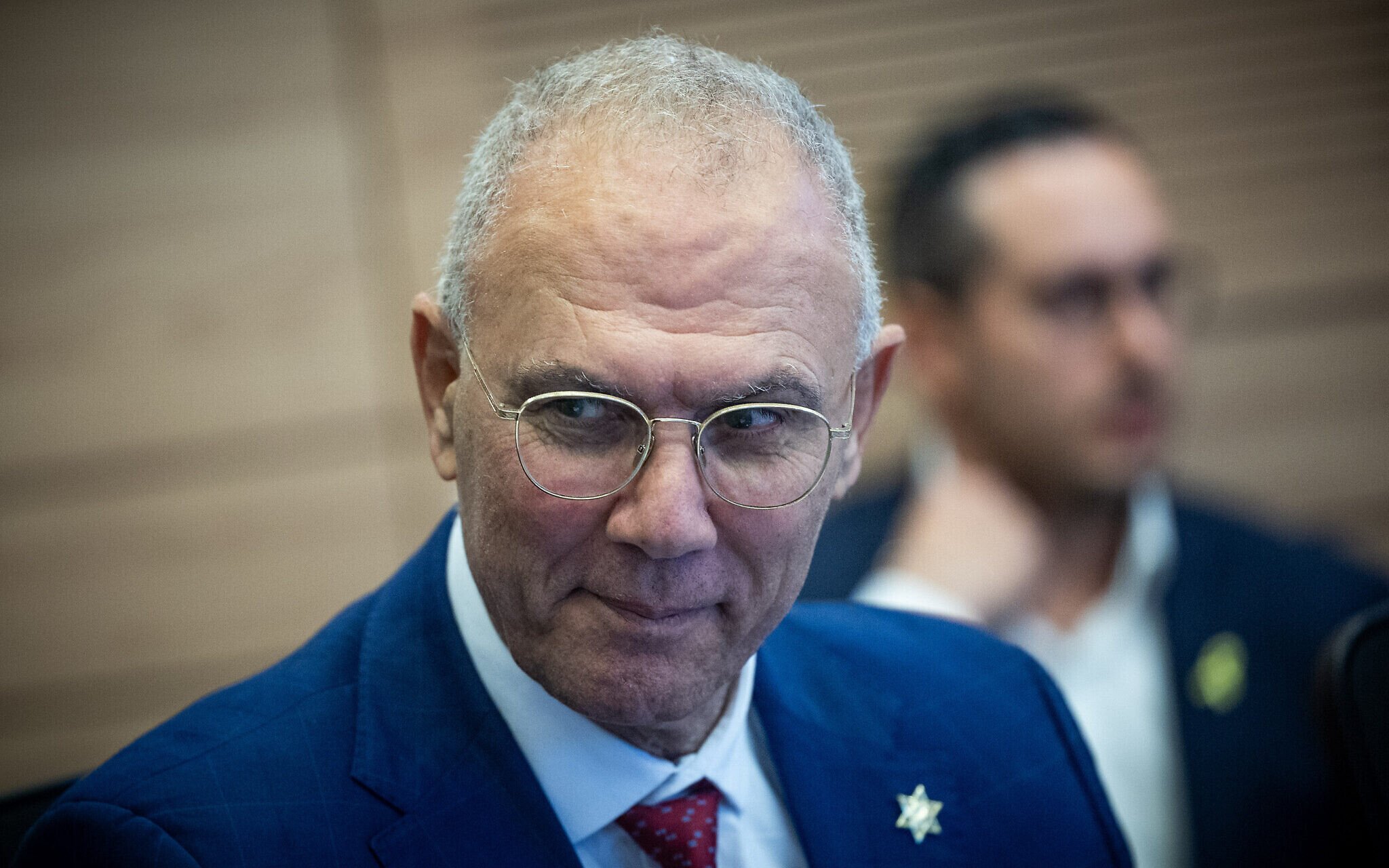
Yossi Shelley, then-director-general of the Prime Minister's Office, at a Finance Committee meeting at the Knesset on June 5, 2024. (Yonatan Sindel/Flash90)
Israel’s Ambassador to the UAE Yossi Shelley has reportedly upset his Emirati hosts over inappropriate conduct during an incident at a bar several months ago.
Shelley was out on a Friday night in Abu Dhabi with several friends and acted in an “undignified” manner, Channel 12 reports, citing three sources familiar with the incident, who said the Israeli envoy “crossed the boundaries of personal space”
Shelley’s personal security guards even reported the incident to their superiors.
The Emirati government got wind of the incident and is unhappy about it, but has refrained from lodging a formal complaint to Jerusalem, Channel 12 says.
An Emirati source tells the network that the government would have ordered Shelley to leave the country had it not been for his position.
Responding to the Channel 12 report, Shelley says in a statement that he was made aware of conduct that the Emiratis interpreted as disrespectful. He stresses that it took place at a private event and was not related to his work as ambassador. In light of the concern raised, he says he has taken the matter into consideration.
Rubio: Macron’s Palestine recognition serves Hamas, is slap in the face to Oct. 7 victims
The US “strongly rejects” French President Emmanuel Macron’s plan to recognize a Palestinian state at the UN General Assembly in September, Secretary of State Marco Rubio tweets.
“This reckless decision only serves Hamas propaganda and sets back peace. It is a slap in the face to the victims of October 7th,” Rubio adds.
Footage shows right-wing activists blocking aid trucks en route to Gaza
Palestinian media is airing footage of right-wing Israeli activists blocking a road being used by several trucks carrying humanitarian aid for Gaza.
Proponents of such actions claim Hamas steals the aid entering Gaza and that the aid should be blocked to pressure the terror group to free the 50 hostages it is still holding, while critics say blocking aid further exacerbates the humanitarian crisis in the Strip.
مستوطنون يغلقون الطريق لمنع عبور شاحنات المساعدات المتجهة إلى قطاع غزة pic.twitter.com/z93IcYZmZS
— شبكة قدس الإخبارية (@qudsn) July 25, 2025
Blasting Israeli ‘aid denial,’ Australian PM says every effort should be made to end Gaza starvation
Every effort must be made to safeguard innocent life and end the suffering and starvation of the people of Gaza, the Australian Prime Minister Anthony Albanese says in a statement, describing the situation as a “humanitarian catastrophe.”
“Israel’s denial of aid and the killing of civilians, including children, seeking access to water and food cannot be defended or ignored,” Albanese says in the statement.
US envoy to Israel mocks French Palestine recognition: ‘Perhaps the UK can declare France a British colony!’
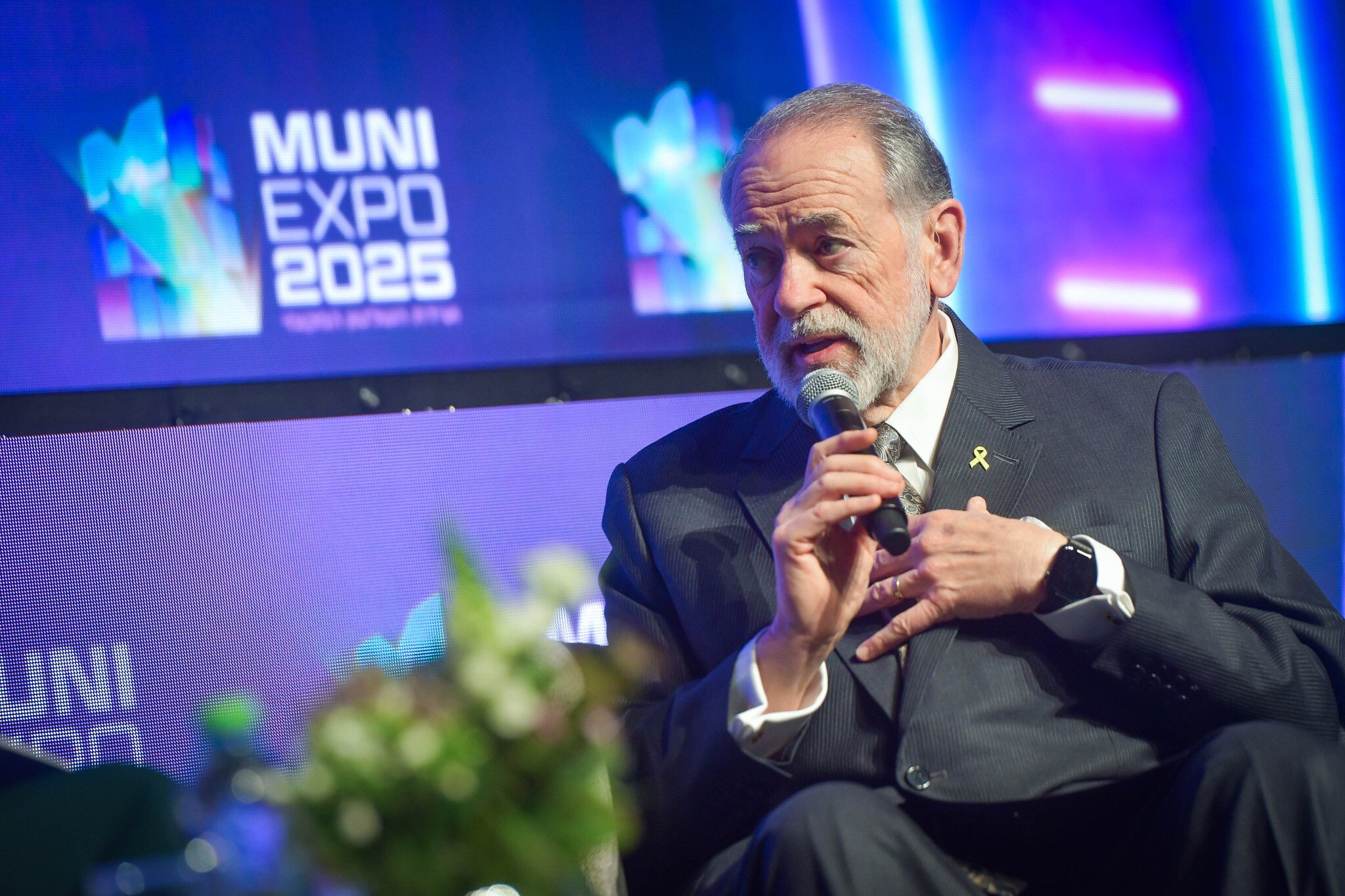
US Ambassador to Israel Mike Huckabee speaks at the Muni Expo 2025 conference in Tel Aviv, on July 15, 2025. (Avshalom Sassoni/Flash90)
In a series of tweets, US Ambassador to Israel Mike Huckabee mocks French President Emmanuel Macron’s announcement that Paris will recognize a Palestinian state in September.
“How clever! If Macron can just ‘declare’ the existence of a state perhaps the UK can ‘declare’ France a British colony!” he writes.
In a follow-up post, he adds: “Macron’s unilateral ‘declaration’ of a ‘Palestinian’ state didn’t say WHERE it would be. I can now exclusively disclose that France will offer the French Riviera & the new nation will be called ‘Franc-en-Stine.'”
Macron's unilateral "declaration" of a "Palestinian" state didn't say WHERE it would be. I can now exclusively disclose that France will offer the French Riviera & the new nation will be called "Franc-en-Stine."https://t.co/zCZR0Fj9tc
— Ambassador Mike Huckabee (@GovMikeHuckabee) July 25, 2025
Macron adviser says Oct. 7 ‘wouldn’t have happened’ had there been a Palestinian state
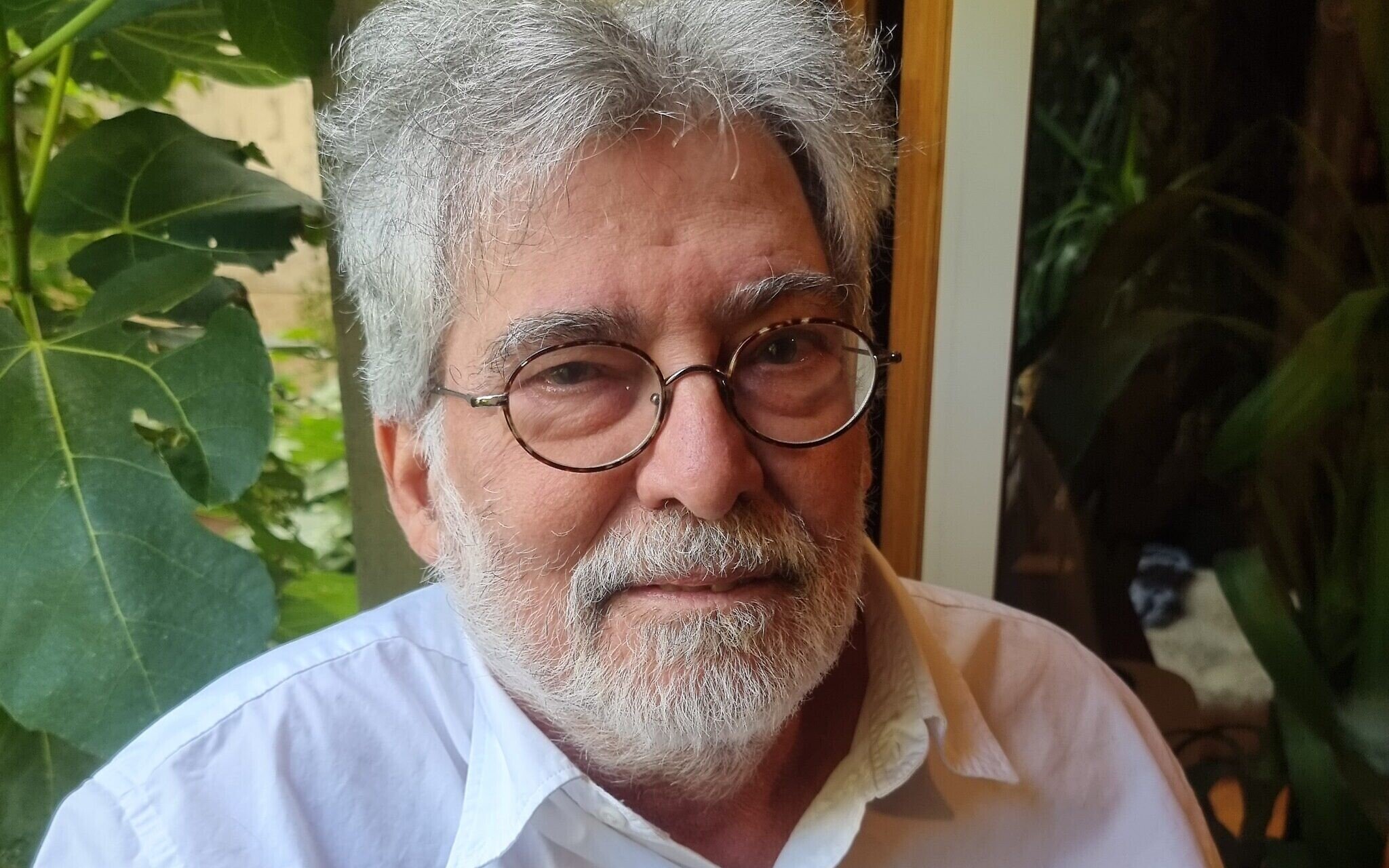
Ofer Bronchtein in Paris, August 2024. (Hally Pancer)
Defending Paris’s decision to recognize a Palestinian state, an adviser to French President Emmanuel Macron blames Hamas’s onslaught of October 7, 2023, on the lack of a Palestinian state.
“Everyone for 40 years has been talking about the two-state solution,” says Ofer Bronchtein, Macron’s longtime special adviser on Israeli-Palestinian affairs, in a Hebrew-language radio interview with Israel’s Kan public broadcaster.
“It angers me that people say we encourage terror,” he says, noting that the Hamas attack happened even without a Palestinian state, and adding: “Perhaps because there was no Palestinian state, October 7 happened.”
“Had there been Palestinian sovereignty in Gaza on October 7 [2023]… October 7 wouldn’t have happened. Sovereignty is responsibility,” he says.
UK foreign minister calls situation in Gaza ‘indefensible’
UK Foreign Minister David Lammy says the deteriorating situation in Gaza is “indefensible,” repeating calls for a ceasefire.
“The sight of children reaching for aid and losing their lives has caused consternation over much of the world. And that is why I repeat my call today for a ceasefire,” Lammy says in a joint news conference with the Australian defense minister in Sydney.
“The deteriorating situation we’ve seen in Gaza over the last few weeks is indefensible.”
Lapid raps French Palestine recognition, says ‘functioning government’ could’ve prevented it
Opposition Leader Yair Lapid criticizes French President Emmanuel Macron’s announcement that Paris will recognize a Palestinian state “a moral error and diplomatically damaging.”
On X, Lapid adds: “The Palestinians should not be rewarded for October 7 and for supporting Hamas.”
He accuses the government of failure to prevent the move: “A functioning government doing basic diplomatic work could have prevented this harmful declaration.”
Cops discover, neutralize powerful explosive in Ramle
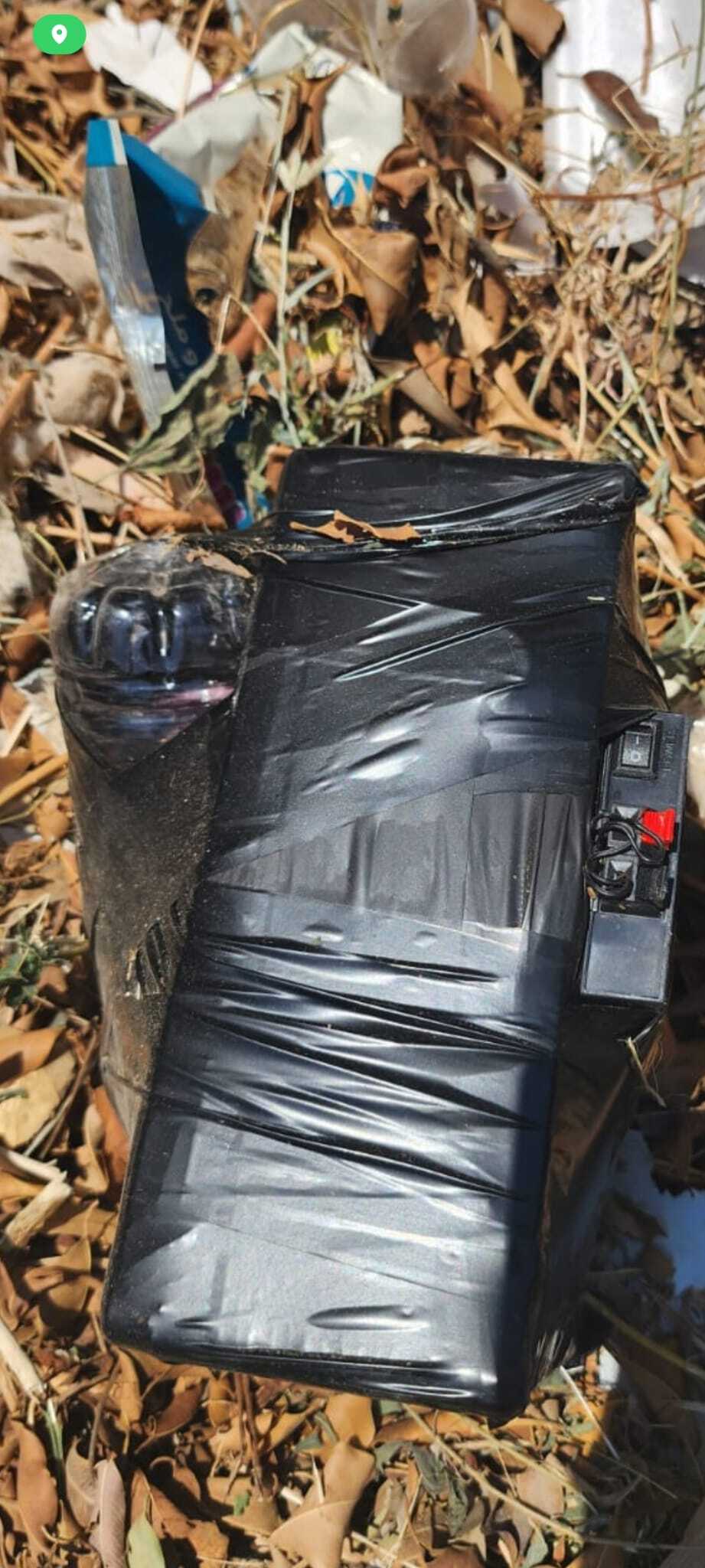
An explosive device found by police in Ramle during a nighttime operation in the city on July 24, 2025. (Israel Police)
Police discovered and neutralized a powerful explosive in Ramle last night, thwarting a potentially deadly criminal attack in the mixed Arab-Jewish city, law enforcement says.
The IED was uncovered during an operation by Ramle police, Border Police officers, and National Guard fighters to combat illegal weapons possession and trafficking in Arab society.
After neutralizing the device, police carried out additional sweeps in the area and ruled out the presence of other explosives.
Iran calls nuclear talks with European powers a chance to ‘correct’ their stance
Iran says that its meeting with Germany, Britain and France will be an opportunity for them to “correct” their stance on Tehran’s nuclear program, ahead of talks today with the three European powers.
Foreign ministry spokesman Esmaeil Baqaei calls today’s meeting in Istanbul a “test of realism for the Europeans and a valuable opportunity to correct their views on Iran’s nuclear issue,” in remarks to the official IRNA news agency.
Talks between Tehran and European nations kick off as Iran says its position is ‘unchanged’
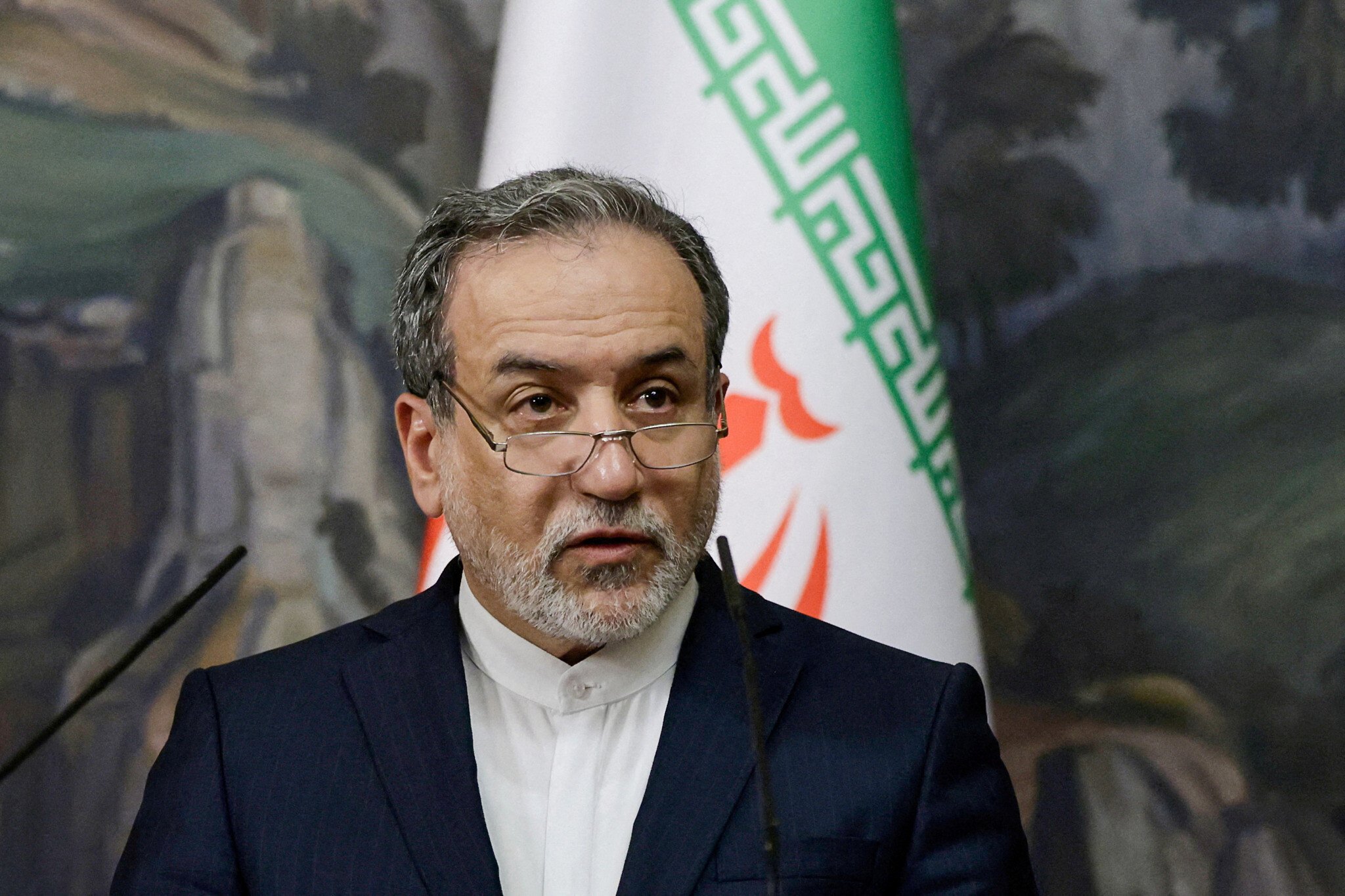
Iran's Foreign Minister Abbas Aragchi attends a press conference following a meeting with Russia's Foreign Minister Sergei Lavrov in Moscow, April 18, 2025. (Tatyana Makeyeva/Pool via Reuters)
Delegations arrive at Iran’s Istanbul consulate this morning for face-to-face talks between Iran and the so-called E3 group of France, Britain and Germany, a Reuters witness reports.
Senior diplomats from the E3 group are set to hold talks with Iran’s negotiating team for the first time since US and Israeli strikes on Iranian nuclear sites in June, aiming to gauge Tehran’s appetite for a compromise to avert sanctions.
Ahead of the talks, Iran’s Foreign Minister Abbas Araqchi says that Tehran’s position remains “firm and steadfast.”
“Our uranium enrichment will continue; we will not give up this right of the Iranian people,” Araqchi says in a video carried by state media, adding that today’s talks are “a continuation of previous discussions, and the world must understand that our position is clear and unchanged.”
IDF says 50 Israelis illegally entered Nablus in the West Bank, threw rocks at buildings
A group of around 50 Israelis entered the West Bank city of Nablus last night, the military says, in a violation of Israeli law.
In a statement, the IDF says that the Israeli citizens were handed over to Israeli security forces by Palestinian security forces, and then passed to the Israel Police to face potential charges.
The military adds that it is investigating claims that the group of citizens threw rocks at buildings in the city, but did not cause any injuries.
According to Hebrew media reports, the group was associated with convicted sex offender rabbi Eliezer Berland, and were aiming to visit Joseph’s Tomb but did so without any coordination with the IDF.
Heavy delays reported at Ben Gurion Airport over alleged baggage handlers strike

Illustrative: Passengers at Ben Gurion Airport near Tel Aviv on May 4, 2025. (Avshalom Sassoni/Flash90)
Overcrowding and heavy delays are being reported at Ben Gurion Airport in Tel Aviv due to a purported strike by baggage handlers.
According to Hebrew media reports, some passengers suggest there is a so-called “Italian strike” in effect, with baggage handlers refusing to load luggage or doing so particularly slowly.
The Airports Authority says in a statement that it is “cooperating with the workers in order to solve the issue as soon as possible,” and apologizes to travelers for any delays.
Likud MK summoned for questioning by police over sex offense charges
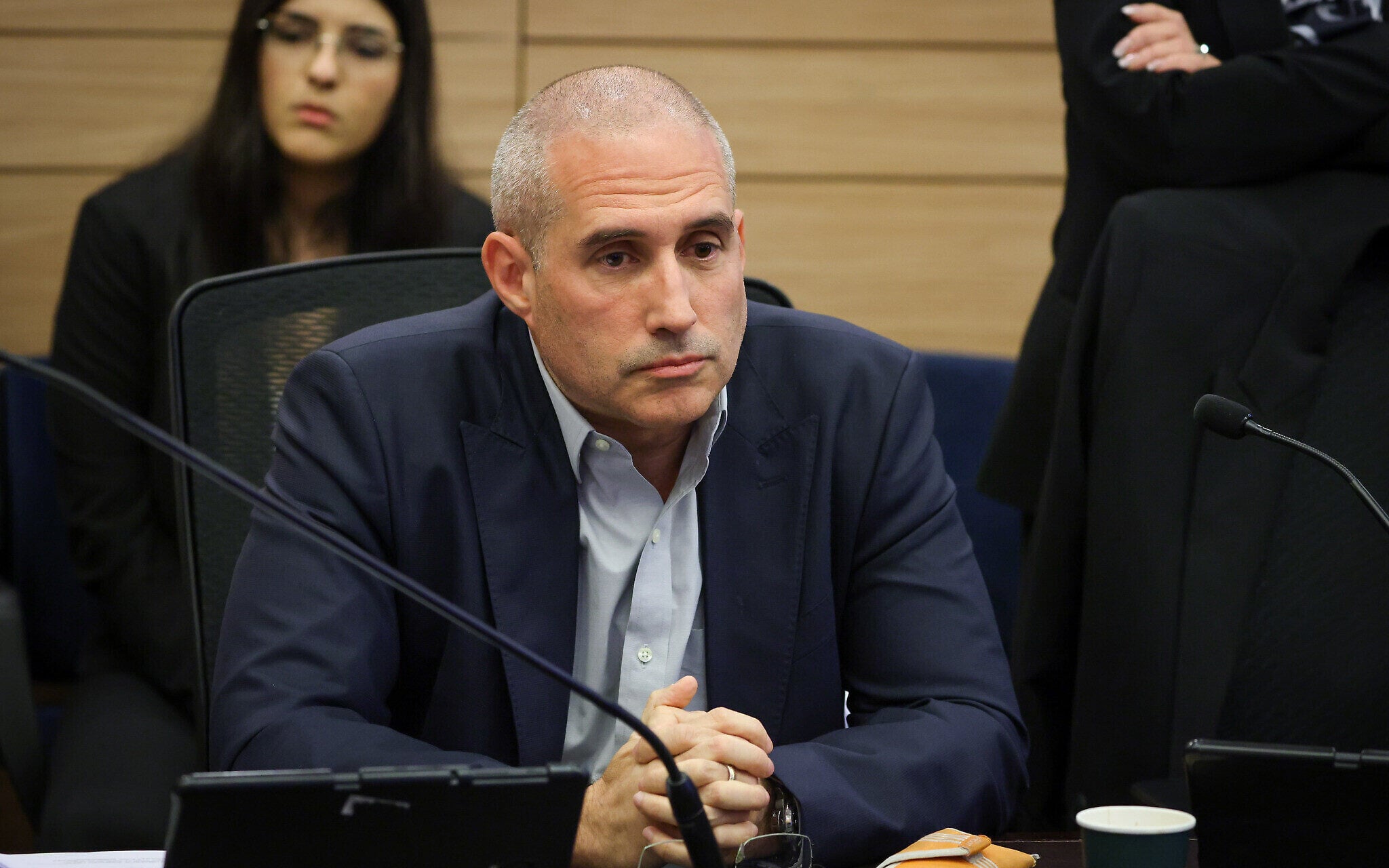
Likud MK Hanoch Milwidsky in a meeting of the Knesset Constitution, Law, and Justice Committee, November 25, 2024. (Noam Moskowitz, Office of the Knesset Spokesperson/ File)
Likud lawmaker Hanoch Milwidsky was summoned for questioning this morning by police investigators, reportedly on suspicion that he committed sexual offenses.
The investigation, conducted by the police’s Lahav 433 major crimes unit, became public this morning as investigators took testimony from several people involved in the case, including Milwidsky, who was questioned as a suspect.
In an oblique statement, the Israel Police do not name Milwidsky or the allegations against him, but say that it summoned a sitting lawmaker for questioning earlier today. Officers detained two others involved in the case for questioning this morning, both on suspicion of obstruction of justice. These offenses are thought to have been committed before Milwidsky was elected to the Knesset, law enforcement notes.
According to police, investigators opened the covert investigation in 2022 and summoned the lawmaker only once they had established reasonable suspicion against him.
In a statement, Milwidsky says that he heeded the summons and showed up to be questioned by police, but accuses law enforcement of persecuting right-wing politicians.
“Political persecution has crossed all boundaries. The attorney general and the system she heads continue to trample democracy with a heavy hand and destroy the public’s trust,” his office says in a statement. “I will continue to act fearlessly for the goals of the right and for the entire nation.”
The Likud MK was recently backed by Prime Minister Benjamin Netanyahu to replace UTJ MK Moshe Gafni as head of the powerful Knesset Finance Committee, after the Haredi party exited the government. Milwidsky accuses law enforcement of capitalizing on that timing.
Milwidsky has faced multiple accusations in the past of sexual assault but has not to date faced any charges.
France claims its recognition of Palestine ‘goes against’ Hamas stance
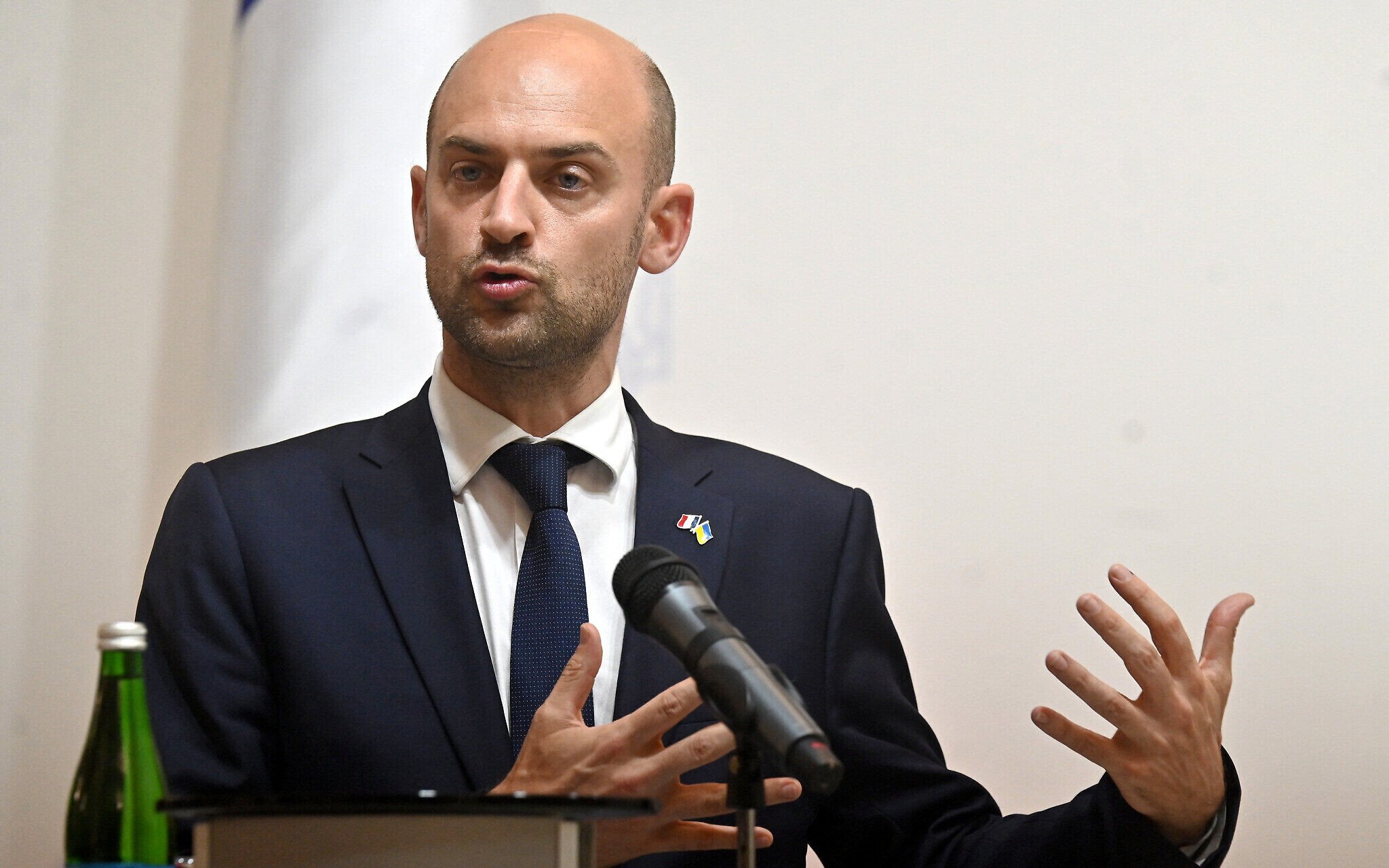
France's Foreign Minister Jean-Noel Barrot speaks during a joint press conference with his Ukrainian counterpart, in Kyiv, on July 21, 2025. (Sergei SUPINSKY / AFP)
France says that its plan to formally recognize a Palestinian state runs counter to the stance held by Hamas.
“Hamas has always ruled out a two-state solution. By recognizing Palestine, France goes against that terrorist organization,” Foreign Minister Jean-Noel Barrot writes on X, a day after President Emmanuel Macron says France will recognize Palestinian statehood in September.
Hamas welcomed the president’s announcement, calling it “a positive step in the right direction toward doing justice to our oppressed Palestinian people.” Israel said that the move “rewards terror,” while the US called it “reckless.”
But Barrot says in his X message that France, with its decision, is “backing the side of peace against the side of war.”
Iran telecoms satellite Nahid-2 goes into space on Russian launcher, state media says
Iranian telecommunications satellite Nahid-2 was carried into space today aboard a Russian Soyuz launcher, Iranian media reports.
The locally made satellite was successfully launched from a cosmodrome in Russia, the media says.
Israeli man indicted for giving NIS 1.5 million to Palestinian Islamic Jihad

Banknotes seized by police while raiding the house of a Tamra resident suspected of funneling funds to the Palestinian Islamic Jihad, in a handout image published July 25, 2025. (Israel Police)
State prosecutors file charges this morning against a man suspected of transferring over a million shekels to the Palestinian Islamic Jihad terror group under the guise of donating to Gazan children, police announce.
Police arrested 36-year-old Tamra resident Ahmad Diab in a raid on his home in June. Officers seized NIS 70,000 ($21,000) and several hundred US dollars in the operation.
Diab began transferring funds to the Islamic Jihad in July 2024, after being contacted online by an operative in the terror group, according to the indictment. He had been active in collecting money for Gaza through online fundraisers since 2020 and presumably exploited crowdfunded donations to support the Gaza-based terror group.
Police say that Diab transferred approximately NIS 1.5 million ($450,000) to the Islamic Jihad via a middleman in the West Bank, who was in contact with the operative in the terror group. The defendant traveled several times to the West Bank to meet his contact in person, police say.
Diab is charged this morning with the security offenses of contact with a foreign agent and aiding a terrorist organization.
Egyptian news outlet: Gaza ceasefire talks expected to resume next week
The Gaza ceasefire talks are expected to resume next week following Israel’s review of Hamas’s latest response, Egyptian state-affiliated Al Qahera News TV says, citing an Egyptian source.
Al Qahera news says the Israeli delegation left a day after Prime Minister Benjamin Netanyahu recalled the negotiating team to Israel for consultations.
US envoy to the Mideast Steve Witkoff said yesterday that the terror group’s most recent response was “selfish” and that Hamas “does not appear to be coordinated or acting in good faith.”
Shas says it will only rejoin government if viable Haredi enlistment bill advanced

Chairman Aryeh Deri attends a meeting of the Shas party Council of Torah Sages in Jerusalem, July 16, 2025. (Flash90)
The Shas party will only rejoin Prime Minister Benjamin Netanyahu’s government when it advances a conscription bill acceptable to the Haredim that would actually pass a vote in the Knesset, a spokesman for the ultra-Orthodox faction tells The Times of Israel.
“There must be a law on the table that is agreed upon by us and has a majority,” says Asher Medina, when asked about his party’s preconditions for returning.
Both the Sephardic Shas and Ashkenazi United Torah Judaism parties have been pushing hard for the passage of legislation enabling most ultra-Orthodox males to continue to avoid military or other national service, in the wake of last year’s High Court decision that such exemptions are illegal on equality grounds.
Last week, UTJ quit the coalition after being presented with a copy of a proposed enlistment bill prepared by Knesset Foreign Affairs and Defense Committee chairman Yuli Edelstein, which it argued violated the terms of a compromise reached in June, when an effort was being made to prevent the Haredim from toppling the government before the war with Iran.
They were quickly followed by Shas, which, while quitting the government, has remained part of the coalition.
To woo back the Haredi parties, Likud lawmakers voted overwhelmingly on Wednesday evening to replace Edelstein — who has said any conscription law must include sanctions on draft dodgers and their institutions of study — with MK Boaz Bismuth. Despite this, UTJ has rejected any return to the coalition without the passage of a conscription law it finds acceptable.
According to national broadcaster Kan, Shas has shown itself to be more accommodating than UTJ, with chairman Aryeh Deri indicating that his party will weigh returning to the government if Edelstein is indeed replaced, which two Knesset committees must still approve.
In a statement to Kan, a Shas spokesman denied that Deri was considering such a course or that he would even refer the issue to the party’s ruling Council of Torah Sages.
British minister says recognizing Palestine not as pressing as securing ceasefire
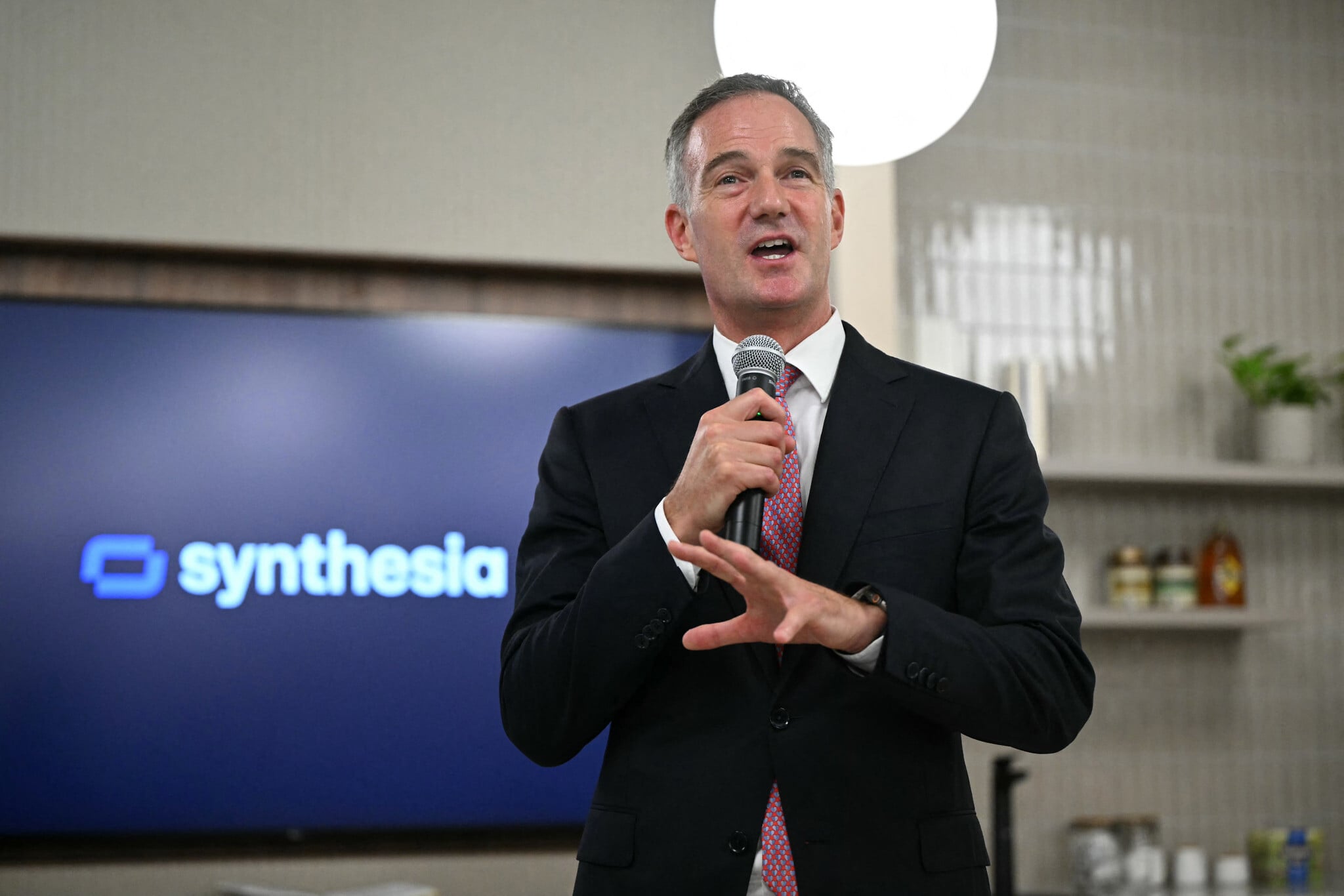
Britain's Science and Innovation Secretary Peter Kyle speaks during a ceremony in central London on July 2, 2025. (JUSTIN TALLIS / AFP)
Britain supports eventual recognition of a Palestinian state, but the immediate priority should be alleviating the suffering in Gaza and securing a ceasefire between Israel and Hamas, a British cabinet minister says.
“We want Palestinian statehood, we desire it, and we want to make sure the circumstances can exist where that kind of long-term political solution can have the space to evolve,” British science and technology minister Peter Kyle tells Sky News.
“But right now, today, we’ve got to focus on what will ease the suffering, and it is extreme, unwarranted suffering in Gaza that has to be the priority for us today.”
His comments came after French President Emmanuel Macron said France intends to recognize a Palestinian state in September at the UN General Assembly, a plan that drew strong condemnation from Israel and the United States.
In a statement yesterday, British Prime Minister Keir Starmer said statehood was the “inalienable right of the Palestinian people,” reiterating his call for a ceasefire as a necessary step towards achieving a two-state solution.
Immigration minister calls for French Jews to move to Israel after Macron recognition of Palestine
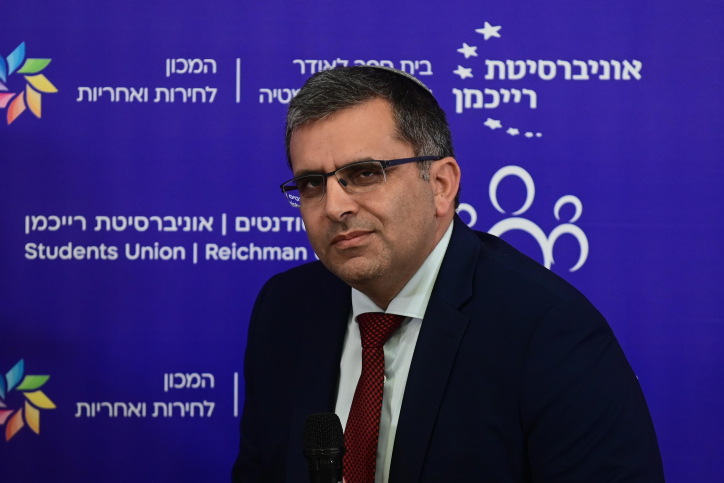
Immigration and Absorption Minister Ofir Sofer speaks during a conference at Reichman University in Herzliya, January 5, 2023. (Tomer Neuberg/Flash90)
Following French President Emmanuel Macron’s statement that Paris plans to formally recognize a Palestinian state during a UN meeting in September, Immigration and Absorption Minister Ofir Sofer calls for French Jews to move to Israel.
“The State of Israel welcomes the many immigrants from France who have chosen to return to their true home here in Israel since October 7, despite the war,” Sofer writes on X. “We are preparing with a variety of new and unique programs to expand absorption.”
“French Jews, this is your home – the State of Israel,” Sofer concludes.
WHO: Health situation in Sweida is ‘grim’ and hospitals are overrun

A Druze fighter sits next to another injured person lying in the back of a vehicle parked outside Sweida National Hospital, in southern Syria's predominantly Druze city of Sweida on July 20, 2025. (Shadi al-Dubaisi/AFP)
Hospitals in the southern Syrian city of Sweida are under immense pressure, following an escalation of sectarian clashes this month between the Druze — a religious minority native to the area — and Syrian Bedouin tribes.
“Inside Sweida is a grim picture with the health facilities under immense strain… Electricity and water are cut off, and essential medical supplies are running out,” World Health Organization representative in Syria Christina Bethke tells reporters in Geneva via video link.
Israel delivered a shipment of medical aid to Sweida earlier this week.
Italian FM: State of Palestine must also recognize Israel to ensure peace
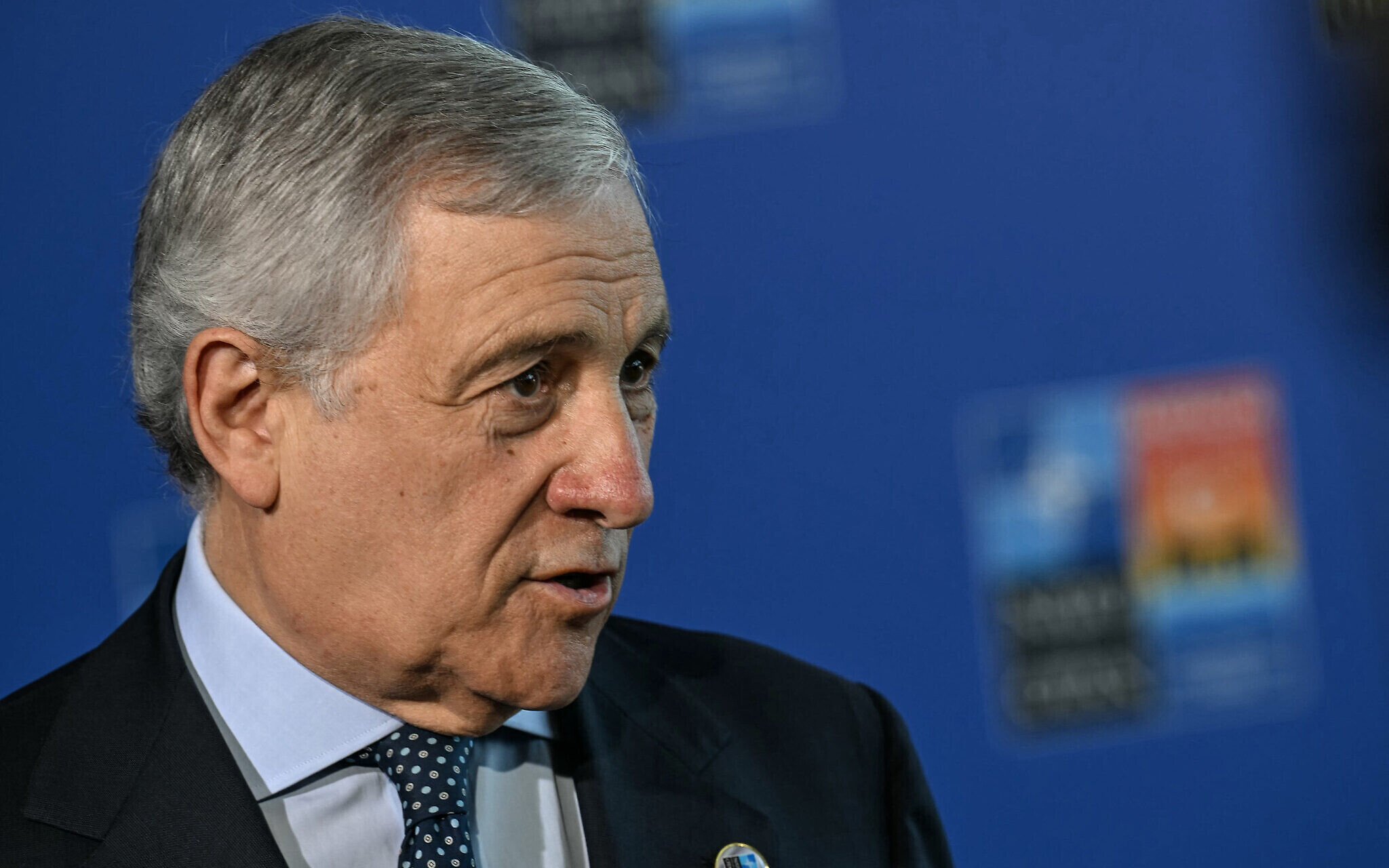
Italian Foreign Minister Antonio Tajani talks to the press as he arrives for an informal meeting of NATO foreign ministers in Antalya, Turkey, May 15, 2025. (Ozan Kose/AFP)
The recognition of a Palestinian state must occur simultaneously with the recognition of Israel by the new entity, the Italian foreign minister says, a day after France said it would recognize Palestinian statehood in September, angering Israel.
“A Palestinian state that does not recognize Israel means that the problem will not be resolved,” Foreign Minister Antonio Tajani tells a meeting of his conservative Forza Italia party in Rome.
Hamas counterintelligence chief killed in Israeli airstrike, says IDF
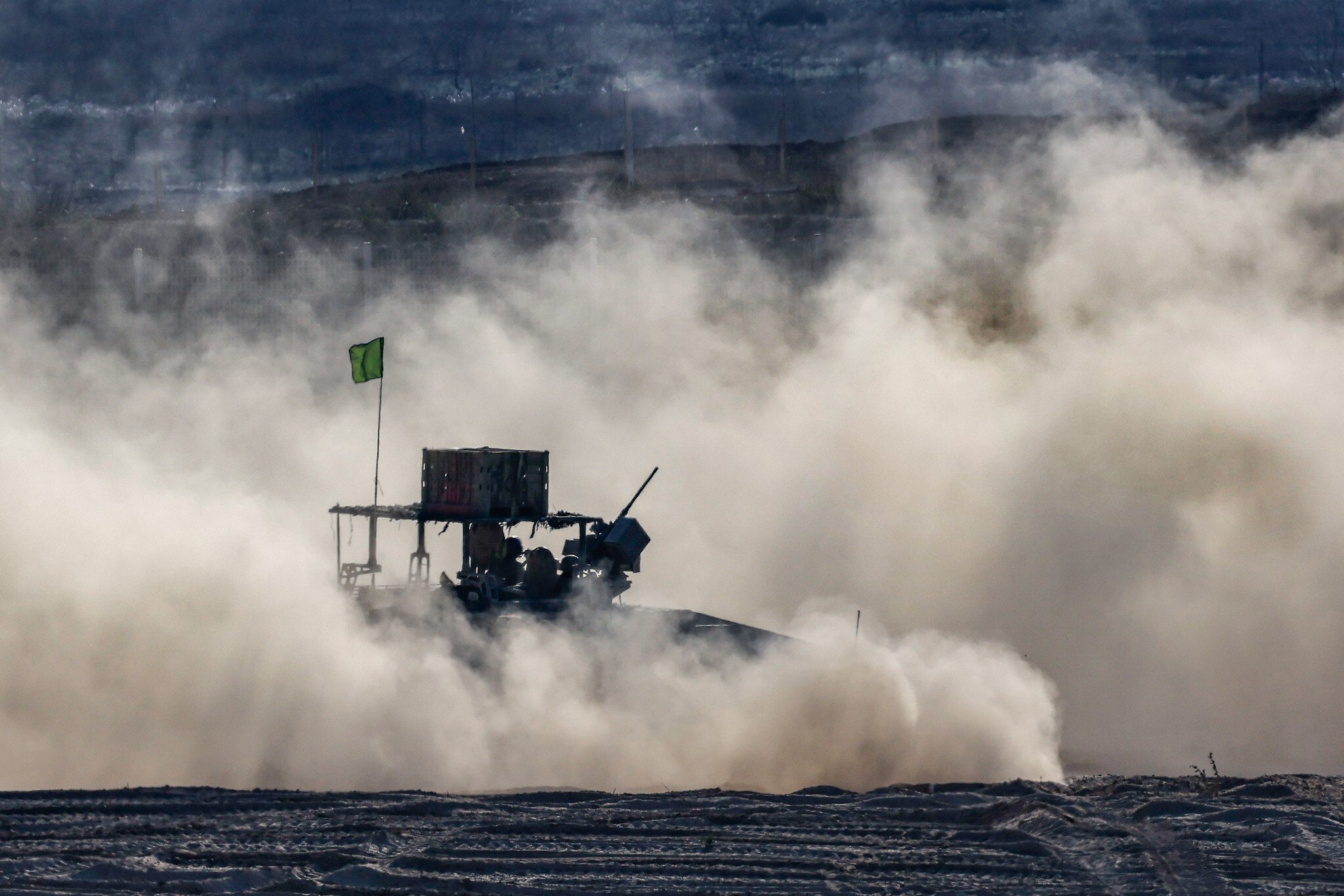
Israeli forces are seen on the Israeli side of the Israel-Gaza border, July 23, 2025. (Tsafrir Abayov/Flash90)
The chief of Hamas’s counterintelligence was killed in an Israeli airstrike in the northern Gaza Strip on Wednesday, the IDF and Shin Bet announced.
The military says the “counterintelligence directorate in Hamas’s general security apparatus,” which Amjad Muhammad Hassan Sha’er headed, is tasked with “suppressing opposition to the regime, counter-espionage and securing senior Hamas officials and their assets in the Gaza Strip and outside of it.”
“The directorate is a vital part of the Hamas terror organization’s general security apparatus, which is responsible, among other things, for building an intelligence assessment that assists senior Hamas officials in decision-making and executing terror attacks against the State of Israel,” the IDF says.
Meanwhile, the IDF says that in the past day, the Israeli Air Force hit dozens of targets across Gaza, including cells of operatives, buildings used by terror groups, tunnels, weapon caches and other infrastructure.
The strikes come as five divisions continue ground operations across the Strip. The military says that the 98th Division has expanded its operations in Gaza City.
Lawyer for French youth camp says children ‘traumatized’ by forced plane removal

Security forces are seen arresting a woman, said to be the director of the French Kinneret summer camp, after her group of some 50 kids was removed from an airplane in Valencia, Spain, on July 23, 2025. (X; used in accordance with article 27a of the Copyright Law)
The French Jewish youth forcibly removed from an airplane at an airport in Spain on Wednesday evening have been traumatized by the experience, the lawyer representing their summer camp says.
Julie Jacob, the lawyer for the Kineret Camp, tells i24 News that some of the children require psychological support after the camp director, four counselors, and 47 minors under age 15 were forcibly removed from a Vueling plane. Video footage that went viral shows the director of the program being pinned to the ground and handcuffed by security forces.
Witnesses have charged that the event was motivated by antisemitism. Vueling has stated that the removal was necessary due to the youths’ dangerous behavior.
Jacob says there is no evidence of any dangerous activity by the youth.
“No act threatening safety has been observed. Vueling’s statements are false, fanciful, and without evidence,” she says.
A complaint against the airline is being prepared, Jacob adds.
Germany says it has no current plans to recognize Palestinian state
Germany is not planning to recognize a Palestinian state in the short term and says its priority now is to make “long-overdue progress” towards a two-state solution, a German government spokesperson says.
“Israel’s security is of paramount importance to the German government,” says the spokesperson. “The German government therefore has no plans to recognize a Palestinian state in the short term.”
IAEA head says he has no info from Iran on location of highly enriched uranium
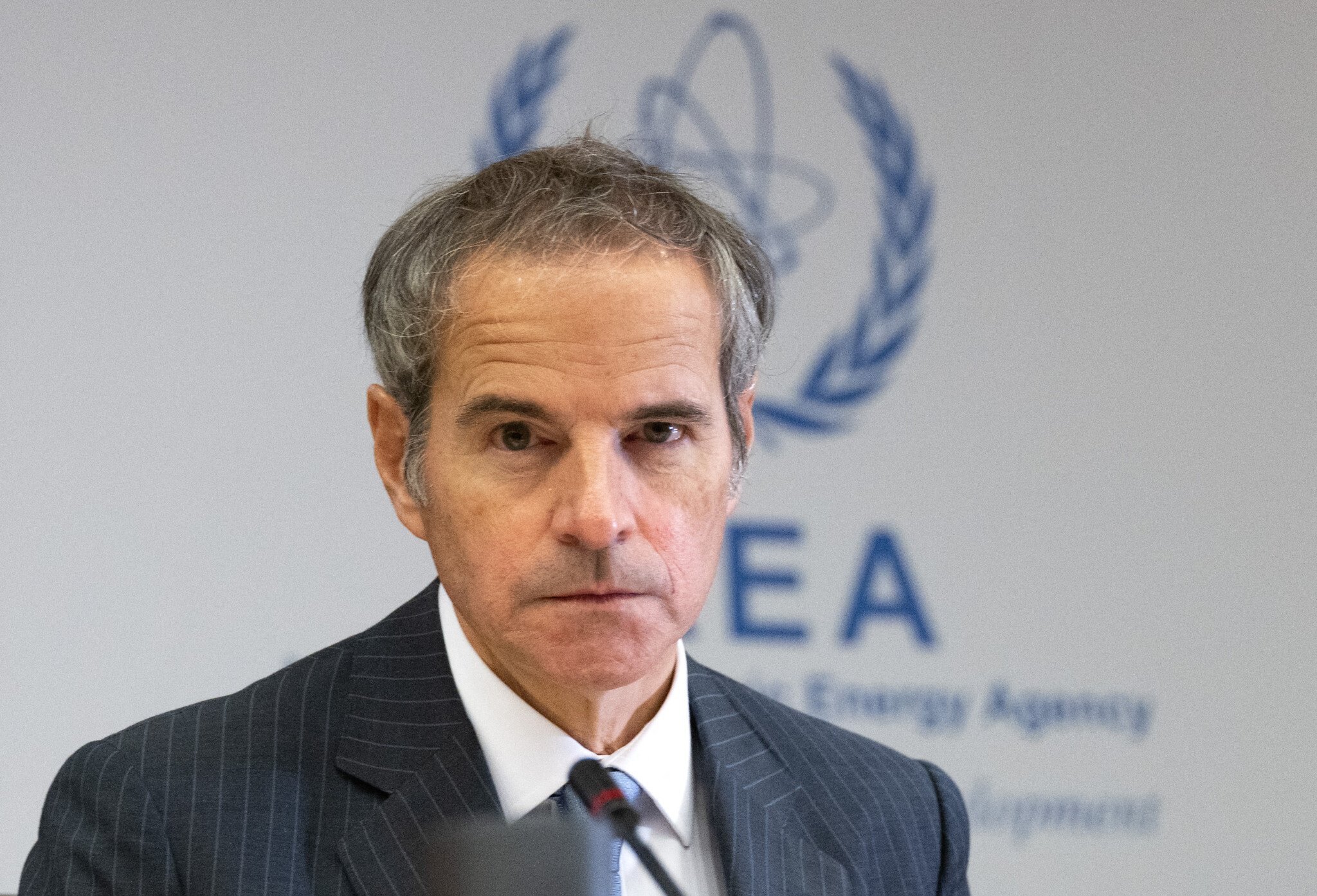
Director General of the International Atomic Energy Agency (IAEA) Rafael Grossi attends an extraordinary Board of Governors meeting at the agency's headquarters in Vienna, Austria on June 23, 2025. (Joe Klamar / AFP)
Iran has indicated that it will be ready to restart technical-level discussions on its nuclear program with the United Nations nuclear watchdog, says IAEA head Rafael Grossi.
The International Atomic Energy Agency has said it must be allowed to resume inspections after Israeli and US airstrikes last month that aimed to destroy Iran’s nuclear program and deny it the capacity to build a nuclear weapon.
Rafael Grossi says in Singapore that Iran must be transparent about its facilities and activities.
He tells reporters that the IAEA had proposed that Iran start discussions on “the modalities as to how to restart or begin [inspections] again.”
“So this is what we are planning to do, perhaps starting on technical details and, later on, moving on to high-level consultations. So this will not include inspections yet,” he adds.
Grossi says he has no further information from Iran on the status and whereabouts of its stock of some 400kg of highly enriched uranium.
“This is why it is so important that we engage as soon as possible and that we can start our inspection,” he says.
Abbas hails French statehood recognition as ‘victory for the Palestinian cause’
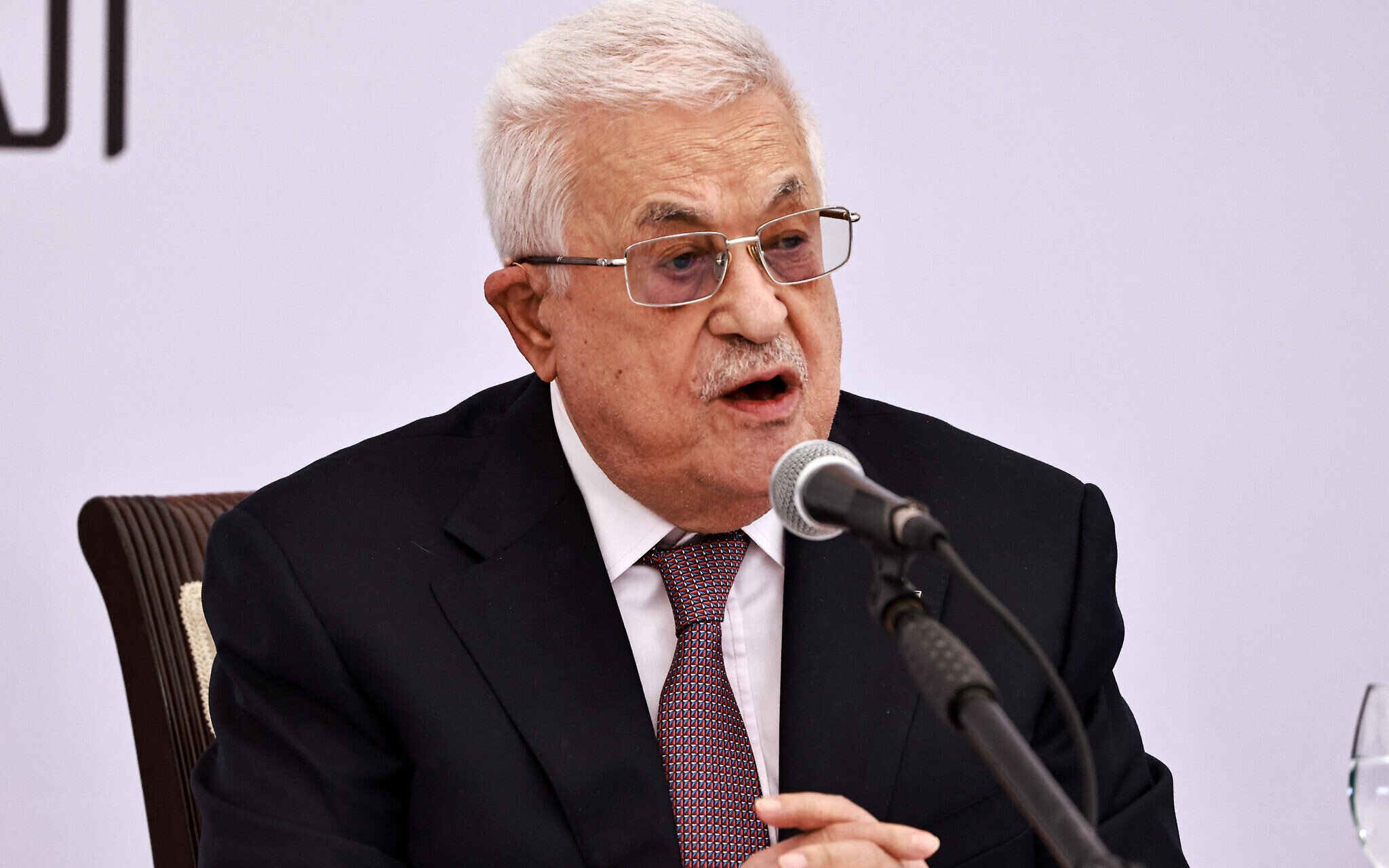
Palestinian Authority President Mahmoud Abbas delivers a speech during the opening of the Istishsari cancer center in Ramallah on May 14, 2025. (Zain JAAFAR / AFP)
Palestinian Authority President Mahmoud Abbas hails the decision by France to press ahead with recognizing a Palestinian state as a “victory for the Palestinian cause.”
“This reflects France’s commitment to supporting the Palestinian people and their legitimate rights to their land and their homeland,” the president of the Palestinian Authority says.
French President Emmanuel Macron announced yesterday that Paris would recognize a Palestinian state in September, drawing fury from Israeli leaders.
UN urges UK to repeal ‘disproportionate’ ban on pro-Palestinian activist group

Supporters of anti-Israel activist group Palestine Action protest outside the High Court in London, July 4, 2025. (Benjamin Cremel / AFP)
The UN rights chief slams Britain’s ban on activist group Palestine Action as a “disturbing” misuse of UK counter-terrorism legislation, and urges the government to rescind its decision.
“The decision appears disproportionate and unnecessary. It limits the rights of many people involved with and supportive of Palestine Action who have not themselves engaged in any underlying criminal activity but rather exercised their rights to freedom of expression, peaceful assembly and association,” Volker Turk says in a statement.
The group was banned earlier this month by the UK over a series of vandalism incidents, including breaking into an Air Force base and damaging planes.
ICC looks to sanction Hungary for not arresting Netanyahu during his visit
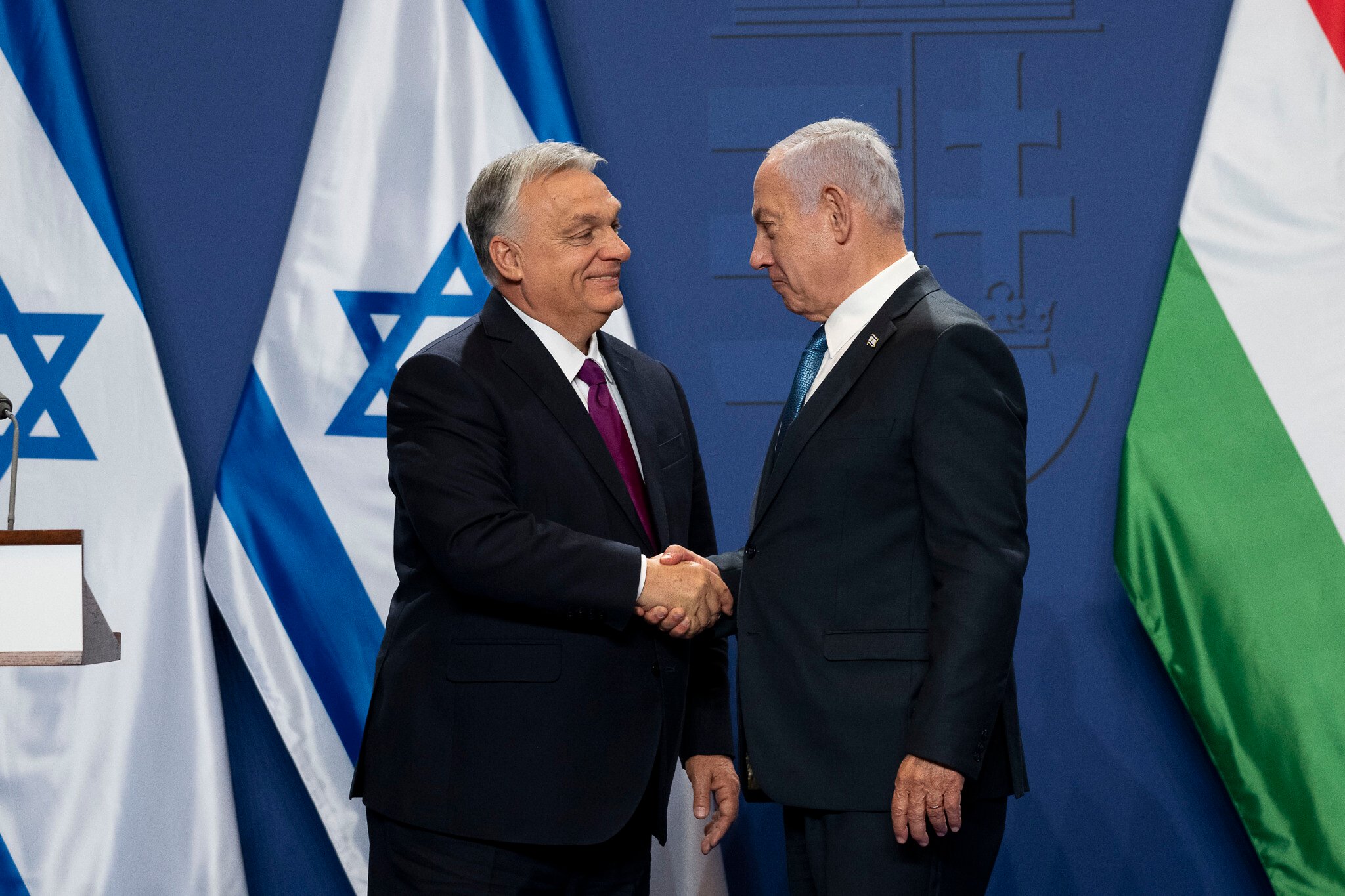
Hungarian Prime Minister Viktor Orban, left, and Prime Minister Benjamin Netanyahu shake hands after a press statement at the Carmelite Monastery in the Buda Castle in Budapest, Hungary, April 3, 2025. (AP/Denes Erdos)
A panel of judges at the International Criminal Court has reported Hungary to the court’s oversight organization for failing to arrest Prime Minister Benjamin Netanyahu when he visited Budapest in April, stating that the move undermines the court’s ability to bring suspects to justice.
In a filing released late last night, the three-judge panel wrote that “the obligation to cooperate was sufficiently clear to Hungary” and the failure to arrest Netanyahu “severely undermines the Court’s ability to carry out its mandate.”
The ICC has no police force and relies on countries worldwide to execute arrest warrants.
The court’s oversight body, the Assembly of States Parties, has limited powers to sanction Hungary. It will consider the next steps during its annual meeting in December.
The Hungarian leader, regarded by critics as an autocrat and the EU’s most intransigent spoiler in the bloc’s decision-making, has defended his decision not to arrest Netanyahu. During the visit, Orbán said his country’s commitment to the ICC was “half-hearted” and he began the process to withdraw Hungary from the court.
Saudi Arabia, Qatar, Kuwait praise France for plan to recognize Palestinian state
Saudi Arabia and fellow Gulf Arab states welcome French President Emmanuel Macron’s announcement that Paris will recognize the state of Palestine, and urge other countries to follow suit.
The Saudi foreign ministry says “the kingdom commends this historic decision, which reaffirms the international community’s consensus on the Palestinian people’s right to self-determination and to establish their independent state.”
It calls on other countries “that have not yet recognized the State of Palestine to take similar positive steps.”
Qatar, a key mediator in indirect negotiations between Israel and Hamas on ending the Gaza war, also welcomes the French move.
Its foreign ministry says the move “constitutes significant support for the legitimate rights of the brotherly Palestinian people” and “contributes to advancing prospects for achieving a just and comprehensive peace in the region.”
The Kuwaiti foreign ministry says it “commended this significant step.”
The six-nation Gulf Cooperation Council (GCC) — which also includes the United Arab Emirates and Bahrain, both of which have ties with Israel — also praises the move.
COGAT asserts ‘no famine’ in Gaza, but acknowledges ‘pockets’ of Strip with food access issues
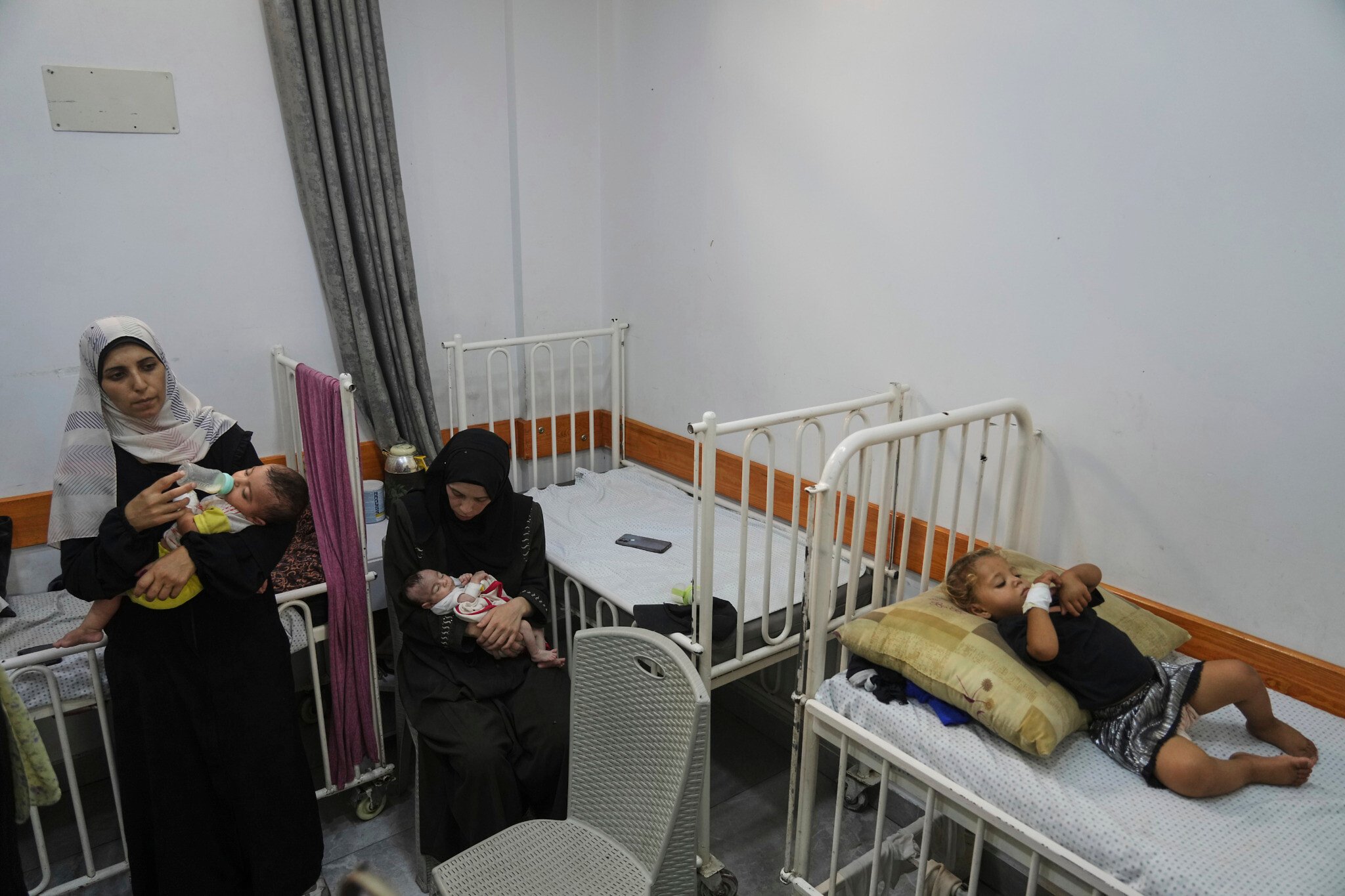
Palestinian women care for their malnourished babies at the Friends of the Patient Hospital in Gaza City on July 23, 2025. (AP/Jehad Alshrafi)
Israel’s Coordinator of Government Activities in the Territories assesses that the humanitarian situation in the Gaza Strip “continues to be difficult and challenging,” but there is no widespread famine, contrary to claims made by Hamas.
COGAT says it continuously assesses the situation in Gaza, working to identify, alongside humanitarian aid groups, “pockets” where there are difficulties with access to food, to assist those areas.
According to COGAT’s assessments, “there is no famine in the Gaza Strip,” however, it acknowledges that “there are issues of access to food.”
Images being circulated by Hamas and media outlets of malnourished children in Gaza are not indicative of a widespread phenomenon, COGAT claims: “There is no documented famine, contrary to the false claims Hamas spreads systematically.”
The humanitarian situation in Gaza has been on a downward trend recently, COGAT assesses, mainly because the IDF is now in control of 75% of the Strip’s territory. This means that Gaza’s estimated 2 million population is squeezed into just 25% of the Strip, which has led to several issues, especially concerning sanitation.
Additionally, actions taken by Israel to limit Hamas’s “takeover” of the humanitarian aid — such as the Gaza Humanitarian Foundation aid distribution sites — have harmed the terror group’s military wing, governance and its ties with the civilian population, according to COGAT’s assessments.
However, these “achievements” have led to extreme population density, chaos and the collapse of public order in Gaza, and as a result, “the humanitarian situation becomes far more complex,” COGAT has determined.
COGAT says that there is no shortage of water entering Gaza, and that food and other supplies should now be reaching Palestinians at an increased rate after the United Nations began transporting aid that had been mounting at the Kerem Shalom and Zikim crossings.
On Sunday, the UN did not collect any aid waiting at the Gaza crossings, leading Israel to publicly accuse it of allegedly refusing to cooperate. In the past two days, the UN resumed regular operations and collected 270 trucks’ worth of aid for distribution, according to COGAT figures.
The UN has repeatedly claimed that COGAT has refused its requests for collection and distribution authorization, and that dangerous and complex conditions inside Gaza made aid distribution very difficult. However, COGAT claims that nothing changed between Sunday and the rest of the week, and that when the UN wants to distribute aid, it can.
Currently, the contents of hundreds of aid trucks are still waiting on the Gaza side of the border crossings, with the main bottleneck being the collection and distribution, according to COGAT, which adds that the delays “have been the real cause of reduced aid availability and of food insecurity among the population.”
Israel set to allow Jordan and UAE to resume humanitarian airdrops in Gaza

An aircraft airdrops humanitarian aid over the northern Gaza Strip, as seen from southern Israel, March 24, 2024. (AP/Tsafrir Abayov)
Israel will soon permit Jordan and the United Arab Emirates to resume airdropping humanitarian supplies to Gaza, as the countries had done last year, according to Israel’s Coordinator of Government Activities in the Territories.
The airdrops are being coordinated with the IDF, says COGAT.
According to Israeli officials, Jordan is set to carry out the first airdrop, possibly even later today.
Last year, the US military, in coordination with Jordan, Egypt and France, airdropped tens of thousands of meals into northern Gaza, although a malfunction in March 2024 killed five Palestinians.
Iran: Talks on nuclear sanctions with European powers were ‘serious, frank and detailed’
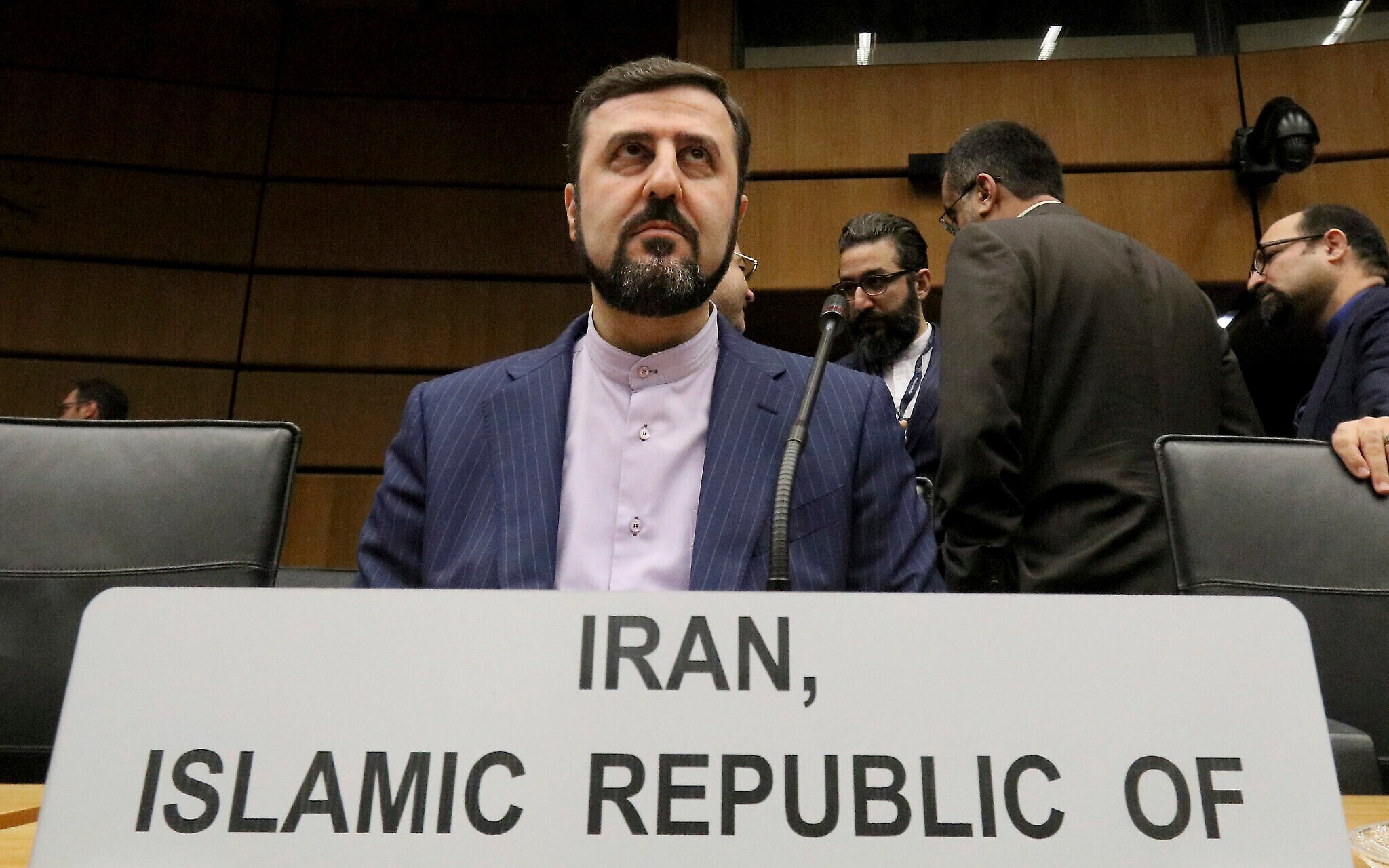
Iran's then-Ambassador to the International Atomic Energy Agency Kazem Gharibabadi waits for the start of the IAEA board of governors meeting at the International Center in Vienna, Austria, November 21, 2019. (AP/Ronald Zak)
Iran’s Deputy Foreign Minister Kazem Gharibabadi says that Tehran held a “serious, frank, and detailed” discussion with European powers about sanctions relief and the nuclear issue, in which both sides presented specific ideas.
He adds that Iran reiterated its principled positions, including on the snapback sanctions mechanism.
“Both sides came to the meeting with specific ideas,” he says. “It was agreed that consultations on this matter will continue.”
Ex-UTJ MK joins criticism of Goldknopf’s comments dismissing ‘pains’ of IDF soldiers

United Torah Judaism MK Yitzhak Pindrus speaks during a committee meeting at the Knesset, February 10, 2025. (Yonatan Sindel/Flash90)
United Torah Judaism’s Degel Hatorah faction appears to distance itself from party chairman Yitzhak Goldknopf’s dismissal of non-Haredi Jews’ suffering due to their service in Gaza.
“I cannot accept these words,” says former UTJ lawmaker Yitzhak Pindrus, one of three MKs who were pushed out of the Knesset last week under the so-called Norwegian Law due to the resignations of the party’s ministers.
“It’s not just me, I’ve been receiving calls since this morning from important rabbis and people who are hurt. It’s the most elementary thing to identify with [their] pain, even if we have an ideological debate, even if there are legitimate discussions — but I am not willing to accept these things, the Haredi public is not willing to accept these things,” Pindrus tells national broadcaster Kan.
The Haredi public “appreciates and thanks all the families and soldiers for their contribution and shares in their pain,” he adds. “I don’t know why [Goldknopf] expressed himself like that. I don’t speak for him, but I am expressing my opinion as someone who grew up and knows our sector, and I have also received calls from very important rabbis and community leaders who think [like me].”
Pindrus is a member of Degel Hatorah, while Goldknopf heads UTJ’s Hasidic Agudat Yisrael faction. His comments come in response to an interview Goldknopf gave to the national-religious Makor Rishon newspaper this week in which he said that the suffering of segments of the population, including non-Haredi Orthodox Jews, who serve in the military, was not his nor his community’s concern.
“Don’t bring me your pains and pass them on to me. Let’s decide that everybody has their own burden,” he said.
According to the Behadrei Haredim news site, Pindrus’ statement was delivered on the orders of Rabbi Moshe Hirsch, the dean of Bnei Brak’s Slabodka yeshiva and one of Degel Hatorah’s spiritual leaders.
Earlier today, Rabbi Dov Lando, another one of the faction’s spiritual leaders, told a number of yeshiva students who had received enlistment orders that only Torah study, and not the military, protects the Jewish people.
“What saves us? The army saves us? God helps them succeed. Why doesn’t the land vomit us out? Because of Torah study,” Lando stated.
Hamas official confirms Gaza ceasefire talks expected to resume next week
A Hamas official confirms that Gaza ceasefire talks between Hamas and Israel are expected to resume next week.
Hamas official Bassem Naim says that he was told an Israeli delegation would depart for consultations early next week. Previous talks had been held in Qatar.
His comments come a day after the United States recalled its negotiating team from Qatar and after US President Donald Trump’s special envoy, Steve Witkoff, said Hamas’s latest response to the negotiations showed a “lack of desire” to reach a truce.
Naim asserts that several gaps had been nearly solved, such as the agenda of the ceasefire, guarantees to continue negotiating to reach a permanent agreement, and how humanitarian aid would be delivered.
There is no immediate comment from Israel, which returned its negotiating team yesterday, on the prospect of resuming talks.
Netanyahu: Israel and US are ‘considering alternative options to bring hostages home’
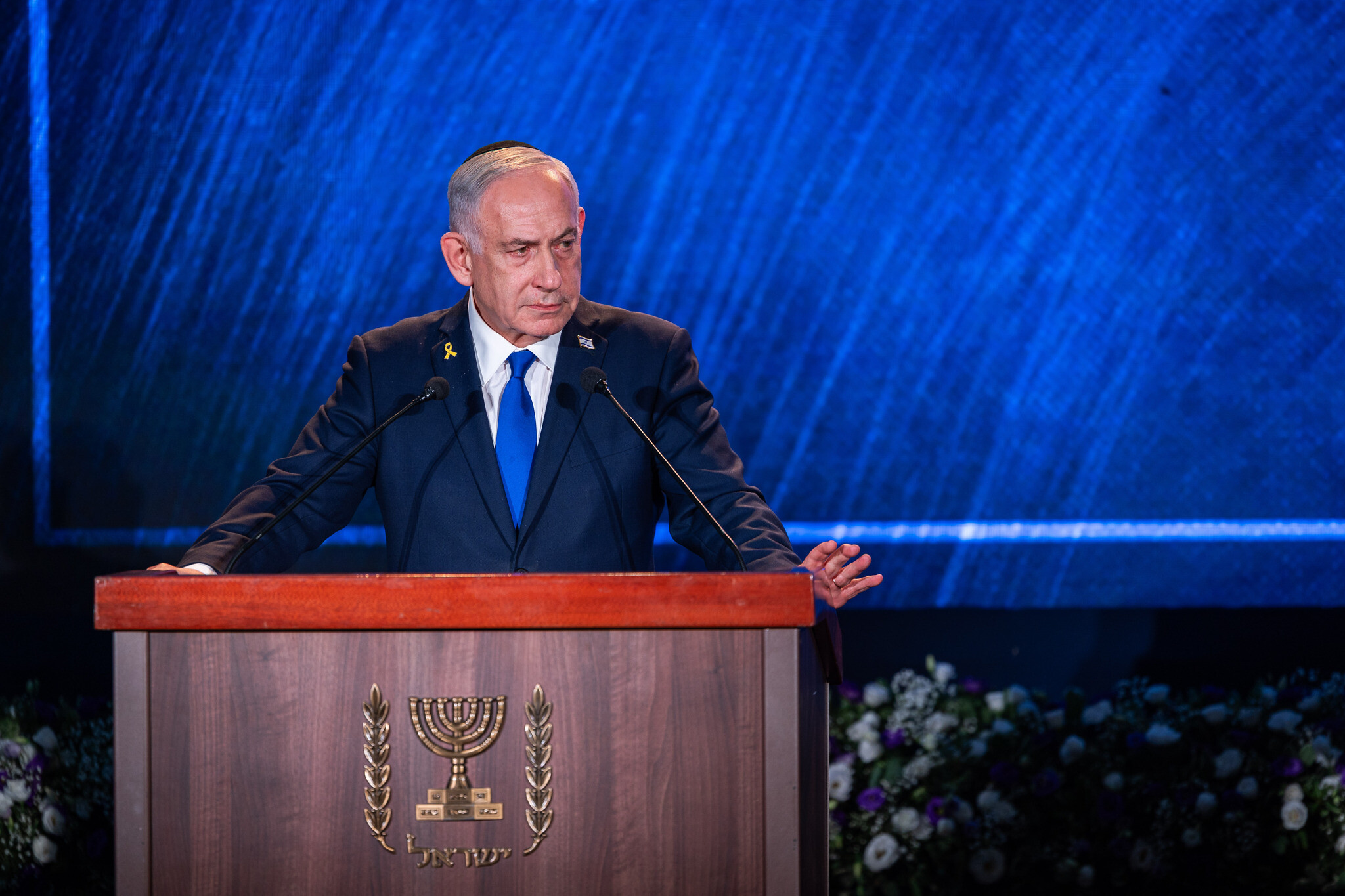
Prime Minister Benjamin Netanyahu speaks at a memorial ceremony for Zionist leader Ze’ev Jabotinsky at Mount Herzl in Jerusalem, July 24, 2025. (Chaim Goldberg/Flash90)
Prime Minister Benjamin Netanyahu says that Israel and the US are weighing ways to secure the release of hostages in Gaza that do not depend on a negotiated agreement with Hamas.
“Special Envoy to the Middle East Steve Witkoff got it right,” Netanyahu says in a statement. “Hamas is the obstacle to a hostage release deal. Together with our US allies, we are now considering alternative options to bring our hostages home, end Hamas’s terror rule, and secure lasting peace for Israel and our region.”
Netanyahu does not elaborate on what such “alternative options” could entail.
Talks hit a major roadblock yesterday after Hamas submitted its response to the latest ceasefire proposal and Israel withdrew its hostage team.
But Jerusalem is still interested in a deal, and public statements are understood by many observers to be part of the pressure campaign to push Hamas to agree to a deal.
Last night, Witkoff announced that Washington was calling back its negotiators from hostage talks in Doha and will pursue “alternative options” after the latest response from Hamas “clearly shows a lack of desire to reach a ceasefire in Gaza.”
Jordan police detain protester who chanted pro-Hamas slogan
Jordanian police are seen confronting a protester chanting for Hamas during a pro-Palestinian demonstration in Amman.
Footage shared on social media shows a protest in support of Palestinians that took place today in the capital, Amman. In the video, Jordanian police are seen detaining a protester and pulling him aside immediately after he began chanting, “Continue, continue Hamas.”
In the past two years, demonstrations in support of Palestinians and against the war in Gaza have taken place, sometimes in Jordan on Fridays.
بمجرد البدء بالهتاف
هجموا عليه قاموا باعتقاله وكأنه ارتكب جريمة بحق الوطن !من المسيرة المتضامنة مع غزة والمطالبة بإيقاف حرب التجويع والإبادة في محيط السفارة الامريكية في عمان pic.twitter.com/IoPaeuB0n9
— علاء القضاة ???????????????? (@ala_qudah1) July 25, 2025
Likud MK’s questioning said to focus on allegation of bribing witness to lie about sexual assault
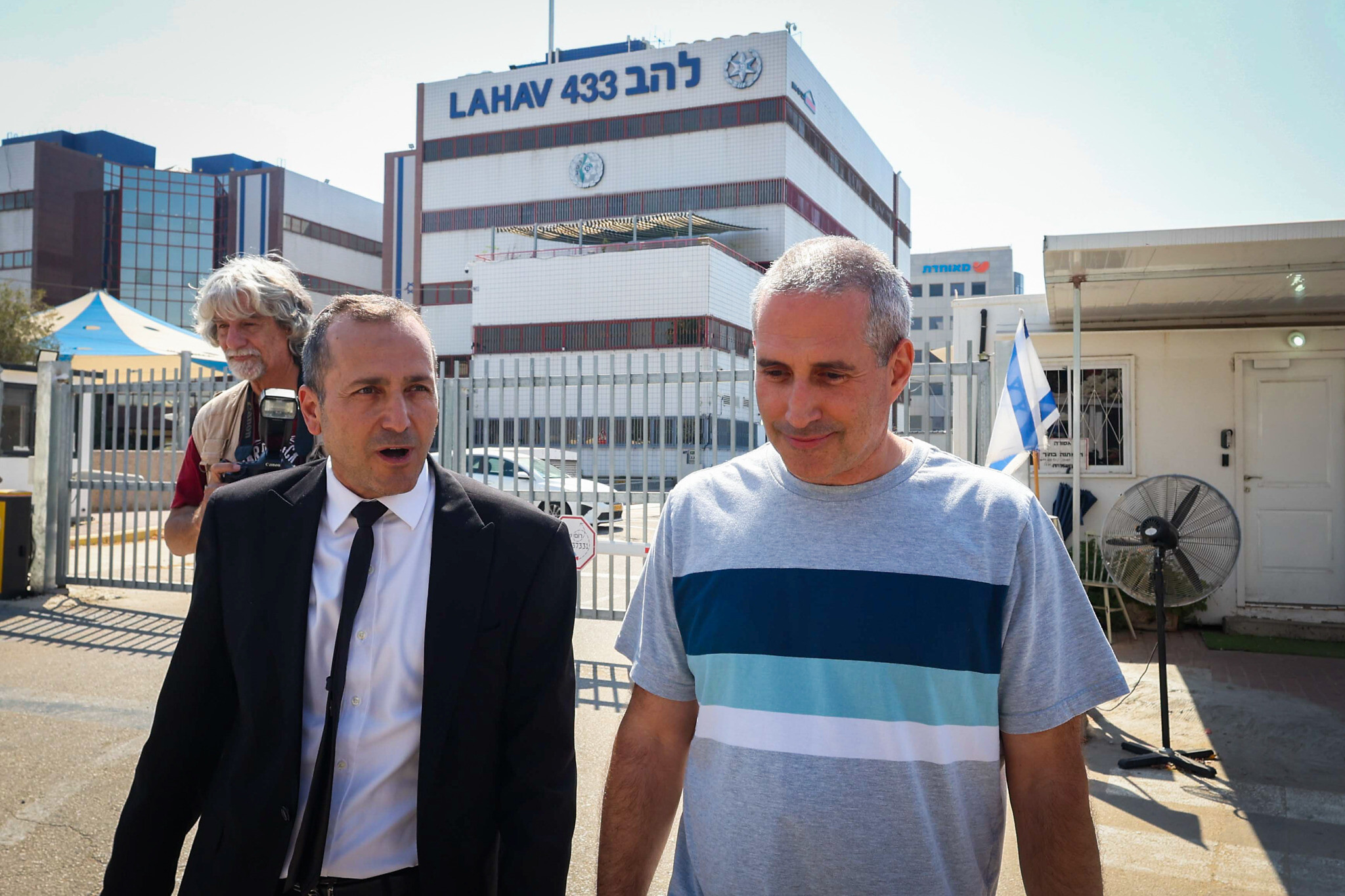
Likud MK Hanoch Milwidsky (right) is seen leaving the Lahav 433 police unit headquarters in Lod on July 25, 2025 alongside his attorney. (Roy Alima/Flash90)
Investigators questioned Likud lawmaker Hanoch Milwidsky earlier today on suspicion of bribing a witness to lie in court regarding sexual assault allegations against the leader of a religious group he has deep ties to, Channel 12 news reports. He is also suspected of forcing himself on her after she gave her false testimony.
Milwidsky served as the legal counsel for Michael Laitman, the leader of the the New Age “Bnei Baruch” association, when Laitman was accused in 2019 of sexual assault by a former member of the group. The ex-member accused Laitman of raping the witness in question, who had since repatriated to Russia.
Police suspect that Milwidsky played a key role in Laitman’s subsequent cover-up attempt, in which the two allegedly bribed the witness to fly back to Israel to reject the allegations that Laitman had raped her.
According to Channel 12, the witness confirmed to police investigators who flew to meet her in Moscow last year that Milwidsky bribed her to commit perjury. She further told police that he sexually assaulted her in her hotel room immediately after she gave her false testimony. The lawmaker has denied all allegations.
This morning, police announced that they had summoned a sitting MK for questioning under caution, without naming Milwidsky explicitly. Officers also detained two others on suspicion of obstructing justice as part of the same investigation. The Likud MK has faced other accusations of sexual assault in the past.
Trump: Hamas didn’t want to make a ceasefire deal, its leaders will be ‘hunted down’

US President Donald Trump speaks with reporters before departing on Marine One from the South Lawn of the White House, July 25, 2025, in Washington. (AP/Alex Brandon)
US President Donald Trump asserts that the Hamas terror group “didn’t want to make a deal” on a ceasefire and hostage release in Gaza.
Speaking to reporters in Washington before departing for a trip to Scotland, Trump says that with only a small number of hostages remaining, Hamas “doesn’t have any bargaining chips” left to negotiate.
“Now we’re down to the final hostages, and they know what happens after you get the final hostages. And basically because of that, they really didn’t want to make a deal,” he says.
He adds that he believes that now the group’s leaders are “going to be hunted down.”
Asked about French President Emmanuel Macron’s announcement that he would recognize a Palestinian state, Trump says that the move “doesn’t carry weight,” but calls Macron “a good guy.”
Trump made the comments a day after his Middle East peace envoy, Steve Witkoff, said the Trump administration had decided to bring its negotiating team home for consultations following Hamas’s latest proposal.
Israeli Air Force helped battle blaze in Cyprus yesterday, says military

Smoke fills the air as a forest fire rages near the Cypriot village of Omodos, in the Limassol province, on July 24, 2025. (Etienne TORBEY / AFP)
Two Israeli Air Force C-130J Super Hercules heavy transport planes dropped over 35 tons of fire retardant material over wildfires raging in Cyprus yesterday, the military says.
The effort was conducted by the IAF’s 103rd Squadron, in cooperation with Israel’s Fire and Rescue Services.
Cypriot authorities said this afternoon that they had successfully contained the wildfire, which claimed two lives and destroyed scores of homes.
An IAF C-130J Super Hercules heavy transport plane is seen dropping fire retardant material over wildfires raging in Cyprus, July 24, 2025. (Israel Defense Forces)
Sources deny Gaza ceasefire talks are slated to resume next week

Demonstrators take part in a rally calling for a deal to end the war and free all the hostages, in Tel Aviv, July 24, 2025. (Avshalom Sassoni/Flash90)
A source involved in the mediation effort and an Arab diplomat deny that hostage negotiations have been scheduled to resume next week after the US and Israel pulled their negotiating teams from Doha due to frustration with Hamas’s latest response.
Egyptian media reported earlier today that talks would still pick back up next week, and Hamas official Bassem Naim told reporters the same.
But the two sources involved in mediation efforts say nothing has been scheduled yet and that Egypt and Qatar are still waiting for directions from US special envoy to the Mideast Steve Witkoff.
France’s top court annuls arrest warrant against Syria’s Assad
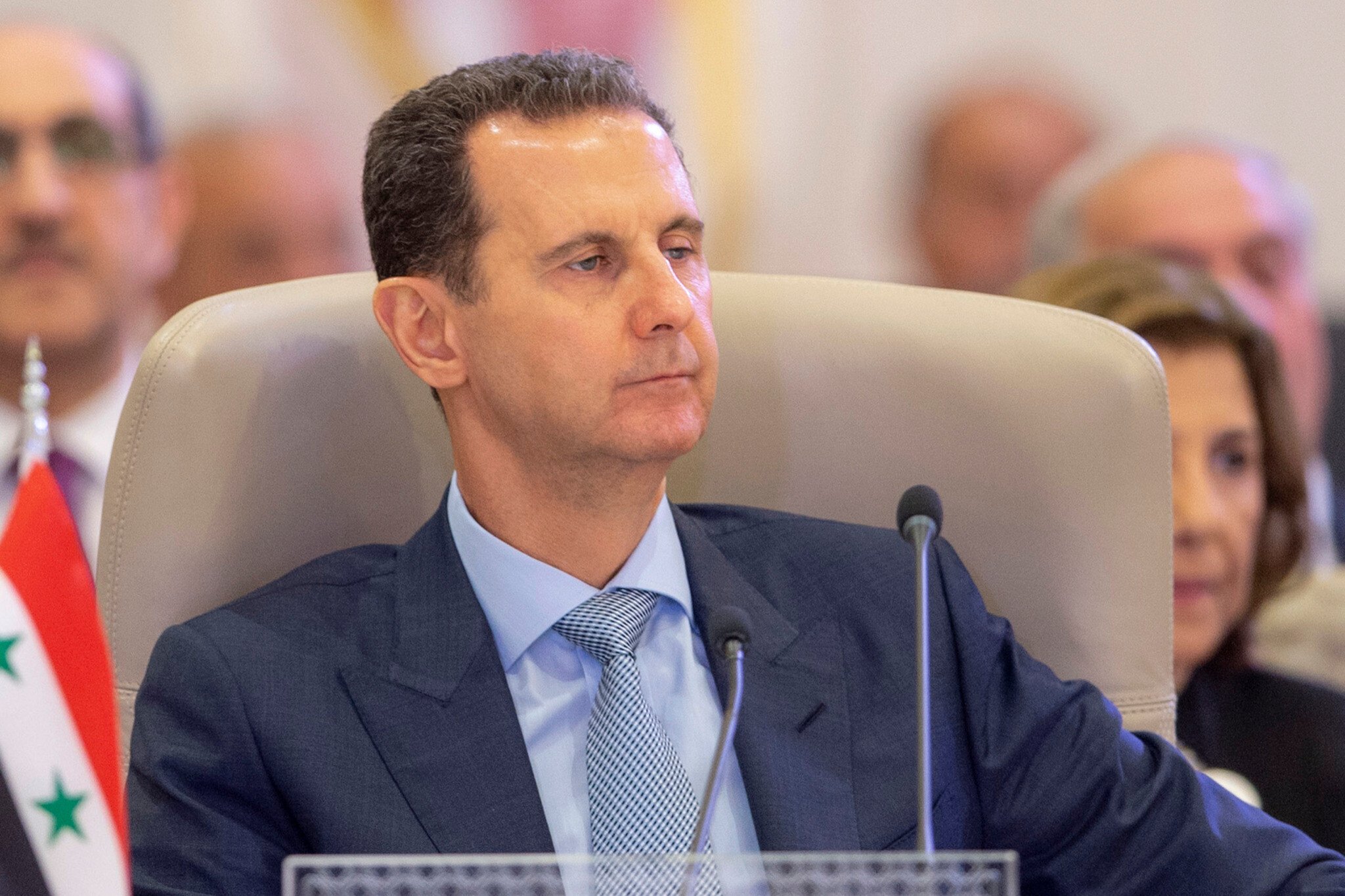
Syrian President Bashar Assad, during the Arab summit in Jeddah, Saudi Arabia, May 19, 2023. (Saudi Press Agency via AP)
France’s highest court annuls a French arrest warrant against Syria’s ex-president Bashar al-Assad over deadly 2013 chemical attacks issued before his ouster.
The Court of Cassation rules there are no exceptions to presidential immunity, even for alleged war crimes and crimes against humanity.
But its presiding judge, Christophe Soulard, adds that, as Assad is now no longer president after an Islamist-led group toppled him in December, “new arrest warrants can have been, or can be, issued against him” and as such the investigation into the case could continue.
Syria, US and France issue joint statement on ‘productive’ talks over ‘critical moment’
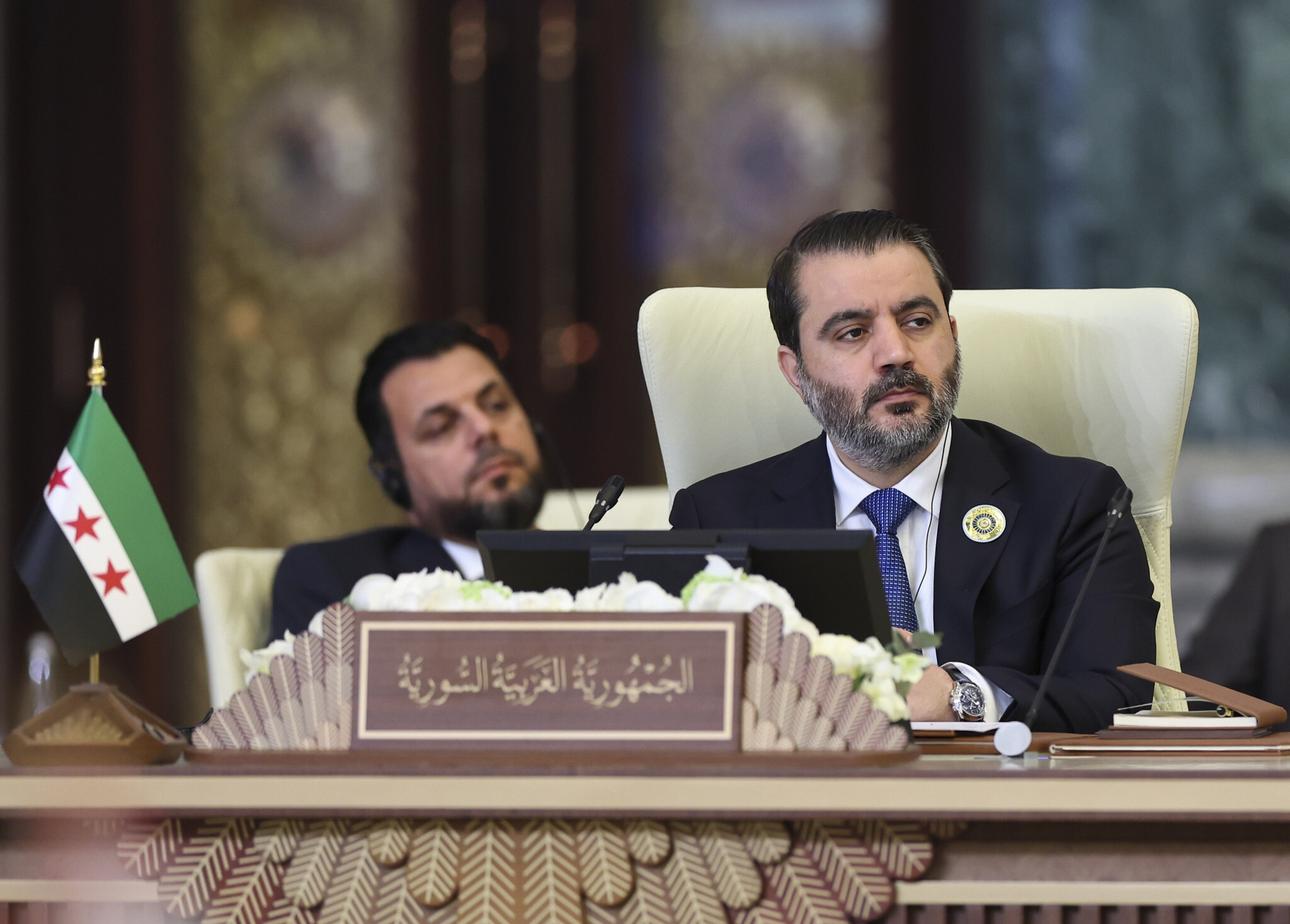
Syrian Foreign Minister Asaad al-Shaibani attends the 34th Arab League summit, in Baghdad, Iraq, May 17, 2025. (Thaier Al-Sudani/Pool via AP)
Syria’s foreign minister held frank and productive talks with the United States and France at which they — in a joint statement released today — say underline the importance of ensuring the success of Syria’s political transition, unity and territorial integrity.
Syrian Foreign Minister Asaad Al-Shibani, French Foreign Minister Jean Noel Barrot and US Special Envoy for Syria Thomas Barrack met in Paris, days after a ceasefire halted bloodshed in Syria’s southern province of Sweida.
In a joint statement, the Syrian, US and French officials say they had held “a very frank and productive meeting at a critical moment for Syria.”
Underlining the importance of engaging quickly to ensure the success of Syria’s political transition following the fall of President Bashar al-Assad, they say they agreed on the need to ensure Syria’s neighbors do not pose a threat and that Syria does not pose a threat to its neighbors.
They also agreed to support efforts to hold those responsible for violence accountable, the statement says.
Police confirm Likud MK being investigated on sexual offenses
Likud MK Hanoch Milwidsky (right) is seen leaving the Lahav 433 police unit headquarters in Lod on July 25, 2025 alongside his attorney. (Roy Alima/Flash90)
Police confirm in a statement that they are investigating a sitting Knesset member on suspicion of sexual offenses, as part of an ongoing probe into Likud MK Hanoch Milwidsky.
The statement does not refer to Milwidsky by name; however, the politician himself announced that he was questioned by police this morning, accusing law enforcement of persecuting right-wing politicians.
Investigators in the police’s Lahav 433 major crimes unit today brought Milwidsky in for questioning under caution, and detained two others on suspicion of obstructing justice. Police now announce that the two have been released under restrictive conditions.
The investigation is ongoing and will be transferred to the State Attorney’s Office for review once it concludes, police add.
Hamas dismisses renewal of aid airdrops: ‘Gaza does not need flying aerobatics’
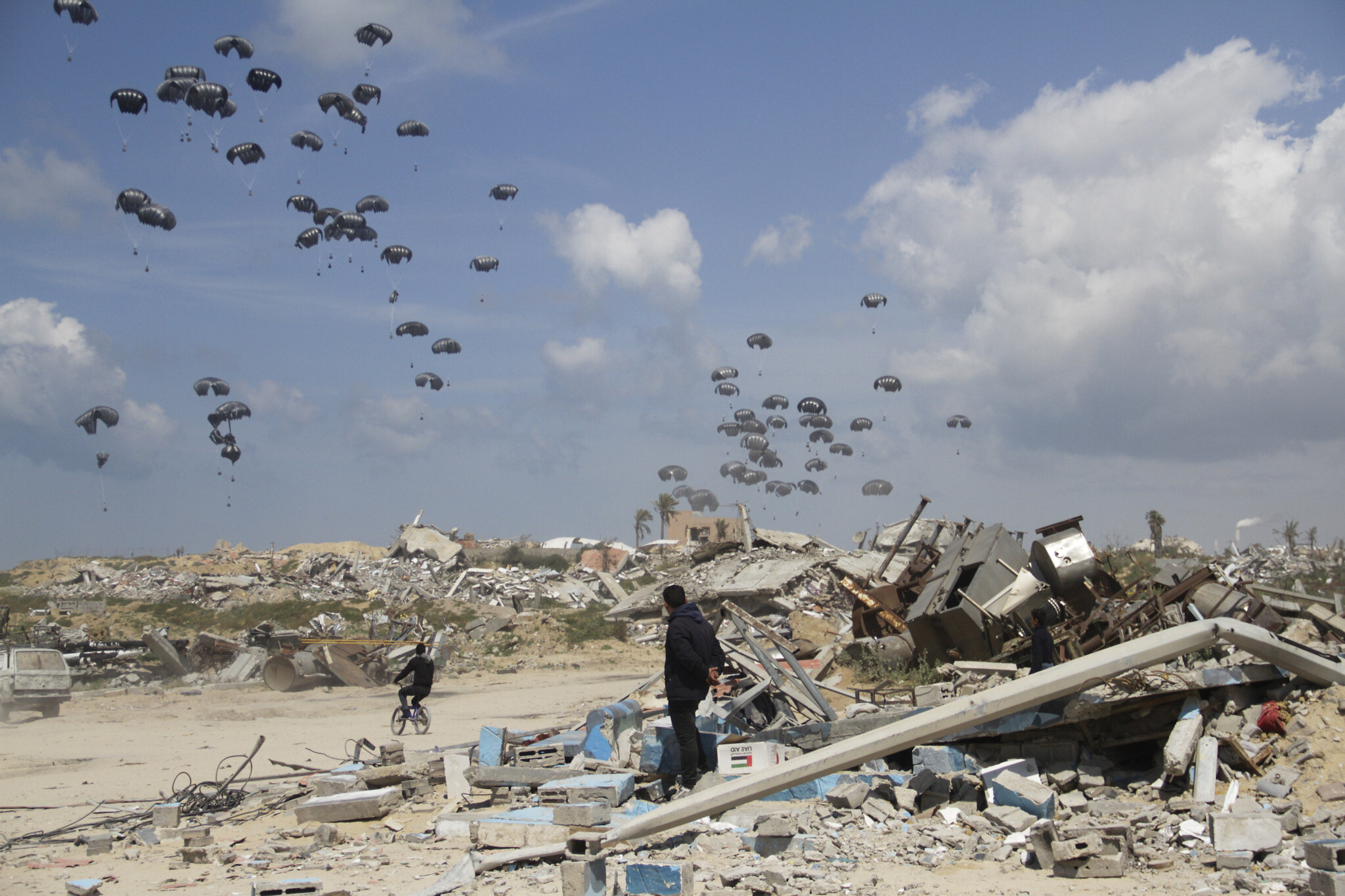
Humanitarian aid is airdropped to Palestinians over Gaza City, Gaza Strip, March 25, 2024. (AP Photo/Mahmoud Essa)
A Hamas official dismisses news about the resumption of airdrops of aid into Gaza, calling it a stunt that won’t help the starving population.
“The Gaza Strip does not need flying aerobatics, it needs an open humanitarian corridor and a steady daily flow of aid trucks to save what remains of the lives of besieged, starving civilians,” Ismail Al-Thawabta, the director of the Hamas-run Gaza government media office, tells Reuters.
The IDF said earlier today that it expected such deliveries, which took place a number of times last year, to resume soon.
Hezbollah commander killed in Israel airstrike in south Lebanon, says military
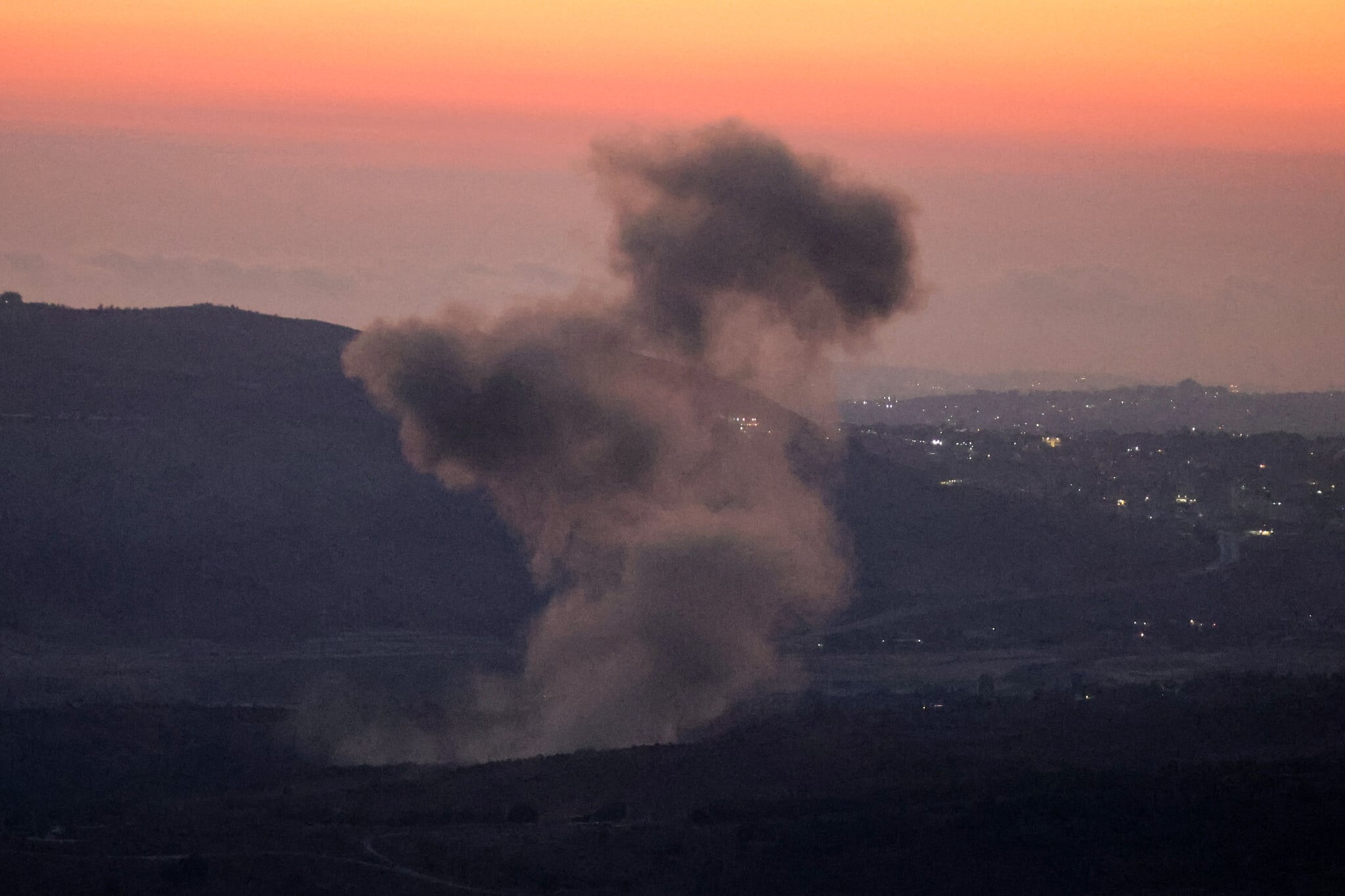
Smoke rises after an Israeli strike on the outskirts of the village of Dimashqiah in the southern Lebanese province of Jezzine on July 24, 2025. (Rabih DAHER / AFP)
A Hezbollah commander was killed in an Israeli airstrike in southern Lebanon’s Bint Jbeil earlier today, the IDF announces.
According to the IDF, Mohammad Hassan Qoutan served as chief of personnel for Hezbollah in the Bint Jbeil area and was involved in efforts to restore Hezbollah’s capabilities and recruit operatives to the terror group.
His actions “constitute a blatant violation of the understandings between Israel and Lebanon,” the IDF adds.
כלי טיס של חיל האוויר תקף וחיסל מוקדם יותר היום (ו'), בהכוונת אוגדה 91, את המחבל עלי מחמד חסן קוצאן, אחראי כוח האדם של גזרת בינת ג'בל בארגון הטרור חיזבאללה.
קוצאן עסק בניסיונות שיקום הארגון במרחב בינת ג'בל שבדרום לבנון ופעל לגיוס מחבלים במהלך המלחמה.
פעילותו של המחבל מהווה… pic.twitter.com/AifCbXReb9
— צבא ההגנה לישראל (@idfonline) July 25, 2025
‘It’s sort of disappointing’: Trump appears to accept being unable to free final hostages

US President Donald Trump waves as he boards Air Force One at Joint Base Andrews, Maryland, July 25, 2025, en route to Scotland. (AP/Jacquelyn Martin)
Asked by reporters at the White House if he had spoken to Prime Minister Benjamin Netanyahu about airdrops of aid into Gaza, US President Donald Trump says he has spoken to the Israeli premier but doesn’t specify when their last call was.
“I speak to him, but I can’t tell you what I speak to him about,” Trump says before lamenting the state of the hostage talks.
“I told you when you get down to those last 20 hostages… It’s going to be very hard for Hamas to make a deal because they lose their shield, they lose their cover. We got a lot of them out,” he says, almost appearing to accept that no other hostages will be released.
“It’s sort of disappointing,” he says.
Israel said earlier today it would soon allow the resumption of airdrops of humanitarian aid into Gaza, which were expected to be from Jordan and the UAE.
Trump also claims that the US donated $60 billion for Gaza humanitarian aid.
He appears to be referring to the $30 million that the US has allocated to the Gaza Humanitarian Foundation.
“We hope the money gets there because that money gets taken, the food gets taken,” Trump says, adding that the US will still give more money. He claims that the majority of aid for Gaza comes from the US and that “no other country other than us gives anything.”
As of early this year, the UAE was behind nearly half of the aid going into Gaza, while the US support was closer to one-third, according to UN figures.
UN chief Guterres blasts ‘lack of compassion’ for Palestinians in Gaza
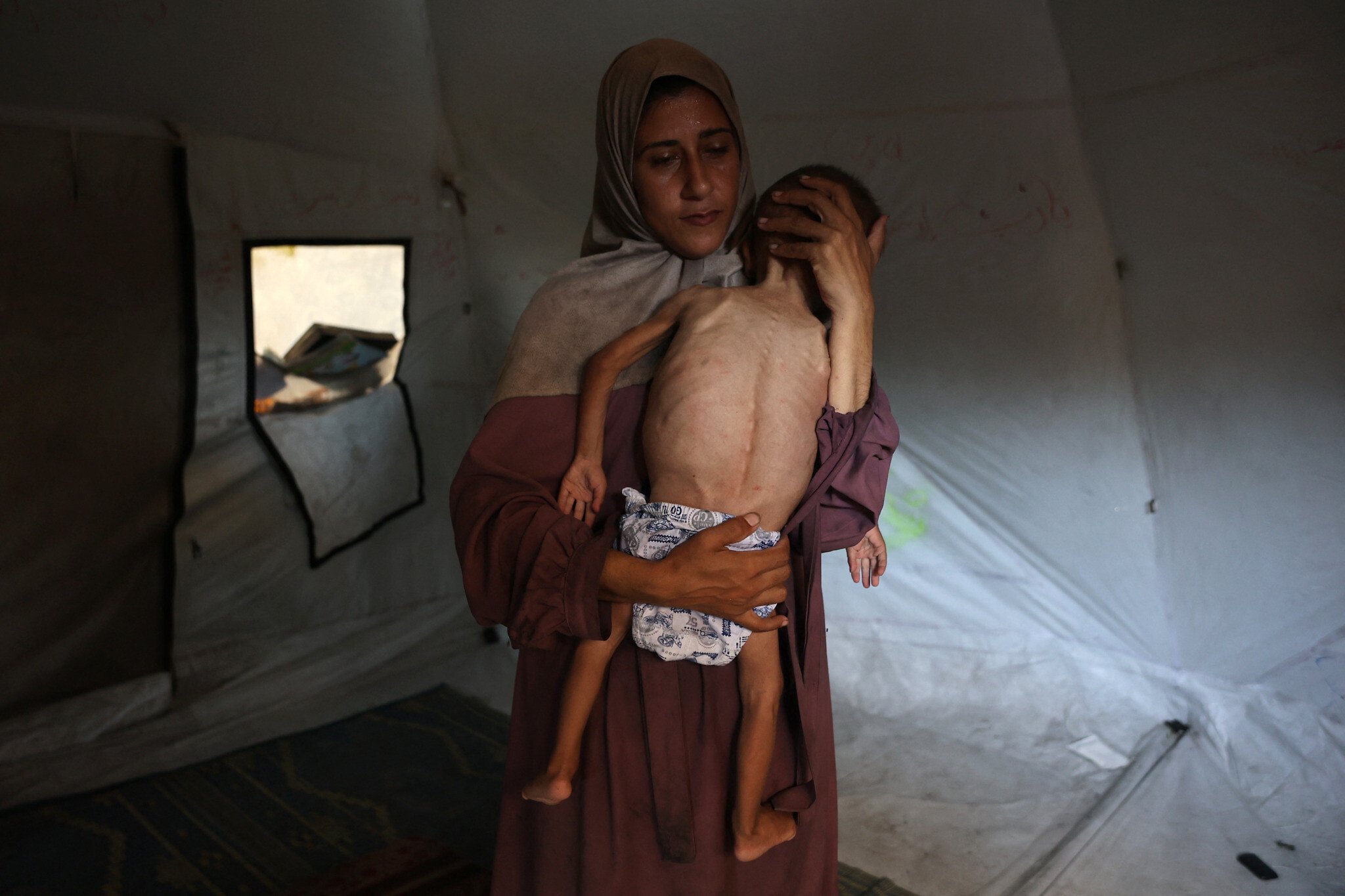
Hidaya, a 31-year-old Palestinian mother, cradles her sick 18-month-old son Mohammed al-Mutawaq, who is also displaying signs of malnutrition, inside their tent at the Al-Shati refugee camp, west of Gaza City, on July 24, 2025. This caption was updated on July 30, 2025 to reflect new information about al-Mutawaq’s condition (Omar AL-QATTAA / AFP)
UN Secretary-General Antonio Guterres slams the international community for turning a blind eye to the suffering of Palestinians starving in the Gaza Strip, calling it a “moral crisis that challenges the global conscience.”
“I cannot explain the level of indifference and inaction we see by too many in the international community — the lack of compassion, the lack of truth, the lack of humanity,” Guterres tells Amnesty International’s global assembly via videolink.
“This is not just a humanitarian crisis. It is a moral crisis that challenges the global conscience. We will continue to speak out at every opportunity,” he adds.
Guterres says that while he has repeatedly condemned the October 7, 2023, attack by Hamas on southern Israel, which triggered the war in the Palestinian territory, “nothing can justify the explosion of death and destruction since.”
“The scale and scope are beyond anything we have seen in recent times,” he alleges.
IDF: Palestinian man attempts to carry out West Bank stabbing attack, is ‘neutralized’
A Palestinian armed with a knife attempted to carry out a stabbing attack near the southern West Bank settlement of Shim’a, the military says.
The IDF says troops deployed to the area opened fire on the suspect, “neutralizing him.” No other injuries were caused.
UN, MSF warn of soaring hunger in Gaza Strip; WCK: Hot meal service resumes in Deir al-Balah
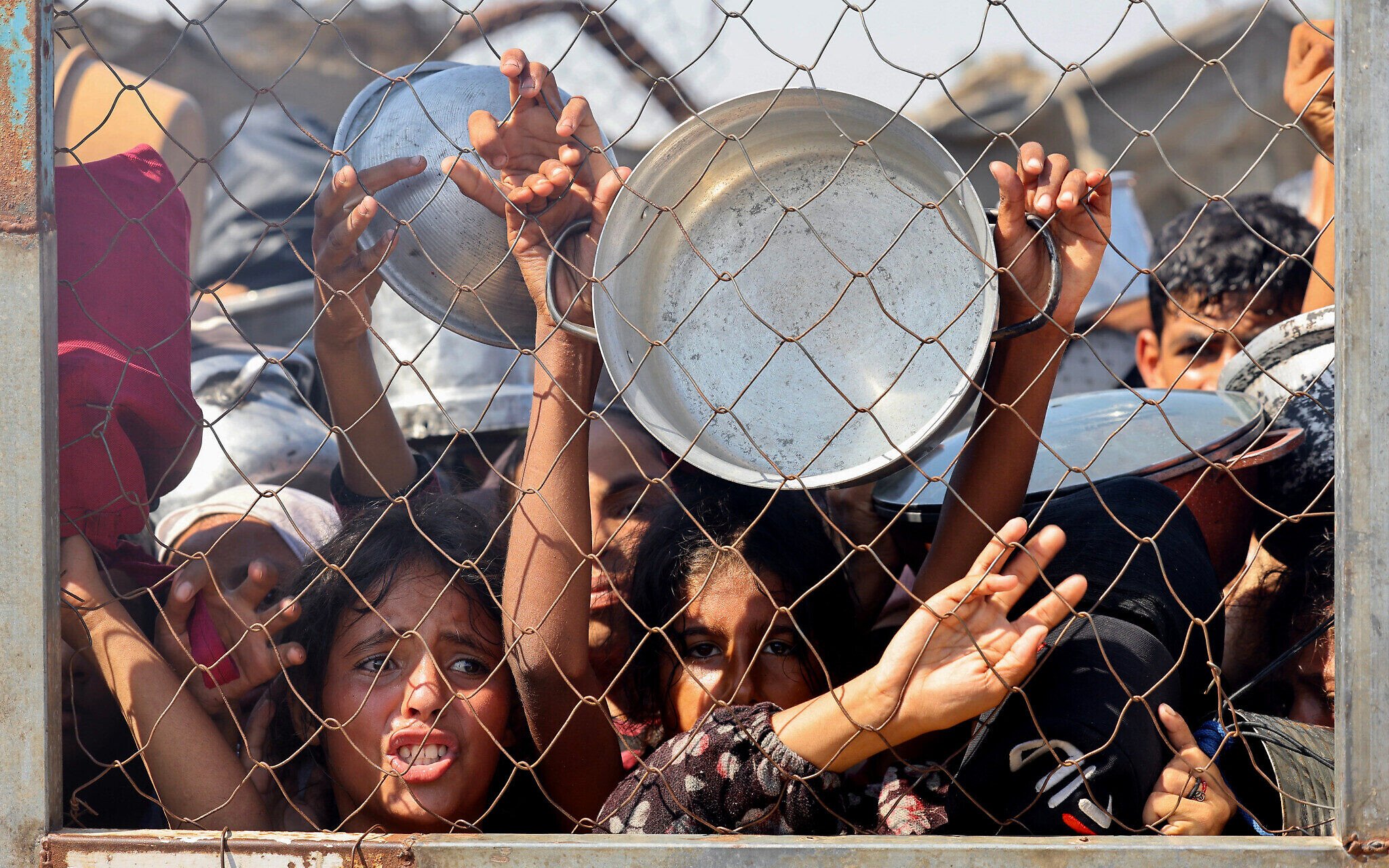
Palestinians, mostly children, push to receive a hot meal at a charity kitchen in the Mawasi area of Khan Younis in the southern Gaza Strip on July 22, 2025. (AFP)
Almost a third of people in Gaza are “not eating for days,” the United Nations food aid agency tells AFP, as medical non-profit Doctors Without Borders says a quarter of all young children or breastfeeding women screened at its clinics in the Strip last month were malnourished.
“Nearly one person in three is not eating for days. Malnutrition is surging with 90,000 women and children in urgent need of treatment,” a statement from the Rome-based World Food Programme says, describing the crisis as having reached “new and astonishing levels of desperation.”
It says 470,000 people are expected to face “catastrophic hunger” — the most critical category under the UN’s Integrated Food Security Phase classification — between May and September this year.
“Food aid is the only way for people to access any food as food prices are through the roof,” the WFP says. “People are dying from a lack of humanitarian assistance.”
Doctors Without Borders, known by its French initials MSF, accuses Israel of “deliberate use of starvation as a weapon in Gaza, [which] has reached unprecedented levels, with patients and healthcare workers themselves now fighting to survive.”
“Across screenings of children aged six months to five years old and pregnant and breastfeeding women at MSF facilities last week, 25 percent were malnourished,” says MSF.
Israel’s Coordinator of Government Activities in the Territories said earlier today that “there is no famine in the Gaza Strip,” but acknowledges that “there are issues of access to food.” Israel has accused Hamas of hijacking aid deliveries.
Meanwhile, the World Central Kitchen non-profit says on X that it has “resumed limited hot meal service” at its field kitchen in the central Gaza Strip’s Deir al-Balah following a “five-day halt due to a lack of supplies.”
Eisenkot calls Gantz’s National Unity a ‘failure’ days after bolting party
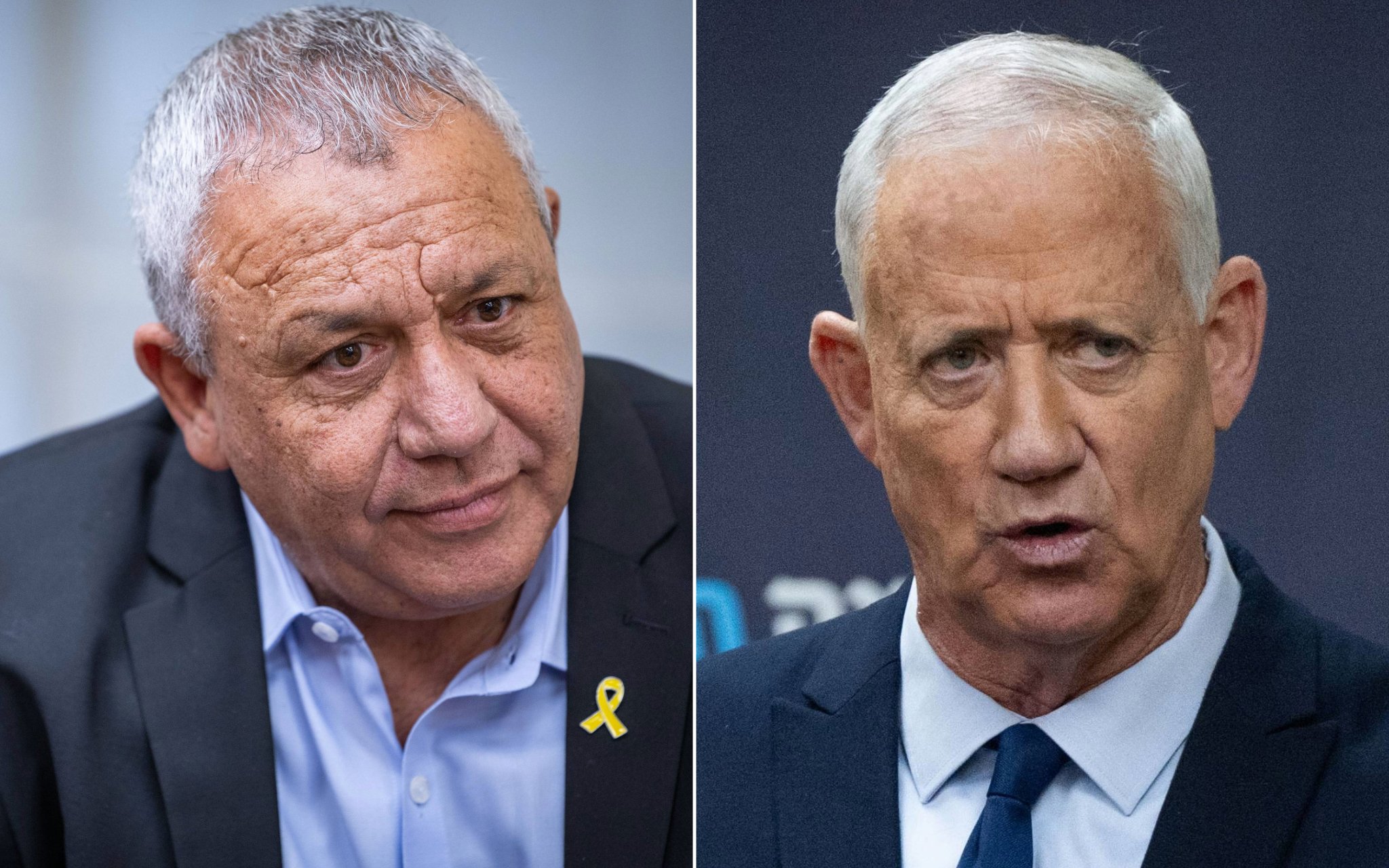
L: MK Gadi Eisenkot attends a National Unity faction meeting at the Knesset in Jerusalem, on May 26, 2025. (Noam Revkin Fenton/Flash90); R: National Unity Party Leader MK Benny Gantz leads a faction meeting at the Knesset in Jerusalem, on May 5, 2025. (Yonatan Sindel/Flash90)
Former IDF Chief of Staff Gadi Eisenkot says the opposition National Unity party, which he helped found, is a failure.
Eisenkot makes the comment in an interview with Yediot Ahronoth published Friday, days after he formally left the party led by his predecessor as IDF chief, Benny Gantz.
“In hindsight, the idea was excellent, but the execution was a failure. I take one-third of the blame for that,” says Eisenkot, adding that he shares responsibility alongside Gantz and Foreign Minister Gideon Sa’ar, whose New Hope faction left the National Unity alliance last year and joined the government months later.
Eisenkot, who was No. 2 in Gantz’s centrist Blue and White faction, recently quit both the faction and Knesset, stating that while he and Gantz worked together for many years and still respect each other, their differences eventually drove them apart politically.
“Of course, I support unity and solidarity, but I also support making decisions and taking a stance,” says Eisenkot, pointing to what he describes as a lack of willingness to build democratic institutions within the party and to establish primaries.
“When I saw the party wasn’t aiming to be a real governing alternative to replace Netanyahu… I thought that was a mistake,” he says.
IDF: Palestinian suspect ‘neutralized’ after hurling stone, charging settlement with knife
A Palestinian suspect armed with a knife was shot by a security guard at the entrance to the southern West Bank settlement of Migdal Oz a short while ago, the military says.
According to the IDF, the suspect hurled a stone at the entrance to the settlement before running toward it while brandishing a knife. The security guard opened fire on the Palestinian, “neutralizing” him, the army adds. No other injuries were caused.
Egypt and Qatar say US, Israeli negotiators recalled ‘before resuming dialogue’
Egypt and Qatar issue a joint statement asserting that they are continuing their mediation efforts after the US and Israel withdrew their negotiators from Doha over frustration with Hamas.
The two Arab countries insist that some progress had been made in the last round of negotiations. They say the US and Israel had merely recalled their negotiators “to hold consultations before resuming dialogue,” adding that the practice is “normal in the context of these complex negotiations.”
Egypt and Qatar add that they remain committed to securing a Gaza ceasefire and hostage release deal.
FM says Hamas thwarting talks, hints at retaliation over French Palestinian state recognition
In a phone call with his Canadian counterpart Anita Anand, Foreign Minister Gideon Sa’ar accuses Hamas of thwarting Gaza truce-hostage talks and appears to threaten retaliatory steps to France’s announcement yesterday that it will recognize Palestinian statehood, according to a readout from Israel’s foreign ministry.
“The diplomatic assaults on Israel in this sensitive period for negotiations encourage Hamas to harden its stances,” Sa’ar tells Anand, according to the readout.
Sa’ar writes on X that he told Anad that Israel said yes to the framework proposed by US special envoy Steve Witkoff while “Hamas stubbornly hardened its position.”
There was no immediate Canadian official statement on the conversation.
Regarding the humanitarian crisis in Gaza, where the United Nations and aid groups have warned of soaring hunger, Sa’ar in the conversation with Anand accused the UN of “not fulfilling its commitments to bring aid into Gaza” and preferring instead to engage in the “de-legitimatization of Israel,” the Israeli readout says.
“I also said that unilateral steps by France and other countries will only push Israel to take steps of its own,” Sa’ar writes on X, without elaborating. “The French initiative harms the chances of achieving a hostage deal and ceasefire.”
According to the official readout, Sa’ar also accuses the Palestinian Authority of inciting against Israel in its education system and continuing to pay stipends to Palestinians detained by Israel and their families.
After French announcement, British PM says recognition of Palestinian state ‘must be part of a wider plan’
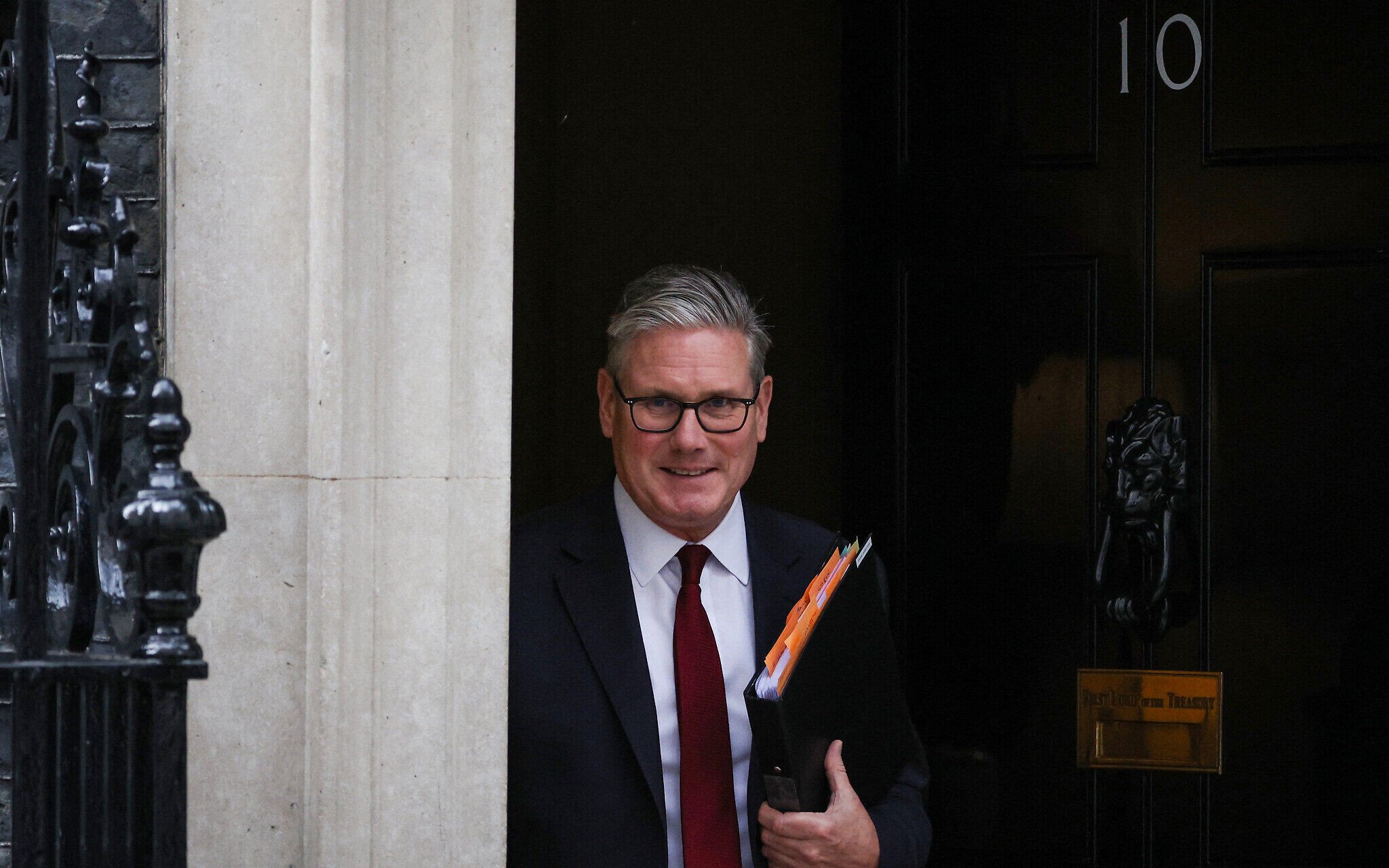
Britain's Prime Minister Keir Starmer leaves 10 Downing street, in central London, on July 21, 2025, to attend a Parliamentary Liaison Committee hearing. (Adrian DENNIS / AFP)
British Prime Minister Keir Starmer says recognizing Palestinian statehood should be part of a wider plan for lasting security for Palestinians and Israelis.
After France said Thursday that it would recognize Palestine, Starmer says he is working with allies on the steps needed to achieve peace.
“Recognition of a Palestinian state has to be one of those steps. I am unequivocal about that. But it must be part of a wider plan which ultimately results in a two-state solution and lasting security for Palestinians and Israelis,” he says in a statement after speaking with the leaders of France and Germany.
UK, France, Germany say Gaza ‘humanitarian catastrophe’ must end immediately
The leaders of Britain, France and Germany say the “humanitarian catastrophe” in Gaza “must end now” and that “the time has come” for Israel’s war against Hamas in the Strip to end.
“We call on the Israeli government to immediately lift restrictions on the flow of aid and urgently allow the UN and humanitarian NGOs to carry out their work in order to take action against starvation,” say British Prime Minister Keir Starmer, French President Emmanuel Macron and German Chancellor Friedrich Merz in a joint statement released by Berlin.
“The most basic needs of the civilian population, including access to water and food, must be met without any further delay,” they say. “Withholding essential humanitarian assistance to the civilian population is unacceptable.”
“Israel must uphold its obligations under international humanitarian law,” they add.
The European leaders also stress that “the time has come to end the war in Gaza.”
“We urge all parties to bring an end to the conflict by reaching an immediate ceasefire,” they add. “We stand ready to take further action to support an immediate ceasefire and a political process that leads to lasting security and peace for Israelis, Palestinians and the entire region.”
Senior academic, lawyer said interrogated for involvement in Likud MK’s alleged witness tampering
Likud MK Hanoch Milwidsky (right) is seen leaving the Lahav 433 police unit headquarters in Lod on July 25, 2025 alongside his attorney. (Roy Alima/Flash90)
A “very senior” academic and a prominent lawyer were interrogated under caution by the police’s Lahav 433 major crimes unit as part of the investigation of Likud lawmaker Hanoch Milwidsky for alleged sex offenses and witness tampering, Channel 12 reports.
According to the report, the two unnamed suspects, along with Milwidsky, are accused of involvement in efforts to tamper with the testimony of a woman who had made sexual assault allegations against Michael Leitman, head of the “Bnei Baruch — Kabbalah La’am” religious group, where Milwidsky served as legal adviser before being elected to the Knesset in 2022.
It is unclear from the report if the two unnamed suspects are part of the group, which has been accused of cult-like behavior and reportedly forms a large voting bloc within the Likud.
Citing a senior law enforcement official, Channel 12 says the group has been refusing to cooperate with the investigation and intimidating women who are thinking of talking to the police. Because of this, the report says, police have had difficulty gathering and questioning witnesses.
US officials said to cast withdrawal of negotiators from Doha as power play against Hamas
US officials told hostage families in a meeting in Washington Thursday night that the US and Israel recalled their negotiators from Doha to “make a muscle” after Hamas hardened its position in truce-hostage talks, Channel 12 reports.
The comment appears to contradict a joint statement by Egypt and Qatar earlier today that said talks were making progress and negotiators were recalled merely “to hold consultations before resuming dialogue.”
Reporting in Hebrew on the English-language conversation, Channel 12 quotes the unidentified officials as saying: “The decision to recall the delegations is part of the negotiations. We’re very close to a deal, but in the face of Hamas’s additional demands, we have to make a muscle back. Israel does not accept the demand about prisoners’ release, but obviously Hamas’s demand is an opening stance for the sake of the negotiations.”
The terror group is said to be upping the number of prisoners it demands Israel will release in exchange for the 50 remaining hostages.
Hostage families reportedly asked the officials if the deal on the table is still a partial deal, adding: “Why not promote a comprehensive deal?”
The officials responded that US President Donald Trump “is committed to bringing back all the hostages and ending the war,” according to Channel 12.
The network also reports that hostage families in Washington are meeting with US Secretary of State Marco Rubio.
Ballistic missile launched from Yemen, sirens expected within minutes — IDF
A ballistic missile has been launched from Yemen at Israel, the military says.
Sirens are expected to sound in the coming minutes.
Over 10,000 attend anti-war protest in northern Arab town under heavy police presence
Over 10,000 people protest against the war in Gaza in the northern Arab town of Sakhnin, Haaretz reports.
Footage posted to social media shows a heavy police presence, but no arrests are reported. The demonstration comes a day after 24 people were arrested at an anti-war protest in Haifa.
Sakhnin mayor Mazen Ghanaim says in a speech at the protest that, “We and our people in Gaza are one nation. We demand full equality and civil rights, not more war.”
Former lawmaker Mohammad Barakeh, who heads the High Follow-up Committee, an Arab community umbrella organization, says the demonstration is “here to send a clear message against genocide, ethnic cleansing and starvation.”
He assails the police build-up at the protest as seeking to intimidate protesters.
“Why would police deploy so many officers for a normal demonstration?” he asks. “You won’t intimidate us.”
Tens of thousands, Palestinians and Jews, marched together in Sakhnin against the war of annihilation and the deliberate starvation.
For an end to the war, for an end to the occupation and the achievement of peace, for the sake of life. pic.twitter.com/QH6yuIglFk
— איימן עודה أيمن عودة Ayman Odeh (@AyOdeh) July 25, 2025
He says the mob that attacked Arab lawmaker Ayman Odeh en route to an anti-war rally in Ness Ziona on Saturday “is, more than anything, similar to the Nazis and to white supremacist groups in the United States,” and accuses the government of “cultivating these mobs.”
On the heels of France’s decision to recognize Palestinian statehood, Barakeh also says: “We demand that the State of Palestine be declared a sovereign state under occupation.”
Arabic-language website Arab48 reports that dozens of people also attended smaller anti-war rallies in the central towns of Jaffa and Tira and the northern town of Kabul.
Sirens sound in southern West Bank and near Dead Sea following Yemen missile, IDF says working to down it
Sirens sound in the southern West Bank and near the Dead Sea following the launch of a ballistic missile from Yemen.
The IDF says it is working to shoot down the projectile.
Houthi missile shot down after triggering sirens, says IDF; no reports of impacts or injuries
A ballistic missile launched by the Iran-backed Houthis in Yemen at Israel a short while ago was intercepted by air defenses, the military says.
There are no immediate reports of impacts or injuries. Sirens had sounded in several settlements in the southern West Bank and communities near the Dead Sea in southern Israel.
Since March 18, when the IDF resumed its offensive against Hamas in the Gaza Strip, the Houthis in Yemen have launched 65 ballistic missiles and at least 17 drones at Israel. Several of the missiles have fallen short.
Hostage families meet with Rubio in DC: ‘This is a critical moment’
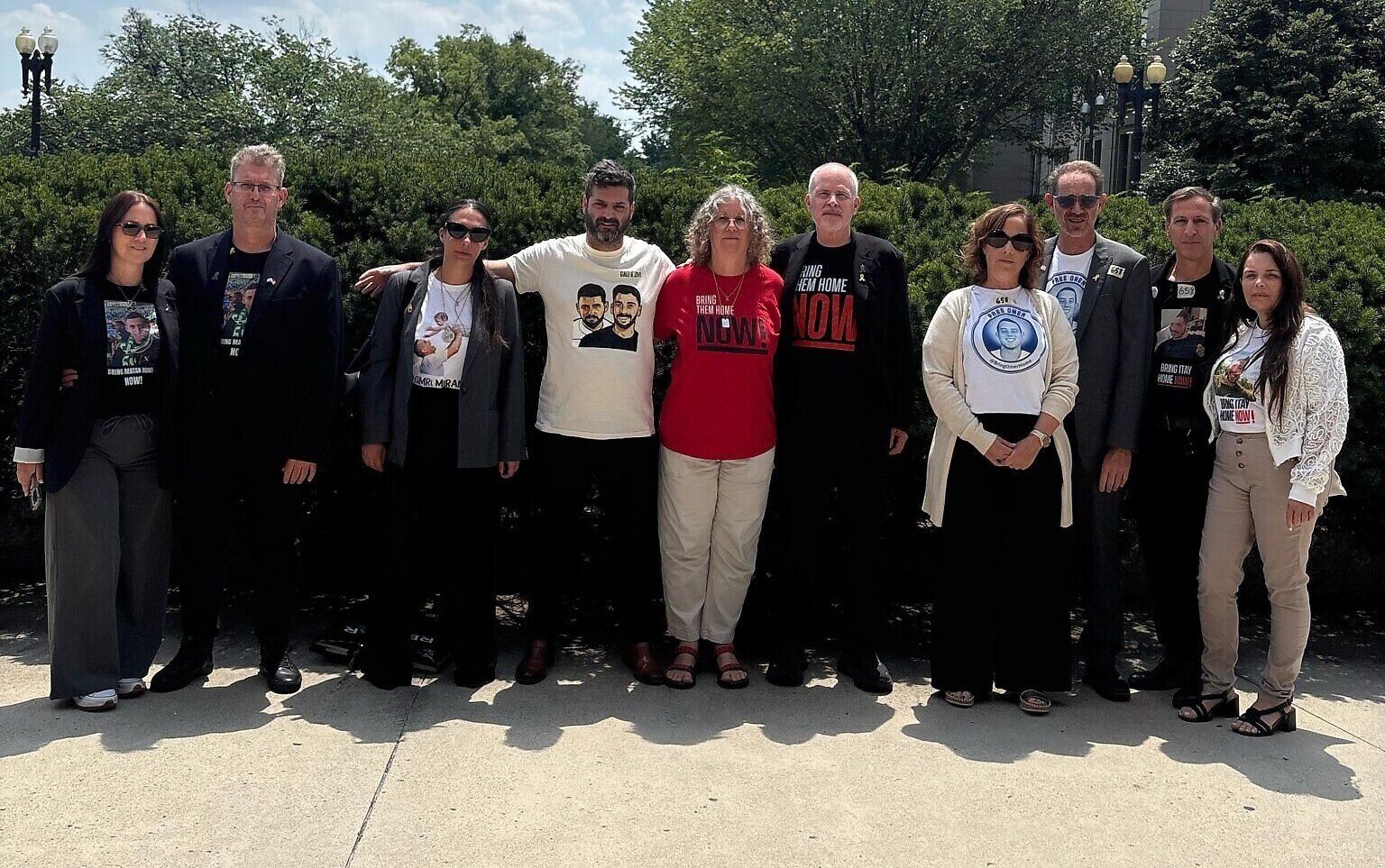
Captivity survivors and relatives of hostages pose for a photo in Washington, July 25, 2025. (Hostages and Missing Families Forum)
Captivity survivors and hostage families met with US Secretary of State Marco Rubio in Washington today, the Hostages and Missing Families Forum says, a day after the US and Israel withdrew negotiators from Gaza ceasefire-hostage talks in Doha.
Participants included Hamas captivity survivors Keith and Aviva Siegel; Lishay Miran-Lavi, wife of hostage Omri Miran; Liran Berman, older brother of twin-brother hostages Gali and Ziv Berman; Anat and Hagai Angrest, parents of captive soldier Matan Angrest; Ronen and Orna Neutra, parents of slain captive soldier Omer Neutra; and Ruby and Hagit Chen, parents of slain captive soldier Itay Chen.
The Forum quotes Rubio as telling the hostage families: “I reaffirm my unwavering commitment — 100% — to achieving a hostage deal that brings every hostage home and ends the fighting.”
In a statement, the hostage families thank Rubio for meeting with them and his “unwavering commitment” to the captives.
“We trust that President Trump and his administration will do everything in their power to ensure this deal does not collapse and that this pressing opportunity is not lost,” say the families. “We believe the President and his team are fully committed to securing an agreement that brings all the hostages home.”
“In such a sensitive and decisive moment, we feel compelled to remind all parties of the cost of failure: the tragedy of August 2024, when six hostages were brutally murdered after negotiations collapsed. That devastating loss must never be repeated,” say the families. “This is a critical moment. The deal must be finalized and it must bring every single one of them home.”
UN aid chief demands Israel provide evidence of allegation that staffers are affiliated with Hamas
United Nations aid chief Tom Fletcher demands Israel provide evidence for its accusations that staffers with the UN Office for the Coordination of Humanitarian Affairs are affiliated with Hamas, according to a letter seen by Reuters on Friday.
In a letter sent to the UN Security Council on Thursday, Fletcher says the remarks by Israel’s ambassador to the UN Danny Danon were the first time any such concern had been raised.
The accusations were “extremely serious and have security implications for our staff,” says Fletcher in the letter. “I expect the Israeli authorities to immediately share any evidence that led them to make such claims to the council.”
He says OCHA engages with all parties to armed conflict to secure humanitarian access, press for the protection of civilians and promote respect for humanitarian principles, adding: “As Israeli authorities know, our contacts with Hamas have also supported hostage releases.”
Danon declared at a UN Security Council meeting on Wednesday that Fletcher and OCHA were no longer neutral and that hundreds of OCHA employees would undergo security vetting. Israel would also restrict OCHA visas to one month, he said.
“Israel has uncovered clear evidence of Hamas affiliation within OCHA’s ranks,” Danon told the 15-member council, without providing evidence.
Israel in January cut ties with UNRWA, the United Nations agency for Palestinian refugees, over its ties to terror groups, including Hamas.
UN chief: Gaza hunger a ‘moral crisis,’ aid deliveries set to be scaled up in case of truce
United Nations Secretary-General Antonio Guterres calls the widespread hunger in Gaza a “moral crisis” and says the UN is ready to scale up aid in the event of a ceasefire.
“Gaza is more than a humanitarian crisis — it is a moral crisis that challenges the global conscience,” writes Guterres on X. “We will continue to speak out. But words don’t feed hungry children.”
“The UN stands ready to make the most of a ceasefire to dramatically scale up humanitarian operations,” he adds.
Footage shows soldiers accompanying settlers as they take livestock from W. Bank Palestinian village
Two videos posted to social media appear to show soldiers accompanying settlers as they allegedly steal livestock from Palestinians in the southern West Bank area of Masafer Yatta.
Neither video could be immediately verified, and it was unclear if they captured the same incident. The IDF did not immediately comment.
In one video, three settlers can be seen entering a barn followed by three armed soldiers, two of them masked. A loud bang, followed by screaming, is heard as the six disappear from view. The soldiers and settlers then go back outside, with each of the settlers dragging a goat behind him.
In the second video, three soldiers — again, two masked and one unmasked — can be seen jostling two people, including a man whom the unmasked soldier briefly puts in a chokehold, as other Palestinians look on. The camera then cuts to a car surrounded by at least six soldiers. Three settlers can be seen pushing the three goats into the car.
In a final scene, a settler flashes a victory sign to the camera as he drives past with a goat in the passenger’s seat and two other goats in the backseat. A soldier looks on as the car goes by.
????⚡️مستوطـنون يسرقون مواشي المواطنين بحماية جنود الاحتـلال، خلال هجومهم على قرية التوانة في مسافر يطا جنوبي الخليل.#ديوان #فلسطين_قضية_الشرفاء pic.twitter.com/GWGQlguCEP
— ديوان (@DiwanDaily) July 25, 2025
TODAY: Armed Israeli settlers + soldiers TERRORIZED Masafer Yatta today, storming homes in Al-Tuwani, STEALING sheep & attacking Palestinians. They beat activists & assaulted the Rabai family. No justice. No consequences. This is Israel's policy of ethnic cleansing in action. pic.twitter.com/NOlNfaEUUw
— Mohammad_Hesham_Huraini (@MHureini) July 25, 2025
Leading US Jewish groups turn down meeting with French FM over Palestine recognition
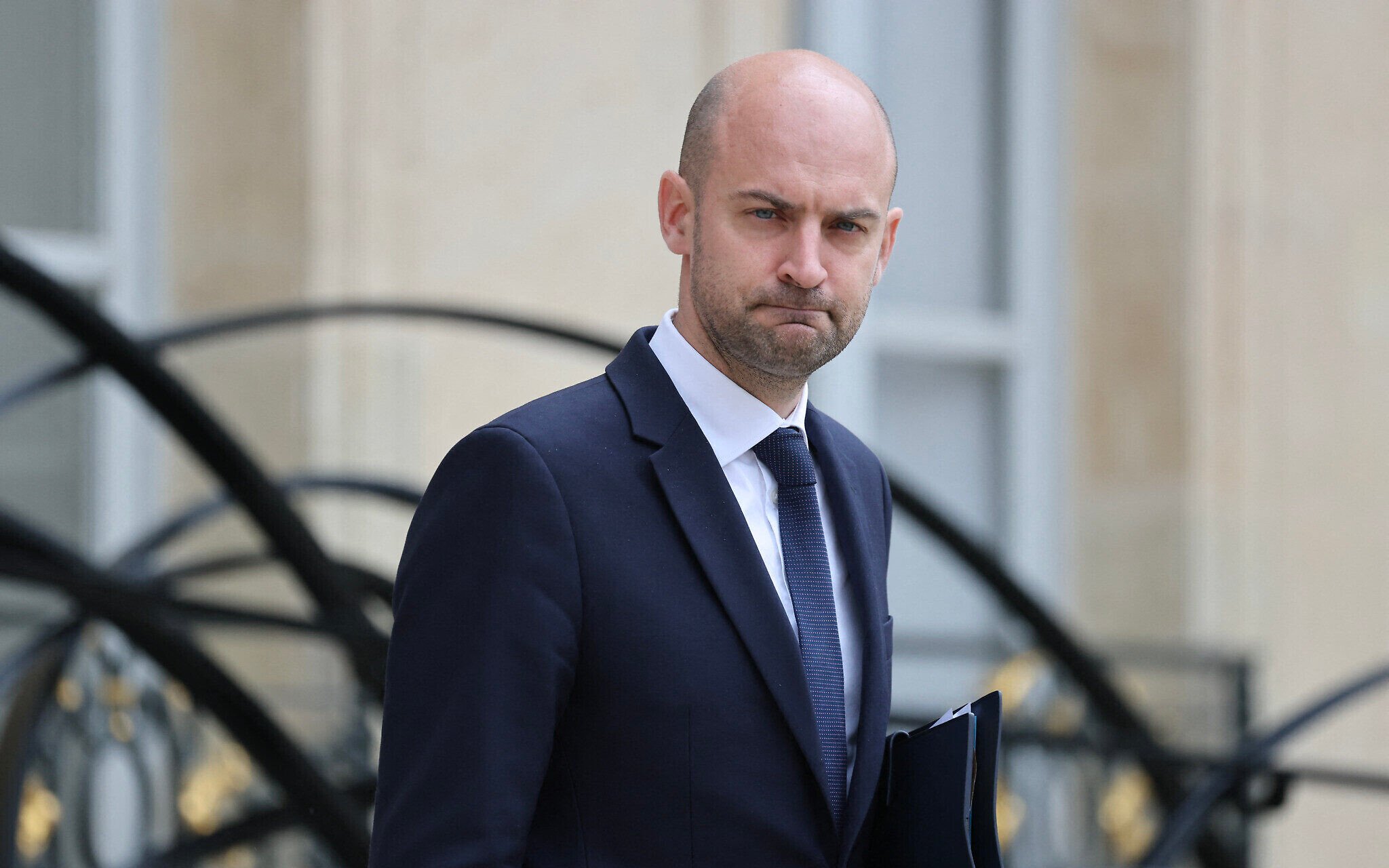
France's Minister for Europe and Foreign Affairs Jean-Noel Barrot leaves after the weekly cabinet meeting at the presidential Elysee Palace in Paris, France, July 16, 2025. (Ludovic Marin/AFP)
A coalition of leading US Jewish groups turn down an invitation to meet French Foreign Minister Jean-Noel Barrot following Paris’s announcement yesterday that it would recognize a Palestinian state in September.
In a joint statement, the Anti-Defamation League, American Jewish Committee, American Israeli Public Affairs Committee, B’nai B’rith International, Conference of Presidents of Major American Jewish Organizations, UJA-Federation of New York and World Jewish Congress say they are “deeply concerned that France’s approach undermines prospects for a mutually negotiated future for Israelis and Palestinians.”
The groups express disappointment that they “were invited to discuss a policy that appears to have already been finalized.”
They urge French President Emmanuel Macron to reconsider the decision, and commend the White House “for its clear and forceful opposition to the French proposal.”
“By taking such a unilateral step, France not only emboldens extremists, but risks the security of the Jewish people around the globe, along with alienating moderate voices and undermining the credibility of French diplomacy in the region,” the groups say.
They accuse Macron of having backtracked on “specific conditions” for recognizing Palestinian statehood, which the groups say he outlined three months ago. These conditions include “the release of hostages still held in Gaza and Hamas’s surrender,” the groups say. It is not immediately clear which statement by Macron they are referring to.
“None of these conditions have been met, contradicting the president’s prior commitments,” say the groups. “By abandoning these conditions, France rewards Hamas for its continued brutality and sends a dangerous message that legitimizes terrorism while dishonoring the victims of October 7, 2023.”
White House seeking fines from universities accused of antisemitism, including Harvard — official

Pro-Palestinian, anti-Israel protesters gather at Harvard University to show their support for Palestinians in Gaza at a rally in Cambridge, Massachusetts, on October 14, 2023. (Joseph Prezioso / AFP)
The White House is seeking fines from several universities it says failed to stop antisemitism on campus, including Harvard University, in exchange for restoring federal funding, a Trump administration official says.
The administration is in talks with several universities, including Cornell, Duke, Northwestern and Brown, the source says, confirming a report in The Wall Street Journal.
The official, speaking on condition of anonymity, says the administration is close to striking deals with Northwestern and Brown and potentially Cornell. A deal with Harvard is a key target for the White House, the official adds.
The universities have not immediately responded to requests for comment.
The Trump administration has welcomed the Columbia deal, with officials believing the university set the standard on how to reach an agreement, says the Trump administration official.
Columbia University, the epicenter of a wave of anti-Israel activity last year, amid the war in Gaza, said Wednesday that it would pay more than $200 million to the US government in a settlement to resolve federal probes and restore most of its suspended federal funding.
Harvard has taken a different approach, suing the federal government in a bid to get its suspended federal grants restored.
Trump says he was ‘never’ told his name was in Epstein files
US President Donald Trump denies he has ever been told that his name appeared in files related to the late sex offender Jeffrey Epstein.
“No, I was never — never briefed, no,” Trump tells reporters in Scotland after the Wall Street Journal reported that the attorney general told him in May about his name appearing multiple times.
Ukraine facing fierce fighting around eastern city of Pokrovsk, Zelensky says
Ukraine’s President Volodymyr Zelensky says Ukrainian forces are facing fierce fighting around the city of Pokrovsk in the east, a logistics hub near which Russia has been announcing the capture of villages on an almost daily basis.
Zelensky, speaking in his nightly video address, says Ukraine’s top commander, Oleksandr Syrskyi, told a meeting of senior officials that the situation around Pokrovsk was the current focal point of its attention in the war, which began when Russia invaded in February 2022.
“All operational directions were covered, with particular focus on Pokrovsk. It receives the most attention,” Zelenskiy says.
Ukrainian forces, he says, are also “continuing to act” in border areas in the northern Sumy region, where Russian troops have gained a foothold in recent weeks.
Syrskyi, in a separate report on the Telegram messaging app, described Pokrovsk and five other sectors as among the most difficult theaters along the 1,000-km (620-mile) front.
“The Russian Federation is paying the maximum price for attempting a ‘summer offensive,'” Syrskyi wrote.
Russian forces have for months been trying to close in on Pokrovsk, a road and rail hub whose pre-war population of about 60,000 has been all but evacuated.
Cambodia calls for ceasefire with Thailand after deadly clashes
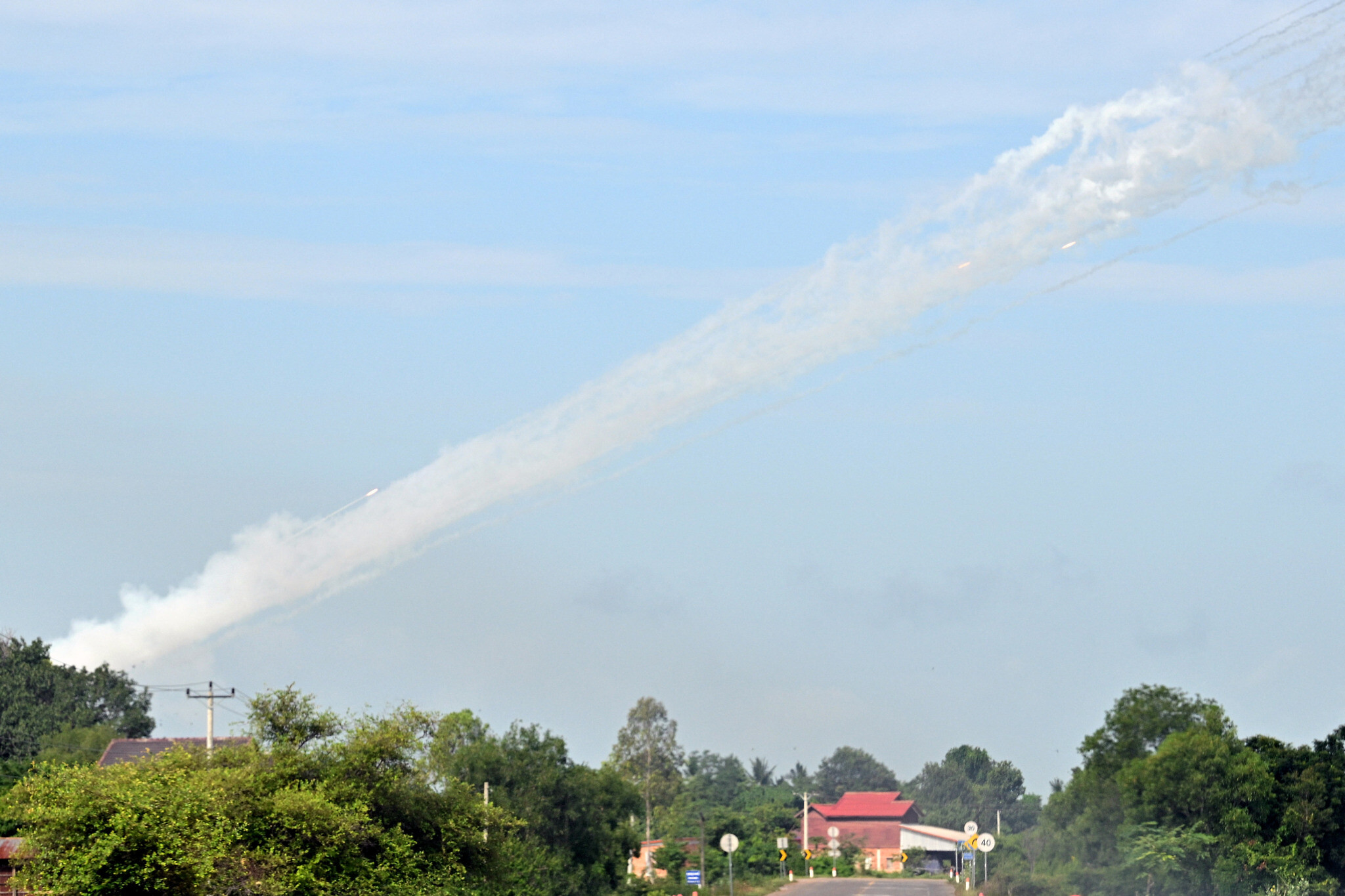
Smoke is pictured in the air as a multi-rocket launcher is fired near the Cambodia-Thailand border in Oddar Meanchey province on July 25, 2025 (TANG CHHIN Sothy / AFP)
Cambodia wants an “immediate ceasefire” with Thailand, the country’s envoy to the United Nations says, after the neighbors traded deadly strikes for a second day.
A long-running border dispute erupted into intense fighting with jets, artillery, tanks and ground troops on Thursday, prompting the Security Council to hold an emergency meeting on the crisis Friday.
“Cambodia asked for an immediate ceasefire — unconditionally — and we also call for the peaceful solution of the dispute,” says Cambodia’s ambassador Chhea Keo following a closed meeting of the Council attended by Cambodia and Thailand.
The envoy questions how Thailand, a regional military heavyweight, could accuse Cambodia, its smaller neighbor, of attacking it.
The Security Council “called for both parties to [show] maximum restraint and resort to a diplomatic solution. That is what we are calling for as well,” says Chhea Keo.
None of the other attendees spoke to reporters.
More than 138,000 people have been evacuated from Thailand’s border regions, its health ministry said, reporting 15 fatalities — 14 civilians and a soldier — with a further 46 wounded, including 15 troops. The fighting marks a dramatic escalation in a long-running dispute between the neighbors — both popular destinations for millions of foreign tourists — over their shared 800-kilometer (500-mile) border.
Rocket sirens activated near Gaza border in false alarm
Rocket sirens were activated in Nir Am near the Gaza border.
The military says the alert was a false alarm, and no rocket ws launched.
British PM said under pressure from cabinet, MPs to recognize Palestinian state

Britain's Prime Minister Keir Starmer inside 10 Downing Street, London on June 19, 2025. (Jordan Pettitt /Pool/ AFP)
The Guardian reports that British Prime Minister Keir Starmer is under pressure from a number of cabinet ministers as well as about a third of the members of parliament to recognize Palestinian statehood, in light of Israel’s conduct in the war in Gaza.
It says 221 MPs from nine parties have signed a letter calling for recognition.
Starmer said Friday such recognition should only come as part of a wider regional plan, after France announced it planned to recognize a Palestinian state in September.
International association of Conservative rabbis calls on Israel to ensure aid for Gazans
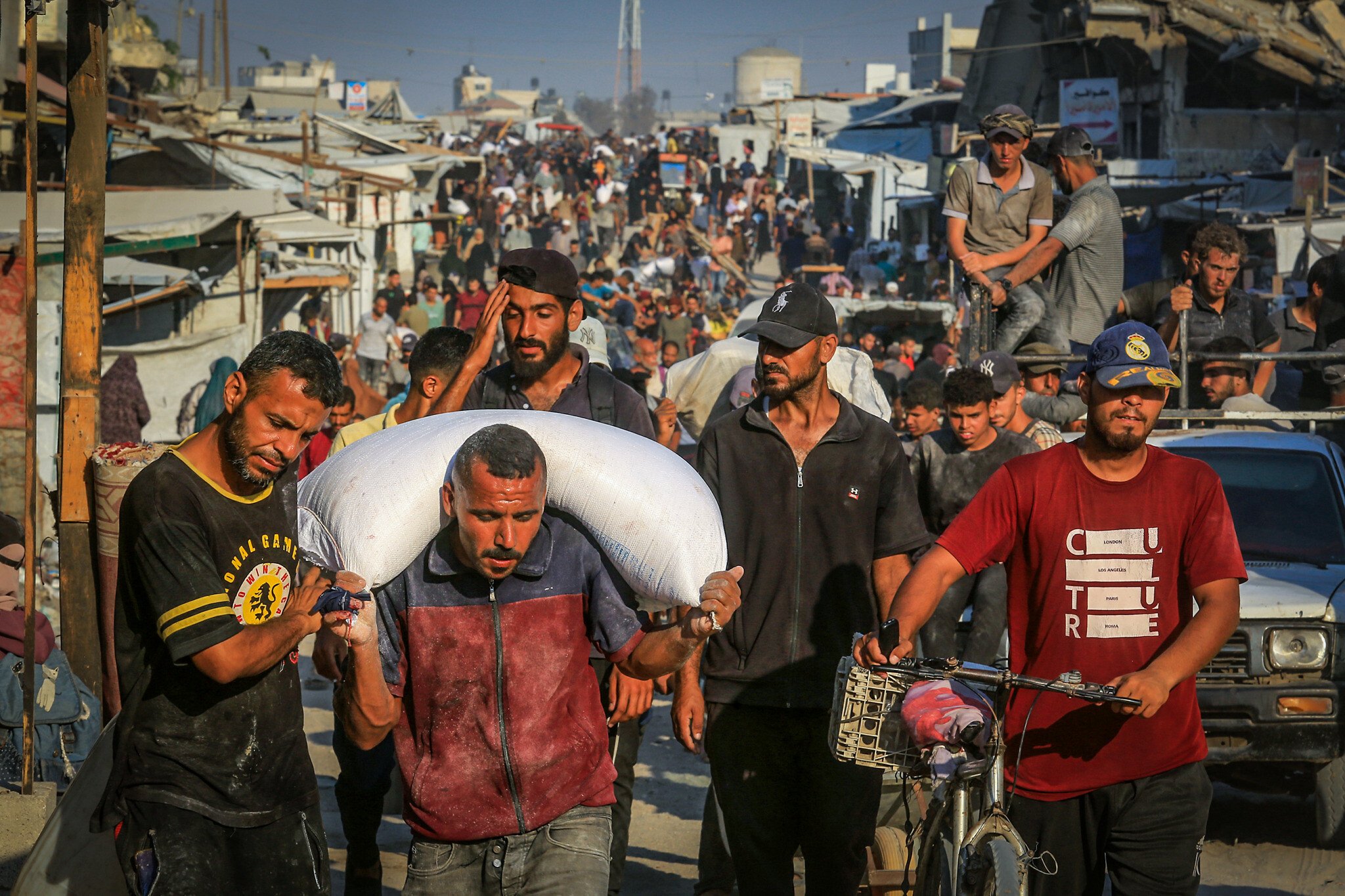
Palestinians walk through the streets with bags of flour after humanitarian aid trucks arrived via the Israeli-controlled Kerem Shalom crossing into southern Gaza, in Khan Younis, July 24, 2025. (Abed Rahim Khatib/Flash90)
The Rabbinical Assembly, the international association of Conservative rabbis, calls on Israel “to ensure humanitarian aid reaches those in need” in Gaza.
In a statement, the RA says it is “increasingly concerned about the worsening humanitarian crisis in Gaza. We recognize the need for urgent action to alleviate civilian suffering and ensure aid delivery, as leaders continue to focus on returning the hostages and ending this war.”
It stresses that “Hamas has caused this crisis. Its brutal October 7 attacks on Israeli communities set this war in motion, and its ongoing tactics — embedding fighters in civilian areas, stealing aid, and turning public infrastructure into military assets — continue to endanger Palestinian lives.”
At the same time, it says, “The Jewish tradition calls upon us to ensure the provision of food, water, and medical supplies as a top priority. Aid agencies, the United Nations, and the Israeli government must act swiftly to distribute supplies currently stalled at the border so they reach the civilians who so desperately need them. We are heartened by today’s news of planned air drops of food, and encourage other creative solutions to address this crisis.”


read more: