

 From
From Eisenkot accuses Bennett, Liberman of harming opposition’s election chances with ‘old politics’
 Add ToI as a Preferred Source on Google
Ariela Karmel is a political correspondent at The Times of Israel. She previously reported for Calcalist and Haaretz. She holds an MA in Middle Eastern and African History from Tel Aviv University and a BA in Political Science from the University of British Columbia.
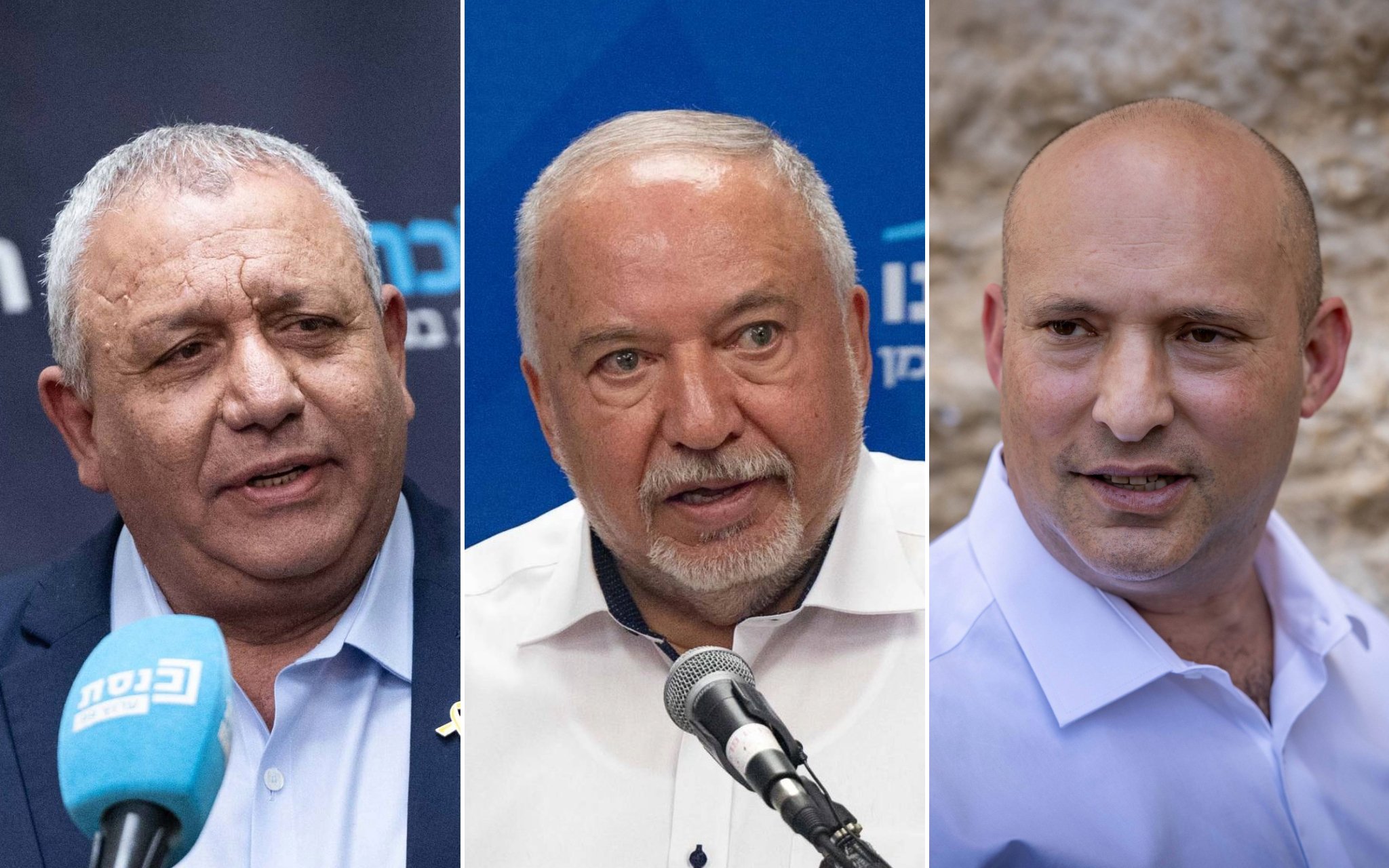
Yashar party leader Gadi Eisenkot sharply criticizes fellow opposition party leaders Naftali Bennett and Avigdor Liberman, accusing them of engaging in “old politics” and harming the anti-Netanyahu bloc’s chances of winning the October 27 election by refusing to agree on rules for determining its candidate for prime minister.
“I think they are making a mistake by refusing to establish basic rules and principles for choosing the candidate for prime minister” to lead a prospective government formed by the four main Zionist opposition parties. “They are hurting the chances of winning,” Eisenkot says of Bennett and Liberman.
Yashar is currently the clear frontrunner within the bloc, consistently polling as its largest party and significantly ahead of both Bennett’s B’Yachad and Liberman’s Yisrael Beytenu. Eisenkot has argued that the leader of the largest party in the bloc should be its candidate for prime minister, while Bennett and Liberman have not committed to backing the largest party’s leader.
“Anyone counting on becoming prime minister with eight seats doesn’t understand what has happened in the State of Israel,” Eisenkot says, in an apparent jab at Liberman and at Bennett, the latter of whom became prime minister in 2021 despite his party winning just six seats in that year’s election.
“This old politics of ‘we’ll pull tricks and decide who will be prime minister’ — that’s something that can’t be accepted,” he adds.
Yisrael Beytenu hits back, saying that “Avigdor Liberman has no ego and he has experience,” and reiterating that its priority is maximizing the number of seats won by the bloc as a whole. The party says it is committed to forming a government without Prime Minister Benjamin Netanyahu, the Arab parties or the Haredi parties. It challenges Eisenkot to clarify his own prospective coalition partners: “Gadi Eisenkot would do well to make clear to the public who his partners will be the day after the election.”
Eisenkot has made overtures toward the Haredi Shas party, and his No. 2 Yoram Cohen said earlier this week that the party could sit with Likud without Netanyahu as well as with Bezalel Smotrich’s Religious Zionism.
The Democrats party chief Yair Golan urges the fellow bloc leaders to end the infighting, saying, “You know that we will all recommend the same candidate for prime minister,” and quipping: “I’ve already stepped aside; now it’s your turn.”








The Times of Israel Community.