

 From the Liveblog of
Thursday, October 24, 2019
From the Liveblog of
Thursday, October 24, 2019
IDF chief warns ‘precarious’ security situation in north could lead to conflict
 Add ToI as a Preferred Source on Google
With a stark warning of potential conflict, IDF Chief of Staff Aviv Kohavi unveils a multi-year plan to make the Israeli military deadlier, faster, better trained and more capable of defending the Jewish state against the threats facing it today.
“In the northern and southern arenas the situation is tense and precarious and poised to deteriorate into a conflict despite the fact that our enemies are not interested in war. In light of this, the IDF has been in an accelerated process of preparation,” Kohavi says in a briefing to reporters.
The plan — dubbed Momentum, or Tenufa in Hebrew — will see huge amounts of investment in developing the Israel Defense Forces’ arsenals, including increasing its collection of mid-sized drones, obtaining large numbers of precision-guided missiles from the United States and purchasing additional air defense batteries.
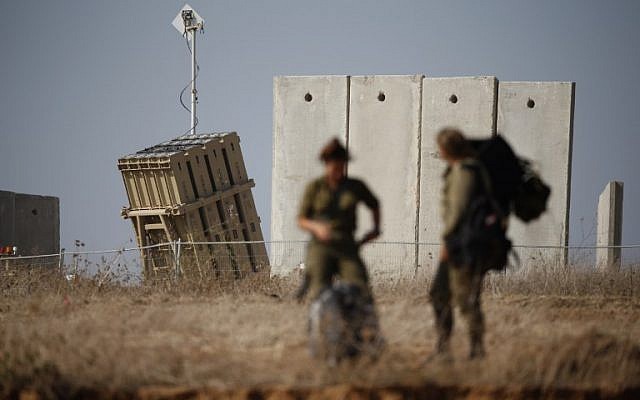
Despite the weighty price tag of the Momentum Multi-Year Plan, the IDF refuses to comment on how it planned to pay for these new weapons and defensive systems.
Kohavi’s plan will formally go into effect on January 1, 2020, but the IDF plans to put into place some of the proposals before then.
The IDF chief says the primary threat facing Israel come from Iran along Israel’s northern borders.
“The central strategic threat of the State of Israel lies in the northern arena: with the entrenchment of Iranian and other forces in Syria and with [the Hezbollah terror group’s] precision missile project,” Kohavi says, referring to an effort by the Iran-backed Lebanese militia to develop highly accurate long-range projectiles.
“Both of these cases are efforts led by Iran, using the territory of countries with severely limited governance,” he says.
Kohavi specifically refers to the case of Lebanon, where Iran’s ally Hezbollah is widely seen as being in control of the government despite technically having a small parliamentary presence.
“For years Hezbollah has taken the state of Lebanon ‘hostage.’ It built an army of its own and it is the one that dictates the security policy,” the army chief says.
— Judah Ari Gross




The Times of Israel Community.