

 From the Liveblog of
Tuesday, September 22, 2026
From the Liveblog of
Tuesday, September 22, 2026
Meeting Arab leaders at UN, Trump says there’s ‘a lot of momentum’ for Iran deal
 Add ToI as a Preferred Source on Google
Jacob Magid is The Times of Israel's US bureau chief
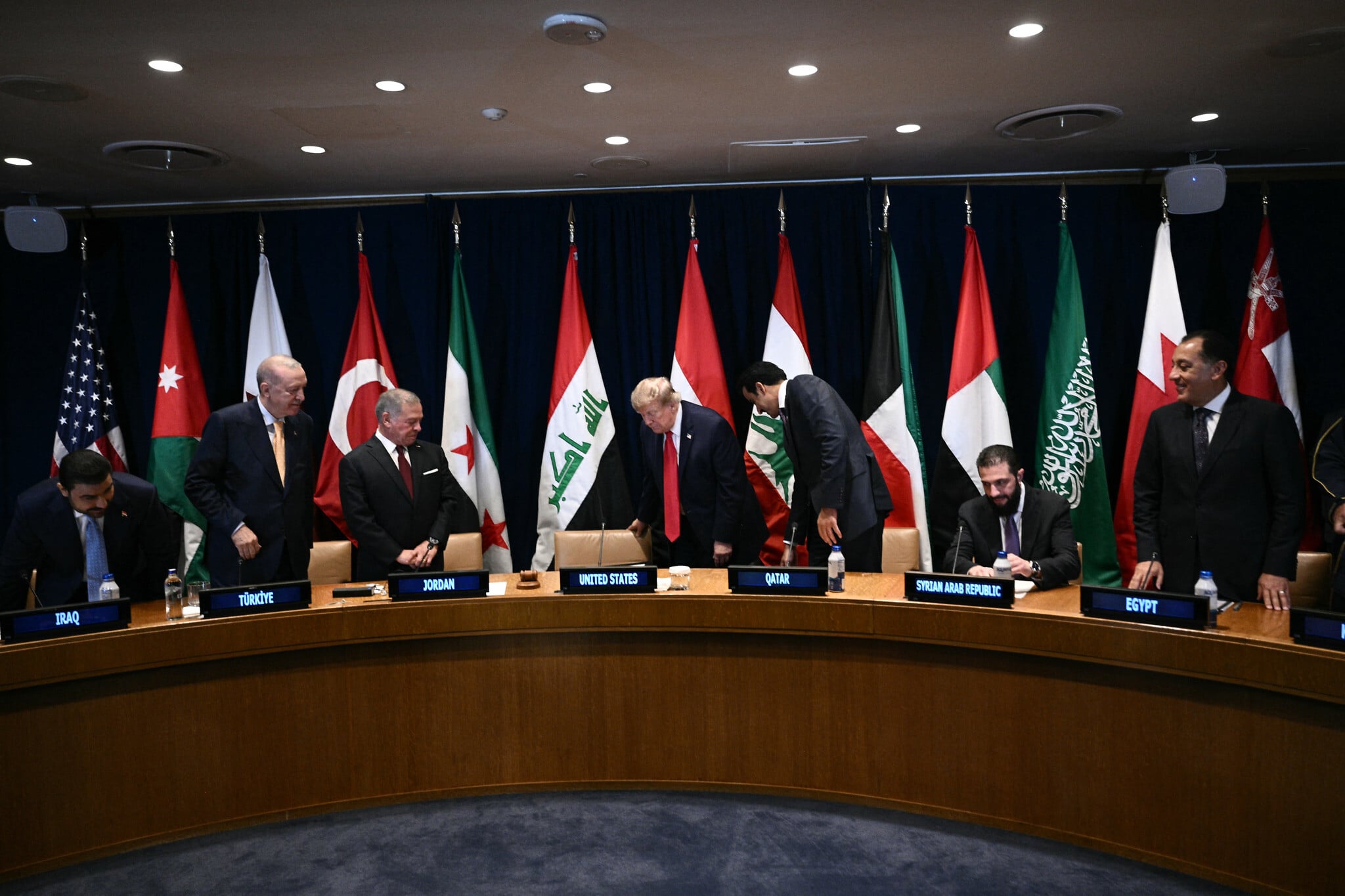
NEW YORK — US President Donald Trump hosts a meeting with senior representatives of 12 Middle Eastern countries on the sidelines of the UN General Assembly in New York.
While the White House says the meeting is with the Gulf Cooperation Council, which is made up of Saudi Arabia, the United Arab Emirates, Qatar, Bahrain, Kuwait and Oman, top officials from Jordan, Egypt, Turkey, Iraq, Lebanon and Syria are also in attendance at the roundtable.
Israel and Iran appear to be among the only Middle Eastern countries not represented in the meeting.
Trump makes remarks to reporters at the beginning of the meeting, which are largely a regurgitation of his remarks from earlier in the day, regarding how well the US is doing against Iran.
He again says that the US may bomb Iran’s Pickaxe mountain nuclear site, while clarifying that “we’re not seeing a lot of activities there.”
Trump reiterates his belief that the US will reach a deal with Iran to end their ongoing conflict by the upcoming midterm elections, if not before.
The US president also repeats that his envoys Steve Witkoff and Jared Kushner held a “very productive” meeting earlier Tuesday with Iranian counterparts.
“We will see what happens with that. I think there’s a lot of momentum for them to make a deal. That’s what we are hearing from everybody,” Trump claims.
He thanks the leaders around the table for their partnership, including in securing a ceasefire and hostage release deal between Israel and Hamas last year, even though progress on the agreement has since largely stalled.
Trump reiterates his administration’s support for the India–Middle East–Europe Economic Corridor. He doesn’t note this, but that corridor incorporates Israel. Saudi Arabia and Turkey have been advancing an initiative to have the corridor link Syria and Lebanon instead of Israel.
Trump also makes no mention of the Abraham Accords, which countries have been increasingly reluctant to join amid what they view as Israel’s expansionist policies in the region.



The Times of Israel Community.