

 From the Liveblog of
Tuesday, November 10, 2015
From the Liveblog of
Tuesday, November 10, 2015
Netanyahu: Security control must remain with Israel, even in a Palestinian state
 Add ToI as a Preferred Source on Google
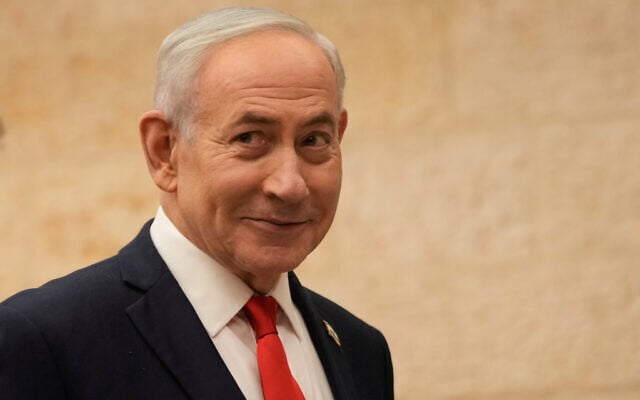
Netanyahu is asked by David Makovsky of the Washington Institute for Near East Policy, “What’s Israel’s plan to remain a Jewish state and not slide to become a binational state?”
His answer centers on security requirements.
“Unilateralism works less well than a negotiated solution.” That is, a unilateral pullout is a last resort.
“In any case, the main problem that we have is the acceptance of the principle that Israel will take care of security in the areas west of the Jordan. This is the main problem.
“The problem in Gaza is that we left by not only taking out the settlers, but we left no security there. As a result, Gaza has become a security threat not only to Beersheba or Ashdod, it’s become this poison thumb, this poison dagger that sends rockets well beyond Tel Aviv.
“Unless you have an Israeli capability to secure territories we vacate in a civilian sense” – that is, free of Israeli civilians, but not of some form of Israeli security arrangement – “that’s where you get into trouble.
“Another issue came up that wasn’t around in 2006, that’s tunneling. There’s tunneling from Gaza into Israel. Any delineation of a border would be hundreds of kilometers, so you’d have thousands of tunnels, and these are terror tunnels from which terrorists can emerge, take people hostage, squirrel them back.
“The only way you can [pull out] is making sure Israel has security control for the foreseeable future. I don’t see the Palestinians agreeing to that. They say, ‘how can we be a sovereign state without security control?’ I say, ‘Well, have you heard of Germany or Okinawa?’ You have to.”
Netanyahu is confident about this, because he believes Israelis back him.
“This is something that Israelis agree about: Any deal or any arrangement, unilateral or negotiated, must have Israel maintain the ability to defend itself by itself against any threat, including from territories that are ceded. That’s the most important provision.”
And, he adds candidly, “that’s something I don’t see Palestinians accepting now. Maybe they will tomorrow. Maybe the Arabs will accept. Maybe the international community will accept.
“If they do, then we won’t have to keep the Arabs in our midst, will be able to separate from them and keep security.”
“I think we have to talk about that more, get it into the international bloodstream.”



The Times of Israel Community.