

 From the Liveblog of
Sunday, August 6, 2023
From the Liveblog of
Sunday, August 6, 2023
Netanyahu says key judicial selection panel to be remade, may then halt other parts of overhaul
 Add ToI as a Preferred Source on Google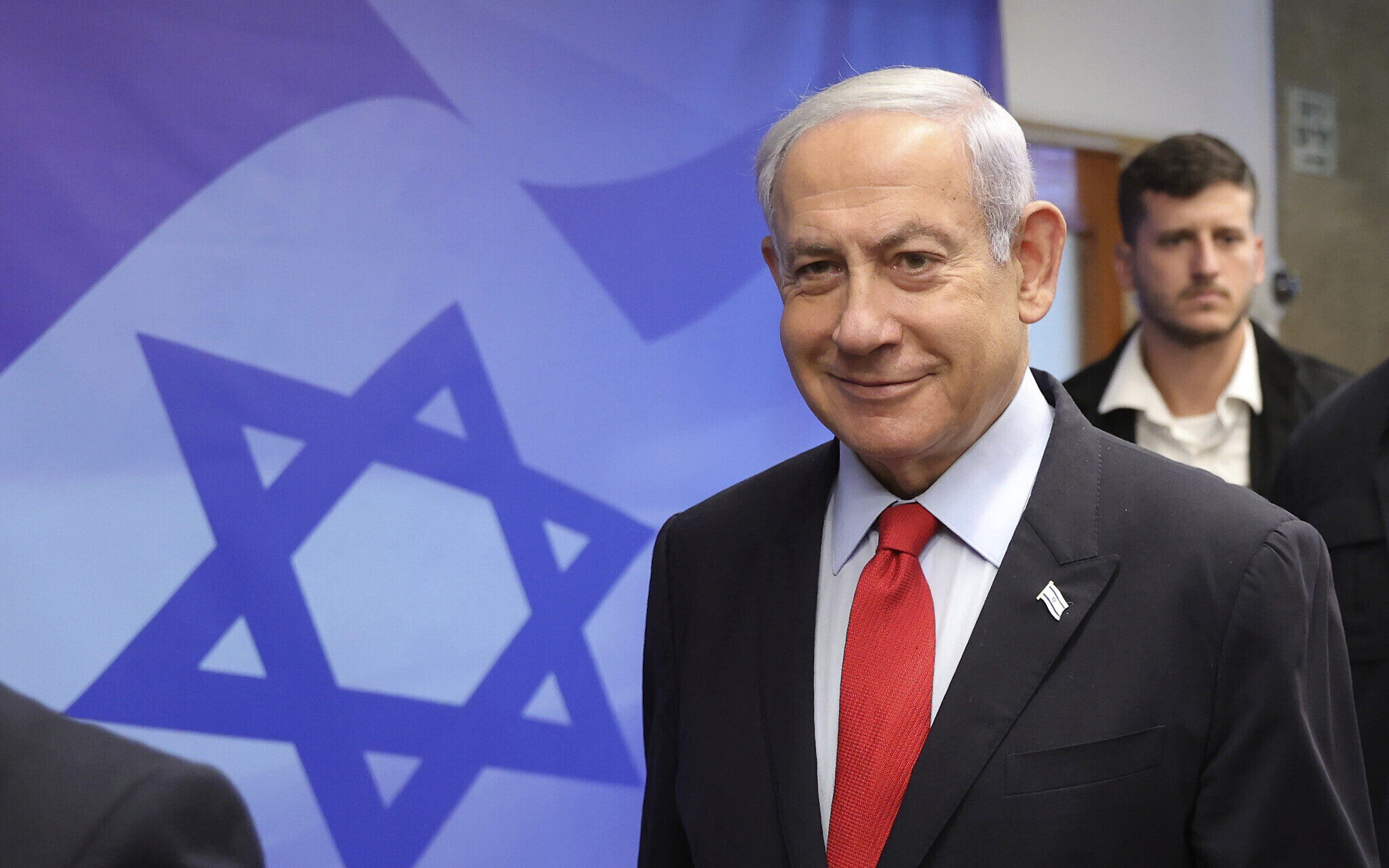
In an interview with Bloomberg, Prime Minister Benjamin Netanyahu suggests his government will pass a bill to remake the committee that appoints judges, the most far-reaching and controversial measure in the judicial shakeup package, and after that may not advance further legislation overhauling the judiciary.
The next measure the coalition will seek to advance will “probably be about the composition of the committee that elects judges,” Netanyahu tells the US news agency. “That’s basically what’s left — because other things I think we should not legislate.”
In its current form, the judicial selection bill, which was suspended in March but is ready for its final readings at short notice, scraps the current Judicial Selection Committee, under which coalition and Supreme Court representatives each have veto power over the other’s candidates for the top court, requiring a consensus on such appointments. Instead, the legislation would bring appointments throughout the Israeli judicial hierarchy under near-absolute government control.
An alternative proposal, floated last week by Netanyahu’s cabinet secretary, would restructure the committee so that half of its representatives would be from the coalition and half of its members would be from the opposition. Such a move would not only completely politicize the committee, but could also leave a loophole in which a party broadly supportive of the coalition could formally sit in the opposition and gain representation on the panel, thereby giving the coalition full control.
Netanyahu tells Bloomberg the Supreme Court is “perhaps the most activist judicial court on the planet” and that “there has to be a balance. That’s what we’re trying to restore.”
He adds: “I’m absolutely sure that Israel will come out stable, successful and democratic — at least as democratic and in my view more democratic. I don’t think we’re going to tear the country apart, I don’t think we’re going to have civil war.”
Netanyahu also says he hopes Israel isn’t plunged into a “constitutional crisis.”
He has recently refused to commit to honoring a theoretical High Court of Justice decision striking down the first piece of legislation in the judicial overhaul, the so-called “reasonableness” law — which was passed on July 24 as a constitutional Basic Law — raising concerns of such a scenario. (That law bars judicial review of government and ministerial decisions on the basis of their reasonableness. Further planned legislation would significantly limit the High Court’s capacity to strike down legislation, allow the Knesset to relegislate a law that is struck down, and/or enable the Knesset to preemptively designate legislation as immune to High Court review.)
“I think we won’t. I think there’s a way of reaching an equitable compromise, which is what I’m trying to do now,” the premier tells Bloomberg.
He also brushes off warnings of economic fallout from the overhaul, urging foreign investors to continue parking their funds in the Jewish state.
“There’s noise in the short-term markets,” Netanyahu claims. “There’s clarity in the long-term markets.”










The Times of Israel Community.