

Movie legend Omar Sharif dies at 83
Egyptian-born actor best known for major roles in ‘Lawrence of Arabia’ and ‘Doctor Zhivago’ had been suffering from Alzheimer’s
 Add ToI as a Preferred Source on Google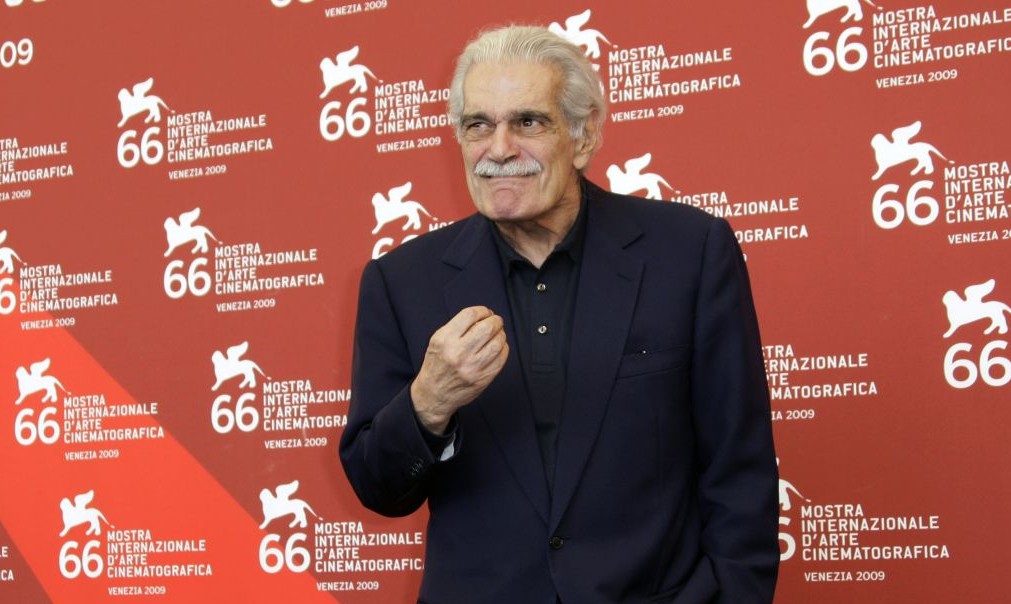
Egyptian-born actor Omar Sharif, who starred in “Doctor Zhivago” and “Lawrence of Arabia”, died on Friday in Cairo aged 83, his London-based agent said.
“He died this afternoon of a heart attack in Cairo,” Steve Kenis told AFP, adding that the actor had been in a hospital for patients with Alzheimer’s disease.
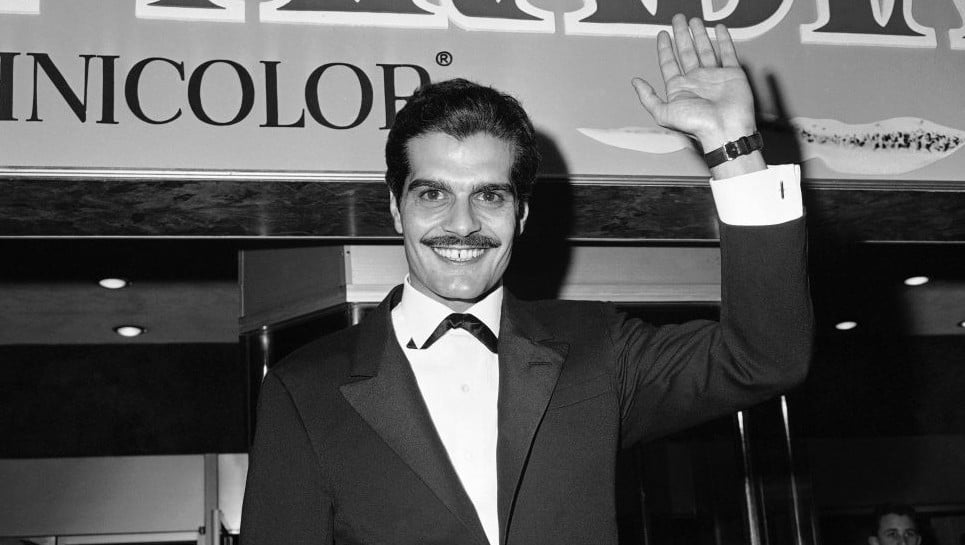
Sharif began acting in the 1950s and was propelled to stardom playing an Arab chief enlisted by Peter O’Toole’s T.E. Lawrence in the World War I drama “Lawrence of Arabia,” for which he won an Oscar nomination.
An even bigger role followed as the eponymous hero in David Lean’s “Doctor Zhivago,” the adaptation of Boris Pasternak’s novel of tortured passions during the Russian Revolution.
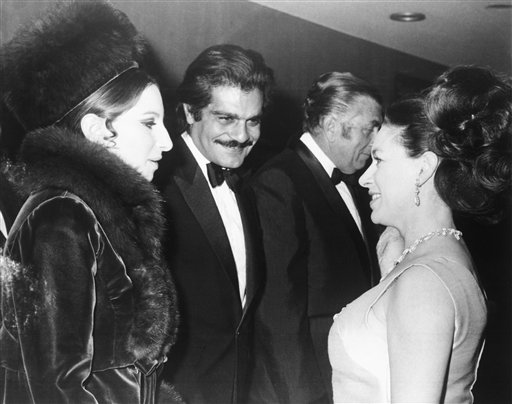
The actor, fluent in Arabic, English, French, Greek, Italian and Spanish, went on to star in many films and television productions, including alongside Barbra Streisand in 1968’s “Funny Girl”.
But he never again scaled the heights of critical acclaim as in his work with Lean.
Known for his raffish good looks, Sharif kept working over the following decades, often in television movies, and in later years became equally renowned for his prowess as a bridge player and owner of thoroughbred racehorses.
Sharif was born in Egypt but spent many years living between France, Italy and the United States, before settling back in his native country.
Venice best actor award
Sharif co-wrote a syndicated bridge newspaper column in the 1970s and 80s, and wrote several books and licensed his name to the computer game “Omar Sharif Bridge.”
“I’d rather be playing bridge than making a bad movie,” he once said, before saying in 2006 that he had given up the game.
He made something of a comeback in 2003 in the title role of the French film “Monsieur Ibrahim,” playing an elderly Muslim shopkeeper.
The performance won him a best actor award at the Venice Film Festival and the best actor Cesar, France’s equivalent of an Oscar.
In his later years he continued making movies and television films, including “I forgot to Tell You” in 2009 and “Rock the Casbah” in 2013.
Born Michel Demitri Shalhoub on April 10, 1932 in the Egyptian Mediterranean city of Alexandria to parents of Syrian and Lebanese extraction, he was raised a Catholic.
He studied at Alexandria’s Victoria College before gaining a degree in mathematics and physics from Cairo University.
He joined his father’s lumber business, but the acting bug had taken hold while he was studying, and in 1954 he made his silver screen debut in the Egyptian film “Siraa Fil-Wadi” (“The Blazing Sun”) by Youssef Chahine.
The movie’s romantic intrigue was echoed off screen as he married the leading lady, renowned Egyptian actress Faten Hamama, converting to Islam and renaming himself Omar Sharif.
They had one son, Tarek, before divorcing in 1974. Hamama died in January 2015.
Playboy lifestyle
Sharif never remarried, but had another son, Robin, from a brief relationship with Italian journalist Lula De Luca.
His playboy lifestyle of fine hotels, casinos and restaurants from California to the Cote d’Azur was not without its brushes with controversy.
In August 2003, he received a one-month sentence and a 1,500-euro fine for headbutting a policeman outside a Paris casino. He was unrepentant, saying: “It made me the hero of the whole of France. To head-butt a cop is the dream of every Frenchman.”
He was also ordered to take an anger management course by a California court in 2005, after punching a parking attendant in a dispute over whether he could pay in euros rather than dollars.
Sharif had a triple heart bypass in 1992 and suffered a mild heart attack in 1994, according to the IMDb movie database website. The 100-cigarettes-a-day smoker quit after the operation.
In January 2011, during Egypt’s popular uprising Sharif called for then-president Hosni Mubarak to stand down, while at the same time expressing doubts about the Muslim Brotherhood.






The Times of Israel Community.