

Netanyahu, Nasrallah on the ropes
The PM juggles national defense, negotiations and internal party politics, and Hezbollah faces a three-front threat
 Add ToI as a Preferred Source on Google
Ilan Ben Zion is an AFP reporter and a former news editor at The Times of Israel.
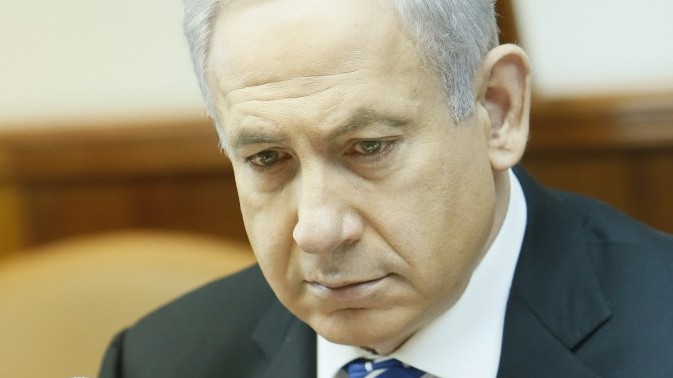
Prime Minister Benjamin Netanyahu is stuck between a rock and a hard place — between American pressure to return to peace talks and an increasingly volatile political maelstrom in his own party. But Netanyahu largely takes a back burner in Friday’s tabloids, whose editors care more about Hezbollah being on the ropes.
Israel Hayom leads off with IDF Chief of Staff Lt. Gen. Benny Gantz making rare, bold statements about the country’s tenuous security situation. Most daring, however, and deserving of the paper’s headline, is Gantz’s comment that “the fire is starting to catch hold of the [Hezbollah leader Sheikh Hassan] Nasrallah’s coattails.”
According to the paper, Gantz voiced his opinion out of knowledge that the Israeli security establishment understands “that Hezbollah finds itself in a state of strategic weakness, in a nadir that it hasn’t known in many years.” Israel Hayom explains that the Shi’ite militia is fighting a three-front war: in Syria, inside Lebanon, and against Israel.
“According to IDF estimates, Nasrallah’s organization has thus far lost more than 200 of its fighters during battles inside Syria, and thousands more have been injured,” it writes.
Be that as it may, Yedioth Ahronoth urges caution, noting that Nasrallah might be down, but his weapons arsenal is anything but out. Of the three fronts Hezbollah faces, “against Israel, Nasrallah is still prepared.”
“The array of missiles stationed [and aimed at] Israel wasn’t damaged on account of the battles in Syria; it is on maximum readiness and capable of carrying out its mission,” the paper warns.
Neither paper gives significant coverage to Netanyahu’s statement at the same event — a graduation ceremony for IAF pilot cadets — that “in the past year we have operated in many sectors, overt and covert, and in all of them the Air Force accomplished its mission.”
US Secretary of State John Kerry, writes Maariv, aims to bring Netanyahu and Palestinian Authority President Mahmoud Abbas to the negotiating table in this, his fifth trip to the region since taking office earlier this year. Despite his best efforts, however, the paper cites a source familiar with the circumstances as saying that “Israel and the Palestinians are not expected to renew negotiations because of US Secretary of State John Kerry’s trip to the region, and the most that he could possibly expect is an agreement for a meeting” between Netanyahu and Abbas.
According to Israel Hayom, Netanyahu has given the Americans the message that Israeli wariness of Abbas’s sincerity toward talks is based on the fact that in the past several years he has turned to international organizations and the UN instead of negotiating with Israel.
According to a senior Israeli official cited by the paper, the Americans share this assessment, which is why Kerry is making such a great effort to bring the sides back to the table.
Front page news for Haaretz is the Egyptian opposition’s big rallies planned for Friday and Sunday. Their objective: to kick President Mohammed Morsi out of power a year after he took it. The paper cites opposition figures who say they have more than 16 million signatures on a petition calling for Morsi’s resignation.
“Many in the opposition hope that the army, which already stationed APCs and soldiers in the streets of Cairo on Wednesday, will be forced to intervene and will enable the deposing of the government,” Haaretz writes. At the same time, Muslim Brotherhood supporters are expected to hold a counter-protest in Cairo on Friday as well.
Maariv’s coverage is far more dramatic, saying that the “Egyptians are planning for an actual war in advance of the millions protesting on Sunday” and that there is “fear of bloodshed.” According to an opposition member quoted by the paper, the opposition movement has garnered more signatures against Morsi than the number of votes Morsi received in last year’s elections.
Sunday marks a big day for the Israeli government, and Netanyahu also faces stiff opposition from within his own Likud party ranks as it is set to have its internal chairmanship elections. According to Yedioth, Deputy Defense Minister Danny Danon is expected to be elected central committee chairman, in which position he will be a fierce opponent to many of Netanyahu’s stances.
“He intends to act to eliminate Netanyahu’s plan to unite [Likud] with Yisrael Beytenu, and he supports — in total opposition to Netanyahu’s stance — returning power to Likud centrists,” the paper writes.
In a rambling, barely coherent article about a grab-bag of ideas, Haaretz columnist Yossi Verter touches on the issue of Netanyahu’s precarious position and says the prime minister “has to decide: Either he regains control of the party with dramatic moves, or he uses its weakness as a lever.” Though the subsequent anecdote about Netanyahu’s victory over former prime minister Ariel Sharon in a Likud committee vote is interesting, it seems to lack bearing as to how Netanyahu can climb out of this morass.









The Times of Israel Community.