

Number of sick Israelis rises to 193 as government weighs tough new measures
Cabinet considers slowdown of economy to combat virus; among those to recently fall ill is an airport security guard, leading to over 80 airport personnel entering quarantine
 Add ToI as a Preferred Source on Google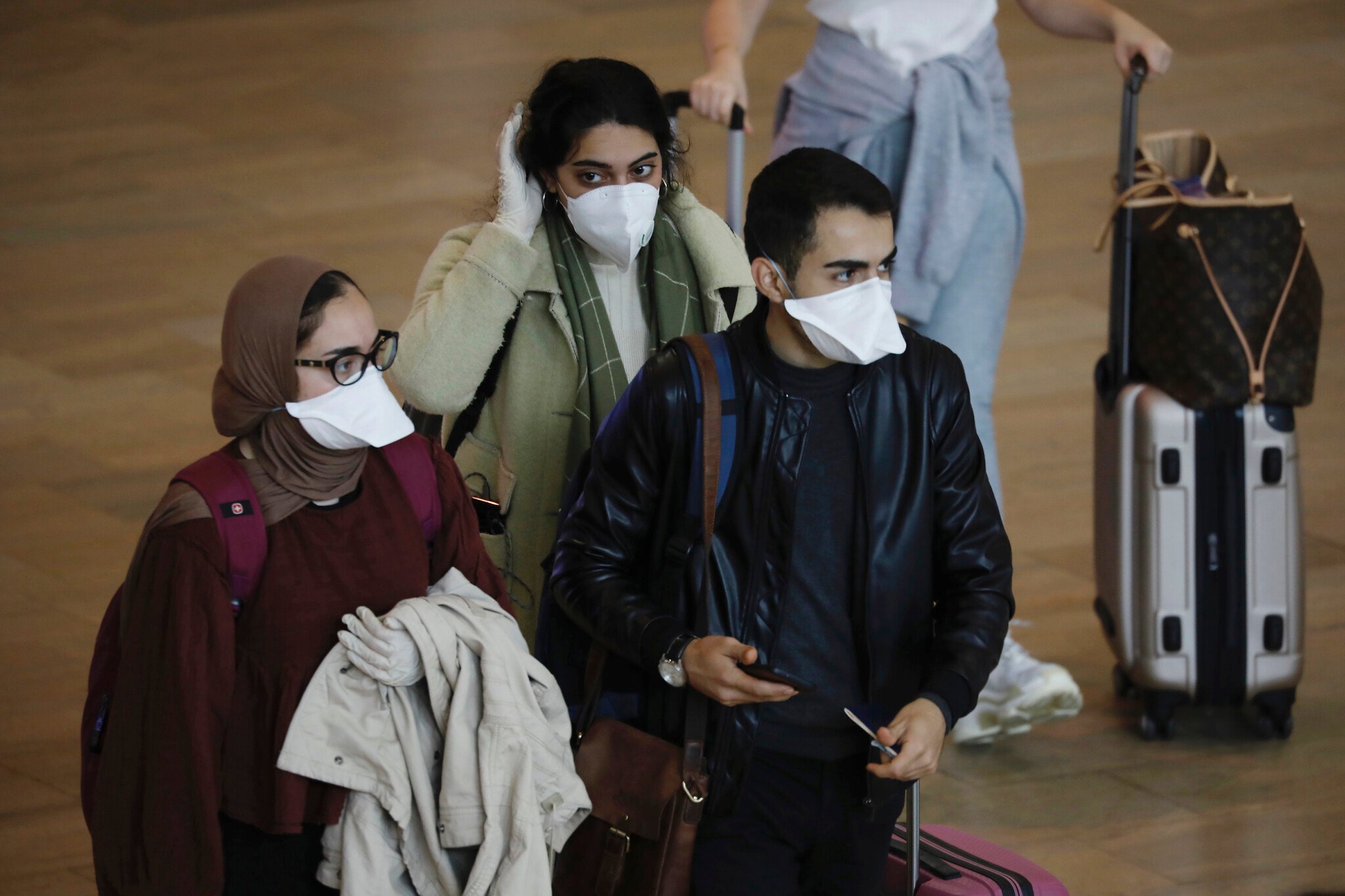
The number of Israelis diagnosed with coronavirus rose to 193 Saturday evening with an addition of 29 new patients since the morning, as the government debated new restrictive measures to curb the spread of the infection. At the core of the imminent new measures, Hebrew media said, would be an effort to have the public keep their distance from each other — at a minimum of two meters — in order to avoid spreading contagion.
The Health Ministry said two of the sick remained in serious condition, with 11 in moderate condition and the rest suffering a light illness only.
The Ynet news site reported that among the newly diagnosed on Friday was a security guard at Ben Gurion Airport, who has been in home quarantine for the past 10 days. Due to his sickness, over 80 airport personnel who had been in contact with him prior to his quarantine have also been sent to isolation at home.
Meanwhile, nearly 40,000 Israelis were in home quarantines for fear of exposure to the virus, including nearly 1,000 doctors, more than 600 nurses, 170 paramedics, and 80 pharmacists, according to Health Ministry figures. Health officials have conducted over 6,800 coronavirus tests nationwide so far, according to the ministry.
Deliberations were being held at the Prime Minister’s Office on Saturday evening ahead of an expected announcement later in the evening of new far-reaching restrictions to combat the coronavirus pandemic.
Among those taking part in the meeting were the defense, finance, economy and public security ministers, as well as the national security adviser, governor of the Bank of Israel, the directors-general of multiple government ministries and other agency heads.
According to a report on Channel 12 news, on the table was a five-week partial shutdown of the economy. This would see supermarkets remain open, but malls, coffee shops and restaurants closed down. Non-essential workplaces will switch to working from home, according to the report.
The network said the measures would not amount to a lockdown of citizens, but are aimed at minimizing the number of people in the same place as much as possible to prevent the spread of the coronavirus.

Police will be in charge of enforcing a closure of public places as well as any restrictions on travel, it said.
Channel 12 reported that while the Health Ministry was pushing for wide differences of opinion between the Health Ministry and other government officials, with the former seeking a near-complete shuttering of the economy, sending all but essential workers home, despite the economic impact, arguing that this is the only way to prevent a surge in contagion.
Officials at other ministries, by contrast, were advocating a phased approach. Even if Israel ultimately ends up with a complete shutdown, they were reportedly saying, they need time to gear up for it.
The Health Ministry and the PMO on Saturday sought to calm the public, stressing that supermarkets would remain open and stocked under any scenario, as people rushed to supermarkets to stock up on goods.
Multiple reports on social media and media outlets showed long lines and emptied shelves in supermarkets across the country, with shoppers complaining that toilet paper and some types of bread were running out. Supermarket owners insisted they had plentiful supplies and were restocking shelves.
Officials have also stressed that supermarkets will remain open in any scenario.
Avshalom Vilan, secretary-general of the Israel Farmers Union, urged calm as well. “Israel’s agriculture industry is able to supply all fresh products: vegetables, fruit, meat, eggs and dairy,” he tweeted. “There is no shortage of rice, sugar and meat imports. Even if in the coming days people are asked to stay at home, all food stores will be open and our produce will continue to flow as usual.”
Despite this, some supermarket chains announced they would be opening more branches on Saturday evening to cope with demand.
The country has taken a number of far-reaching measures to contain and fight the virus, but has so far stopped short of steps such as banning all non-essential domestic travel or ordering the closure of most businesses.
Any public gatherings of over 100 people have been banned as of Wednesday, leading to the cancellation of sports games and numerous other events, as well as the closure of theaters and many hotels. That order, which went into effect Thursday, applies to weddings, bar mitzvahs and funerals, and covers “both closed and open spaces,” according to the Health Ministry.
Earlier in the week, the government announced an emergency package of more than NIS 10 billion ($2.8 billion) to stabilize the economy and offset some damage caused by the coronavirus crisis.
To curb the spread of the virus in the country, all Israelis returning from overseas are required to quarantine at home for 14 days. Non-Israeli nationals were barred from entering the country as of March 12, unless they can demonstrate an ability to self-quarantine for two weeks.
The number of coronavirus cases worldwide passed 150,000 on Saturday driven by a spike in infections in Italy, according to an AFP tally compiled from official sources.
Italy announced 3,497 new cases on Saturday, bringing the global total to 151,797, with 5,764 deaths across 137 countries and territories.
Italy, the worst-hit country outside of China where the outbreak began in December, has now registered a total of 21,157 cases and 1,441 deaths.






The Times of Israel Community.