

On the trail of ‘Israel’s Petra’: Amram’s Pillars
Five towering pillars carved out of sandstone by water, they make for a stupendous sight, and you don’t need a camel ride to get there
 Add ToI as a Preferred Source on Google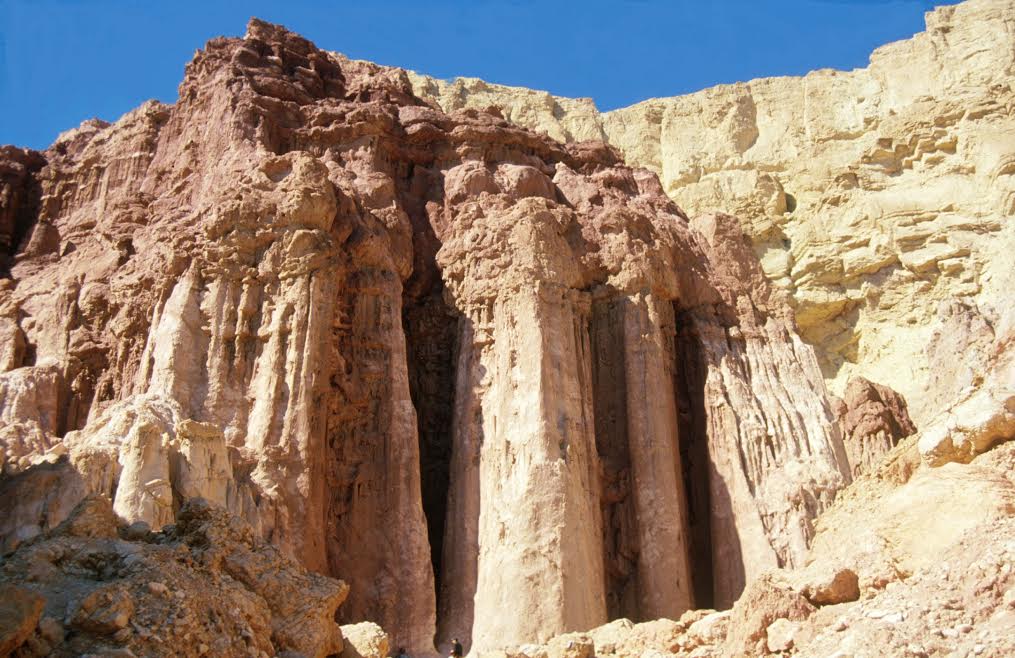
Lately, almost all of our tourists have been cutting their time in Israel short so that they have a day or two to visit Jordan’s Petra. But, as it happens, this country can boast majestic structures of its own. Amram’s Pillars, colossal columns that could have come straight out of a pagan temple, are a natural phenomenon located within the dazzling Eilat Mountains Nature Reserve. You don’t need to ride a donkey or straddle a camel for this trip (which you may have to do if you can’t handle the walk to Petra); in fact, Amram’s Pillars are astonishingly easy to reach. You will find them off the main desert highway (#90) eight kilometers north of Eilat. And winter is the perfect season for your visit.
Turn at the sign for Amram Pillars and Wadi Shehoret. Soon afterwards you pass a daemia plant, a climber with heart-shaped grayish leaves and a velvety texture that blooms from February to April with flowers that are brownish-yellow to white.
The leaves contain a poisonous substance that repels most insects. Indeed black-and-yellow grasshoppers are the only insects that find nourishment in the daemia. The grasshopper’s venom – a fluid that severely irritates the mouth and eyes — is produced partly from the daemia’s liquid.
A few dozen meters further, also on your right, you will see one of the region’s rare leafless silk vine plants. Although from a distance the silk vine looks dry and dead, from March to May it contains tiny, deep red blossoms surrounded by a halo of white strands.
Other winter flowers include the light purple thorny zilla and furry-leaved yellow fleabane. The fleabane blooms until June, its size dependent on the amount of rainfall during the year. Containing a sweetness unusual for a desert herb, fleabane is delicious in tea. Bedouin claim this tea relieves stomach pain.
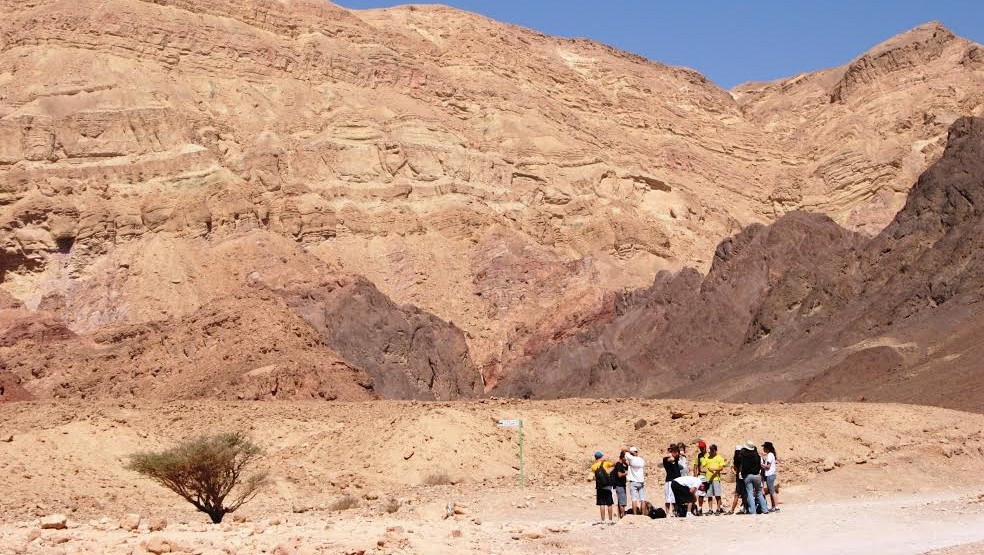
When you reach a fork in the road, green trail markers lead to Wadi Shehoret and blue ones to Amram’s Pillars. Don’t be confused by other roads; just bear right and follow the blue markers along a dirt road for about five kilometers to the pillars.
Considering their location so close to the Sinai Desert, and the entire desert connection, Amram’s Pillars could logically have been named for Moses’ father Amram. But, in fact, their name derives from the riverbed in which they stand: amrani in Arabic, with the Hebrew name simply resembling the Arabic.
As you drive, you will see magmatic rocks of shimmering black, dusty green and burnt-red hues, mingling deliciously with cream-colored dolomite and yellowish limestone. The view is especially startling when a raven-colored hill suddenly appears, jutting out of a lighter mountainside.
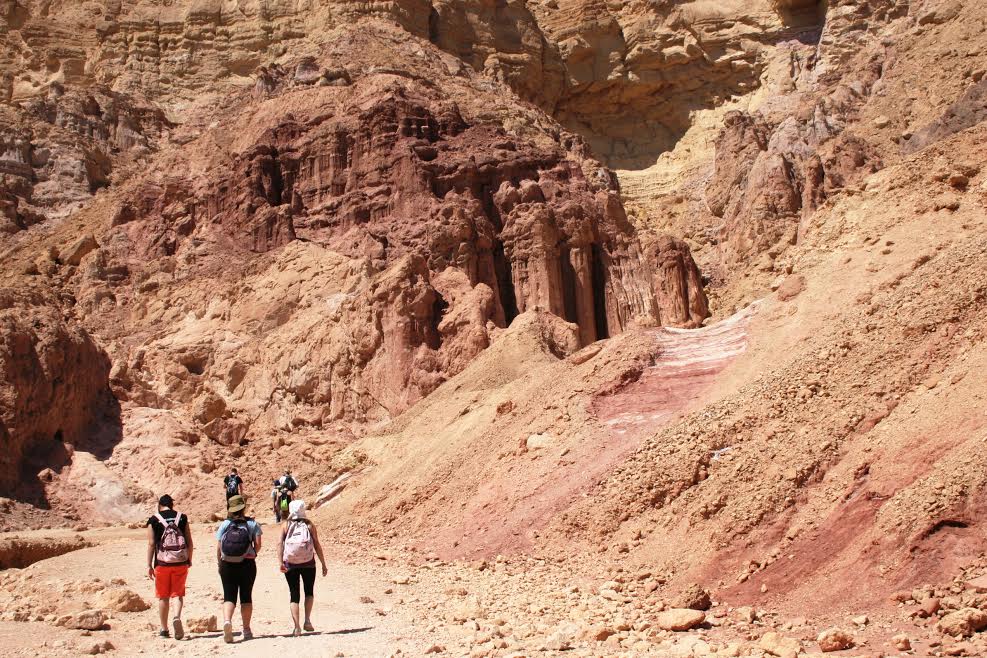
From the green Nature Reserve sign where you park, there is a ten-minute walk along a black-marked trail. As you hike, you will catch a preview of the sight you are about to see: look for exposed red and white marbled sandstone mixed with limestone and dark magma.
Suddenly you reach five towering pillars, well over a dozen meters high — a stupendous sight that explains why some people call them Israel’s Petra. These columns, however, were not made by man: they were carved out of sandstone by water which trickled through cracks in the rock.
The Amrani riverbed contains numerous tunnels and vertical shafts where miners hacked out copper at the same time that nearby Timna was being mined (6,000 years ago). Hunt for the openings — you can even crawl inside. But be careful when climbing on the rocks as sandstone crumbles under your feet. On the way back to the car, look on your left side for green rocks along the wall, signs of copper deposits.
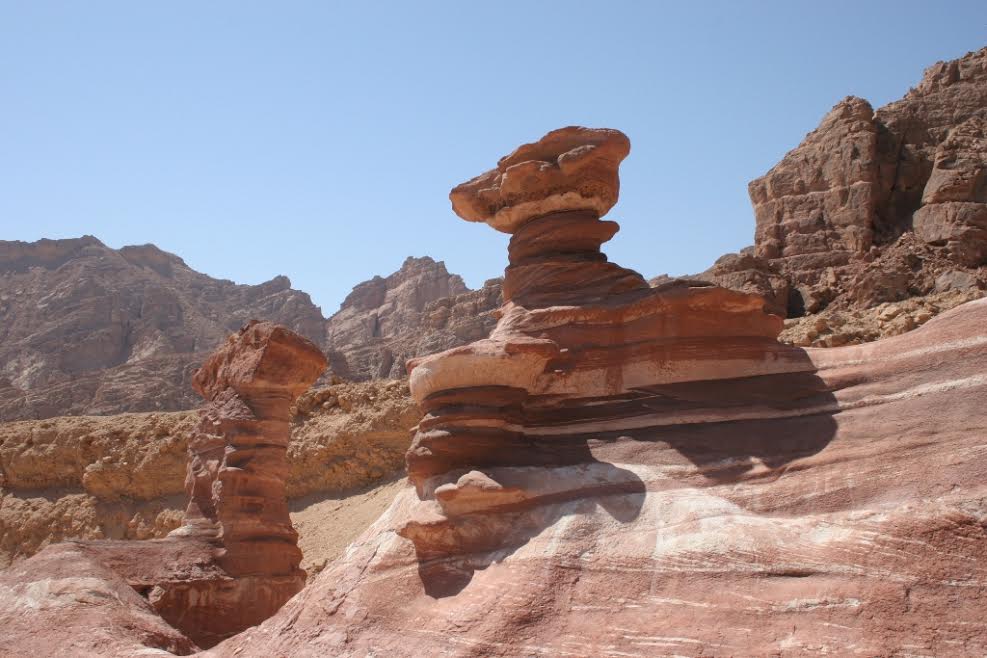
You will find your drive back to the road even more beautiful on the return trip. Watch for a delightful sandstone mushroom, resembling the exciting phenomenon at Timna. At one spot the white sandstone is colored with red blotches, looking for all the world as if a painter dropped his bucket.
You don’t have to climb up to the pillars to enjoy this amazing sight and the walk, while long, is suitable for practically everyone. This is a nature reserve: please don’t touch the foliage.
This article is adapted from EasyWalks in Israel by Aviva Bar-Am.
——————————————————
Aviva Bar-Am is the author of seven English-language guides to Israel.
.
Shmuel Bar-Am is a licensed tour guide who provides customized private tours for individuals, families and small groups.









The Times of Israel Community.