

Palestinians transform factories into mask manufacturing plants as virus spreads
Gaza businessman says his company plans to make 25,000 masks every day by the end of March; PA official says firms in West Bank meeting local market’s demand
 Add ToI as a Preferred Source on Google
Adam Rasgon is a former Palestinian affairs reporter at The Times of Israel
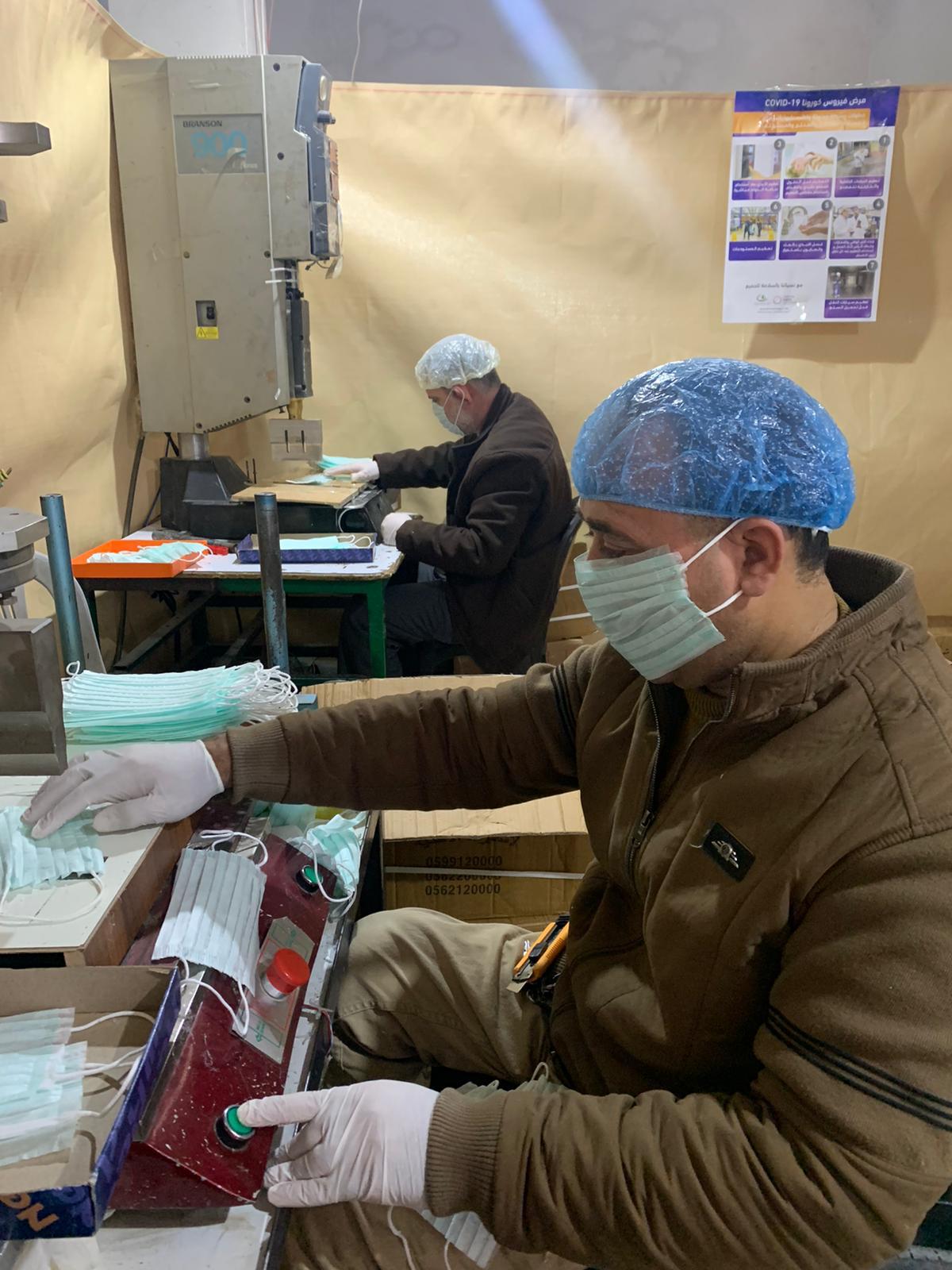
Despite multiple wars and incessant smaller conflicts, Unipal 2000 has produced clothing in the Gaza Strip for more than five decades.
Its designs have appeared in stores across Israel, including in Tel Aviv, Beersheba and Ashkelon, but also to a lesser extent in markets in the Palestinian coastal enclave.
Following the global outbreak of the highly contagious coronavirus, however, the Gaza City-based company has taken a break from manufacturing garments, and instead thrown all its resources into producing surgical masks and other protective gear.
Nabil Bawab, Unipal 2000’s 59-year-old chairman, said the company made the transition at the beginning of March and was already producing thousands of masks and protective suits daily.
“We never stopped making clothing, even during all the difficult times,” Bawab, a fluent Hebrew speaker, said in a phone interview. “But when the virus came, we decided to do something to provide people with protection.”
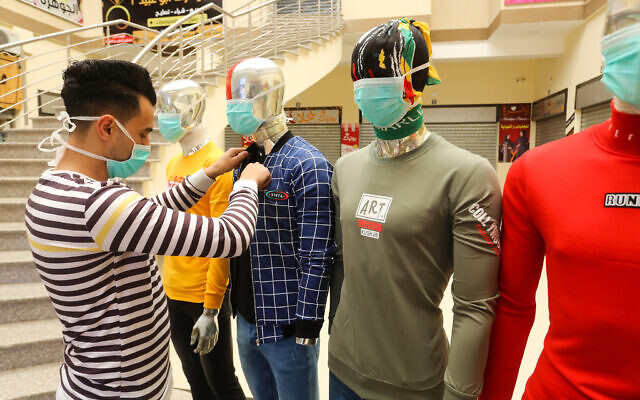
Bawab said that while Unipal 2000 has already signed contracts with Israeli business partners to provide one million masks and 50,000 protective suits by the end of April, the company was also in talks with local and international medical organizations in Gaza to sell them products too.
He said his company was selling masks to Israel for NIS 5 ($1.4) each and every protective suit for NIS 12 ($3.35).
Demand for masks and protective suits worldwide has skyrocketed since the start of the virus outbreak, which has infected more than 523,000 people.
Israel has confirmed that 2,693 people have contracted the virus in the country as of Thursday night, while Palestinian authorities have said that 84 people, including nine in Gaza, have caught it.
Carriers of the virus can wear masks to prevent readily transmitting it to healthy people, while medical professionals, security forces and others on the front lines don protective suits to avoid infection.
Bawab said that Unipal 2000 planned to step up production in the coming days by taking advantage of four empty factories in Gaza.
“We need more space because we are making sure our workers are not close to each other,” he said. “We hope to be making 25,000 masks every day by the end of the month.”
https://www.facebook.com/325245177605943/posts/1841890995941346/?d=n
Bawab declined to reveal the identity of Unipal 2000’s Israeli business partners.
The Coordinator of Government Activities in the Territories (COGAT), the Defense Ministry body responsible for liaising with the Palestinians, did not respond to multiple requests for comment about whether it was aware of Unipal 2000’s shipments of masks and protective gear to Israel.
Bawab said Israeli authorities, who maintain significant restrictions on the movement of people and goods into and out of Gaza, had been cooperating effectively with his company regarding exporting masks and protective gear to Israel.
“When it comes to this health issue, they have been working with us,” he said.
Israel maintains that its extensive limitations on movement into and out of the Strip seek to prevent Hamas and other terror groups from importing weapons to Gaza or the means to develop them.
From shoes to masks
Factories in the West Bank have also taken action to rapidly manufacture masks and protective gear for medical professionals, security officers and others.
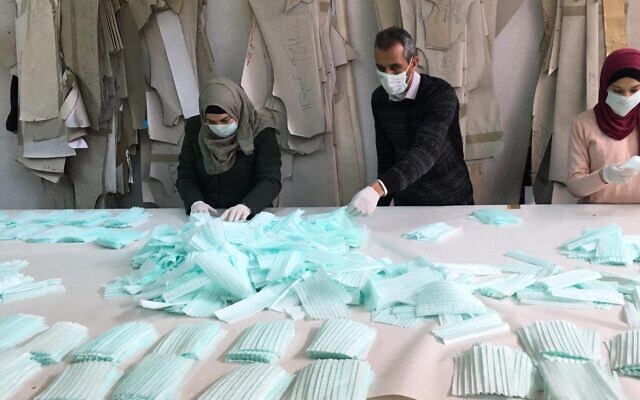
Amjad Zughayer, 30, ran a shoe factory in Hebron but decided in early March to transform it into a mask production facility.
“The idea came to me when I saw the high demand for masks here,” he said. “After I found the raw materials to make them, the only issue was locating the correct machines and figuring out the right technique.”
Zughayer said he tirelessly searched in Hebron for machines that would enable him and his staff to produce masks without burning or tearing them — an issue they encountered with the equipment they use to make shoes.
“I looked at many different places before I finally found something that works,” he said.
As of Wednesday, his company was manufacturing some 7,000-10,000 masks per day and added 30 workers for a total of 50 employees.
Zughayer said he sells them for NIS 1.5 per unit — what he said was the cost of production — to health professionals, PA security forces and municipalities, while offering them to pharmacies and other vendors for NIS 2.
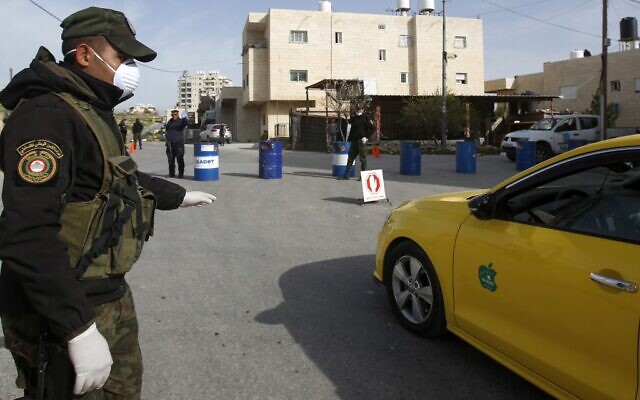
Haidar al-Hajji, the director of the Palestine Standards institution, a PA body that licenses companies to manufacture products, said there were two companies in the West Bank making masks and four others producing protective gear, adding that he thought they were meeting the Palestinian market’s demand.
“I think they should even be able to support other markets in neighboring countries like Israel and Jordan,” he said.
He also said that there were four other companies in the West Bank trying to get licenses to manufacture protective gear.
Zughayer said that he was proud of making masks for Palestinians.
“It is really important to me that we are making them in our country with our hands,” he said. “We are making our contribution to preventing the spread of the virus.”






The Times of Israel Community.