

Rabbinical council to decide whether to topple coalition over enlistment law
Decision-making body for key ultra-Orthodox coalition faction will convene on Wednesday; meanwhile, government is trying to delay vote on controversial bill
 Add ToI as a Preferred Source on Google
Michael Bachner is a news editor at The Times of Israel

A key decision-making council for an ultra-Orthodox coalition faction will convene this week to decide whether to quit the government if a contentious bill regarding drafting religious seminar students to the army passes in its current form.
The legislation, opposed by ultra-Orthodox parties, is scheduled to go up for a final vote in the Knesset plenum on December 2, although coalition party leaders decided Sunday in a meeting to ask the High Court of Justice to further extend the deadline it previously set for the government.
The contentious legislation, written by the Defense Ministry, sets minimum yearly targets for ultra-Orthodox conscription that, if not met, would result in financial sanctions on the yeshivas, or rabbinical seminaries, where they study. At the same time, it also formalizes exemptions for the vast majority of yeshiva students.
On Monday, the Council of Torah Sages of Agudath Yisrael, a rabbinical body that makes many of the decision for one of the two factions that makes up the United Torah Judaism (UTJ) coalition party, said it would convene on Wednesday, according to the Walla news site.
The council will determine during that meeting whether Agudath Yisrael lawmakers Yaakov Litzman, Meir Porush, Yisrael Eichler and Menachem Eliezer Mozes will leave the coalition if the law passes in the Knesset in its current form, a move likely to trigger early elections.
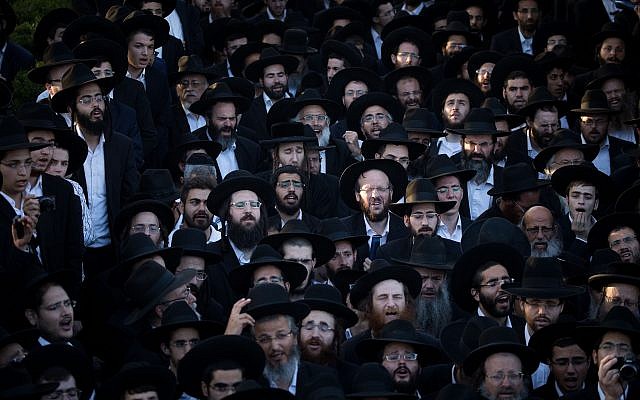
Last month, the rabbinical council said UTJ did not intend to bring down Netanyahu’s government over the issue. A source within the party told The Times of Israel that the Council of Torah Sages of Agudath Yisrael agreed to consider backing the amended bill if “a few changes are made.”
Before that, ultra-Orthodox coalition partners threatened to topple the government if the amended version submitted by the Defense Ministry is implemented.
Many in the ultra-Orthodox community shun the mandatory military service that applies to most Israelis, and the community has historically enjoyed blanket exemptions from the army in favor of religious seminary studies.
Last September, the High Court ruled that a 2015 version of Israel’s draft law granting most yeshiva students draft exemptions was unconstitutional, and gave lawmakers a year to institute new guidelines for ultra-Orthodox enlistment.
The court later gave Netanyahu’s government until December 2, to pass an amended version of the bill regulating IDF enlistment. If new legislation is not voted into law, current deferral regulations will expire with the deadline, and thousands of yeshiva students will find themselves unable to renew their deferments, making them eligible to be drafted by the IDF.
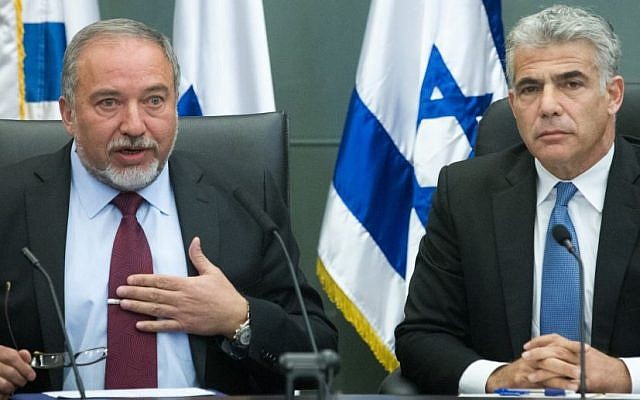
Netanyahu is reportedly confident that he can pass the new version of the law even without the support of the ultra-Orthodox Shas and United Torah Judaism parties, by banking on the support of the secularist opposition parties Yesh Atid and Yisrael Beytenu, both of whom supported the legislation in its first, initial vote in parliament.
Nevertheless, those opposition factions may wish to capitalize on the coalition’s vulnerable status — reduced to the minimal majority of 61 MKs after Avigdor Liberman resigned earlier this month as defense minister and withdrew his Yisrael Beytenu party from the coalition — and oppose the bill in a move that could topple the government.
Raoul Wootliff contributed to this report.









The Times of Israel Community.