

Schools in Kazakhstan, Uzbekistan, and Azerbaijan portray Jews fairly, study shows
Findings on Muslim-majority Central Asian countries more encouraging than previous investigations into European countries
 Add ToI as a Preferred Source on Google
Zev Stub is the Times of Israel's Diaspora Affairs correspondent.

Textbooks used in schools in Kazakhstan, Uzbekistan, and Azerbaijan offer generally fair and even positive depictions of the Jewish people, according to a series of reports published by the Institute for Monitoring Peace and Cultural Tolerance in School Education (IMPACT-se).
A report published Tuesday on Kazakhstan’s textbooks is the last of a three-part survey of school curricula in Muslim-majority Central Asian countries, produced in partnership with the Ruderman Family Foundation. Reports on Uzbekistan and Azerbaijan were published in March and February, respectively.
Kazakhstan and Uzbekistan have maintained diplomatic relationships with Israel since 1992, with increasing economic ties in recent years. Azerbaijan, which shares a border with Iran, enjoys the strongest relationship with Israel of the group, with an embassy opened in Israel in 2023 and a trade agreement under which it supplies about 40 percent of Israel’s oil needs.
An evaluation of more than 100 textbooks used in Kazakhstan over the past decade to teach students in grades 2-11 found a positive portrayal of Judaism, Jewish religious practices, and Jewish history, with Judaism portrayed as part of the country’s multicultural composition, IMPACT-se said. Antisemitism and the Holocaust were fairly discussed, and Israel’s revival of the Hebrew language is “particularly admired,” the report said.
“However, differing textbooks offer varied coverage of the Arab-Israeli conflict, from balanced narratives to more one-sided portrayals,” the report noted.
Similar positive observations were noted in Uzbekistan, where Israel’s economic achievements were appreciated, Hamas and Hezbollah were labeled “radical Islamist organizations,” and values like diversity and tolerance were promoted with no signs of Islamism or radicalism, IMPACT-se said.
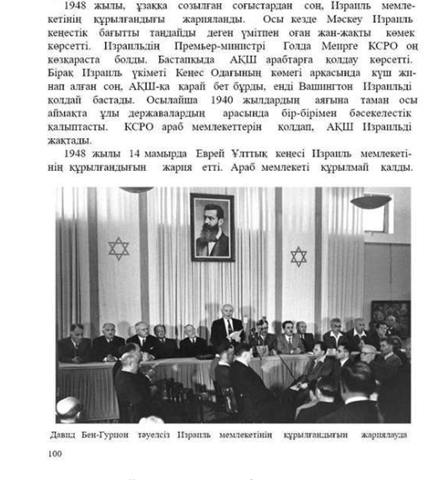
In Azerbaijan, anti-Israel narratives were removed from new textbooks, reflecting a shift toward a more balanced overview of the conflict, the report said. Azerbaijan has also become the first Muslim-majority country to incorporate a definition of antisemitism into its textbooks, it noted, although textbooks lacked coverage of Azerbaijani and general Jewish history.
“As a strategic neighbor to Iran, Azerbaijan’s societal values hold geopolitical significance, and so its curricular implementation of secular ideals is of significance,” IMPACT-se said.
The reports on Muslim-majority Central Asian countries were positive compared to previous investigations by IMPACT-se. A survey of Irish textbooks published in November found that school curricula “trivialize Auschwitz, misrepresent Judaism and are hostile to Israel,” while a report on Polish textbooks published in December found that many still contain antisemitic narratives, despite overall improvements over the past decade.
Unsurprisingly, recent reports on schools in Gaza and Syria showed continued promotion of antisemitism, violence, and martyrdom within their educational systems.







The Times of Israel Community.