

Senate confirms Ashton Carter as Pentagon chief
Obama’s pick to replace Hagel brings quiet record on Israel, will need to steer military through confrontation with Islamic State
 Add ToI as a Preferred Source on Google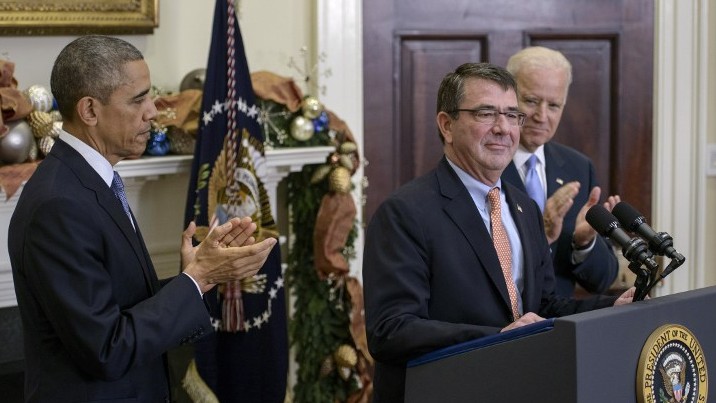
WASHINGTON — The Senate confirmed the president’s choice to run the Pentagon, giving the nod to Ashton Carter by a wide margin.
The vote Thursday was 93-5 for Carter to replace Chuck Hagel and be Obama’s fourth defense secretary in six years.
Carter faces the unenviable task of steering the military as the United States battles Islamic State militants in Iraq and Syria, and deals with crises in Ukraine and the drawdown of the war in Afghanistan.
His confirmation comes as Republicans and Democrats have reacted negatively to the president’s draft proposal for authorizing force against the extremists.
The 60-year-old Carter is a physicist by training. He served as the Pentagon’s No. 2 official from 2011 to 2013.
Hagel struggled with Obama’s insular group of national security advisers. He announced in November he was stepping down.
A civilian, Pentagon insider, Harvard professor, and Rhodes scholar, Carter is known in defense circles as an efficient administrator with an effective working relationship with the Pentagon’s top brass, while Hagel was seen as having an adversarial relationship on issues of military budgeting.
Hagel’s nomination in 2013 chafed at some in pro-Israel circles, sparking concern that his Senate confirmation would be held up due to comments he made in the past about the influence of the “pro-Israel lobby.”
Carter, however, is relatively quiet on Israel — at least publicly. But what he has said has been supportive.
‘Protecting America means protecting Israel, and that’s why we’re here in the first place’ — Ashton Carter in Israel last year
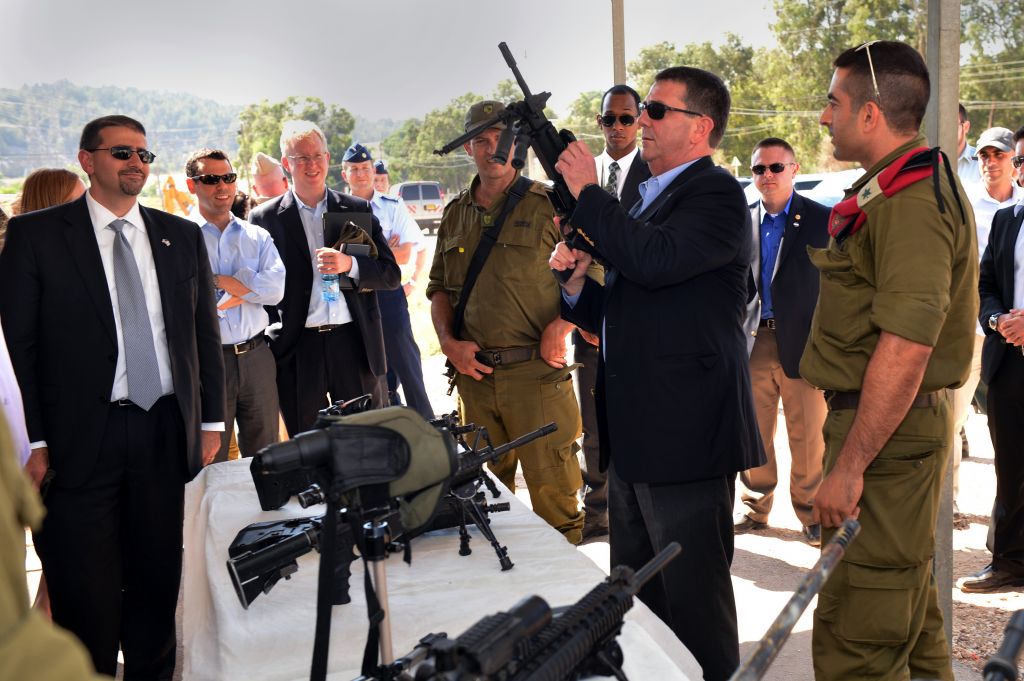
His first official trip to Israel was in 2013 — shortly after a visit by Defense Minister Moshe Ya’alon. Carter met with Ya’alon, then-national security adviser Yaakov Amidror and Defense Ministry Director Udi Shani, who hosted an official dinner for him.
Observing members of the Oketz IDF Canine Unit, Carter told the soldiers that “protecting America means protecting Israel, and that’s why we’re here in the first place.”
Carter’s relative quiet on Israel is balanced by a long series of statements on Iran.
Whereas, previously, the State Department has almost exclusively managed the ongoing P5+1 talks with Iran, the appointment of Carter to the top Pentagon position would introduce a new cabinet member with a vocal record on the subject.
Carter brings to the table over 20 years’ worth of experience with nuclear policy, giving him a potentially credible voice in cabinet discussions.
During president Bill Clinton’s first term, Carter served as assistant secretary of defense for international security policy and had a formative role in shaping the deals that resulted in the nuclear disarming of Belarus, Ukraine and Kazakhstan following the fall of the Soviet Union.
Although his policy papers tend to be nuanced and complex, Carter’s position can be characterized as advocating strong action to further non-proliferation aims. In comparison with the administration, Carter seems to place more weight on the significance of credible military force in conducting de-nuclearization negotiations with Iran.







The Times of Israel Community.