

This Yom Hashoah, survivors must bear witness from their living room lockdowns
Grassroots initiatives like Zikaron BaSalon get same boost in attendance as large groups, as events canceled due to COVID-19 force memorials online. (Includes links to ceremonies)
 Add ToI as a Preferred Source on Google
Yaakov Schwartz is The Times of Israel's deputy Jewish World editor
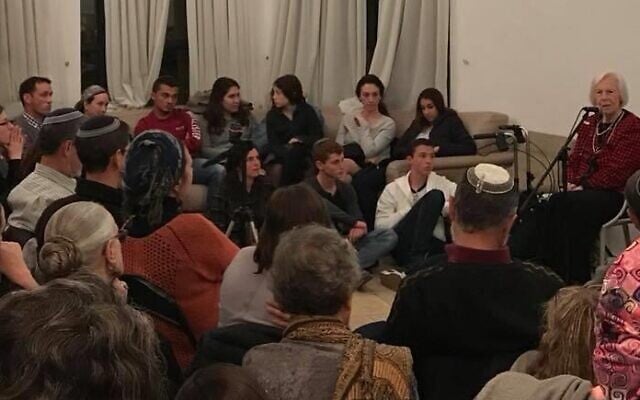
Two years ago, Holocaust survivor, author, and former professor Livia Bitton-Jackson addressed a group of people in her granddaughter’s Jerusalem living room for the first time as part of the Zikaron BaSalon program in honor of Israel’s Yom Hashoah, or Holocaust Remembrance Day.
“It was wonderful,” Bitton-Jackson said. “It was a very heartwarming experience for me.”
The initiative aims for a more interactive Holocaust commemoration and is an alternative to larger — and by necessity more passive — ceremonies. Zikaron BaSalon (in English, “commemoration in the living room”) brings people together in homes, workplaces, and other more intimate environments to speak with survivors.
However, with strict guidelines in place to maintain social isolation during the coronavirus pandemic, as Israel ushers in Yom Hashoah on the evening of April 20, Bitton-Jackson will be confined to her small apartment in the Neve Shalem senior living community in Jerusalem’s Arnona neighborhood. But she’s expecting a bigger audience for her presentation than ever.
“This year, we are doing it on Zoom,” Bitton-Jackson told The Times of Israel. “I will give my talk on Zoom, and whoever I’m connected with will hear me.”
As more than a third of the global population is estimated to be under some form of lockdown, Bitton-Jackson and fellow survivors participating in Zikaron BaSalon aren’t the only ones forced to pivot to tell their stories this Holocaust Remembrance Day. Institutions across Israel, Europe, and the United States have taken activities and ceremonies online in an attempt to maintain – and perhaps even increase – participation.
Virtual ceremonies
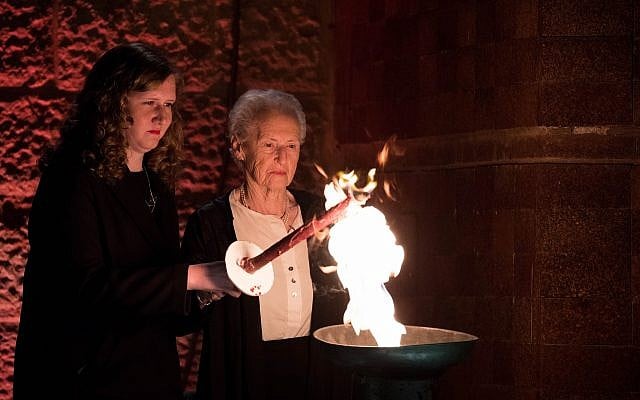
Yad Vashem, Israel’s national Holocaust Memorial and Museum, will go online with its annual ceremony marking the start of Yom Hashoah on the evening of April 20. The program was produced in accordance with Israeli Health Ministry guidelines and includes the annual lighting of six torches by survivors in memoriam of the six million victims of the Holocaust. It has been pre-recorded, and will be broadcast on YouTube and Yad Vashem’s website in six languages.
The museum has also brought a lecture series to Zoom and Facebook Live, and released an online exhibition called “Rescue by Jews, One for All,” which focuses on this year’s theme of Jewish heroism during the Holocaust.
The yearly tradition of reading aloud names of victims has also been given an update: Yad Vashem is encouraging people to participate in a social media campaign by accessing names of Holocaust victims from its website and a record themselves reading them. The museum plans to make a compilation of uploaded videos that are tagged by users with the campaign’s hash tags.
Yad Vashem has Facebook and Instagram accounts in two languages, Twitter in five languages, and their website is in eight. Head of new media and digital projects Gabi Duec says that the museum is “very with it, so to speak, in terms of promoting and sharing our content online.”
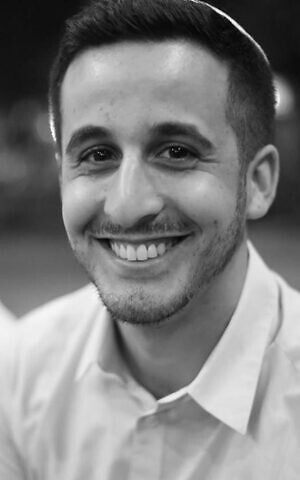
“Especially now with everything that’s happening in the world, we’ve really ramped up our social media and a lot of the responsibility has fallen on the digital side of Yad Vashem,” Duec said.
“With the museum closed, and the campus temporarily closed, we’re looking to share content that is specifically relevant for now, for this time of year – Passover, Yom Hashoah, Israeli Memorial Day, Independence Day,” he said. “And because of the COVID-19 crisis, we’re also looking to share stories of hope, such as Righteous Among the Nations, or of Jews rescuing fellow Jews, which is this year’s theme for our Yom Hashoah commemorations.”
While Holocaust education may not top the list of most popular search terms for people in home isolation, Duec says that Yad Vashem still has much to offer.
“One of the challenges of being Yad Vashem on social media is that people… might not even know they’re looking for Holocaust material. But there are so many topics, and all these stories which can be adapted for a learning environment, especially at home,” he said.
In addition to Yad Vashem, institutions from Israel’s Knesset to the United States Holocaust Memorial Museum (USHMM) are holding online events. The USHMM will simulcast a ceremony on Facebook and YouTube on April 21 which will include remarks given by past speakers including Elie Wiesel and the last surviving Nuremberg prosecutor, Benjamin Ferencz.
The Israel Congress, an NGO made up of academics, businesspeople, and activists, is holding an alternative commemoration ceremony Monday evening aimed at bringing together Israel’s secular and ultra-Orthodox populations.
The Jewish Agency is hosting two virtual Yom Hashoah events, which will broadcast live with testimony from Holocaust survivor Leah Hason. On the evening of April 20, a Hebrew-language event with French subtitles will stream on Facebook Live. On April 21, the agency’s English Facebook page will feature testimony with Spanish subtitles.
The World Jewish Congress (WJC) has moved online a gathering that would have taken place at the Bergen-Belsen displaced persons camp, with the virtual commemoration taking place April 20. In addition, WJC has put together a compiled resource of survivor testimony and educational films, including a new short film featuring survivors who were born at the Bergen-Belsen displaced persons camp.
Israeli embassies around the world are also moving their events online. For example, the Israeli embassy in Berlin, which has plastered a #stayhome sign over its logo, will hold a ceremony on April 21 in Hebrew and English, with a memorial prayer, presentations by embassy staff, and a speech by Ambassador Jeremy Issacharoff. There will also be a separate virtual Zikaron BaSalon session with a Holocaust survivor coordinated by Israel’s Munich consulate.
The show must go on
Dana Sender-Mulla co-founded Zikaron BaSalon when she was in university in Israel a decade ago.
“Most people would either stand by their TVs and passively watch a movie or a ceremony, or in best case, if you’re in school or work you might participate in a ceremony,” Sender-Mulla told The Times of Israel. “A group of us young adults said, ‘this isn’t right for us anymore. This isn’t the right way to commemorate and this isn’t the right way to look into our present and into our future.’”
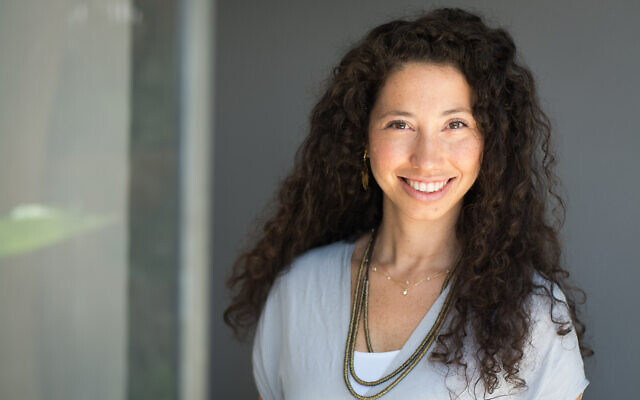
The program, which is intended as a resource for people to conduct gatherings on their own, has since been utilized in thousands of homes around the world, and has cultivated partnerships with organizations spanning from government agencies to Israeli prisons, even working with survivors of prostitution and human trafficking.
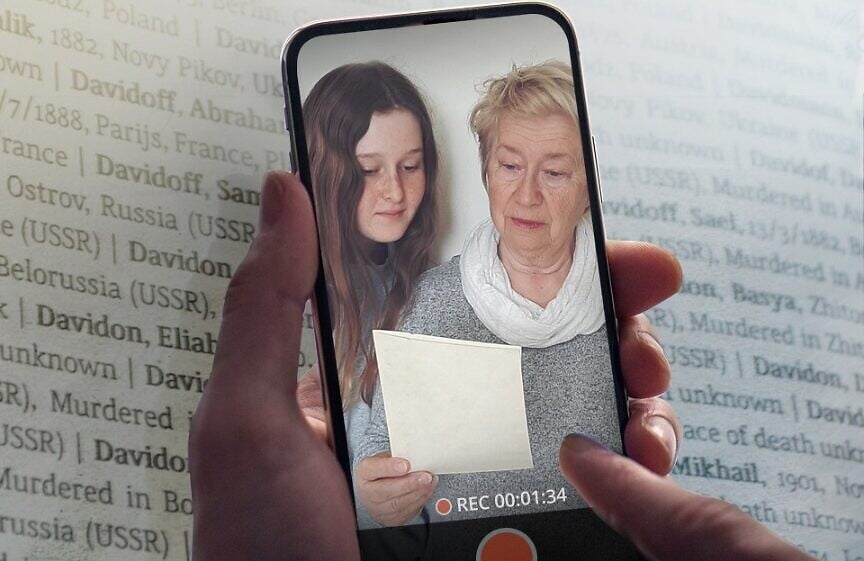
While in years past people would reach out to the staff for help pairing up with a Holocaust survivor, this year they’re looking for online resources — and even asking for help downloading Zoom, Sender-Mulla said. There are over a million people using the Zikaron BaSalon format this year “that we know of,” she said.
While touting the fact that Zikaron BaSalon has democratized the storytelling process, allowing more survivors to share their experiences, she said that “commitment this year has obviously shifted. Many survivors are lacking the technology or the ability to use Zoom. And for some, it isn’t right for them, or they’re not feeling up to it.”
Last year there were over 3,000 survivors sharing their stories through Zikaron BaSalon. This year the number has dropped to just under 300, she said.
Still, that doesn’t necessarily reflect a drop in listeners. Bitton-Jackson’s granddaughter who first introduced her to Zikaron BaSalon says that COVID-19 is not putting a cramp in what is becoming a family tradition.
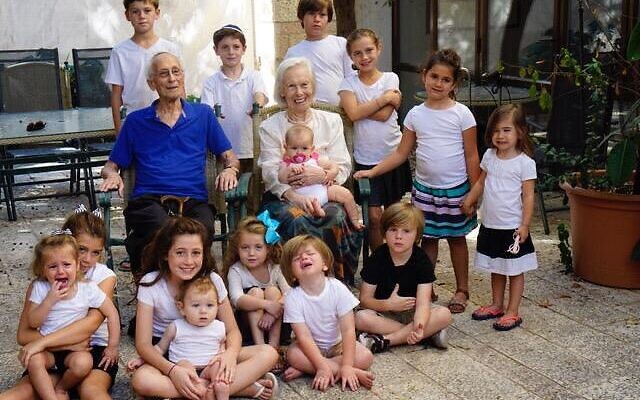
“I honestly don’t know that it’s going to be different, except that it will be bigger or broader, and more people from the United States will be coming, because it’s on Zoom and people are at home when they’d usually be at work,” said Yael Bitton.
“That means our family in the United States can bring their friends and their communities. So our relatives have told us already that we should be attuned to the fact that there’s going to be a bit of a bigger crowd,” she said.
“People unfortunately don’t have such an opportunity to hear from a Holocaust survivor who really went through the experiences and the camps and saw it firsthand anymore, so people are thirsting for that,” Bitton said.
And unlike some, for 90-year-old Bitton-Jackson the technology is far from daunting.
“I have gone through many different things. I’m a Holocaust survivor – so believe me, a Holocaust survivor can handle anything,” Bitton-Jackson said. “I’m delighted with all kinds of new inventions, and I find it wonderful. Zoom is a lot of fun. As a matter of fact, another granddaughter made me promise that next Shabbat, I will Zoom with them, so I’m looking forward to that.”
As for the topic of her talk this year: “I think I’ll do the same shtick,” she said.






The Times of Israel Community.