

Trump’s top campaign aides had repeated communication with Russian intel — report
Intercepted calls and records show constant contact between members of president’s team and Moscow in lead-up to election
 Add ToI as a Preferred Source on Google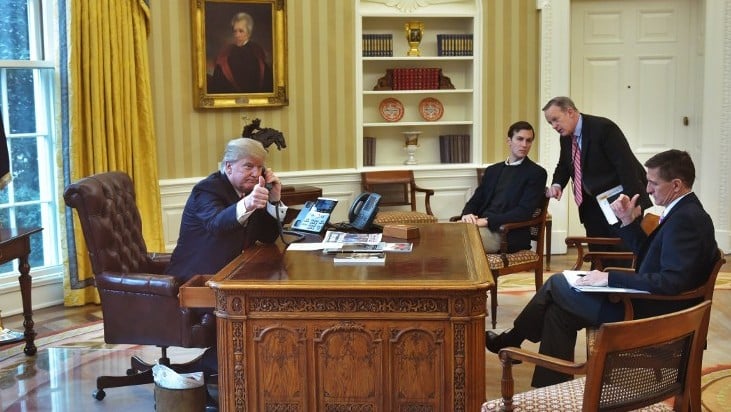
Intercepted phone calls and records from last year show that members of Donald Trump’s presidential campaign had repeated contacts with Russian intelligence officials in the year before the election, according to the New York Times, which cited four current and former US officials.
The intercepted communications were uncovered around the same time intelligence agencies discovered evidence that Russia was trying to influence the election campaign by hacking into the Democratic National Convention, according to the report. The intelligence agencies sought to determine whether the Russians had received cooperation from the Trump campaign, with three of the officials interviewed saying no evidence pointing to such a scenario was found.
American intelligence agencies presented a report, a version of which was published last month, that concluded that Moscow had interfered in the presidential campaign in an effort to sway the vote toward Trump.
The Times reported Tuesday that the Russians made contact with Paul Manafort, who briefly served as Trump’s campaign chairman. In late August, Manafort resigned from that job after disclosures by The Associated Press about his firm’s covert lobbying on behalf of Ukraine’s former pro-Russia governing party.
Manafort dismissed the claims as “absurd” in an interview with the Times.
Current and former US officials interviewed by the Times declined to identify other Trump associates contacted by the Russians.
The report comes a day after Trump’s National Security Adviser Michael Flynn resigned on Monday amid questions over his contacts with the Russians, specifically intercepted calls he made last year to the Russian ambassador to the United States in which US sanctions on Russia were discussed.
The New York Times earlier on Tuesday reported that the FBI had interviewed Flynn on his phone calls with the Russian ambassador days into his job and that Trump had known about a possible problem over three weeks ago.
Citing current and former government officials, the Times said that after the FBI interviewed Flynn on January 26, the justice department’s top official at the time, acting attorney general Sally Yates, reported to the White House that there were significant differences between what intelligence officials knew of the calls and what Vice President Mike Pence had said publicly.
Yates reportedly told the White House that the discrepancies left Flynn potentially vulnerable to blackmail by the Russians.
Trump asked Flynn to resign on Monday after the retired army general admitted having misled Pence on whether his discussions in December with Russian Ambassador Sergey Kislyak involved US sanctions on Moscow.
Pence insisted in television interviews in mid-January that Flynn hadn’t spoken about sanctions with Kislyak. But last week, it came to light that transcripts of those calls show the topic was broached.
It appears Trump left his VP in the dark for weeks.
White House spokesman Sean Spicer said Tuesday that Flynn had lost Trump’s confidence.
“The level of trust between the president and General Flynn had eroded to the point where he felt he had to make a change,” Spicer told journalists.
Flynn is the third Trump aide to step back amid questions about his ties to Russia since the mogul began his improbable White House bid.
His departure follows those of Manafort and Carter Page, an early foreign policy advisor to the candidate.






The Times of Israel Community.