

Trump’s unique diplomacy offers Netanyahu a path to goals in Gaza and beyond
Reshuffling conflict after increasingly rough diplomatic stretch for Israel, US president harnesses broad support for plan to free hostages, disarm Hamas, and transform Middle East

 Add ToI as a Preferred Source on Google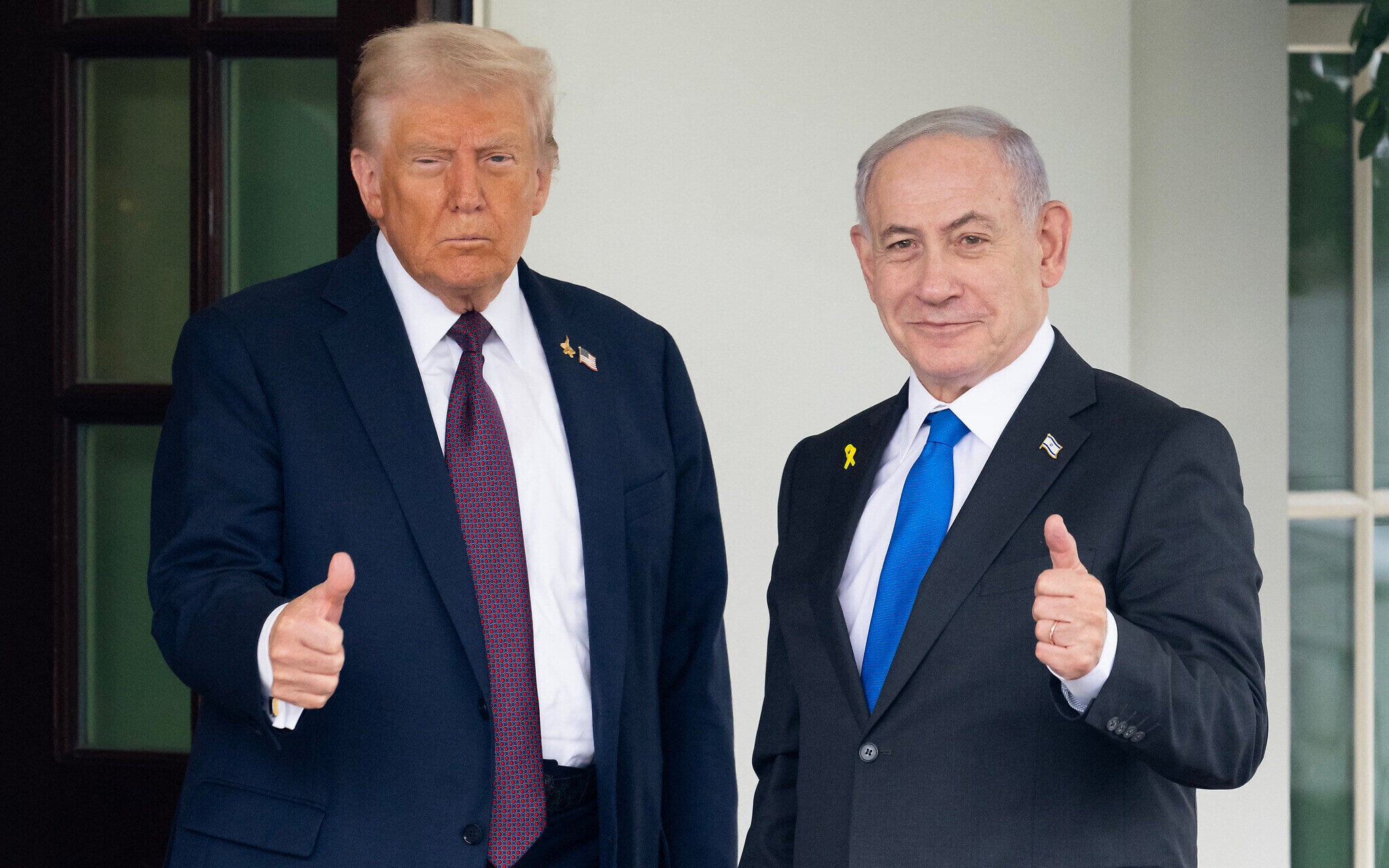
WASHINGTON — The world suddenly looks very different than it did for Israel — and for Hamas — only a week ago.
An anti-Israel campaign had been gaining momentum for months. Photographs of emaciated babies, many with serious preexisting health conditions, were spread by leading media outlets to promote the idea that there was mass starvation in the Gaza Strip. Citing the images, leaders of leading Western countries usually close to Israel hopped on the French train speeding toward recognition of a Palestinian state.
Meanwhile, Israel’s botched strike on Hamas leaders in Doha earlier this month united Muslim countries in a rhetorical offensive against Israel.
The wave crested last week at the United Nations General Assembly, as numerous leaders announced that they recognized a state of Palestine and continued to excoriate Israel for allegedly blocking aid into Gaza.
In Gaza, IDF troops were moving steadily into Gaza City, but there were no indications the military pressure was pushing Hamas into an imminent hostage release.
And the potential annexation of parts of the West Bank was shaping up to be a source of tension between US President Donald Trump and Prime Minister Benjamin Netanyahu, as well as a serious threat to Netanyahu’s own coalition.

After Monday’s White House announcement by Trump following his meeting with Netanyahu — setting out a process for ending the war in Gaza, securing the release of all hostages, transitioning to a post-Hamas Gaza, and opening the door to wide regional normalization — those issues may have begun their fade into history.
Peak Trump
It’s easy to let Trump’s style get in the way of recognizing the scale of his diplomatic achievements on Monday.
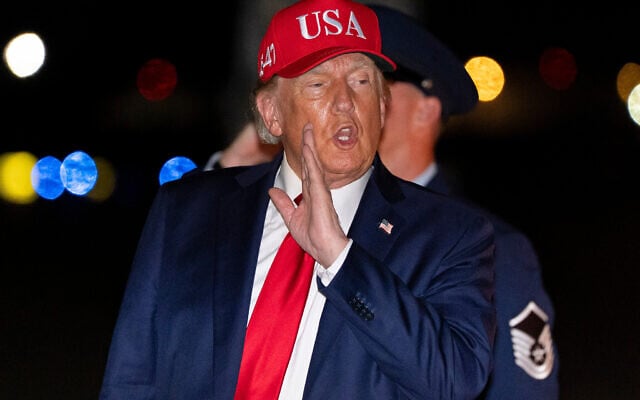
The US president was certainly at peak Trumpiness during his address, especially as he got deeper into the speech. Speaking about the world leaders he had been consulting with about his Gaza plan, he said, for some reason, “They tend to be mostly men, however, I will say that.” He repeatedly blasted Joe Biden, and decided to start changing the way he pronounces the Abraham Accords to approximate the Hebrew pronunciation of the patriarch’s name, more or less.
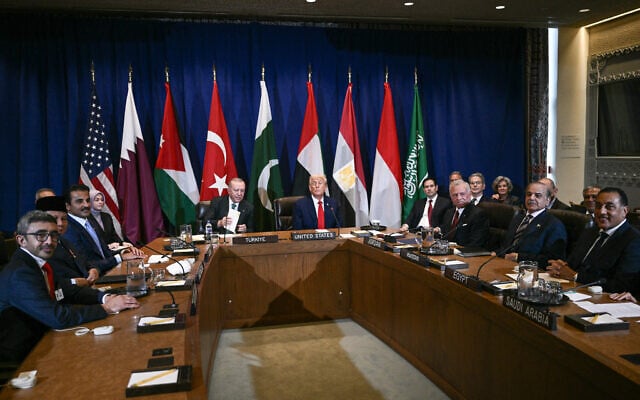
Beyond the laughter- or cringe-inducing elements of the speech, nonetheless, what Trump did through his brand of personal diplomacy is striking. Israel’s right-wing prime minister appeared to sign up for the same Gaza proposal that Hamas defender and Israel-basher Recep Tayyip Erdogan of Turkey endorsed, alongside a number of leading Arab and Muslim countries.
What’s more, only three weeks after Israel fired ballistic missiles into Qatar in a failed attempt to eliminate Hamas’s leadership there, Trump had the Qatari prime minister accepting Netanyahu’s apology and agreeing to set up a trilateral framework to discuss disagreements.
Path to victory
The most significant aspect of the Trump-Netanyahu meeting is, of course, the US president’s proposal itself.
If implemented, it would represent Israel’s most direct path to victory in Gaza. All the hostages would be released at the outset of the deal, Hamas would slowly be disarmed, and a range of regional partners would back a new, non-Hamas and possibly non-Palestinian Authority ruler in the Strip.

From there, Trump intends to use the momentum to transform the Middle East, and rapidly expand the circle of countries that recognize Israel.
The trouble is that those are exactly the reasons for Hamas, ideologically centered on destroying Israel, to try to prevent Trump’s vision from ever taking effect. The Hamas-Israel war has always been a zero-sum game, and a victory for one means a defeat for the other.
Given the relatively unified front backing the Trump proposal, and the president’s public assurances that Israel has his “full backing to finish the job of destroying the threat of Hamas” if the terror group rejects it, Hamas is unlikely to issue an outright “no.”

What it is more likely to do is offer clarifications, to play for time, and if that fails, to do whatever it needs in order to maintain some weapons and a coherent structure so it can begin reasserting itself when the dynamics change at some point in the future.
Though he, like Trump, preferred not to answer questions about any of it at their joint appearance before the press, Netanyahu appears to have accepted that he has no better path than the one Trump is offering.
It has the potential to bring back all the hostages, meet Israel’s war aims, and get normalization with more countries back on track, all ahead of an extremely precarious election in the next year.

It will create problems for Netanyahu among his political allies on his right. They won’t get to resettle Gaza, move Palestinians out, or annex the West Bank. That could complicate his political future.
At the same time, none of those matters were at any point the stated aims of the war in Gaza.
Freeing the hostages and removing Hamas were, and peace deals with more Muslim countries have always been an Israeli goal.
At Trump’s side on Monday, at least, Netanyahu made plain that those aims took precedence over short-term political calculations.






The Times of Israel Community.