

UN head urges dialogue in Venezuela to avert ‘disaster’
Antonio Guterres says an escalation in violence after Guaido declared himself president would have bad consequences for the region
 Add ToI as a Preferred Source on Google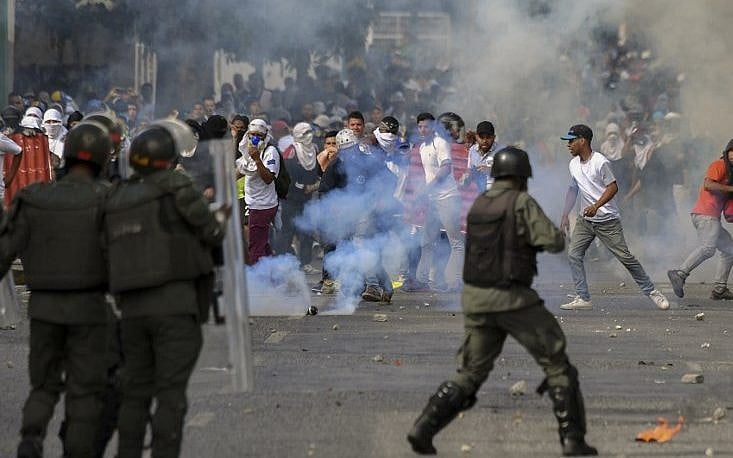
UN chief Antonio Guterres on Thursday appealed for dialogue in Venezuela to avoid the political crisis spiraling out of control, after opposition leader Juan Guaido declared himself interim president.
“What we hope is that dialogue can be possible, and that we avoid an escalation that would lead to the kind of conflict that would be a disaster for the people of Venezuela and for the region,” he said at the World Economic Forum in Davos.
The United States, Brazil and other countries on Wednesday endorsed Guaido’s declaration in repudiation of President Nicolas Maduro, as more protests rocked the economically strapped country.
“Sovereign governments have the possibility to decide whatever they want,” the UN secretary-general said on a Facebook Live broadcast from Davos.
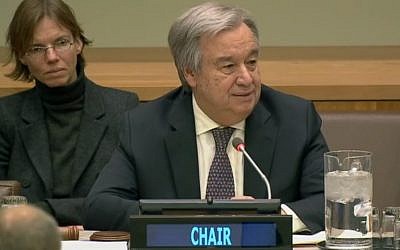
“What we are worried (about) with the situation in Venezuela is the suffering of the people of Venezuela,” he said.
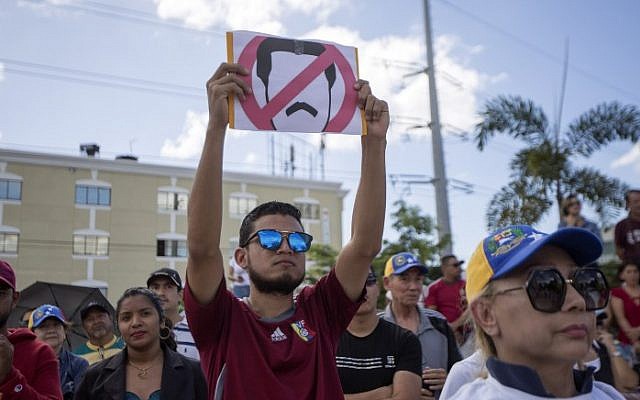
Guaido’s declaration came as tens of thousands of anti-government demonstrators poured into the streets Wednesday accusing embattled Maduro of usurping power and demanding he step down as the country reels from a crushing economic crisis forcing millions to flee or go hungry.
Maduro has presided over a deepening economic crisis that has left millions in poverty as the oil-rich country faces shortages of basic necessities such as food and medicine.
Some 2.3 million people have fled the country since 2015, according to the United Nations, while the International Monetary Fund says inflation will hit a staggering 10 million percent this year.
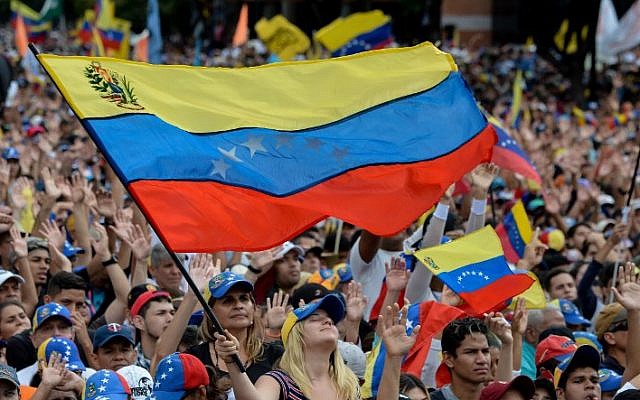
Large crowds of protesters gathered in Caracas Wednesday waving flags and chanting “Get out Maduro!” in what was the largest demonstration since a wave of unrest that left more than 120 dead in 2017.
Pro-government demonstrators dressed in red in support of Maduro were also marching in the capital, at times crossing paths with opposition protesters and shouting “sell outs” and “traitors.” National guardsmen launched tear gas at anti-government protesters in the middle-class neighborhood of El Paraiso but for the most part the marches continued without conflict.
“Join us!” the protesters cried out to a line of officers wearing helmets and carrying shields. “You are also living this crisis!”
The protest is considered a crucial test for the reinvigorated opposition as it seeks to send a forceful message that Maduro no longer has the people’s backing and appeals to the military and the poor to shift loyalties that until recently looked solidly behind the president. The protests were called to coincide with an historic date for Venezuelans — the anniversary of the 1958 coup that overthrew military dictator Marcos Perez Jimenez.
US President Donald Trump in a statement called on other Western hemisphere governments to join him in recognizing Guaido.
“The people of Venezuela have courageously spoken out against Maduro and his regime and demanded freedom and the rule of law,” Trump said.
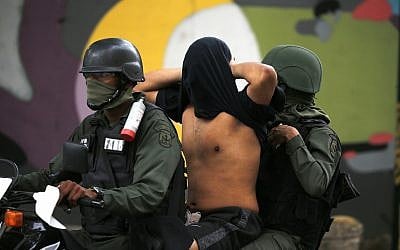
The demonstration came after a whirlwind week that saw an uprising by a tiny military unit put down by government forces, fires set during protests in poor neighborhoods and the brief detention by security forces of Guaido, the newly installed head of the opposition-controlled congress.
Guaido, who is took the reins from a long list of better-known predecessors who have been exiled, outlawed or jailed, was dragged from a SUV just over a week ago by intelligence agents but was quickly released amid an international outcry.
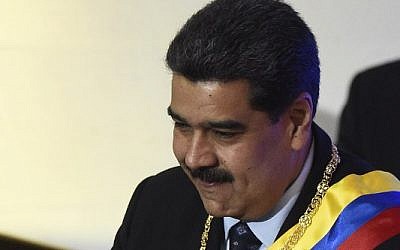
Driving the crisis was Maduro’s decision to ignore international opposition and take the presidential oath on January 10 for a second term widely considered illegitimate, after his main opponents were banned from running against him.
For much of the past two years, following a deadly crackdown on the 2017 protests and the failure of negotiations ahead of last May’s boycotted presidential election, the coalition of opposition parties has been badly divided over strategy and other differences as millions of desperate Venezuelans fled the country’s hyperinflation and widespread food shortages. But buoyed by unprecedented international criticism of Maduro, anti-government forces have put aside their infighting and are projecting a united front.
In the run-up to Wednesday’s protests, Guaido crisscrossed Caracas, attending outdoor assemblies known as “open cobildos” — for the revolutionary citizen councils held against Spanish colonial rule — pumping up crowds by arguing that Maduro must go for democracy to be restored.
Guaido has been targeting his message to Venezuela’s military, the traditional arbiter of political disputes.
Maduro, who lacks the military pedigree of his mentor, Chavez, has sought to shore up support from the armed forces by doling out key posts to top generals, including heading the PDVSA oil monopoly that is the source of virtually all of Venezuela’s export earnings. He has also been playing commander in chief, appearing last week at a military command meeting wearing camouflage fatigues and receiving the blessing of the defense minister, Gen. Vladimir Padrino Lopez.
But beyond the public displays of loyalty from the top brass, a number of cracks have started to appear.
On Monday, Venezuelans awoke to news that a few dozen national guardsmen had taken captive a loyalist officer and seized a stockpile of assault rifles in a pre-dawn raid. The government quickly quelled the uprising, but residents in a nearby slum took to the streets to show their support for the mutineers by burning cars and throwing stones at security forces, who fired back with tear gas.
Disturbances continued into Tuesday, with small pockets of unrest in a few working-class neighborhoods where the government has traditionally enjoyed strong support.
Maduro has accused the opposition of inciting violence with the aim of provoking a bloodbath.
“I demand the full rigor of the law against the fascists,” Maduro said Tuesday night, blaming what he called “terrorists” allegedly linked to Guaido’s Popular Will party for a fire at a cultural center named for a pro-government lawmaker murdered in 2014.






The Times of Israel Community.