

Visiting Israeli border, Lebanese PM vows to expand state authority against Hezbollah
While lamenting near-daily IDF strikes as a ‘blow to our dignity,’ Nawaf Salam pledges reconstruction, restoration of public services during trip to heavily damaged towns
 Add ToI as a Preferred Source on Google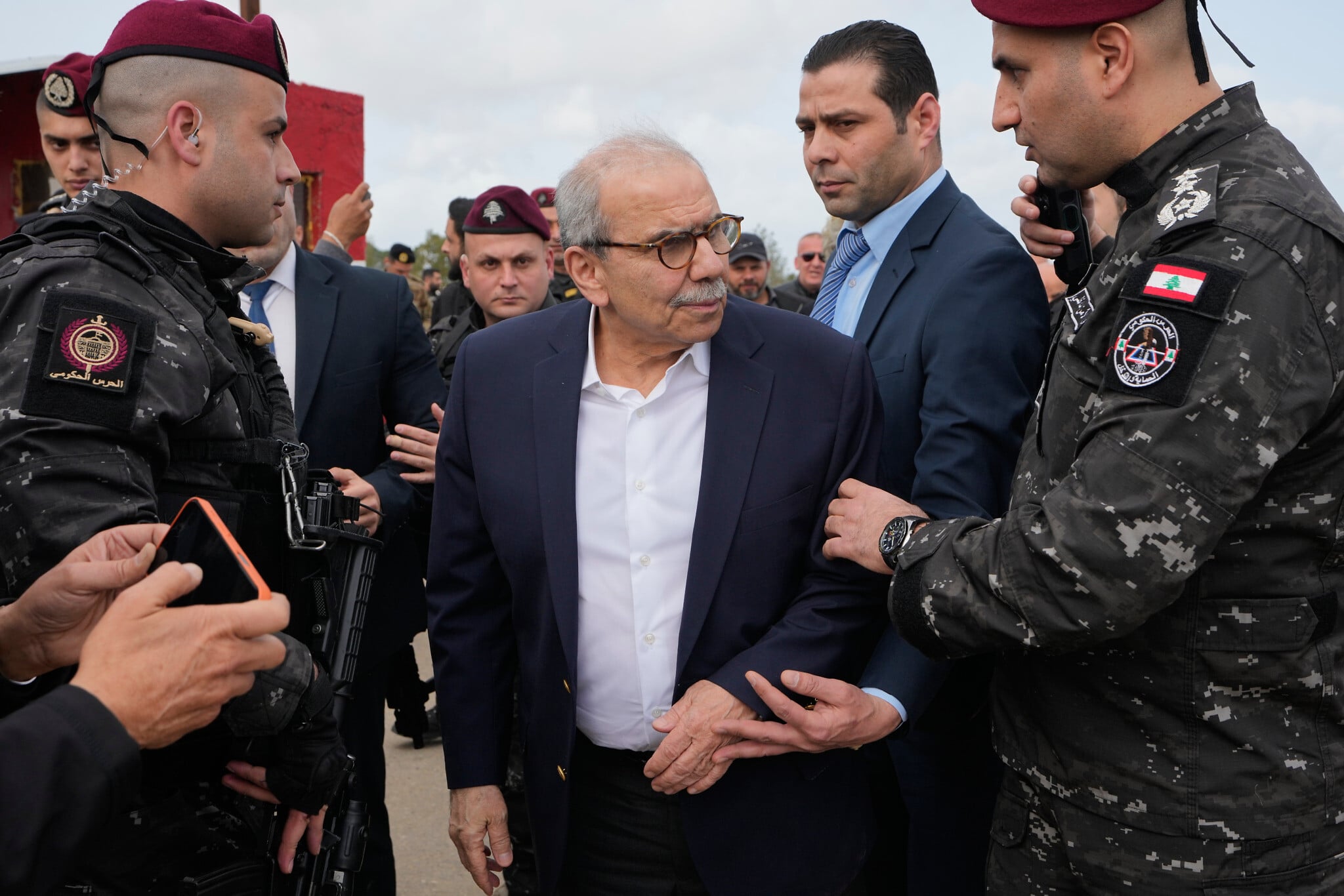
Lebanese Prime Minister Nawaf Salam visited heavily damaged towns near the Israeli border on Saturday, pledging reconstruction and lamenting the frequent strikes on the area as a “blow to our dignity.”
It was his first trip to the southern border area since the Lebanese army said in early January that it had completed its mission of disarming Hezbollah south of the Litani River.
Under the November 2024 ceasefire agreement, the Iran-backed terror group was required to withdraw and disarm south of the river, but Israel alleges that the group remains entrenched in the area, leading to near-daily IDF strikes.
“The challenges today are great, but they do not push us to retreat; rather, they increase our determination to overcome the obstacles,” he said about the security situation in the country’s south, according to Lebanese media reports.
“Border towns are being attacked on a daily basis, and this is a blow to our dignity,” Salam said, emphasizing that his visit was meant to underscore the presence of the Lebanese state in the south of the country, which was been a stronghold of Hezbollah for decades.
Expanding state authority, he said, means not only deploying the army and restoring security but also restoring public services for residents.
Lebanese Prime Minister Nawaf Salam Begins Two-Day Visit to Southern Lebanon pic.twitter.com/oGY7lCkwG3
— ME24 – Middle East 24 (@MiddleEast_24) February 7, 2026
Lebanon’s government has committed to disarming Hezbollah, and the army last month said it had completed the first phase of its plan to do so, covering the area between the Litani River and the Israeli border about 30 kilometers (20 miles) further south.
Visiting Tayr Harfa, around two miles from the border, and nearby Yarine, Salam said frontier towns and villages had suffered “a true catastrophe.”
He vowed authorities would begin key projects, including restoring roads, communications networks and water in the two towns.
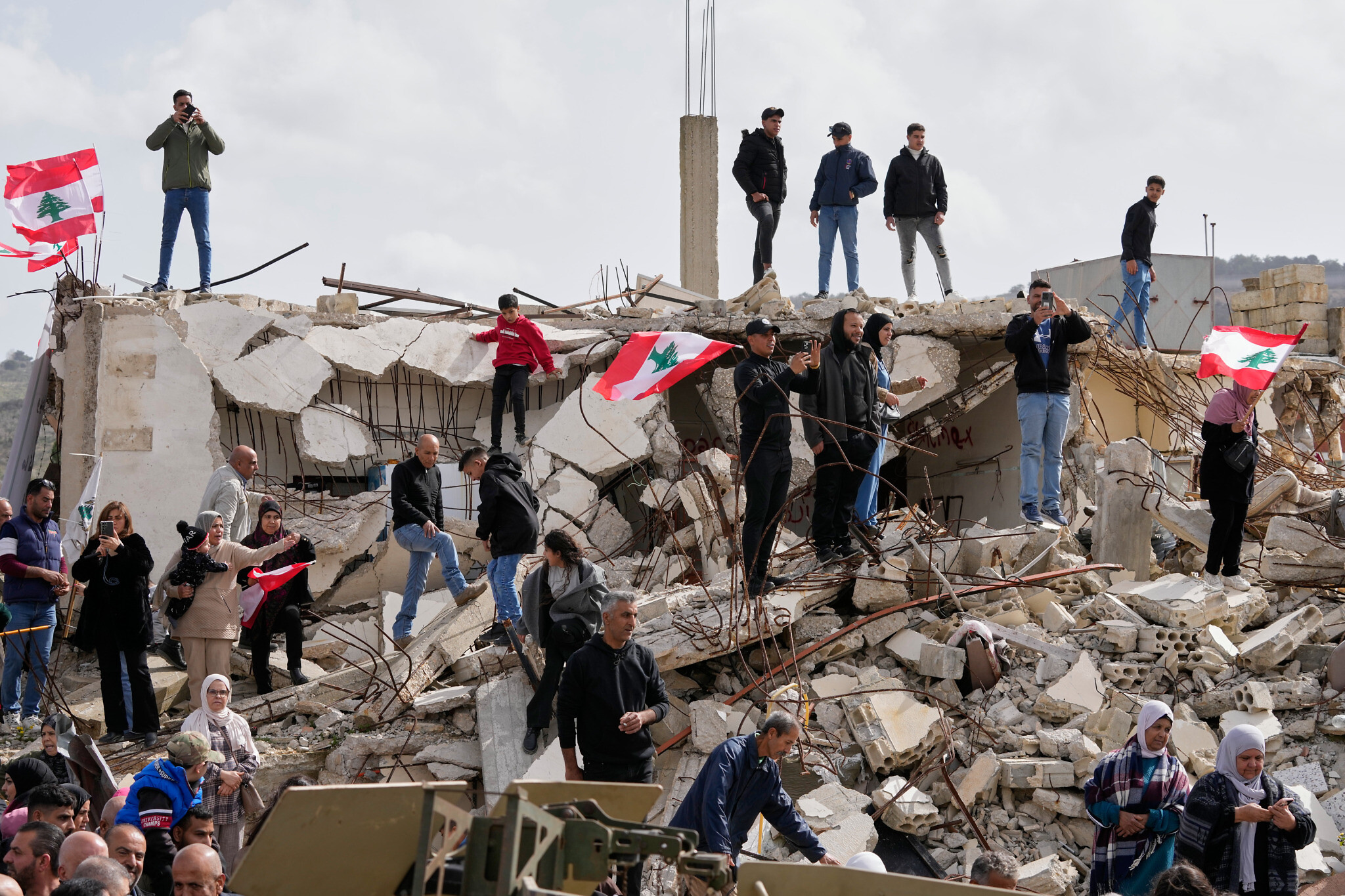
Locals gathered on the rubble of buildings to greet Salam and the delegation of accompanying officials in nearby Dhayra, some waving Lebanese flags.
In a meeting in Bint Jbeil, further east, with officials including lawmakers from Hezbollah and its ally the Amal movement, Salam said authorities would “rehabilitate 32 kilometers of roads, reconnect the severed communications network, repair water infrastructure,” and power lines in the district.
Last year, the World Bank announced it had approved $250 million to support Lebanon’s post-war reconstruction, after estimating that it would cost around $11 billion in total. Salam said funds, including those from the World Bank, would be used for the reconstruction and rehabilitation projects.
On Friday, French Foreign Minister Jean-Noel Barrot visited Beirut, and said that Lebanon’s army must be given the means to disarm Hezbollah and replace the United Nations peacekeeping force after its mandate ends this year.
“France’s vision for Lebanon is that of a strong, sovereign state holding a monopoly on arms,” Barrot said, adding that “the Lebanese government has shouldered its responsibilities by launching and carrying through to completion the first phase of this disarmament plan.”
“The second phase must now begin, and the plan associated with this phase is to be presented in the coming days, and in any case before the conference is held,” he continued, referring to the March 5 meeting in Paris.
The second phase concerns the area between the Litani and the Awali rivers, around 40 kilometers south of Beirut.
Hezbollah has so far refused to hand over its weapons north of the Litani.
The Israel-Hezbollah war began when the terror group began firing missiles across the border on October 8, 2023 — a day after the Hamas-led attack on southern Israel.
The November 2024 ceasefire between Hezbollah and Israel followed an Israeli ground invasion and concurrent air assault that severely degraded the group and killed much of its leadership.






The Times of Israel Community.