

WHO head reverses decision to name Mugabe goodwill ambassador
Tedros Ghebreyesus says he has ‘reflected’ on his decision following international opposition to appointment of Zimbabwean dictator
 Add ToI as a Preferred Source on Google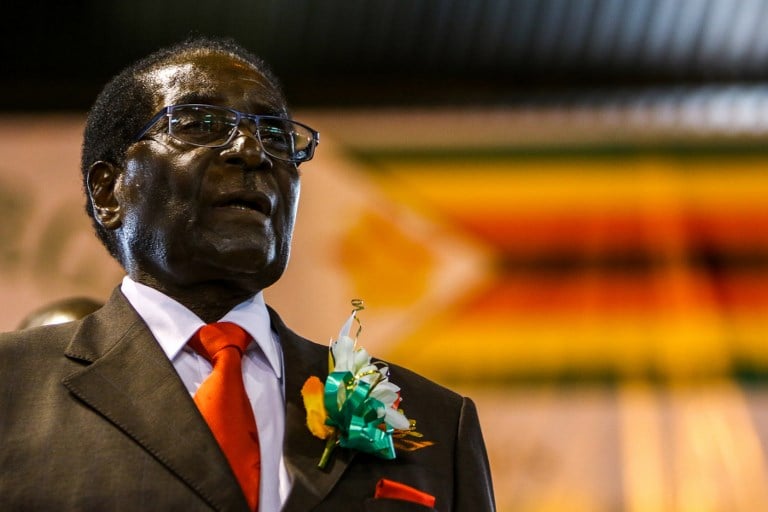
The head of the World Health Organization on Sunday reversed his decision to name Zimbabwean President Robert Mugabe as a goodwill ambassador, following a widespread uproar.
“Over the last few days, I have reflected on my appointment of H.E. President Robert Mugabe as WHO Goodwill Ambassador for (Non-communicable diseases) in Africa. As a result I have decided to rescind the appointment,” the head of the UN agency, Tedros Adhanom Ghebreyesus, said in a statement.
Tedros, who took charge of WHO in July, said he had “listened carefully” to those who condemned the decision.
“We have concluded that this decision is in the best interests of the World Health Organization.”
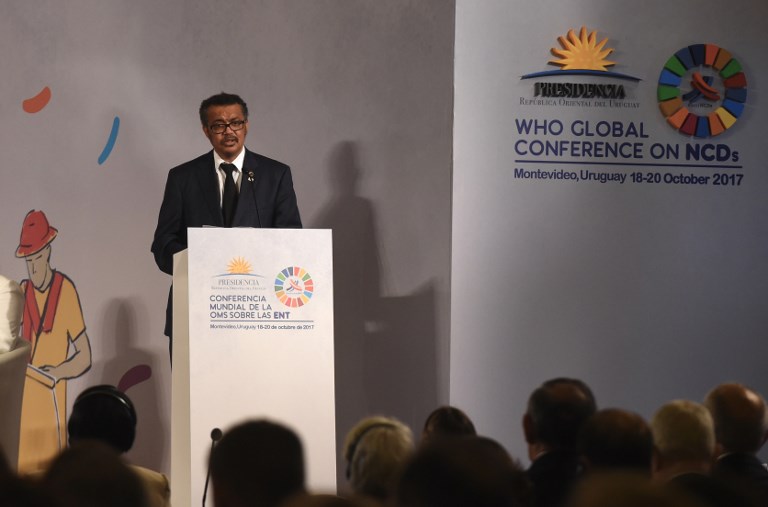
Tedros had announced the appointment earlier this week during a speech in Uruguay, where he praised Zimbabwe as “a country that places universal health coverage and health promotion at the center of its policies to provide health care to all.”
But activists, public health experts and key WHO donors like Britain, Canada and the United States swiftly denounced any prospective role for Mugabe, saying Zimbabwe’s healthcare system has collapsed under his 37 years of authoritarian rule.
Tedros said on Sunday his goal was “to build political leadership and create unity around bringing health to all.”
The WHO boss had faced mounting pressure to reverse the decision, including from some of the leading voices in global public health.
“The Mugabe appointment, coming at the end of (Tedros’s) first 100 days, was a misstep,” the director of the Global Health Institute at Harvard University, Ashish K. Jha, told AFP in an email shortly before the WHO decision was announced.
“Reversing will actually be a strong sign that the leadership listens and is willing to be responsive to views of the global public,” he added.
The United States had called the appointment of Mugabe by WHO’s first African leader “disappointing.”
“This appointment clearly contradicts the United Nations ideals of respect for human rights and human dignity,” the State Department said.
Ireland’s health minister, Simon Harris, called the appointment “offensive, bizarre.” ”Mugabe corruption decimates Zimbabwe health care,” tweeted the head of Human Rights Watch, Kenneth Roth.
Health and human rights leaders chimed in. “The decision to appoint Robert Mugabe as a WHO goodwill ambassador is deeply disappointing and wrong,” said Dr. Jeremy Farrar, director of the Wellcome Trust, a major British charitable foundation. “Robert Mugabe fails in every way to represent the values WHO should stand for.”
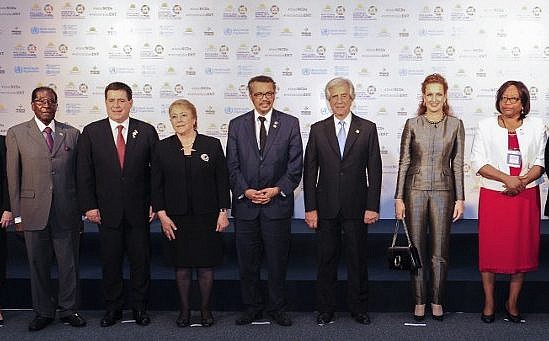
With Mugabe on hand, Tedros announced the appointment at a conference in Uruguay last week on non-communicable diseases.
Two dozen organizations — including the World Heart Federation and Cancer Research UK — released a statement slamming the appointment, saying health officials were “shocked and deeply concerned” and citing his “long track record of human rights violations.”
The groups said they had raised their concerns with Tedros on the sidelines of the conference, to no avail.
Richard Horton, the editor of the leading medical journal The Lancet said: “WHO DG stands for Director-General, not Dictator-General. Tedros, my friend, retract your decision, consult with colleagues, and rethink.”
Multiple critics noted that Mugabe, who is 93 and in increasingly fragile health, travels abroad for medical care because Zimbabwe’s health care system has been so severely decimated.
The heads of UN agencies and the UN secretary-general typically choose celebrities and other prominent people as ambassadors to draw attention to global issues of concern, such as refugees (Angelina Jolie) and education (Malala Yousafzai). The choices are not subject to approval.
The ambassadors hold little actual power. They also can be fired.
Tedros is the former health minister of Ethiopia, and his election as the first African leader of WHO was billed as a key moment for the continent, where much of organization’s work is based.
But his decision to honor one of Africa’s most controversial leaders has raised questions about his leadership just four months into his tenure.





The Times of Israel Community.