

With ‘engaging’ approach to Holocaust storytelling, Yad Vashem targets next generation
A new audiovisual experience and live theater at the national museum and memorial raise questions about Shoah education after survivors pass on
 Add ToI as a Preferred Source on Google
Zev Stub is the Times of Israel's Diaspora Affairs correspondent.
A visit to Yad Vashem, Israel’s national Holocaust memorial and museum, is a sobering and harsh experience that can be difficult for both adults and kids to process.
Now, as the Jerusalem-based institution seeks to engage visitors in new ways, it hopes that two new immersive experiences will succeed in teaching younger generations the story of the murder of six million Jews without trivializing it.
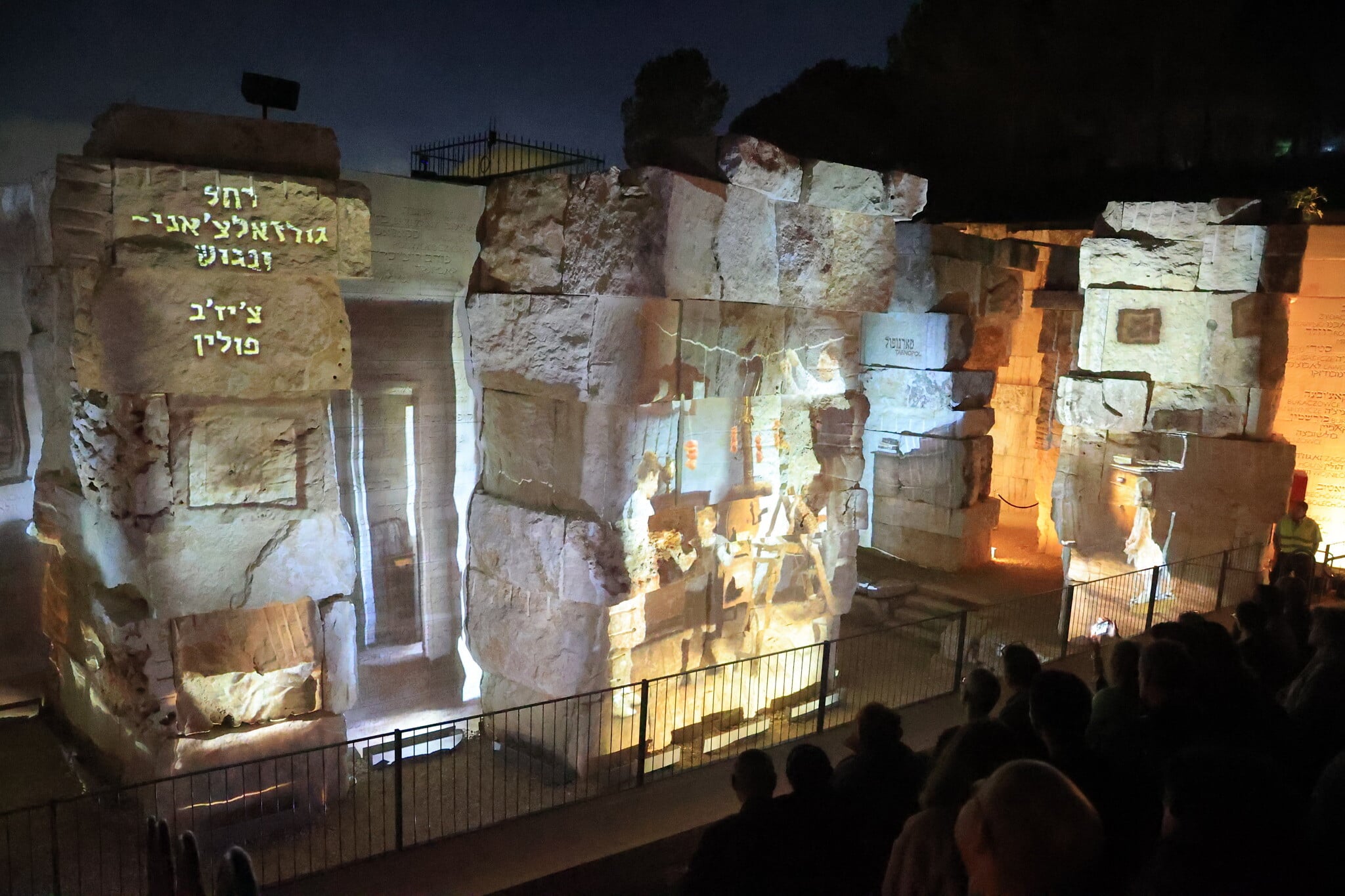
On a recent warm April night, a small audience gathered at Yad Vashem’s new outdoor amphitheater for a new audiovisual show launched earlier in the month. Unlike many of the scenes of horror and oppression depicted throughout the museum’s exhibitions, this show focused on celebrating European Jewish life and culture in Europe before the Holocaust, not just mourning it.
“For our kids, this was the most interesting part of the day here,” said Noa from Tel Aviv, who watched the show with her young children after touring the museum with them. “A lot of what we saw was too graphic for them, and they didn’t have the context to understand it. This show was much more interesting and engaging for them. I’d recommend it for anyone coming here with kids.”
The new presentation, launched this month in Yad Vashem’s Valley of the Communities, is the first of several new installations the museum hopes will help keep it relevant for a younger generation. Later this spring, a new immersive theater will open, with several shows in Hebrew and English telling the stories behind unique artifacts from Yad Vashem’s vast collections.
Eighty years after the end of World War II in 1945, the International Holocaust Remembrance Alliance (IHRA), currently hosted by Israel in a rotating presidency, has dubbed this year “The Crossroads of Generations,” an acknowledgment that many of the poignant voices of those who survived Nazi persecution are no longer with us.
Holocaust educators and institutions such as Yad Vashem are looking for new ways to keep the lessons of the Shoah relevant at a time when there are fewer living eyewitnesses available to give testimony, antisemitism is rising worldwide, Holocaust awareness is declining, and misinformation is rampant online.
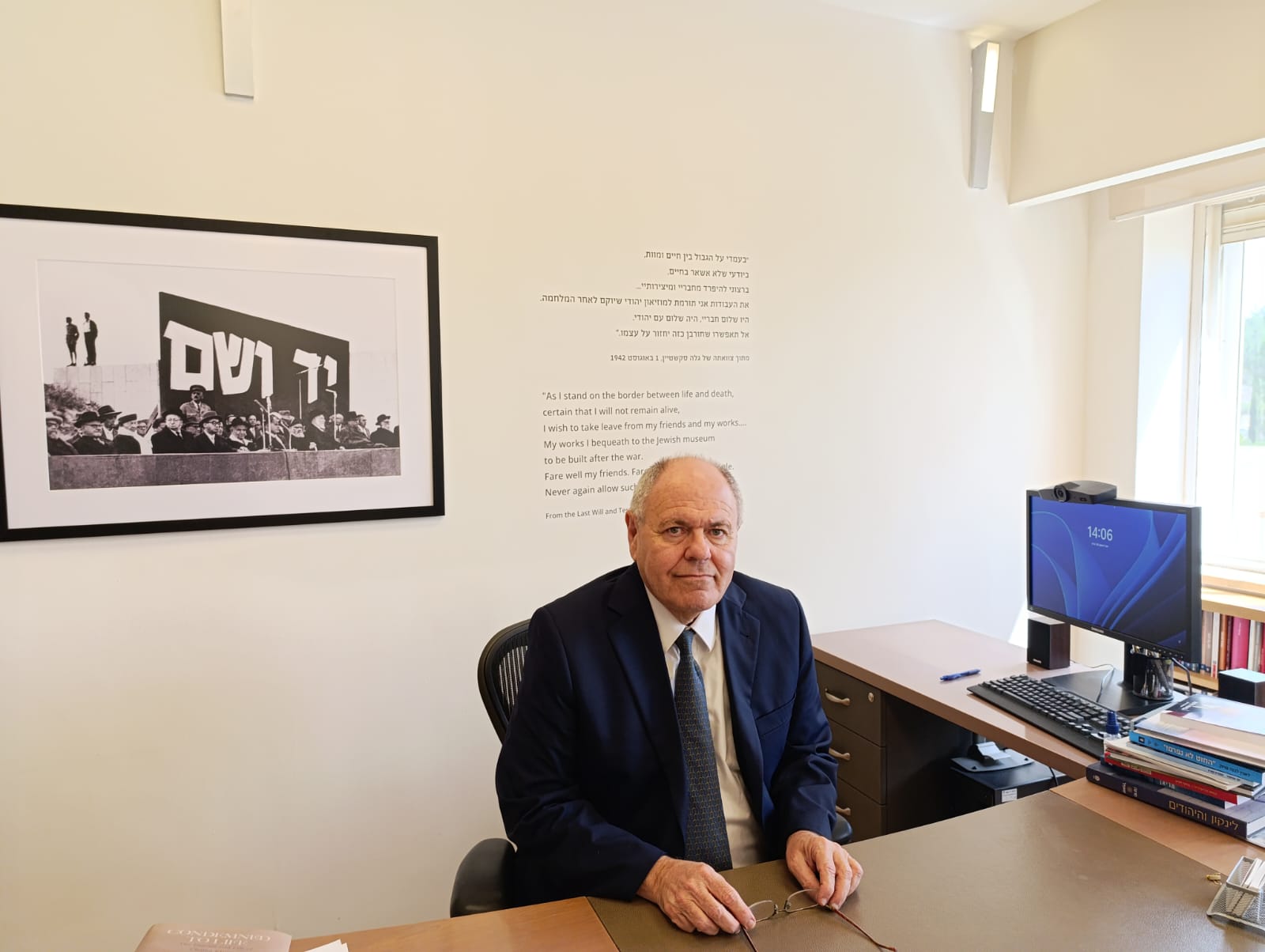
“There is nothing as formative in Holocaust education as sitting in front of a survivor and hearing his or her story firsthand,” Yad Vashem chairman Dani Dayan told The Times of Israel. “It’s like standing on a bridge, with one end in your living room and the other end in Auschwitz. There is no substitute for that.”
However, only about 220,000 Holocaust survivors remain in the world, with half in Israel and the other half spread out throughout some 40 countries, according to the Conference on Jewish Material Claims Against Germany.
Engaging education
New and innovative ways are needed to transmit the Holocaust experience, Dayan told The Times of Israel.
“Our new installations deal with two aspects of Holocaust education that aren’t usually stressed: identity and significance,” said Dayan. “We are not just telling a story, we are touching on issues of resilience, faith, and finding meaning to survive.”
As with all new things, the lines of what is appropriate are not always immediately clear. A recent advertising campaign conducted by Yad Vashem for its new projects featured dramatic music, fast-paced visuals, and a smiling musician, leading some Israelis to question whether it was okay for one of the nation’s most solemn institutions to try to position itself as “cool.”
“We made bold decisions that were not easy and can sometimes be misunderstood,” Dayan said. “We have to find appropriate ways to convey these experiences to younger generations as well.”
Choosing the right way to teach the Holocaust to younger audiences is not always easy, noted Scott Ury, associate professor of Jewish history at Tel Aviv University.
“When discussing these questions, you need to be especially careful about what is appropriate for different ages,” Ury said. “A lot of thought must be given to the point you are trying to teach. I hope they’ll be able to teach the messages of the Holocaust sensitively in an age-appropriate fashion.”
Dayan is confident that Yad Vashem is on the right track.
“We have to provide an emotional experience to our visitors, not just an intellectual one,” Dayan said. “We want Yad Vashem to be a place that attracts people to come on their own initiative, not just because they’re brought by schools or tour operators. We hope that families will come for a full day, or even several visits, to experience what we have to offer.”
Valley of history
Yad Vashem, established in 1953 on Jerusalem’s Mount Herzl, is a sprawling 180 dunam (44.5-acre) complex with numerous buildings, including memorials, museums, research centers, and commemorative sites. As The Times of Israel toured the recently added facilities, there was a quiet tranquility in the extensive gardens overlooking Jerusalem.
A 15-minute walk from the visitor center is the Valley of the Communities monument, a massive 2.5-acre monument chiseled out of the natural bedrock and engraved on the walls with the names of over 5,000 Jewish communities destroyed during the Holocaust.
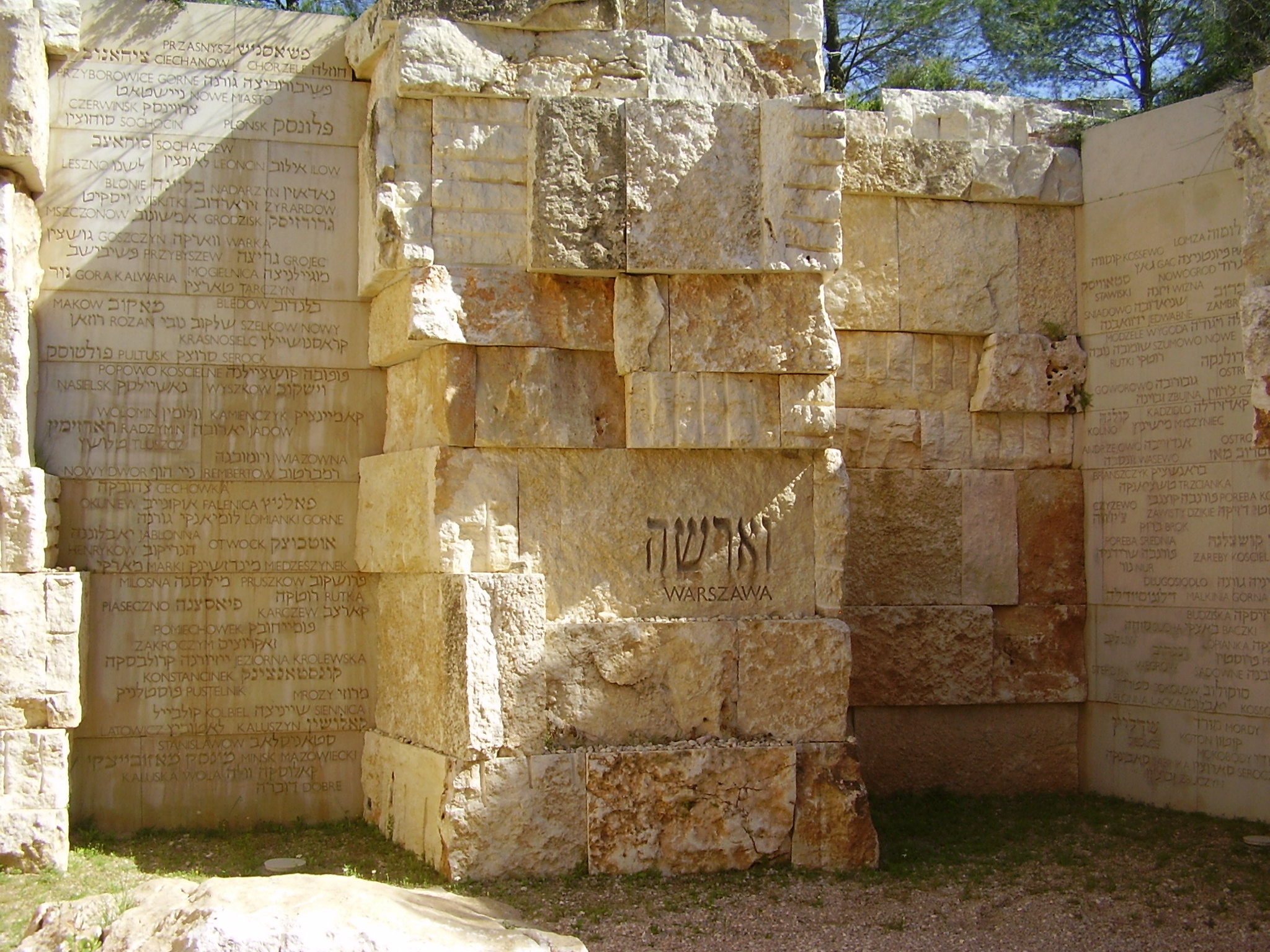
A recent collaboration with the European Union provided €10 million ($10.8 million) to upgrade the Valley of Communities, paving the pathways between the different rooms and erecting a 250-seat outdoor amphitheater where the new audiovisual experience will be shown at night.
The 30-minute presentation includes a cultural tour of Jewish European history, with personal testimonials portraying the richness of Jewish life in North Africa and Europe right up until the eve of the Holocaust. The show, suitable for most younger visitors, is a colorful and reverent look at Jewish history that comes to an abrupt ending in the last scene, when everything that has been built crumbles in the face of the Nazi regime and the screen goes black.
The EU was interested in developing the project to underscore the Holocaust’s place in Europe’s history, a spokesperson for Yad Vashem noted. The content was developed independently at Yad Vashem, without European intervention, he added.
Tickets to the nightly show will be available on Yad Vashem’s website, and an English-language version will be available by Passover, the spokesperson said. A shuttle is available to take visitors from the front entrance of Yad Vashem, and visitors are invited to tour the monument after the show.
Touching memory
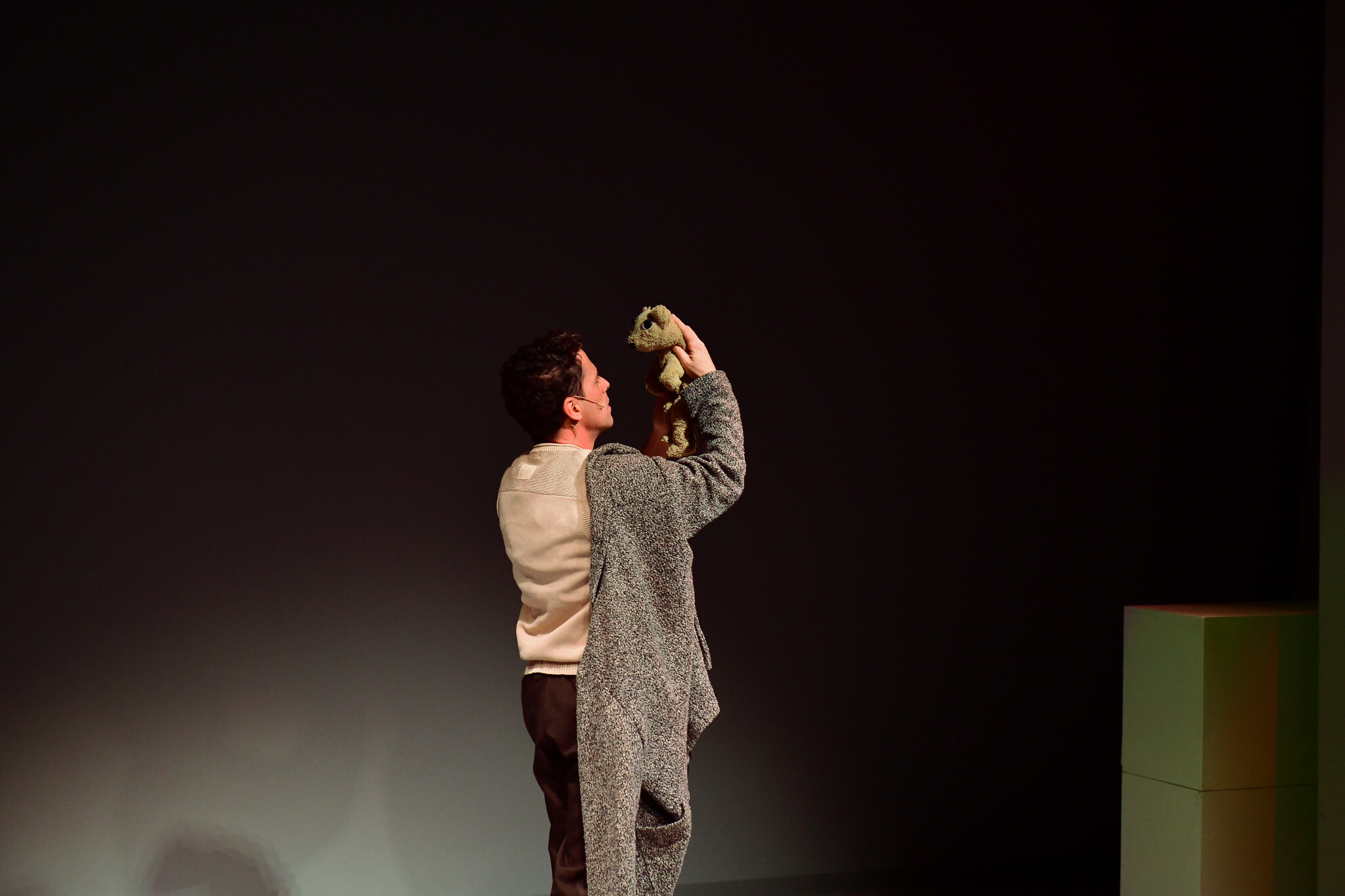
In a nearby building, construction was being completed on the new “Touching Memory” theater, where four different one-man plays in Hebrew and English have been developed to help young viewers connect to survivors on a personal level.
Shows include “The Painter of Truth and Lies,” which tells the story of the painter Leo Haas, whose paintings served as evidence in the Eichmann trial; “Unetaneh Tokef,” of a freezing mountaineer recalling the faith of a rabbi amid the horrors of the camps; “Bar and the Toy Underground,” a story of a boy hiding alone with his toy bear; and “The Curator,” which deals with the telling of the Holocaust story in North Africa. The project was completely funded by an anonymous private donor who had no input on the content, Dayan noted.
The choice of live theater as a medium to engage youngsters was striking, said Daniel Feldman, a senior lecturer of English literature at Bar-Ilan University who specializes in Holocaust literature.
“It is poignant that with all the high-tech tools Yad Vashem has on offer, it has chosen the intimacy of live performance as its latest response to the encroaching post-survivor era,” Feldman said. “This pivot — from digitizing archives to humanizing narratives through live performance — shows that there is no one way to remember the Shoah,” he added.
Growth plans
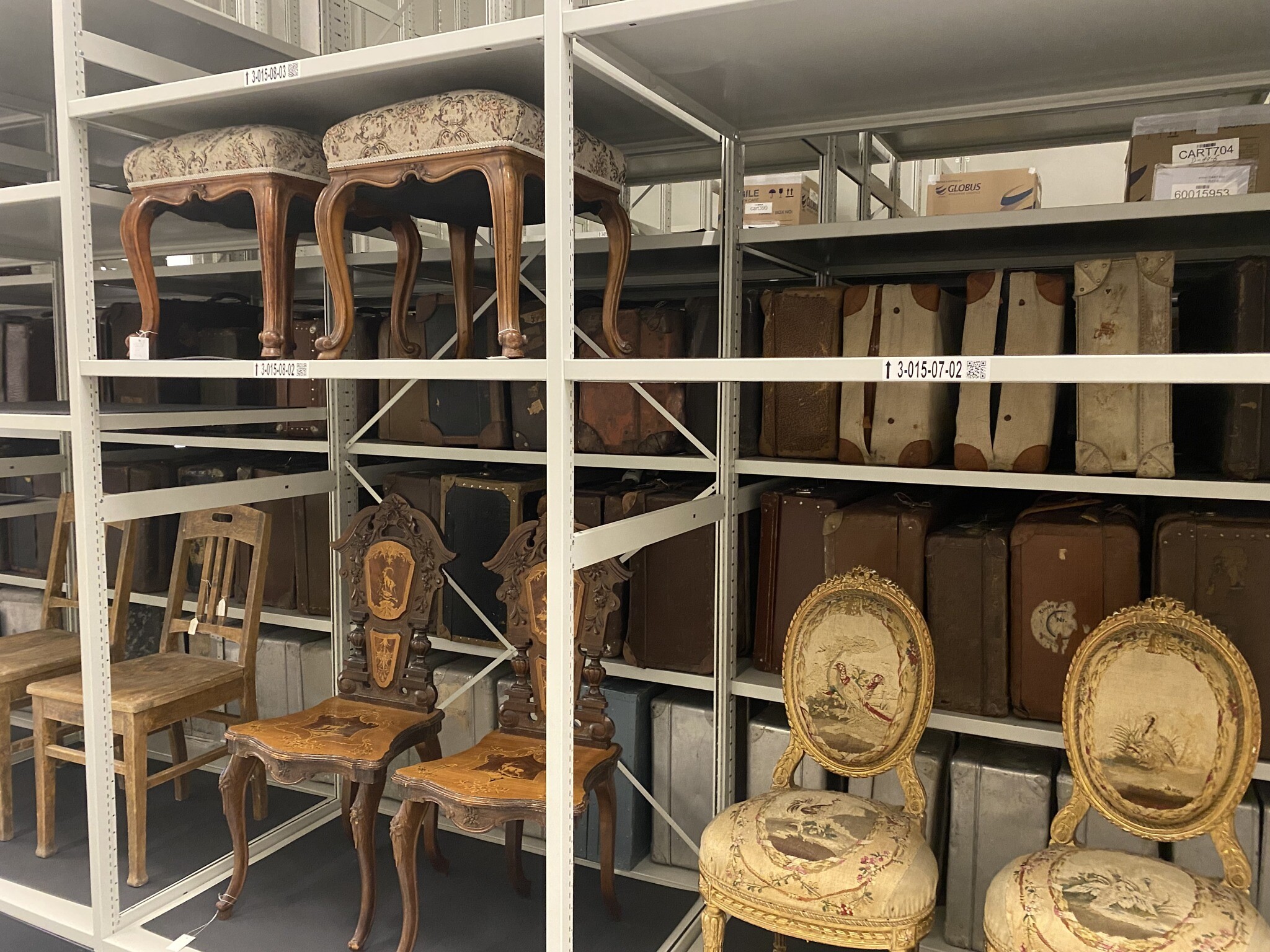
Yad Vashem has been expanding in other ways as well. Last year, it opened the David and Fela Shapell Family Collections Center, a five-story building where it stores and preserves tens of thousands of artifacts, including artwork, photographs, testimonies, artifacts, and other documents.
New items are constantly being added, in a comprehensive process that includes a deep decontamination process, careful storage in a low-oxygen environment to prevent fires, and full digitization and publishing on the Yad Vashem website.
Outside of Jerusalem, Yad Vashem plans to open its educational center in the Ariel Sharon City of Training Bases in the Negev, currently available only for soldiers, to cater to the local population, including Bedouin residents, Dayan said. Other satellite centers are in the works in Nof Hagalil (previously called Nazareth Illit) and Givatayim.
Internationally, initial planning has begun for new Holocaust education centers in Germany and Thessaloniki, Greece, although these are at least several years away, Dayan noted. There are also ambitious plans to exhibit from the museum’s vast collection in galleries throughout the world.
“I would say that most of the projects we envision are already completed or in the final stages of completion,” Dayan said. “One that we haven’t started yet is a museum for children, but that will be a challenge that’s still many years away.”
Financial foundations
All of this depends on strong financial backing at Yad Vashem, something that Dayan takes credit for rehabilitating.
A document from 2022, a year after Dayan took the helm, shows that Yad Vashem was operating at a deficit of nearly NIS 43 million, with 30% of the budget coming from the Israeli government and 60% from private contributions.
Now, the Israeli government provides about 50% of operating costs, which have been streamlined and cut, Dayan said. These figures are separate from the costs of new initiatives, which are 100% funded by donors, he added.
Yad Vashem’s financial reports for 2023 show that it received NIS 90.4 million from the Israeli government, NIS 80.1 million from donations, and NIS 18 million from other activities. Figures for 2024 are not yet available.
“2024 was an extremely good year for fundraising, in spite of the challenges facing Israel,” Dayan said. “At a time when politics divide the Jewish people, remembrance is one of the things that still unites us.”





The Times of Israel Community.