

64 dead in Yemen as al-Qaida group blows up army post
Six civilians, 24 militants and 14 soldiers killed
 Add ToI as a Preferred Source on Google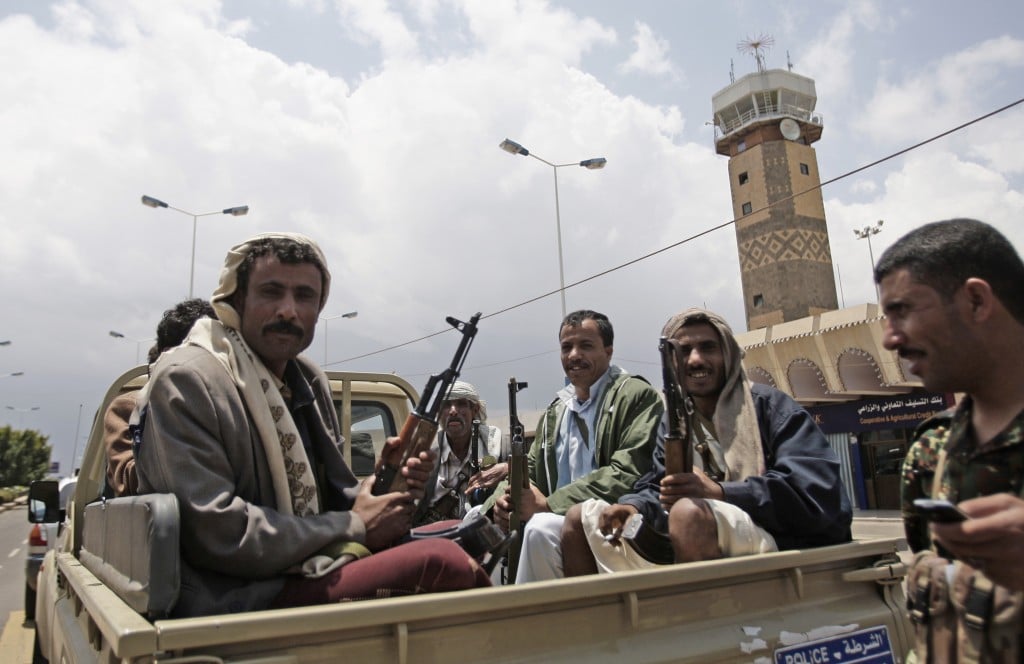
SANAA, Yemen (AP) — Yemeni military officials say they have pushed back al-Qaida militants from taking control of a key city after a lengthy battle that left 64 people dead.
The clashes erupted Monday after the militants attacked a Yemeni army post in the city of Lawder in Abyan province, where al-Qaeda fighters are active.
Residents and military officials say dozens of militants and soldiers, including a colonel, were killed in the clashes. The officials spoke on condition of anonymity in line with military rules.
Jihad Hafeez, a member of an anti-al-Qaeda civilian committee in Lawder, says six of his men were also killed.
The attack demonstrates how al-Qaeda’s branch in Yemen has exploited the political and security turmoil following the country’s yearlong uprising, managing to take control of large swaths of land in the south and staging increasingly bold attacks on the military.
The officials said the militants attacked an army position in the town of Lawder in Abyan province, where al-Qaeda fighters are very active.
They said the dead included a colonel. In addition, three soldiers were wounded.
Members of armed popular anti-al-Qaeda committees joined the fighting alongside the soldiers. The committees are formed by civilians, mainly from anti-al-Qaeda tribes, who oppose the terror group.
A member of one of the committees, Abdullah Amer, said the militants tried to enter Lawder at dawn. Lawder is a strategic town northeast of Zinjibar in Abyan province where al-Qaida fighters still control some areas.
He said fierce fighting raged for hours before the militants were forced to retreat.
The officials said a nearby army brigade sent reinforcements to the army post in Lawder to back up the soldiers during the firefight.
The officials, who spoke on condition of anonymity in line with military rules, said three militants were also killed in government heavy shelling of the town of Jaar, near Zinjibar, which is still under the militants’ control.
Al-Qaeda’s branch in Yemen, known as al-Qaeda in the Arabian Peninsula, is one of the movement’s most dangerous offshoots.
Al-Qaeda and other militant groups have taken advantage of Yemen’s yearlong political turmoil to try to expand their toehold in the country’s south and have captured several key cities and towns.
Yemen’s uprising, inspired by Arab revolts elsewhere, forced longtime president Ali Abdullah Saleh out of office in February. His successor, Abed Rabbo Mansour Hadi, was later rubber-stamped as president in a nationwide vote. Hadi has vowed to fight al-Qaida while restructuring the armed forces, in which Saleh’s loyalists and family members still hold key posts.
Hadi, in his attempt to shake up the military, fired key commanders and relatives of Saleh including the ex-president’s half-brother, air force commander Mohammed Saleh Ahmar. The air force commander initially defied the order and seized control of the airport in the capital of Sanaa on Saturday. Ahmar holed himself up in his office before abruptly leaving Sunday as the airport was reopened.
Copyright 2012 The Associated Press.








The Times of Israel Community.