

As Israel withdraws troops from Gaza, a dilemma for Hamas
Its popularity waning, the terror group is faced with a choice: perpetrate a large attack or slide into a long-term ceasefire

 Add ToI as a Preferred Source on Google
Avi Issacharoff, The Times of Israel's Middle East analyst, fills the same role for Walla, the leading portal in Israel. He is also a guest commentator on many different radio shows and current affairs programs on television. Until 2012, he was a reporter and commentator on Arab affairs for the Haaretz newspaper. He also lectures on modern Palestinian history at Tel Aviv University, and is currently writing a script for an action-drama series for the Israeli satellite Television "YES." Born in Jerusalem, he graduated cum laude from Ben Gurion University with a B.A. in Middle Eastern studies and then earned his M.A. from Tel Aviv University on the same subject, also cum laude. A fluent Arabic speaker, Avi was the Middle East Affairs correspondent for Israeli Public Radio covering the Israeli-Palestinian conflict, the war in Iraq and the Arab countries between the years 2003-2006. Avi directed and edited short documentary films on Israeli television programs dealing with the Middle East. In 2002 he won the "best reporter" award for the "Israel Radio” for his coverage of the second intifada. In 2004, together with Amos Harel, he wrote "The Seventh War - How we won and why we lost the war with the Palestinians." A year later the book won an award from the Institute for Strategic Studies for containing the best research on security affairs in Israel. In 2008, Issacharoff and Harel published their second book, entitled "34 Days - The Story of the Second Lebanon War," which won the same prize.
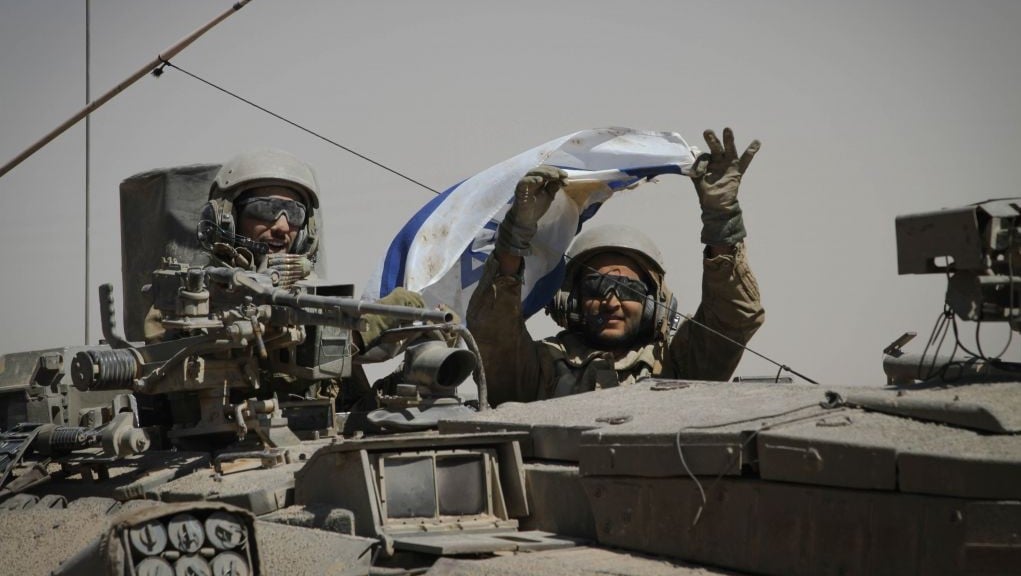
The IDF will most likely complete its redeployment along the Gaza border Sunday, after concluding the process of neutralizing the Hamas tunnels extending toward Israel. The IDF will not withdraw entirely from Gaza, but it will leave the populated areas and keep troops deployed in a narrow area inside the Palestinian territory.
This decision gives Hamas a certain legitimacy in the eyes of the Palestinian public to continue attacking the Israeli troops. But eventually, the IDF will pull out of those areas as well and then the organization will face a difficult dilemma – what should it do now?
On the one hand, the Gazan public is pressing Hamas more every day to hold its fire. The destruction in the Gaza Strip is unprecedented. This refers not only to the 1,700 Palestinians killed (including hundreds of gunmen) and more than 9,000 injured, but also to the inconceivable damage: the thousands of homes destroyed, the power cuts, the dearth of drinkable tap water, the hundreds of thousands of displaced. All these have made Gaza a place of great distress, desperate for a few days of quiet and rehabilitation. Therefore, an IDF withdrawal from the entire Gaza Strip will harm Hamas’s legitimacy in the eyes of the Gazan public to continue the rocket fire and attacks. It’s possible the organization will be satisfied, in such a case, with firing a few rockets and releasing victory statements, and to transition bit by bit into an undeclared long-term ceasefire.
On the other hand, a total cessation of fighting at this stage without having achieved an agreement that includes the lifting of the blockade on the Strip would be perceived as a defeat for Hamas. At the start of the operation, the organization’s military wing presented six demands for a ceasefire: the release of the prisoners freed during the 2011 swap for IDF soldier Gilad Shalit and recently rearrested in the West Bank, the establishment of a port, the expansion the fishing zone, opening the Rafah crossing into Egypt, opening the crossings into Israel, and the payment of Hamas salaries. Slowly, the demands eased, and the head of Hamas’s military wing, Mohammed Deif, said last week that the organization wouldn’t agree to a ceasefire unless “the aggression ceases and the blockade is lifted.” These two demands are vague, but it was interesting to note that Deif didn’t mention the prisoner releases or the establishment of a port. And if this round of hostilities concludes without Israel or Egypt agreeing to accept even one of the organization’s demands, Hamas will be humiliated.
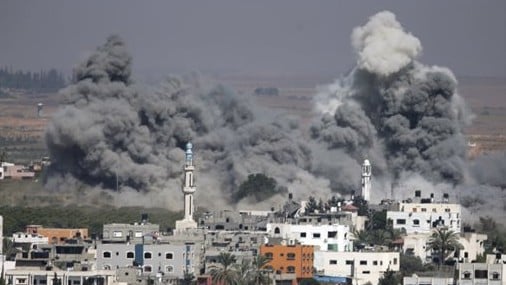
The Palestinian public, which now seeks quiet, will ask itself why the organization drove Gaza to ruin for no reason, with no results to show for its efforts. Hamas is aware of this, and is therefore likely to be tempted to do two things: first, fire more rockets so long as it can, despite the inevitable Israeli response; and second, to continue attempts to carry out significant attacks, mainly through tunnels that may have been left untouched, to render empty the Israeli assurances about finishing the tunnel demolitions. But an attack of that degree is likely to draw a very harsh response, perhaps even a renewed ground offensive — and once again, the Gazan public will pay the price.
The war in Gaza, and to a great extent the brutal killing of three Israeli teenagers in the West Bank weeks earlier, are part of one overarching theme: the campaign to save Hamas. The organization initiated the abduction and killing of the three, as well as the escalation in Gaza, to prevent its economic downfall in the Strip and to preserve its relevance in Gaza and the West Bank. These actions are born of the crisis in which the organization found itself, due to Egypt shuttering the tunnels into Gaza, its loss of popularity among Palestinians, and its agreement to reconcile with Fatah, which led to the salary crisis. But as the end of the IDF’s ground offensive draws near, it’s doubtful whether there is a solution to these problems. Even the public support that Hamas gained from launching the attack on Israel will wear away with time as the IDF completes its withdrawal from the Strip.







The Times of Israel Community.