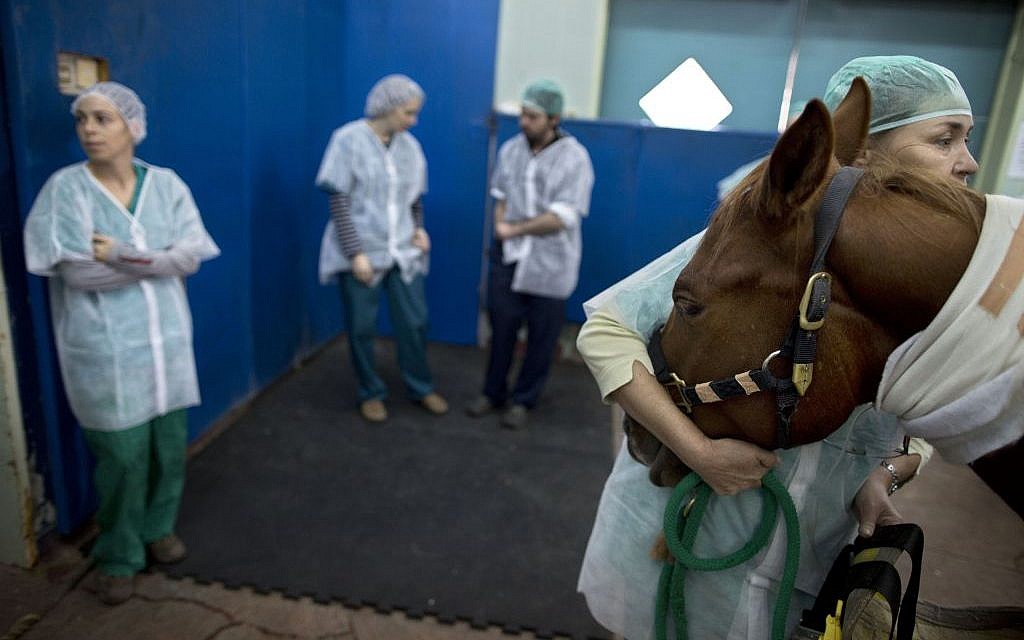
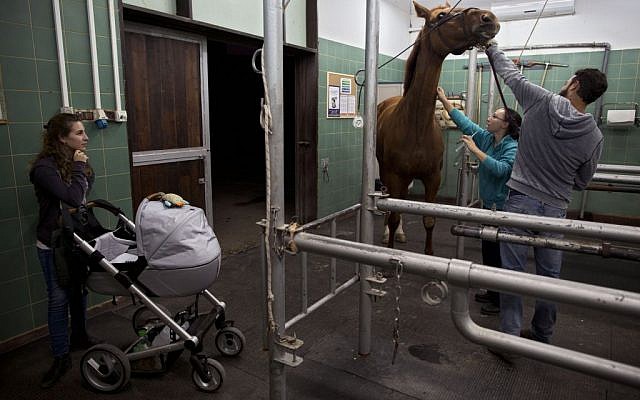
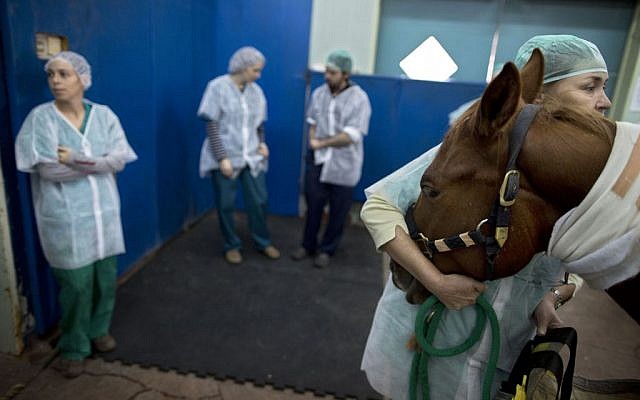
In this Wednesday, Dec. 2, 2015 photo, a veterinarian holds a horse as he is anesthetized before a surgery at the University's Koret School of Veterinary Medicine in Rishon Lezion, Israel. (AP Photo/Oded Balilty)
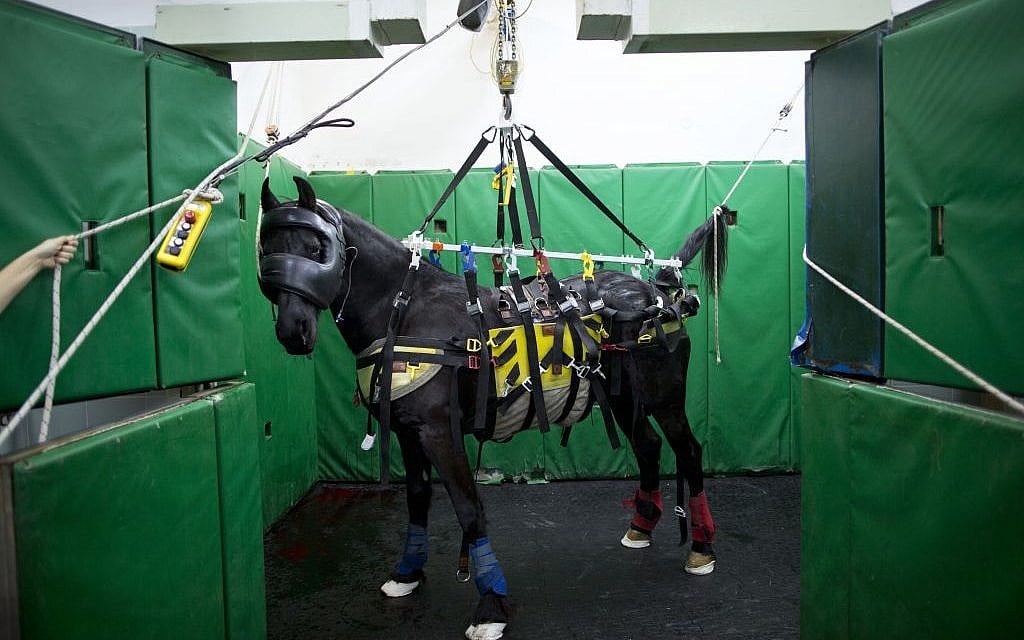
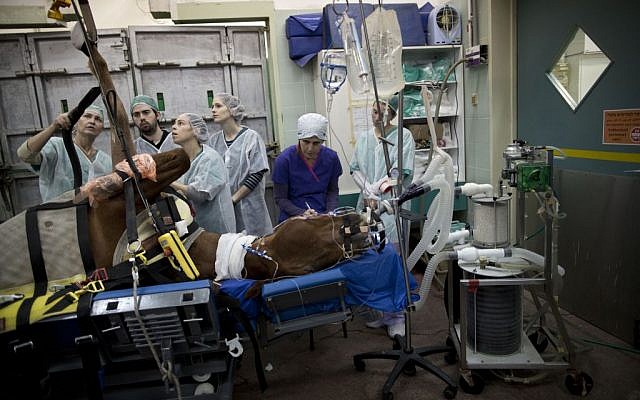
In this Saturday, Nov. 28, 2015 photo, a horse is supported in a recovery room after a surgery at the Hebrew University's Koret School of Veterinary Medicine in Rishon Lezion, Israel. (AP Photo/Oded Balilty)
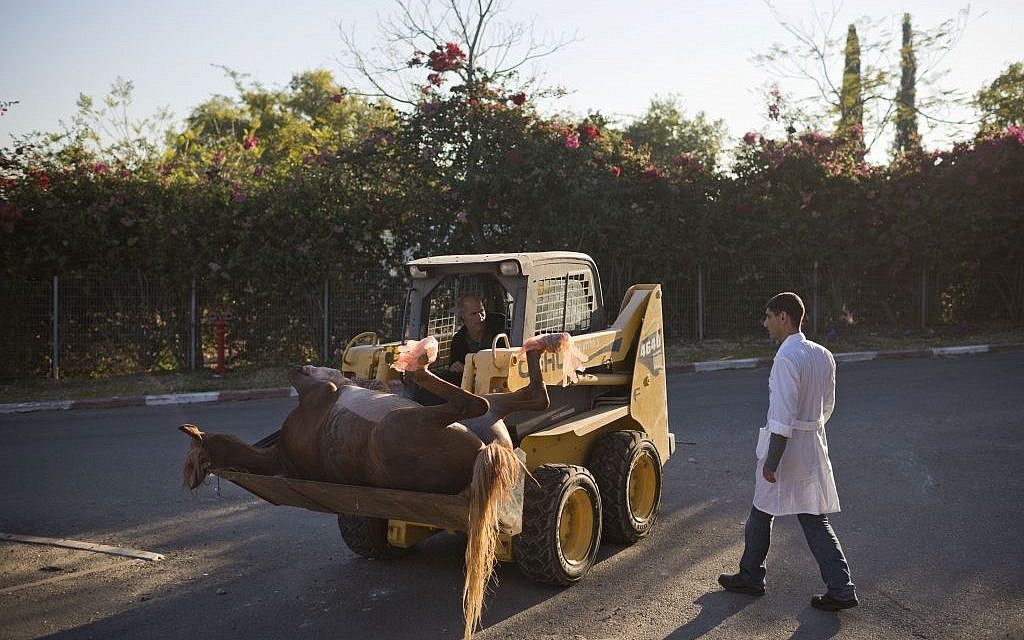
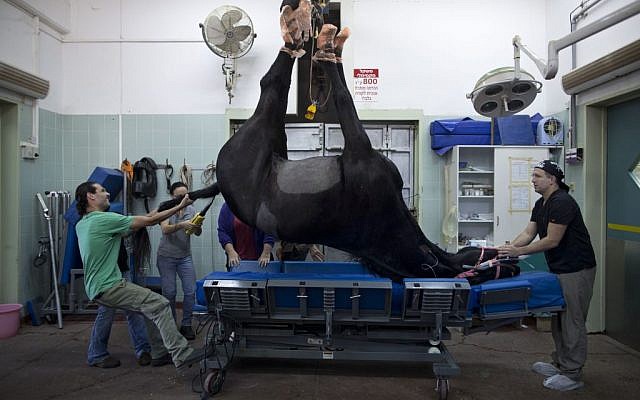
In this Thursday, Dec. 10, 2015 photo, Dr. Gal Kelmer, head of the department of large animals, transports a dead horse at the Hebrew University's Koret School of Veterinary Medicine in Rishon Lezion, Israel. (AP Photo/Oded Balilty)
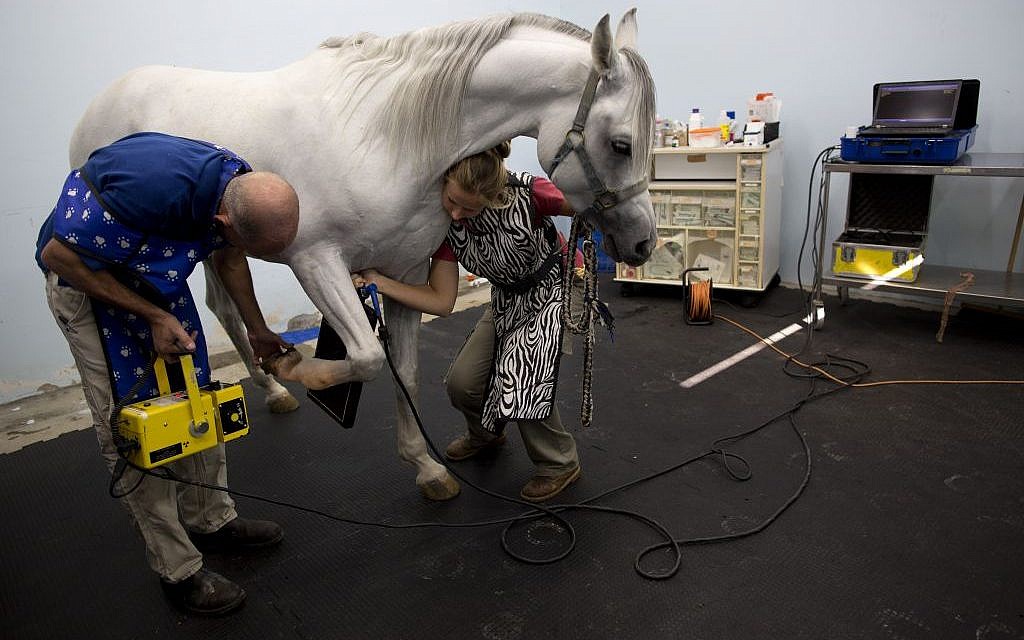
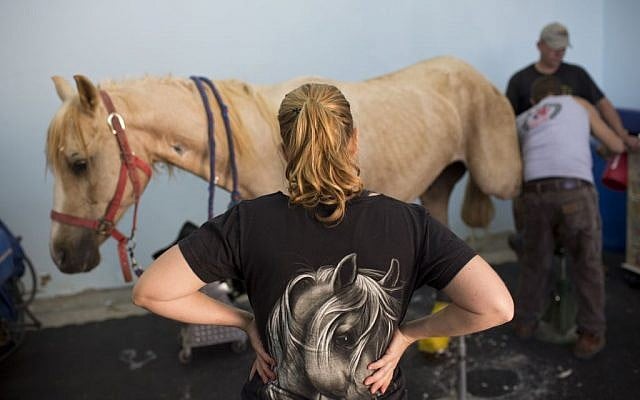
In this Monday, Nov. 23, 2015 photo, Dr. Gal Kelmer, head of the department of large animals, left, and a veterinarian technician prepare a horse for an X-ray demonstration at the Hebrew University's Koret School of Veterinary Medicine in Rishon Lezion, Israel. (AP Photo/Oded Balilty)
In this Monday, Dec. 7, 2015 photo, a veterinary technician feeds a horse at the Hebrew University's Koret School of Veterinary Medicine in Rishon Lezion, Israel. (AP Photo/Oded Balilty)
RISHON LEZION, Israel (AP) — At Israel’s main equine hospital, the animals can be wild patients, creating some unique challenges for the veterinarians treating them.
“They are not good patients,” said Dr. Gal Kelmer, who heads the large animal department at Hebrew University’s Koret School of Veterinary Medicine. “I get a lot of satisfaction when things work.”
Veterinarians at the hospital operate on about two dozen horses a month, most of them pleasure and show horses. To prepare a horse for surgery, anesthesiologists slip an infusion into the animal’s jugular vein, which is harder to dislodge than an IV in the leg.
Horses are prone to galloping off the operating table as soon as anesthesia wears off, requiring veterinarians to rely on elaborate tools and an army of volunteers to safely treat animals that can weigh more than 1,000 pounds (450 kilograms).
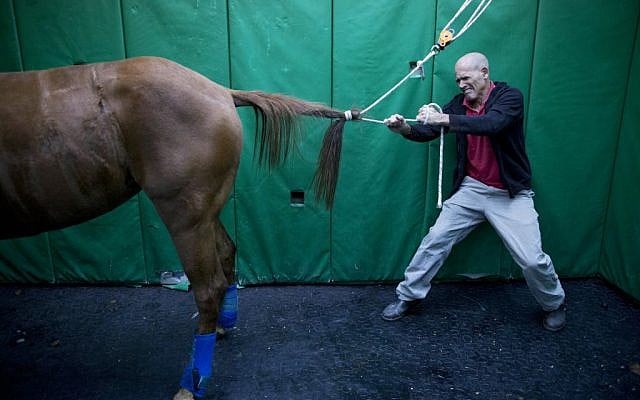
In this Wednesday, Dec. 2, 2015 photo, Dr. Gal Kelmer, head of the department of large animals, unties a horse after its operation at the University’s Koret School of Veterinary Medicine in Rishon Lezion, Israel. (AP Photo/Oded Balilty)
“Horses have an instinctive response of flight from danger,” Kelmer said. “The minute they wake up they start trying to stand and run, even if they don’t have control of their limbs. So then they fall.”
Get The Times of Israel's Daily Editionby email and never miss our top stories
In this Wednesday, Nov. 25, 2015 photo, a horse owner waits outside the clinic as veterinarians examine her horse at the Hebrew University’s Koret School of Veterinary Medicine in Rishon Lezion, Israel. (AP Photo/Oded Balilty)
To restrain a flighty horse, Kelmer straps the animal into a sling that suspends it from the belly and lifts it into the air, keeping the mouth closed and tail tied as the horse gradually regains control of its body.
In this Monday, Nov. 23, 2015 photo, Dr. Gal Kelmer, head of the department of large animals, left, and a veterinarian technician prepare a horse for an X-ray demonstration at the Hebrew University’s Koret School of Veterinary Medicine in Rishon Lezion, Israel. (AP Photo/Oded Balilty)
The most common medical problem is colic, Kelmer said, a digestive ailment that usually requires hoisting the horse upside down to examine the abdomen. Other issues include trauma, leg fractures and breathing problems.
In this Saturday, Nov. 28, 2015 photo, veterinarians examine a horse after his surgery at the Hebrew University’s Koret School of Veterinary Medicine in Rishon Lezion, Israel. (AP Photo/Oded Balilty)
“Some people ask me, ‘What, you do only horses?’ But for surgeons it’s very broad,” Kelmer said. “Today I treated an eye, and a horse with an injured distal limb, and a rectum. For a human, not in a lifetime would a surgeon do these three things.”
Advertisement
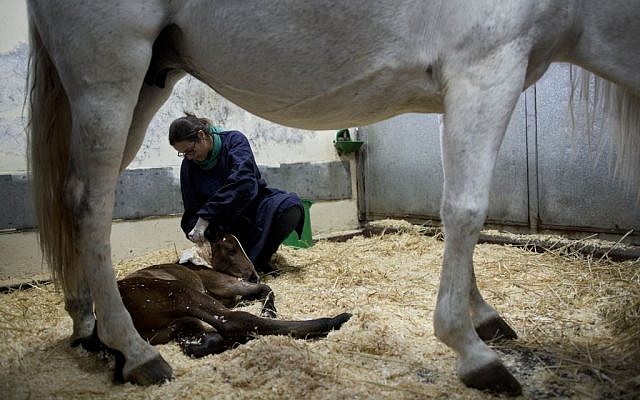
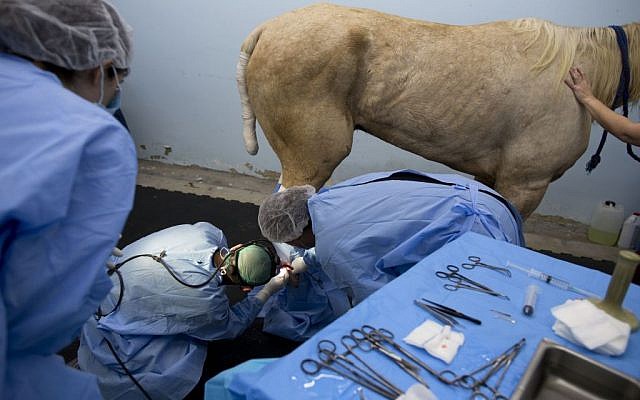
In this Wednesday, Dec. 2, 2015 photo, veterinarians and students prepare a horse with a broken leg for a surgery at the Hebrew University’s Koret School of Veterinary Medicine in Rishon Lezion, Israel. (AP Photo/Oded Balilty)In this Wednesday, Nov. 18, 2015 photo, a veterinarian examines a horse with a leg wound at the Hebrew University’s Koret School of Veterinary Medicine in Rishon Lezion, Israel. (AP Photo/Oded Balilty)In this Wednesday, Dec. 2, 2015 photo, a veterinarian holds a horse as he is anesthetized before a surgery at the University’s Koret School of Veterinary Medicine in Rishon Lezion, Israel. (AP Photo/Oded Balilty)In this Thursday, Dec. 10, 2015 photo, a veterinary doctor treats a horse and her one day old foal as they rest in their recovery zone at the Hebrew University’s Koret School of Veterinary Medicine in Rishon Lezion, Israel. (AP Photo/Oded Balilty)In this Sunday, Nov. 29, 2015 photo, veterinarians operate on a horse with leg wounds at the Hebrew University’s Koret School of Veterinary Medicine in Rishon Lezion, Israel. (AP Photo/Oded Balilty)
Copyright 2015 The Associated Press.
Help us report truthfully on social media
As a multimedia journalist, my job is to take the quality, fact-based journalism produced by The Times of Israel newsroom and make it accessible across every platform — from Instagram posts to podcasts to short-form videos.
This is how many, especially young people, consume news these days. But misinformation is rampant on social media. Our team at ToI produces accurate, responsible short-form reporting on Israel and the Jewish world.
If you believe in the importance of factual social media journalism, please consider joining our reader support group, The Times of Israel Community. Your financial support is essential to sustain responsible multimedia reporting.
We’re really pleased that you’ve read X Times of Israel articles in the past month.
That’s why we started the Times of Israel - to provide discerning readers like you with must-read coverage of Israel and the Jewish world.
So now we have a request. Unlike other news outlets, we haven’t put up a paywall. But as the journalism we do is costly, we invite readers for whom The Times of Israel has become important to help support our work by joining The Times of Israel Community.
For as little as $6 a month you can help support our quality journalism while enjoying The Times of Israel AD-FREE, as well as accessing exclusive content available only to Times of Israel Community members.
Thank you, David Horovitz, Founding Editor of The Times of Israel


 Add ToI as a Preferred Source on Google