

Palestinian Authority faces worst financial crisis since its founding, says labor minister
Arab states’ nonpayment of promised aid is partially to blame; IMF rejects Israeli request for $1 billion bridge loan to PA
 Add ToI as a Preferred Source on Google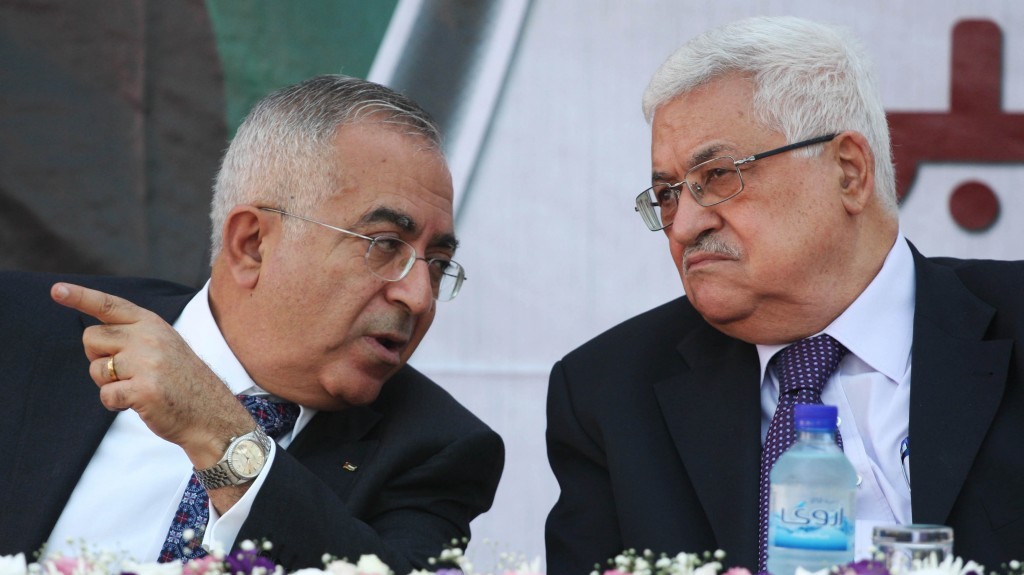
The Palestinian Authority is facing the worst economic crisis since its founding in 1994, the PA’s labor minister told AFP on Sunday.
Minister Ahmad Majdalani said that if Arab countries fail to follow through with their pledged aid money, the government will not be able to pay its salaries or debts.
“What is available to the Palestinian Authority at the moment in terms of funds is not enough to pay government employee salaries this month, with Ramadan approaching … It is not sufficient to pay the bills that the Palestinian Authority owes to private companies,” he said.
The International Monetary Fund recently refused an Israeli request for $1 billion in bridge loan funding for the Palestinians. The PA cannot ask the IMF for money on its own because it isn’t a state.
Israel made the request following a meeting between PA Prime Minister Salam Fayyad and Bank of Israel Governor Stanley Fischer. According to Haaretz, Fayyad told Fischer that the PA was in dire straits due to nonpayment by Arab countries of funds they had promised, as well as the global financial crisis impeding any increases in aid packages from the US or Europe.
The IMF rejected Israel’s request, saying that it did not want to set a precedent of non-state entities receiving loans by proxy.
Israel has a clear interest in preventing the financial collapse of the PA. Though peace talks have been stalled for nearly two years, the vast majority of Israelis and most of the international community still believe that the PA — and not Hamas which won general elections in 2007 — is the only possible partner for Israeli-Palestinian negotiations.
Whether those negotiations will ever proceed is a different question.








The Times of Israel Community.