

Iran may expand its nuclear energy organization
Tehran seeks atomic cooperation with Asian, European countries, says nuclear body facing ‘large volume of work’
 Add ToI as a Preferred Source on Google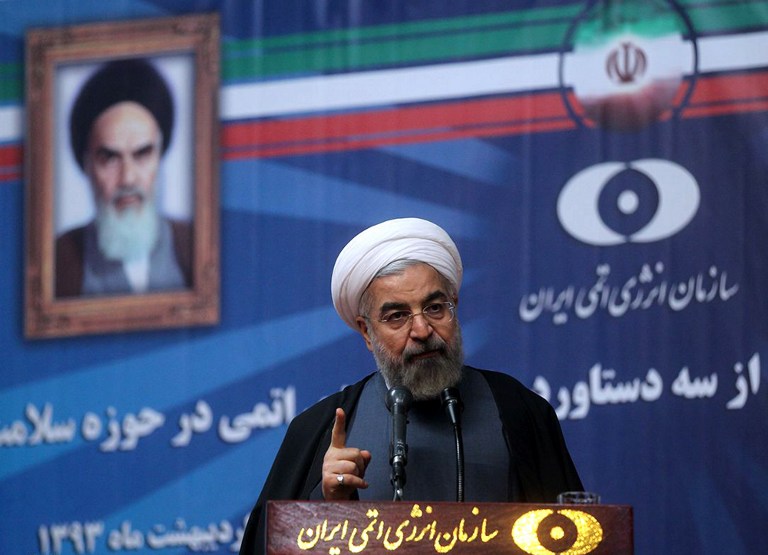
Iran’s nuclear body may undergo an expansion after Tehran launched an initiative aimed at developing nuclear cooperation with countries other than Russia, the country’s nuclear chief said.
“The Atomic Energy Organization of Iran has stepped into a new phase; with the contract endorsed with Russia whose implementation is due to start in the near future, the AEOI is facing a large volume of work,” AEOI Chief Ali Akbar Salehi said on Saturday during a ceremony in Tehran.
“We hope to ink cooperation contracts with other countries too,” Salehi was quoted by Fars news as saying, adding that “if so the AEOI should enlarge”.
Salehi, a former Iranian foreign minister and representative to the IAEA, revealed that Tehran had received several proposals from Asian and European countries for nuclear cooperation.
“Some European countries have contacted us and demanded us not to be in a rush for signing contracts on the construction of new power plants, saying that they are interested to cooperate with us in building new nuclear power plants,” Salehi had said said in a December interview with Iran-based Arabic-language al-Alam news channel.
In addition to the Bushehr power plant, Iran signed contracts with Russia for building two new ones in the same province.
On Saturday, Iran denied reports that it had reached a tentative agreement with the US and other world powers on a formula that would rein in its nuclear program.
“Such media propaganda was made with political motivations and is basically aimed at damaging the atmosphere of the nuclear talks and further complicating the process to resolve the nuclear issues,”
said spokeswoman of the Iranian Foreign Ministry Marziyeh Afkham, according to IRNA news agency.
A day earlier, the Associated Press reported that two diplomats it spoke to said that negotiators at the December round of nuclear talks drew up for the first time a catalog outlining areas of potential accord and differing approaches to remaining disputes.
The AP reported that the diplomats said Iran and the United States have tentatively agreed on a formula that Washington hopes will reduce Tehran’s ability to make nuclear arms by committing it to ship to Russia much of the material needed for such weapons.
The diplomats said differences still dominate ahead of the next round of Iran-six power talks on Jan. 15 in Geneva. But they suggested that even agreement to create a to-do list would have been difficult previously because of wide gaps between the sides.
Iran denies it wants nuclear arms, but it is negotiating with the US, Russia, China, Britain, France and Germany on cuts to its atomic program in hope of ending crippling sanctions. The talks have been extended twice due to stubborn disagreements.
Negotiators hope to reach a rough deal by March and a final agreement by June 30.





The Times of Israel Community.