

Islamic militants destroy historic mosque in Mosul
Members of Islamic State blow up Prophet Jirjis shrine, the third demolition of an ancient holy site in northern Iraq
 Add ToI as a Preferred Source on Google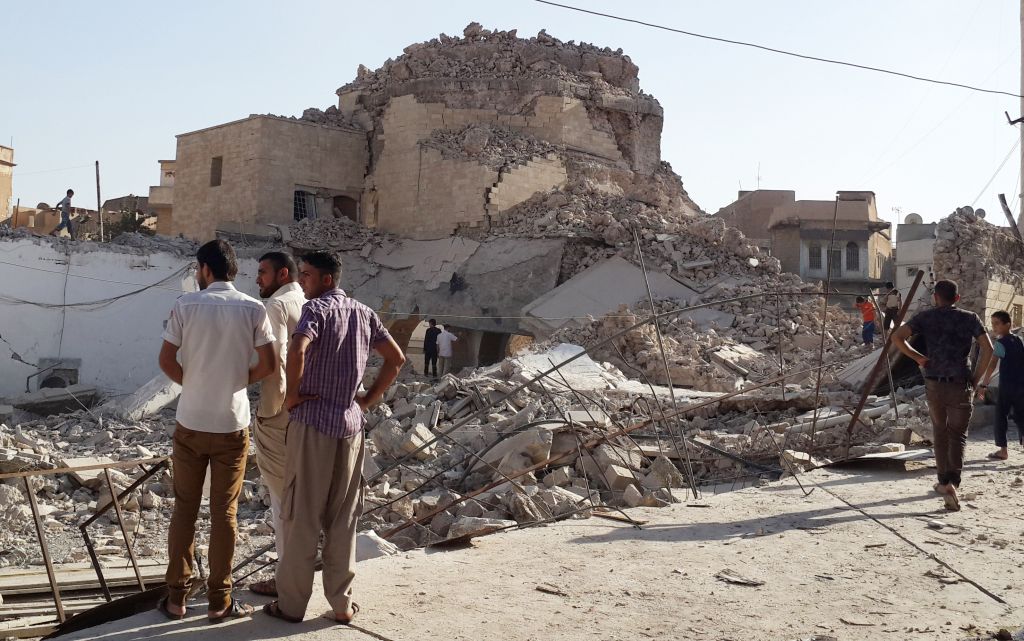
BAGHDAD (AP) — Militants from the Islamic State group blew up a mosque and shrine dating back to the 14th century in Mosul on Sunday, local residents said, the latest casualty in a week that has seen a half dozen of the Iraqi city’s most revered holy places destroyed.
Mosul residents said the Prophet Jirjis Mosque and Shrine was bombed and destroyed by the radical jihadist group. They spoke anonymously to The Associated Press for fear of reprisal.
The complex was built over the Quraysh cemetery in Mosul in the late 14th century, and included a small shrine dedicated to Nabi Jerjis, the Prophet George.
The al-Qaeda breakaway Islamic State group captured large swaths of land in western and northern Iraq, including Mosul, Iraq’s second largest city, which was captured in June. The group has imposed a self-styled caliphate in territory they control in Iraq and Syria, imposing their harsh interpretation of Islamic law. .
Among the mosques destroyed in Mosul last week were the Mosque of the Prophet Sheeth (Seth) and the Mosque of the Prophet Younis, or Jonah, said to be the burial place of the Prophet Jonah, who in stories from both the Bible and Quran is swallowed by a whale. The militants claim that such mosques have become places for apostasy, not prayer.
Since the Islamic State launched their blitz across Iraq, more than a million people have fled their homes, according to the United Nations. Many of those people have escaped to the semi-autonomous Kurdish region in northern Iraq since it has remained relatively stable since the 2003 US-led invasion.
In a statement published on Kurdish state media late Saturday, Kurdish Regional Government President Massoud Barzani said the bombing of churches and mosques in Mosul “is against all the principles of the heavenly religions, humanity, and it is targeting the culture and demographic of the area.”
Copyright 2014 The Associated Press








The Times of Israel Community.