

Netanyahu chills right-wing ‘excitement’ over Trump meeting
Prime minister tells cabinet Israel needs a ‘responsible policy’ to protect its interests under new US administration
 Add ToI as a Preferred Source on Google
Raoul Wootliff is a former Times of Israel political correspondent and Daily Briefing podcast producer.
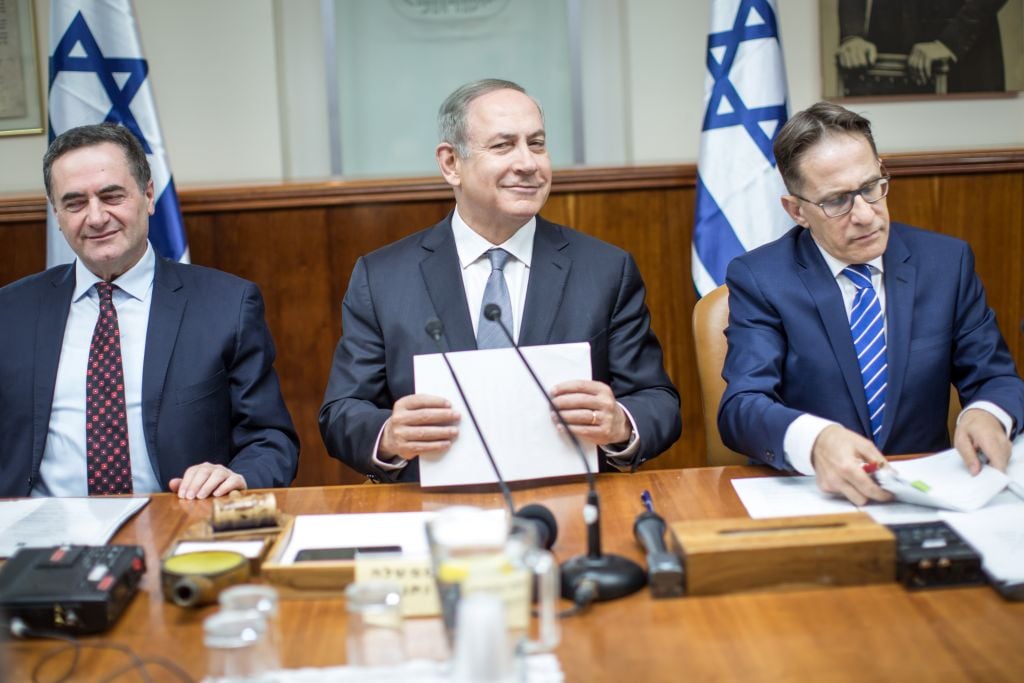
Prime Minister Benjamin Netanyahu pushed back Sunday at ministers pressuring him to use his first meeting with US President Donald Trump to disavow his support for Palestinian statehood, telling the weekly cabinet meeting that only “responsible policy-making” would protect Israel’s interests.
“This is an extremely important meeting for the security of Israel, both for our increasingly strong international standing and for our wide international interests,” the prime minister said of his scheduled Wednesday’s sit-down with Trump at the White House.
Writing on Facebook Saturday night, Education Minister Naftali Bennett, who chairs the Jewish Home party, said the meeting with Trump would be “the test of Netanyahu’s life” and would determine Israel’s policy toward the Palestinians for years to come.
Bennett said that if the two men mention “an obligation to establish Palestine or ‘two states’ in some or other iteration, it will impact us directly for years to come. It will be an earthquake.”
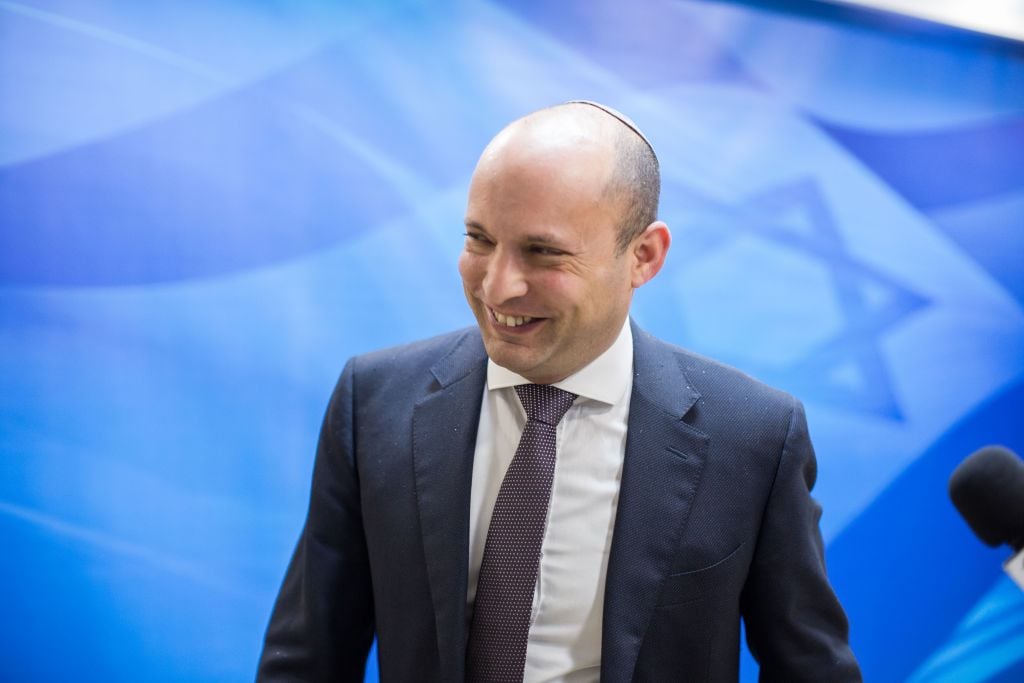
Implying that Bennett’s demands were politically motivated, Netanyahu told ministers that Israel’s security needs would take precedence over any other consideration in his discussions with the new president.
“I understand that there is great excitement in advance of this meeting, driven by various motivations. But I only have one motivation: My utmost consideration is to ensure Israel’s security and strengthen our relationship with the United States as well as the joint interests that stand behind it,” Netanyahu said.
Adding that he has always conducted relations with the US in a “rational manner,” the prime minister said that just as with previous administrations, dealing with Trump requires a “responsible and level-headed” approach.
Netanyahu had warned ministers to refrain from airing their opinions before Trump tells him, behind closed doors, of his own positions. Such comments by Israeli politicians ahead of Wednesday’s meeting “risk sabotaging” the talks, an official in the Prime Minister’s Office said Saturday night.
Nevertheless, on Sunday morning, Justice Minister Ayelet Shaked, from Bennett’s Jewish Home party, told reporters that the Republicans’ own stance meant Netanyahu didn’t need to compromise on the Palestinian issue when meeting Trump.

“The Republicans took Palestinian statehood off their platform, there’s no reason that a right-wing Israeli government should outflank it from the left,” she said.
Speaking to Likud ministers directly before the cabinet meeting, Netanyahu reportedly said that it would be unwise to underestimate Trump. “To think that there are no limits with Trump is a mistake,” he said, according to the Ynet news site.
“After eight years of complicated maneuvering in the Obama era, we need to continue to act judiciously during the Trump era,” Haaretz quoted him as saying.
In an interview published Friday and Sunday in the Israel Hayom newspaper, Trump may have surprised some right-wing ministers by saying that Israeli settlements in the West Bank “don’t help the process” of reaching peace.
“Every time you take land for settlements, there is less land left,” he said. “But we are looking at that, and we are looking at some other options we’ll see. But no, I am not somebody that believes that going forward with these settlements is a good thing for peace.”
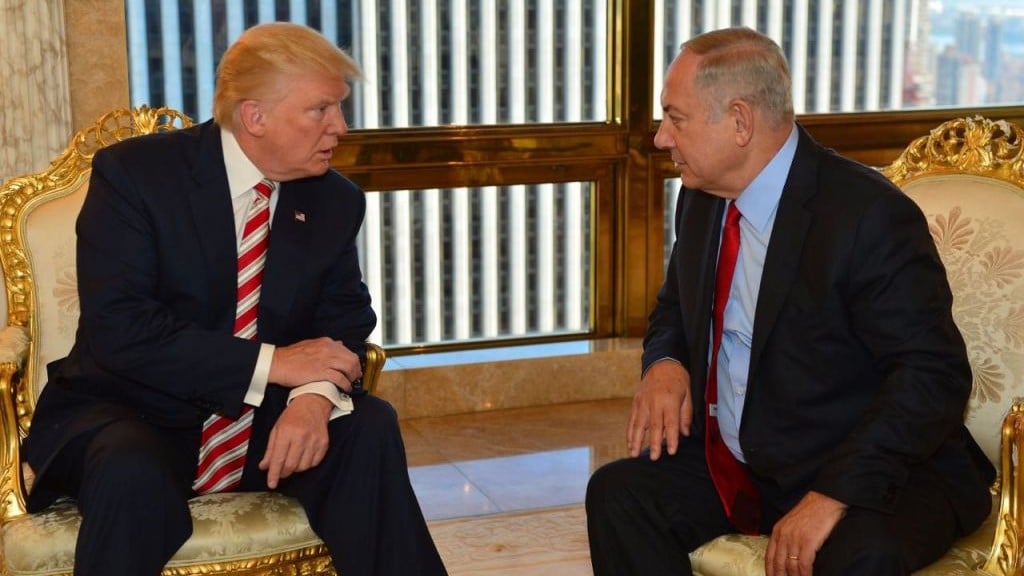
It wasn’t the first time Trump’s administration expressed reservations over Israel’s settlement construction, but it was the president’s first comment on the issue, and his remarks were more critical than those of his spokesman. Earlier last week the White House issued a mild rebuke over Israel’s spate of approvals for new settlement homes, warning that expansion in areas Palestinians want for their own state “may not be helpful” to peace efforts.
“While we don’t believe the existence of settlements is an impediment to peace, the construction of new settlements or the expansion of existing settlements beyond their current borders may not be helpful,” press secretary Sean Spicer said on February 3.
Raphael Ahren and Times of Israel staff contributed to this report.





The Times of Israel Community.