

Sorrow, deadlock and illness
Memorial Day kicks off with the requisite sobriety while Netanyahu and the Health Ministry are both in a pickle
 Add ToI as a Preferred Source on Google
Ilan Ben Zion is an AFP reporter and a former news editor at The Times of Israel.
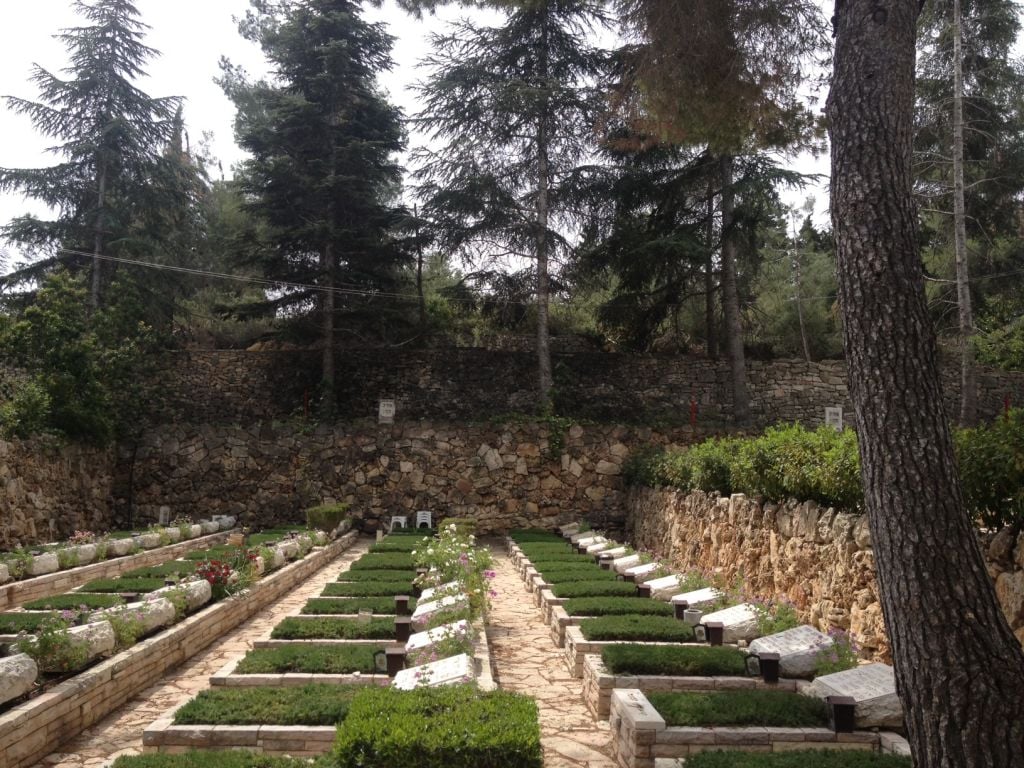
Memorial Day is upon us, and the Hebrew papers are bedecked in mournful black in honor of the fallen, whose numbers grew by 116 since last year. Behind the letters to loved ones, accounts of heroics past, and pictures of families visiting graves, the papers also get down to reporting on the news.
After Prime Minister Benjamin Netanyahu received a two-week extension to put together a government, members of the Likud negotiation team informed their prospective coalition partners that joining the government would be conditional upon backing new legislation to weaken the Supreme Court, Haaretz reports. The Kulanu party opposes such legislation and rejected the demand that it sign off on the bills as condition of joining the government, the paper reports.
Netanyahu met with Kulanu party leader Moshe Kahlon Monday and was expected to reconvene with him again Tuesday. Israel Hayom prefers to see the glass half full, noting that there was “progress” in the meeting between the two party leaders despite being at loggerheads over the Supreme Court bills. The paper makes no mention of the conflict, instead saying that the main points of contention are with Shas and Jewish Home, who both want the religious affairs portfolio.
Yedioth Ahronoth quotes a “senior coalition official” saying that Netanyahu is having a hard time signing deals with Kulanu, Jewish Home and Yisrael Beytenu because of his prior commitments to the ultra-Orthodox parties. According to the official, Netanyahu inked a deal with Shas and United Torah Judaism shortly before the last Knesset was dispersed, and is now having a hard time keeping his side of the bargain.
The Health Ministry, meanwhile, rolls back its findings connecting pollution in Haifa to higher rates of cancer in children, Israel Hayom reports. It announced that there was no proof supporting a higher rate of illness, and that it would be examining the findings of the research announced last week. The researchers are quoted saying that their findings were “distorted.”
Nonetheless, Haaretz runs a satellite image of Haifa highlighting the eight factories most likely to be contributing dangerous pollutants to the city, all of them chemical and petrochemical plants. The paper reports that the Haifa municipality barricaded the entrances of several oil refineries in the city with garbage trucks because of the damning report, and that the mayor moved to close them.
The two papers run opinion pieces that call for action on the issue of pollution in Haifa. Haaretz says in its editorial that the “effort to improve air quality cannot be based on sudden moves against particular companies” by the municipality, but by hard scientific groundwork. It notes that the Health Ministry study in question was conducted in 2007 and doesn’t take into account steps taken since then to reduce carcinogenic emissions.
It calls for more funding for the Environmental Protection Ministry to investigate this matter, and for the Health Ministry to get a more accurate picture of the status quo through epidemiological surveys.
“All these steps, which require restoring a suitable level of funding to the Environmental Protection Ministry, are also essential to help Haifa and the north to flourish. Otherwise, the city will continue to be shrouded in fear of dangerous pollution.”
Israel Hayom op-ed writer Ran Reznick writes that public trust in the Health Ministry is essential, and that the recent announcement by its director general concerning cancer rates in the port city are troubling. He notes that the Israel Medical Association announced that the Health Ministry’s statistics “were never confirmed and they were absolutely not checked and backed up in a medical and scientific fashion,” he writes.
He calls the press’s publication of photos of sick children in correlation with the pollution “manipulation and sowing irresponsible panic” with the public. He lambastes the director general of the Health Ministry for not saying what his department intended to do about the issue when he made the announcement last week, and says its actions eroded public trust in the ministry.
He gives no solutions, however, about what must be done.
In other news, opposition leader Isaac Herzog’s wife’s car was struck by a rock outside their north Tel Aviv home, prompting police to investigate whether the incident was an intentional attack directed at the Herzogs or simple mischief, Yedioth Ahronoth reports. Herzog’s wife wasn’t injured, but the windshield was damaged.





The Times of Israel Community.