

Teach better skills, cut regulation, central bank head demands
Israel’s growth depends on more effective workforce and investment in infrastructure, Bank of Israel Governor Karnit Flug says
 Add ToI as a Preferred Source on Google
Shoshanna Solomon was The Times of Israel's Startups and Business reporter
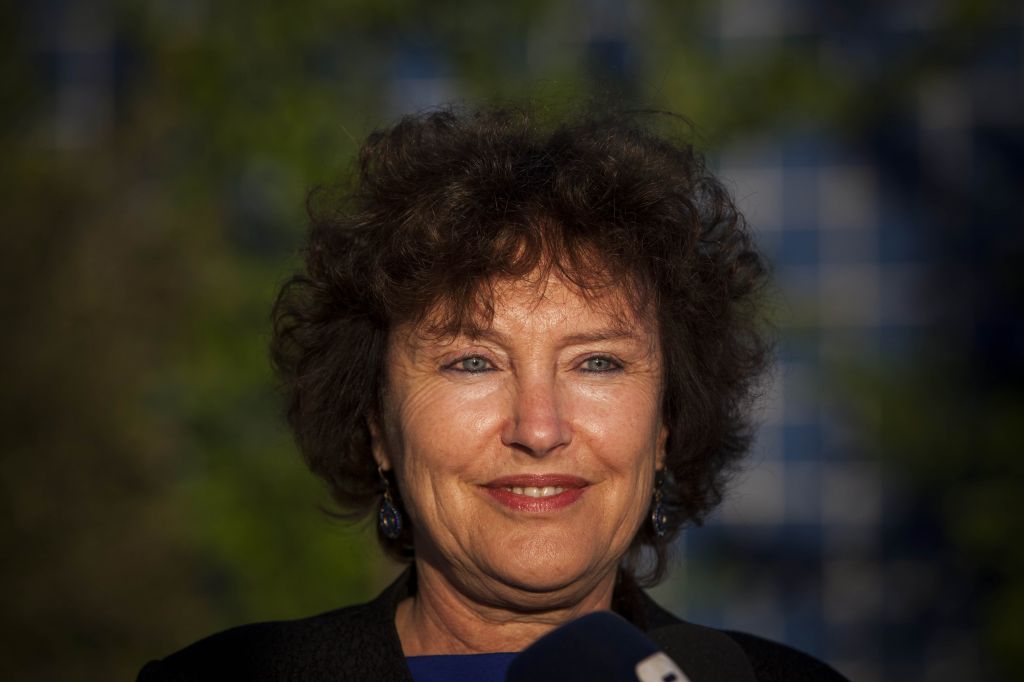
Israel must chart a course to improve its human capital, cut back on regulation and invest in infrastructure to enable sustainable and inclusive growth that relies on a continuing increase in worker productivity, Karnit Flug, the governor of the Bank of Israel, said at a conference on Thursday.
Global research has shown that an improvement in workers’ skills is a main element of economic growth. But to achieve this, focus should be placed on the quality of education and not the quantity, i.e., not simply increasing the number of school years, Flug said.
The OECD has also found that if regulation in Israel were “as friendly” as in the average OECD country, this would lead to an increase of about 3.75 percent in gross domestic product (GDP) after five years, and about 5.75% after 10 years, Flug said — an addition of 0.5 to 0.75% in annual growth over the period.
In terms of physical infrastructure, the IMF’s World Economic Outlook in April 2014 found that, on average, an increase of 1% of GDP in infrastructure investment leads to an average increase of 1.5% in GDP over four years.
“Assuming that marginal output declines, we can assume that in a country like Israel, in which the infrastructure is at a lower than average level, the contribution will be even higher,” Flug said in her speech at the annual conference of the Aaron Institute for Economic Policy at IDC Herzliya.
In the years since the 2007-2008 economic crisis, the global economic environment has become “more challenging” for economic policy makers in Israel, due both to the fact that world trade increased at a much slower rate than in the past, and to the ultra-accommodative monetary policies adopted by some of the central banks of Israel’s major trading partners, Flug said.
Globalization retreat
“The not-so-good news is that even in the long term, according to many assessments, global growth, and even more importantly world trade — which is the global economic variable with the largest effect on Israeli exports — are expected to remain more moderate than in the past,” she said. “These forecasts of the future global environment make it more necessary to act to increase productivity in the Israeli economy, as part of the economic strategy, of which dealing with the quality of human capital is a main component.”
According to an analysis by the International Monetary Fund, the fact that investments as a share of GDP declined is responsible for 75% of the slowdown in world trade, Flug said.
“At the same time, we also see a slowdown in the trend of policy measures intended to lead to a liberalization of trade, alongside an acceleration in the imposition of restrictive measures on international trade,” she said. “This basically amounts to a retreat of sorts from the trend of globalization that took place in past decades, even before the effect of the most recent political changes is felt.”
All of this contributed to a further slowdown in the growth of world trade, “the significance of which from Israel’s point of view is that demand for Israeli exports in recent years has increased more slowly than in the past,” Flug said.
In addition, the accommodative policies adopted by several of the central banks of Israel’s major trading partners, have created an upward pressure on the shekel “beyond the appreciation derived from the fundamental economic forces,” she said.
Against this background, the shekel has appreciated significantly in terms of the nominal effective exchange rate — almost 20% since 2012, and 11.5% in the past two years. “The appreciation led to the fact that Israeli exports increased at an even lower rate than the growth of world trade,” Flug said.
“Looking at the long term, the global environment is expected to remain moderate. In particular, world trade is expected to increase moderately. As such, increasing labor productivity, which is a main element in the ability to remain internationally competitive and is a necessary condition of economic growth at a rate that will contribute to reducing the gap in per capita GDP between Israel and the most advanced economies, has become more important,” Flug said.








The Times of Israel Community.