

Violence, for a change
The Israeli press effortlessly shifts gears into writing about soccer fighting instead of the Arab-Israeli kind we’ve come to know so well
 Add ToI as a Preferred Source on Google
Joshua Davidovich is The Times of Israel's Deputy Editor
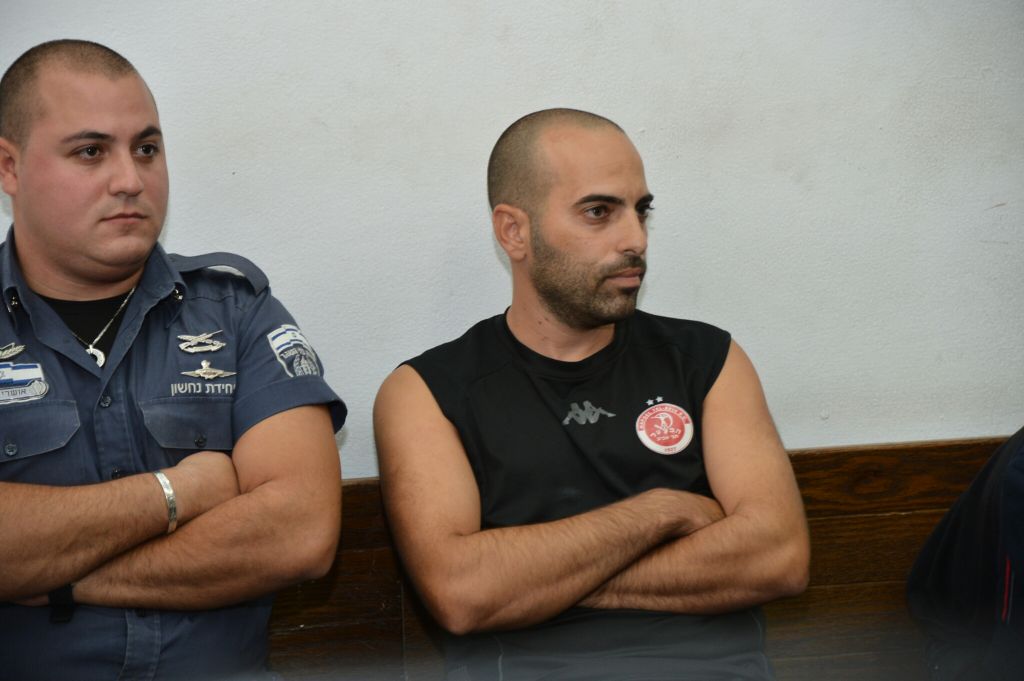
It would be hard to describe the soccer hooligan fights that broke out in Tel Aviv Tuesday — and all over Israeli front pages Wednesday — as “a breath of fresh air,” but after weeks of heavily freighted inter-ethnic violence in Jerusalem dominating media coverage, it’s at least a change of pace.
Both the Yedioth Ahronoth and Israel Hayom tabloids lead off with the scuffle that broke out outside a courtroom in the First Hebrew City as fans were arraigned after an on-field melee the night before. And neither paper is shy about telling readers how ashamed they are at the behavior.
“No limits,” reads the main headline in Yedioth, giving readers a flashback of the proud history of soccer violence in Israel, from a 2004 attack on coach Guy Luzon to Monday’s donnybrook at the Tel Aviv derby. The paper covers the affair from every angle possible, from the criminal history of the shirtless Hapoel fan who sparked the fracas (he’s been hooliganing it up since before it was cool) to the response of Maccabi player Eran Zahavi, who got a red card for fighting back after he was attacked on the field (“I should back off? Imagine if he had a knife!”) to how easy it is for people, including senior citizens, to get a job doing on-field security (just pass a five-day, NIS 1,200 course.)
Writing in from Thailand, Israeli coach Avraham Grant puts much of the blame for the game descending into an on-field rumpus not on the hooligans, but on Israeli soccer’s governing body for not taking steps ahead of time to make sure things like this don’t happen.
“A preventative strategy, as has been proven around the world, is many times more effective than the ridiculous moves by untrained attendants running after fans like it was a game of tag,” he scolds.
Israel Hayom is all for preventative measures too, so long as that means busting heads in. The paper leads off with the headline “The solution: A strong fist,” though lest you think that’s the paper’s actual editorial line, it’s actually a paraphrase of a quote buried in the last paragraph of a sidebar from police chief Yohanan Danino. So yeah.
The paper, while doubtless anxious not to further fan the flames of hatred between the teams, brings in a commentator each from both Tel Aviv clubs to plead their cases.
On the Maccabi side, Dan Margalit argues that Zahavi shouldn’t have gotten penalized, because that’s really the heart of the matter and the reason there’s all this handwringing over soccer violence.
Meanwhile, Edi Rubinstein, in the Hapoel corner, intimates in the most acid way possible that Maccabi had it coming.
“What is it with the fatty yellow [Maccabi] club that allows it to grow tall weeds, generation after generation, season after season? Here’s Erel Williams attacking fans in Madrid, and here’s Chura slapping a journalist of this paper, Eli Sohar, for writing a critical word about the senior club, and here’s Guy Pnini wishing brain cancer on an opposing player and using nasty language, and here’s Will Bynum, a foreign player only here for a moment, running over innocent visitors and coming out of it — just don’t mention Maccabi – clean as snow.”
Not fine being a feinschmecker
Haaretz leaves the soccer story almost completely off the front page, instead coming at the issue of violence in Israeli society from another angle, reporting on a new bill being pushed forward by Justice Minister Tzipi Livni to stiffen penalties for incitement.
“Amid the violent, explosive and dangerous situation in Israeli society today, we cannot remain feinschmeckers,” Livni is quoted saying, using a Yiddish word employed in Israeli slang for someone who is above it all, and not in a good way. “The current wording of the law enables violence under the protection of the law and gives extremists permission to be violent. In the past, and recently as well, we have paid overly high prices, and at present it’s clear we have the obligation and responsibility to act before it’s too late.”
Israel is roiling from the inside, but the picture is less than rosy outside its halcyon borders as well, the paper’s Amos Harel writes. Israel’s “stable instability” can no longer be relied upon, he says, with extremist groups whipping up the Mideast and interconnecting in ways they never have before, linking Gaza and the Sinai to Jerusalem and Syria.
“Israeli defense officials are concerned that Gazan rocket fire is connected less to increasing tensions in the Gaza Strip and more to events in Jerusalem and on the Temple Mount,” he writes. “Israel should now realize that it can’t fully separate the various arenas. During the summer, turmoil in East Jerusalem was inspired by the Gaza war, and now this mechanism is at work in the opposite direction, even when Hamas doesn’t want it that way.”
America, what a country!
Despite the fact that their reports would be pretty much fish wrap by the time they hit the stands, the papers also cover Americans going to the polls for midterm elections. Israel Hayom’s Boaz Bismuth churns out a dispatch from sunny Hoboken, New Jersey, and makes like Yaakov Smirnoff in marveling at the wonders of American democracy.
“This is the beauty of America: On election day you vote for the Senate, and for the House of Representatives, and to legalize light drugs and – why not – for your school board as well. Obama may not have been in the race, but his policies certainly were,” he writes.
In Haaretz, Chemi Shalev skips past the Republicans’ expected (and confirmed) win, and starts to gear up for the presidential race. He’s not alone, though, he says, writing that the campaigns are longer than ever before:
“Obama is the one who managed the long campaign for the Democrats when he was just a young senator from Illinois, and he proved that it’s impossible to get started too early. Despite being busy with the job of the new Congress that was created yesterday, the eyes of politicians are already on the big prize awaiting them on November 8, 2016.”



The Times of Israel Community.