

Zygier meant well but messed up, prison source tells Channel 2
TV report portrays Australian-born Mossad spy as a complex, sensitive man who made a mistake, and describes how he deteriorated in isolation, ultimately killing himself
 Add ToI as a Preferred Source on Google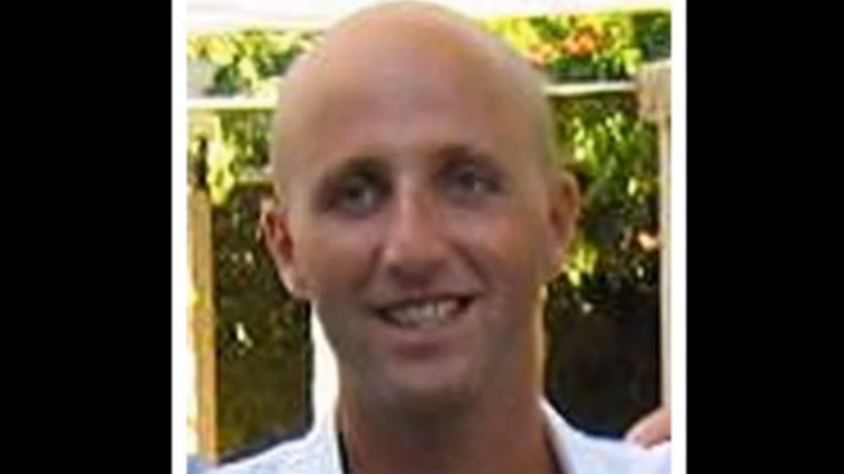
Ben Zygier, the Australian-born Mossad agent who was arrested in Israel in January 2010 and killed himself in jail 10 months later, was a complex and sensitive man who badly wanted to be a hero, but messed up — and who fell through the cracks of the Israeli Prisoner Service, which failed to heed his cries for help, a TV report said Monday.
At least two people expressed concern that Zygier could hurt himself before his death, the Channel 2 investigative report revealed, quoting several people who met with Zygier in his final weeks.
News about Zygier, who committed suicide by hanging himself by a wet bed-sheet from the shower of his bathroom in a super-secure cell in Ayalon Prison on December 15, 2010, leaked out in February. It remains unclear why he was arrested and held in solitary confinement, or why he was facing serious charges that were set to see him jailed for many years even if he concluded a plea bargain. Zygier — initially identified only as “Prisoner X” — was said by some reports to have been arrested for passing information on the Mossad use of Australian passports, and on a major Mossad operation, to Australia’s internal spy agency, ASIO. However, sources in Australia, notably including Canberra Attorney General Mark Dreyfus, denied that the spy had spilled any Israeli secrets to the ASIO.
The Channel 2 report claimed the Mossad sent an agent to Zygier’s funeral in Australia one week after his death — though the agency did not admit he was affiliated with them.
Investigative reporter Ilana Dayan spoke with a number of members of the Israeli Prison Service who met the inmate during his last days. One of the unnamed men who worked with the prison service described Zygier as a complicated person “who also knew how to get things out of people.
“He was very sensitive, completely not a macho type,” the man said. “He had no intention to hurt, he was just a bit of a fool, who just made a huge mistake… He wanted to be a hero, he had a good conscience, and he couldn’t deal with himself after it all happened.
“Zygier just knew too much,” this prison service staffer added.
At least two people who met with Zygier told the prison service that he had needed help, and that he posed a danger to himself, the man added.
Zygier was in complete isolation, held in a small cell that had a bunk-bed, which he adorned with a family picture, an English-language book, and a small TV. He was also allowed to go outside, into a small courtyard with high walls, for 3 hours per day. He was also permitted to use the phone occasionally.
Zygier also had a social worker come fairly often — but it didn’t help, mostly because he wasn’t allowed to ever talk about what he had done, or what he was in jail for, the report indicated.
“He wasn’t allowed to speak to anyone about it. He felt that he had to share what he’d done, to talk to someone, and to find out what was going to happen to him,” the prison official said. “I saw old pictures of him, when he was a full man. But he became just a pair of eyes. He was deteriorating. He barely ate. He said it made him sick, except for vegetables.”
What may have been a turning point in Zygier’s mental condition was the birth of his child a short while before his death. “He ate himself up from the inside. He took antidepressant pills… He was scared of what was going to happen to him when he’d get out,” the prison service representative added.
Before he left, Zygier asked the prison official if he’d visit him again. That was the last time he saw the spy.
Then, on the day of his death, Zygier made one last phone call, at about 6 p.m., and took his life within the next two hours, hanging for close to an hour before guards found him, the TV report said.








The Times of Israel Community.