

After hearing out South Africa and Israel on genocide, what a fair-minded court would do
In seeking The Hague’s intervention, Israel argued persuasively, South Africa is abusing the court and potentially subverting the Genocide Convention

 Add ToI as a Preferred Source on Google
David Horovitz is the founding editor of The Times of Israel. He is the author of "Still Life with Bombers" (2004) and "A Little Too Close to God" (2000), and co-author of "Shalom Friend: The Life and Legacy of Yitzhak Rabin" (1996). He previously edited The Jerusalem Post (2004-2011) and The Jerusalem Report (1998-2004).
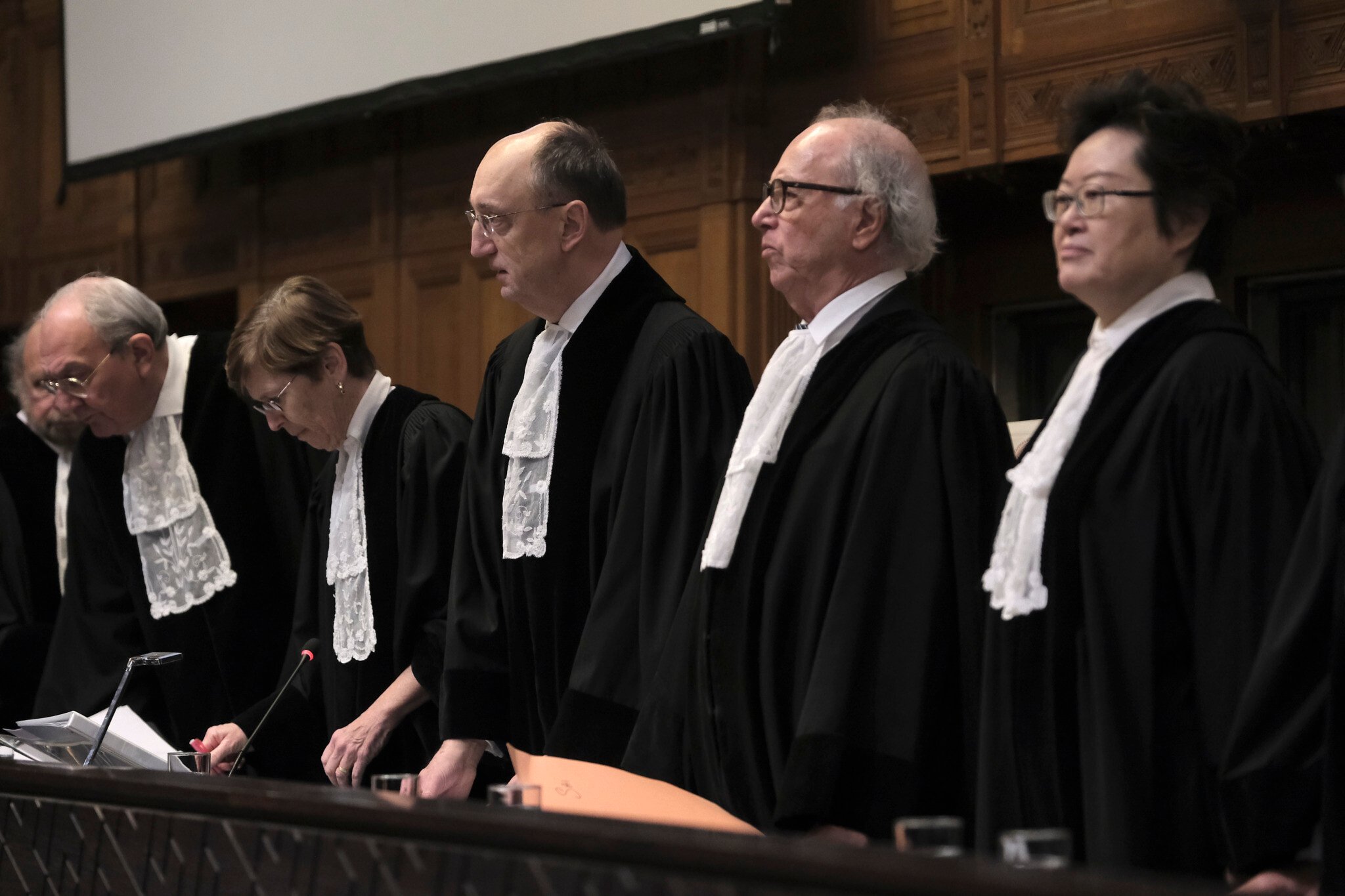
At the end of two days of hearings in The Hague, there is no knowing how the International Court of Justice will rule on South Africa’s demand for an immediate ceasefire in Israel’s military operations in Gaza. But there can be no doubt that the ostensible legal basis for that demand — the allegation that Israel is carrying out genocide in Gaza — is unfounded and that any fair-minded court would dismiss it.
South Africa’s highly skilled and deeply disingenuous legal team on Thursday offered no credible evidence to back up the claim, as defined by the 1948 “Genocide Convention,” that Israel has been carrying out “acts committed with intent to destroy, in whole or in part, a national, ethnical, racial or religious group,” because no such evidence exists.
Apart from underlining the “false” and “malevolent” nature of that charge leveled by Pretoria’s legal representatives, however, Israel’s speakers, in their response on Friday, provided persuasive evidence to defang South Africa’s request for “provisional measures” which require a relatively low evidentiary bar, to halt the war based on a claim of genocidal intent.
Where South Africa claimed on Thursday that a stream of inflammatory comments by senior Israeli politicians, including talk of burning Gaza and resettling its populace elsewhere, constituted proof of such intent, Prof. Malcolm Shaw countered that these represented a “distorted picture” and charged: “To produce random quotes which are not in conformity with government policy is misleading at best.”
More substantively, he argued that the strategy employed in Israel’s war against Hamas is determined by policy decisions taken in the war cabinet and security cabinet, and that the IDF itself has been declaredly bound since October 7 by a directive that states: “Attacks will be solely directed at military targets while adhering to the principles of distinction, proportionality [and] taking precautions in attacks to reduce collateral damage.”
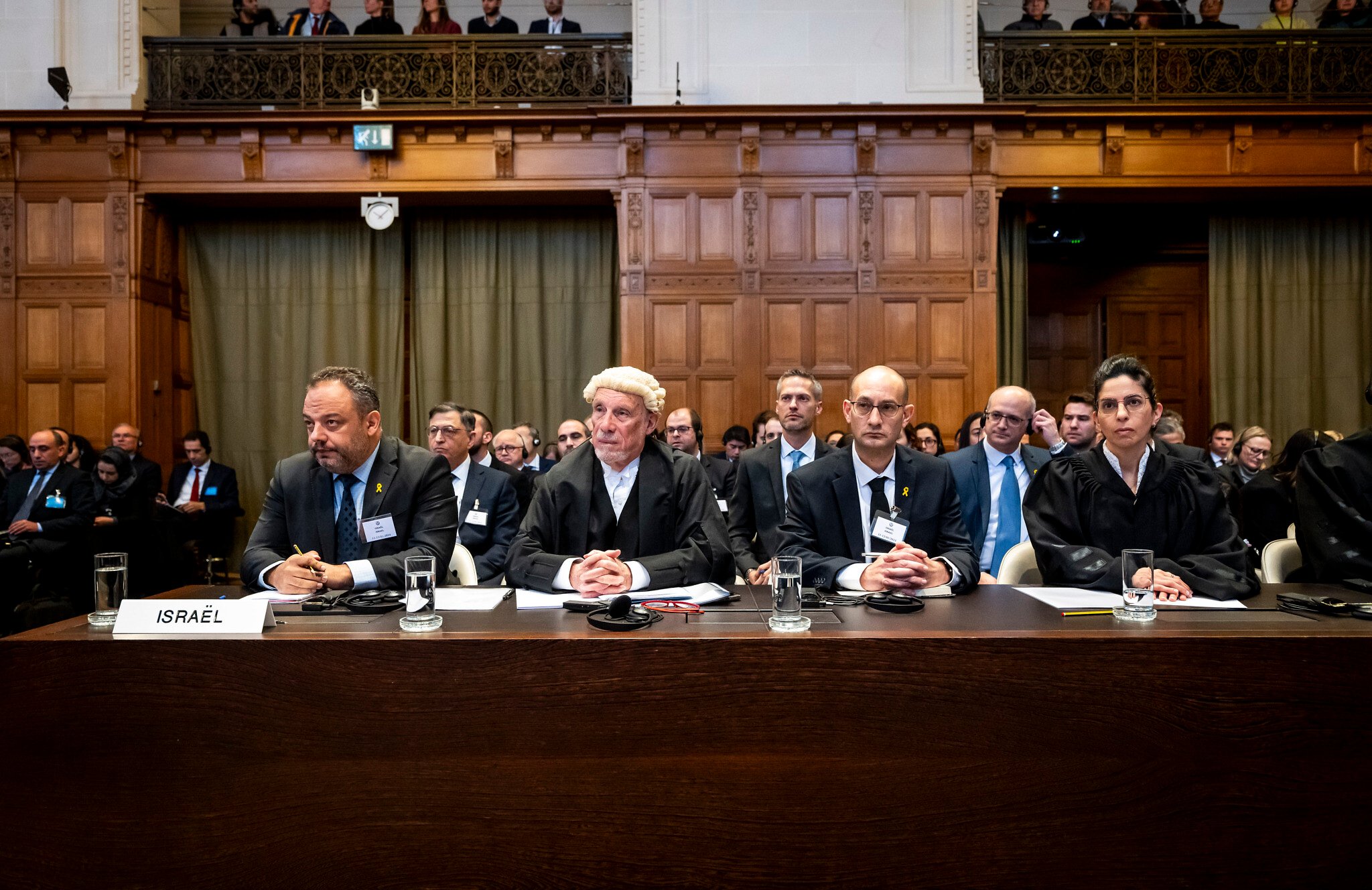
Other Israeli representatives highlighted the glaring omissions in South Africa’s presentation — notably including as regards the October 7 slaughter by Hamas in southern Israel as the trigger of Israel’s war, and Hamas’s strategic reliance on fighting from within “homes, mosques, UN facilities, schools, and, perhaps most shockingly, hospitals.” They also focused on Thursday’s misrepresentation of Israel’s repeated warnings to Gazans to leave areas where there is heavy fighting as ostensibly making life impossible and thus being genocidal in nature, when they were and are designed to evacuate noncombatants from areas of fighting — that is, to enable life.
“A measure intended to mitigate harm to civilians is proof, according to the applicant, of Israel’s intent to commit genocide when it in fact proves the exact opposite,” Dr. Galit Raguan told the court.
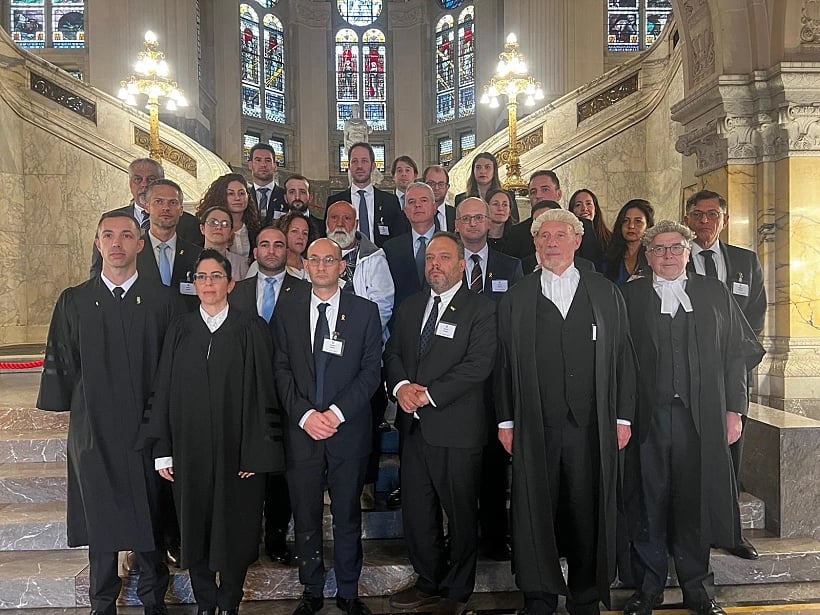
Israel argued more fundamentally that the allegations brought by South Africa constitute complaints that relate to the laws of war rather than to the Genocide Convention, indeed that there is no “plausibility” to the claim that Israel is engaged in genocide, and therefore that the very nature of the complaints is not within the court’s jurisdiction.
In seeking the court’s intervention, Israel contended, South Africa was abusing the court and potentially subverting the Genocide Convention.
If a provisional order were granted by the court, protested Dr. Christopher Staker, it “would mean that when a recognized terror group commits terrorist attacks on another state, a third party seeking provisional measures can stop a party from defending itself.”
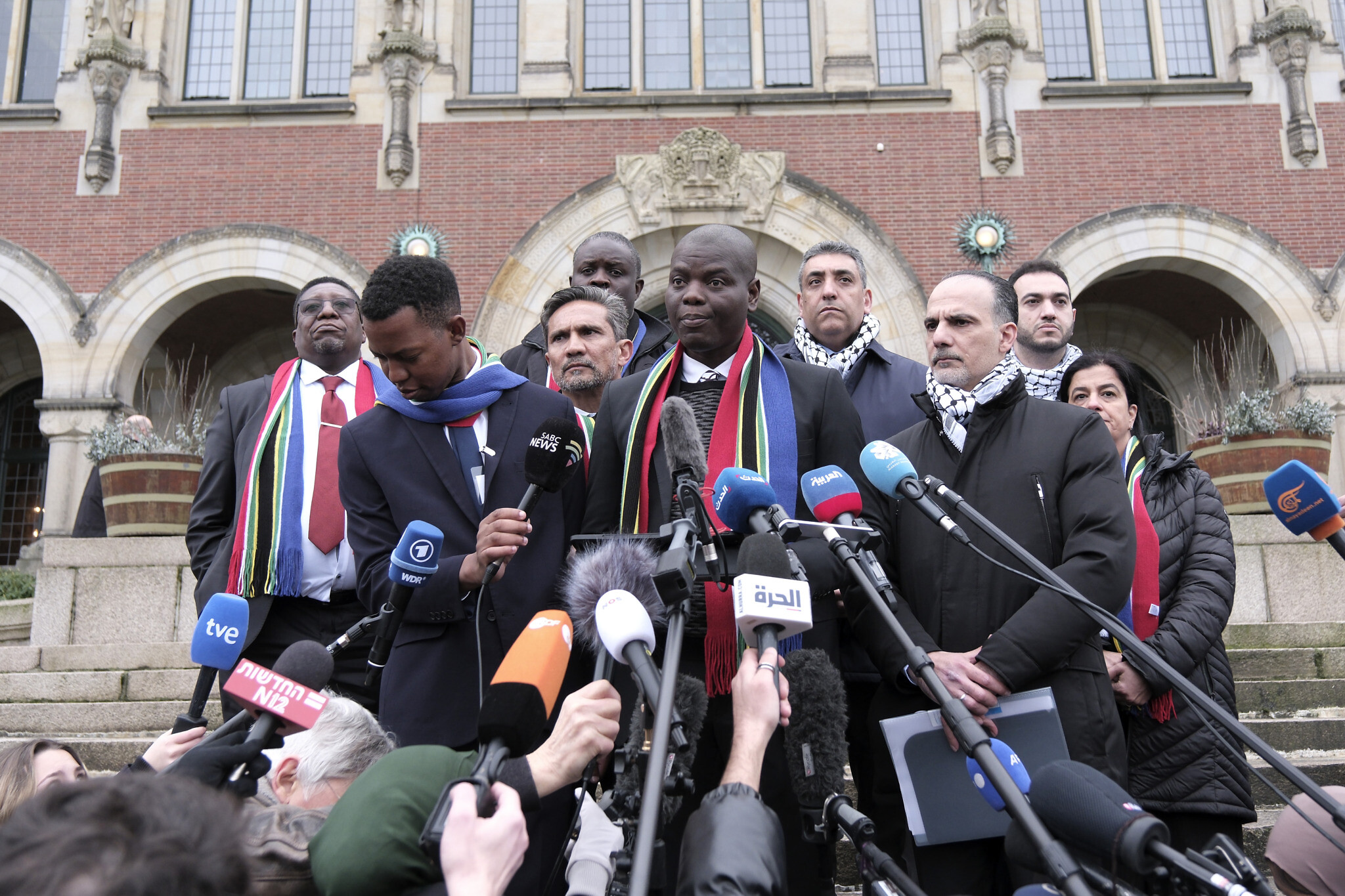
Or as opening speaker Tal Becker, the Foreign Ministry’s legal adviser put it, “If the term ‘genocide’ can be so diminished in the way that [South Africa] advocates, if provisional measures can be triggered in the way that it suggests, the convention becomes an aggressor’s charter. It will reward, indeed encourage, the terrorists who hide behind civilians, at the expense of the states seeking to defend against them.”
Argued Becker of the case as a whole: “The key component of genocide — the intention to destroy a people, in whole or in part — is totally lacking. What Israel seeks by operating in Gaza is not to destroy a people, but to protect a people — its people, who are under attack on multiple fronts — and to do so in accordance with the law, even as it faces a heartless enemy determined to use that very commitment against it.”
Related: Full text — S. Africa genocide case is ‘a libel,’ aimed ‘to deny Israel the right to defend itself’
There is no knowing how the court will rule. But there is no doubt that Israel served its interests in participating rather than boycotting the proceedings. Its representatives at The Hague were manifestly passionate, capable and persuasive — in striking contrast to Israel’s bickering, dysfunctional political leadership. They were also efficient: They would have known broadly what South Africa would have to say, but had less than a day after hearing Pretoria’s claims to update and finalize their responses.
Were the court to order the ceasefire that South Africa seeks, leaving Hamas semi-intact and unquestionably still bent on carrying out “October the 7th, October the 10th, October the millionth,” Israel would do its utmost to defy it. Were the court to order a greater influx of aid, Israel would likely comply. Were it to call for an end to incitement against Gaza by irresponsible political leaders, Israel would presumably vow to try to do so, with no guarantee of success.
A fair-minded court, however, would dismiss the South African presentation altogether, on the grounds that Pretoria did not prove its allegations of genocide or genocidal intent. And also in the knowledge that Israel (still, mercifully) has a robust Supreme Court of its own, capable of bringing its independent judicial weight to bear if needed on Israel’s conduct in its war against Hamas.





The Times of Israel Community.