

After series of errors, Tel Aviv hospital barred from accepting new IVF patients
Health Ministry censures Assuta Ramat HaHayal for several serious breaches, including baby born with no DNA link to father, says outside safety adviser must be appointed
 Add ToI as a Preferred Source on Google
Renee Ghert-Zand is the health reporter and a feature writer for The Times of Israel.

Following a series of disturbing errors in the IVF department of the Assuta Medical Center in Tel Aviv, the Health Ministry announced Thursday that the hospital’s fertility clinic is barred from accepting new patients.
The announcement of a set of restrictions on the hospital came after a hearing focusing on several recent incidents involving the department, including a baby born via in-vitro fertilization performed there who was found to not be genetically linked to the father.
The Health Ministry said that the hearing was also prompted by an incident in which 13 fertilized eggs stored by the hospital dried up. The medical center has been accused of trying to cover up the instances, which were not reported to authorities in a timely manner.
“These events and their close proximity, as well as the fact that they weren’t reported to the Health Ministry, raise concerns of harm to public health,” the ministry said at the time. “Therefore, the option of ordering the full or partial closure of the department is being considered.”
In its ruling on Thursday, the ministry ordered the hospital to limit its IVF activity moving forward. There will be no more than 25 procedures (egg retrievals and embryo transfers combined) allowed per work day, which will end no later than 11 p.m.
In addition, the IVF department is not allowed to accept any new patients.
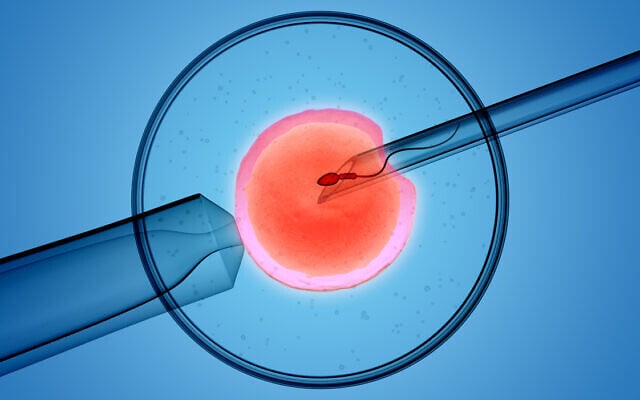
“This will continue until further notice to ensure that the scope of the activity corresponds to the required standard and the unit acts in a way that does not endanger or damage public health, or patients’ rights,” the statement said.
The Health Ministry also instructed the hospital to immediately search for and appoint an independent senior adviser to lead efforts to improve organizational culture around treatment safety, including “the proper and timely reporting of exceptional incidents.”
In September 2022, a woman discovered that her embryo had been mixed up at Assuta’s Rishon Lezion branch. She and her husband waged a months-long legal battle to keep the baby, Sophia, who was born in October.
In that case, the Health Ministry initially sought to find the child’s biological parents, but after one couple thought most likely to be the parents was ruled out by tests, officials announced in November that they would halt the search.
In March 2023, the Supreme Court decided not to allow further genetic testing to go ahead for six other potential couples to determine if they were the biological parents of the child.
According to the ruling, justices determined that there was very little chance that the six couples may be the biological parents and that the birth mother and her husband’s legal claim over the child was stronger.
A Health Ministry probe into the incident at Assuta Rishon Lezion pointed to significant breaches in protocol due to heavy workload resulting in the misplanting of the embryo.
The rising demand for IVF in recent years has driven patients to seek treatment at private hospitals like Assuta. In light of the resultant pressure put on these institutions, Health Ministry general director Moshe Bar Siman Tov appointed a ministry teamin May to study the issue and make recommendations.
The team’s draft report was published on July 5 and is open for public comment. Among its recommendations is expanding competition between public and private IVF treatment providers, in part by making public options more attractive by allowing patients to choose their doctor without additional cost.
The ministry’s group also emphasized the need to raise standards, especially concerning how specimens are handled and tracked. It also recommended limiting treatment cycles (egg retrieval and embryo transfer) to 8,000 per year until it is proven that an IVF treatment department can handle more.
Times of Israel staff contributed to this report.








The Times of Israel Community.