

Agreement reached for state subsidies to reopen afterschool care centers
Education Minister Rafi Peretz hails the move, saying having programs for young children in the afternoon will enable thousands of parents to get back to work
 Add ToI as a Preferred Source on Google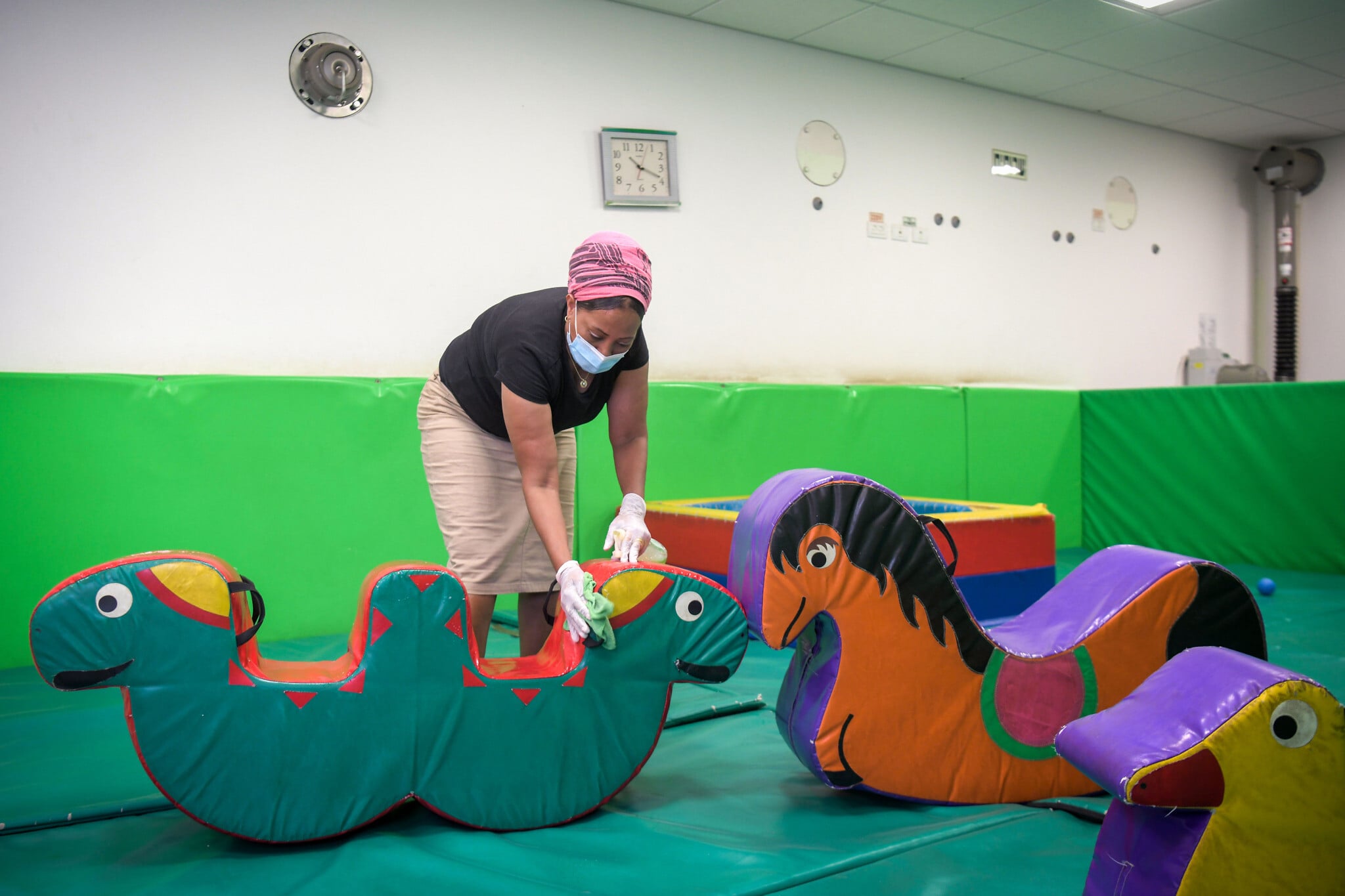
An agreement was reached Friday between the Treasury, local councils and the Education Ministry that would allow for the reopening of afterschool care centers for kindergarden children and 1st and 2nd graders.
The agreement comes after elementary schools brought back students in first through third grades this week, as Israel has looked to gradually transition back into a more normal routine with the deadly virus seemingly under control.
But with many kindergartens finishing by 2 p.m., and schools at 1 p.m., pressure mounted to reopen the afterschool centers too. Getting small children into daycare is seen as key to helping parents return to work as the lockdown restrictions ease.
Children aged 3-6 are expected to return to kindergartens and preschools on Sunday in groups of no more than 18. The majority will attend only three days a week so that the limits can be maintained.
The agreement reached would see afternoon programs reopen in a similar format as the kindergartens. Parents would only pay for the days that their children were in the centers and the Finance Ministry would pay the shortfall in operating costs.
Local councils, which run the centers, now have the green light to get them ready and inform parents when they will open, most likely during next week.
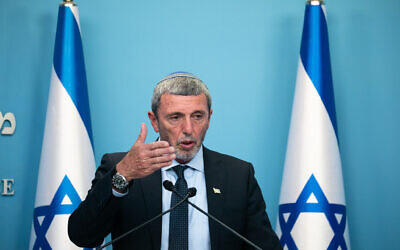
Education Minister Rafi Peretz hailed the move, saying it would enable thousands of parents to get back to work.
“The agreement covers children between the ages of three to eight, which affects a large portion of the public and the effects will be felt immediately,” he said.
Ahead of the talks the national parents’ forum on Friday called on Finance Minister Moshe Kahlon to release compensation payments for the restarting of afterschool programs.
“Wake up. Stop the delusion of a return to routine. What sort of routine is it when we are forced to leave work at noon to collect our children or worse, remain home to care for them. Release the financial aid for the programs,” the organization said in a statement to the Kan public broadcaster.
The Health Ministry on Wednesday okayed a deal under which government-supervised daycares for children up to the age of 3 will also be allowed to open Sunday, albeit with caps on class sizes that may keep thousands of toddlers at home.
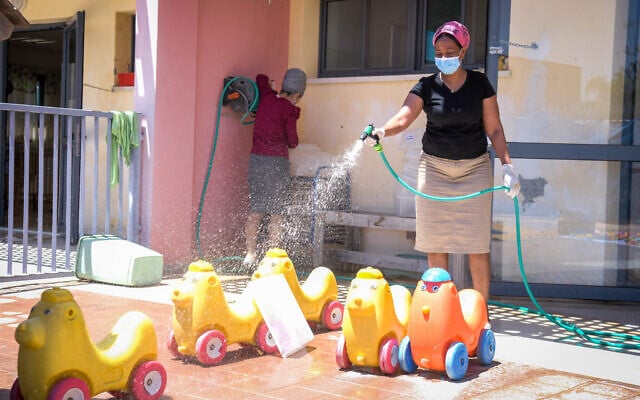
Israel is in the midst of emerging from the lockdown and reopening stores, schools, kindergartens and more, as the number of new infections have appeared to slow to a mere trickle.
In Israeli schools, grades 1-3 and 11-12 returned to school this week with smaller classes and strict health procedures.
Prime Minister Benjamin Netanyahu said Monday he expects all students will return to classes by the end of the month, while universities and colleges are set to reopen on June 14. Schools will likely have to rotate attendance, as they do not have enough classroom space for all students to maintain social distancing at the same time.
At schools, pupils were being divided into groups, each of which, under Education Ministry guidelines, was to remain together for all classes and breaks. Each group was to have dedicated bathrooms as well.
Schools were among the first institutions to shut down in mid-March, a move that was quickly followed by stricter measures that brought the economy to a virtual standstill and forced many to remain at home as the country sought to prevent a large outbreak of COVID-19.







The Times of Israel Community.