

Amona residents pledge to High Court they will evacuate peacefully
Justices rejected previous declaration as ‘ambiguous,’ demanded clearer statement as condition for considering delaying outpost’s demolition
 Add ToI as a Preferred Source on Google
The residents of the Amona outpost in the West Bank pledged to the High Court of Justice on Thursday they would evacuate the site peacefully under any conditions, as the court debated a 45-day extension to its December 25 demolition deadline.
“The respondents clarify that they ‘agree and commit unanimously to a peaceful eviction without conflict or resistance,'” read the statement from the residents to the court, citing an earlier court ruling.
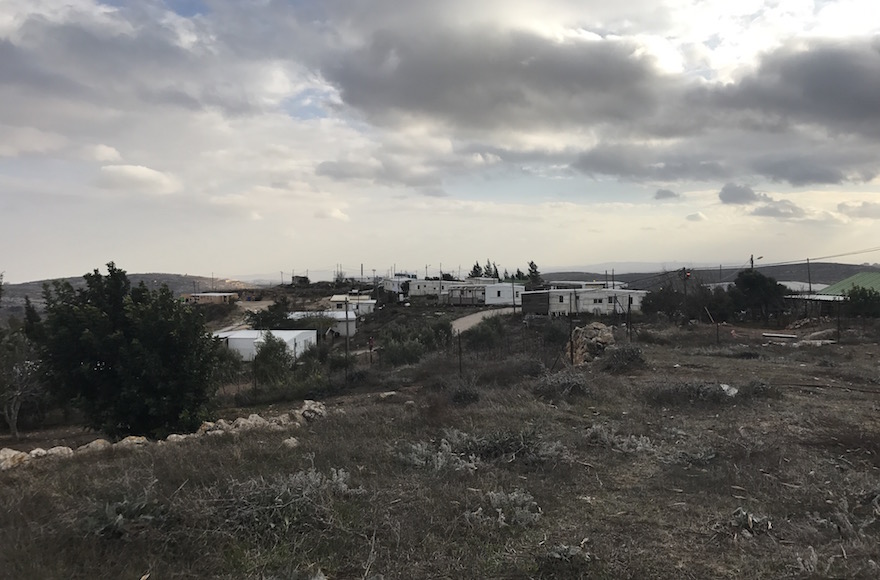
A tiny outpost of some 41 families on a hillside alongside the Ofra settlement northeast of Ramallah, Amona was built in the 1990s on what the court has repeatedly ruled was privately owned Palestinian land. A 15-year legal battle culminated in a December 2014 ruling by the High Court that the outpost be evacuated and demolished. At the time, the court gave the state and residents 24 months to prepare alternate arrangements.
The looming deadline led to a political crisis in recent weeks that saw the advancement of the Regulation Bill that would allow the state to seize control of private lands on which settlements are built if the settlers are deemed to have squatted on the site in good faith, without knowing it was privately owned property.
In recent weeks, the court rejected requests by the state to postpone the demolition as negotiations were held with residents on evacuating peacefully. But on Wednesday, the court gave the residents of the Amona outpost until 10 a.m. Thursday to sign an “unequivocal” guarantee that they will leave their homes with no resistance, before ruling on a new request from the state for a 45-day delay.
The residents submitted a statement to the court, but it was rejected by the justices as “ambiguous” as it conditioned a peaceful relocation on the state’s fulfilling unspecified “obligations.” The court then gave the residents until 5 p.m. Thursday to submit a clearer statement that they would leave peacefully “on the delayed date, whenever it may be set” and without conditions. The residents submitted the revised statement by 4 p.m.
The original declaration from the residents said they “see themselves obligated to the signatures of the [outpost’s] leadership on the agreement [with the state] to evacuate and advance alternative options for Amona… and the plan that would see them leave the settlement peacefully and without violence, with the understanding that the state would fulfill its obligations.”
Under the deal reached between the residents and the government, 24 of Amona’s 41 families would be moved to an adjacent plot of land on the same hill while the rest would move to the nearby Ofra settlement. The government would also explore permanent housing solutions on the adjacent plot.
If the 45-day request is granted, the new final date for the evacuation would be February 8, 2017.
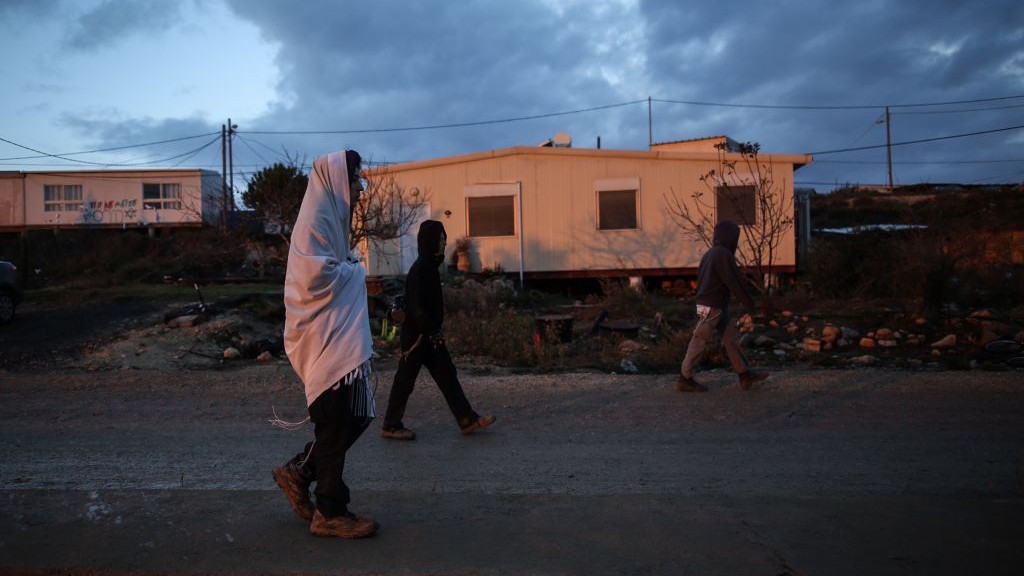
Authorities were hoping the compromise deal could prevent a repeat of the violence that followed the destruction of several permanent buildings in the outpost in 2006, when the court similarly ruled that buildings were built on private Palestinian land.
But Amona residents have threatened to cancel the government agreement if the court rejects the state’s request.
“We are not obligated by the agreement,” Amona spokesman Ofer Inbar told The Times of Israel earlier this week. “If they reject it, we will have to see what to do.”
Meanwhile, the Palestinian landowners came out against the state’s extension request, claiming in a letter to the High Court this week that despite the court ruling, the state does not intend to return their land.
“The request to delay the evacuation, filed just four days before the court-ordered date, is the culmination of a two-year-long process to break down the respondents while keeping up the appearance of preserving the values of rule of law, equality, protection of property rights and fairness,” they wrote.
Times of Israel staff contributed to this report.










The Times of Israel Community.