

An old political ally, a new threat to the PM
Netanyahu’s former chief of staff Ari Harow reportedly agrees to turn state’s witness, and the Hebrew-language media wonders if this means the game is up for the PM
 Add ToI as a Preferred Source on Google
Adiv Sterman is a breaking news editor at The Times of Israel.
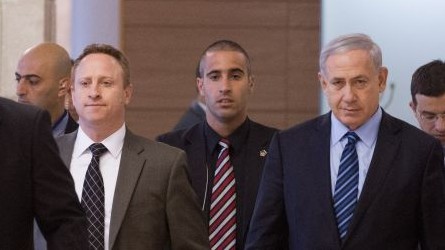
For the first time in days, the Hebrew-language papers shift focus away from the divisive and emotionally charged Elor Azaria verdict and on to Prime Minister Benjamin Netanyahu’s various corruption headaches — today in the shape of his former chief of staff Ari Harow, who is set to turn state’s witness as part of the ongoing investigations into alleged illegalities among top Israeli officials.
Yedioth Ahronoth, Israel Hayom, and Haaretz run nearly identical headlines about Harow being “on his way to become a state witness,” with each daily stressing in its own words that the move would likely end up with Netanyahu’s former adviser turning against his previous boss. The newspapers explain that Harow, who has been under investigation since mid-2015 on suspicion of using his ties to Netanyahu to advance private business interests, is a key figure in two corruption probes, dubbed “Case 1000” and “Case 2000,” both of which allegedly involve the prime minister himself. Harow is reportedly willing to provide information in both probes.
As is often the case with the more center-left Israeli papers, the Harow coverage in Haaretz and Yedioth is tainted with a bit of schadenfreude about Netanyahu’s difficulties. The tone in Israel Hayom, however, is less easy to discern. The paper, which was once considered a mouthpiece for the prime minister, has recently turned away from him somewhat and harshly criticized him over his handling of the clashes and tensions surrounding the Temple Mount over the past three weeks. Today, it does not shy away from describing the difficulties facing Netanyahu and seems to acknowledge that the allegations against him are becoming more credible. At the same time, it prominently features an interview with retired Harvard law professor Alan Dershowitz, who warns that people opposed to the prime minister are using the legal system in an attempt to oust the Jewish state leader.
“The judiciary in Israel and in the US has become a tool for those who have lost in the elections,” Dershowitz tells Israel Hayom.
Dershowitz, who has worked on a number of high-profile cases, insists that his concerns are not related to Netanyahu per se, but to the way in which the legal battles involving sitting prime ministers or presidents are conducted. “I have no problem with [Attorney General Avichai] Mandelblit investigating Netanyahu, I have a problem with the protesters who are demanding that he do so… I am very much concerned about Israeli democracy, and it has nothing to do with Netanyahu, it has to do with any controversial prime minister in the future.”
Haaretz, meanwhile, is still not ready to move on from the Azaria affair completely, and the paper’s op-eds deal with the lessons that may be drawn from the case of the former IDF soldier convicted of manslaughter who lost his appeal against the conviction this week. The daily’s Zvi Barel argues that Azaria’s conviction ultimately changes nothing in terms of Israel’s policy toward the Palestinians.
“Even during the long months when the trial was taking place, the unnecessary killing of Palestinians has remained a reality,” Barel writes. The Haaretz contributor notes that many in the country are demanding a death penalty for Palestinian terrorists, and worries that while illegal now, the soldier’s actions may be accepted in the future. “A soldier will have a legal outlet for his emotions, the public can avenge and feel moral, and the Palestinians – they will undoubtedly be deterred.”
Azaria was ordered jailed for 18 months for killing an incapacitated Palestinian stabber, Abdel Fattah al-Sharif, 11 minutes after Sharif had attacked two soldiers with a knife and was shot and disarmed, in the West Bank city of Hebron, on March 24, 2016. The Azaria saga deeply divided the Israeli public, with some demanding his release as a hero, and others calling for a lengthier imprisonment. Netanyahu and other leading ministers have urged that he be pardoned, but the former soldier has not indicated any regret for his actions.
Israel Hayom places a serious emphasis on the pilgrimage of some 1,300 Jewish visitors to the Temple Mount yesterday, only days after the heightened tensions surrounding the holy site seemed ready to erupt into a new and lengthy wave of violence and terror.
The daily notes that nine Jews were detained after they uttered prayers, in violation of a ban on Jewish prayer at the site. The Mount is considered the holiest place in Judaism, where the two ancient Temples once stood, and the third holiest in Islam. Orthodox rabbis generally ban visits to the site for fear of treading on holy ground. But the numbers suggest a shift in the views of many Jews, as control over the site for both Israeli and Palestinians becomes less about religion and more about national symbolism.










The Times of Israel Community.