

Argentina vows to back probe into AMIA prosecutor’s suspicious death
President Fernandez criticizes Alberto Nisman’s investigation into 1994 attack; he had been set to detail her alleged cover-up when he died
 Add ToI as a Preferred Source on Google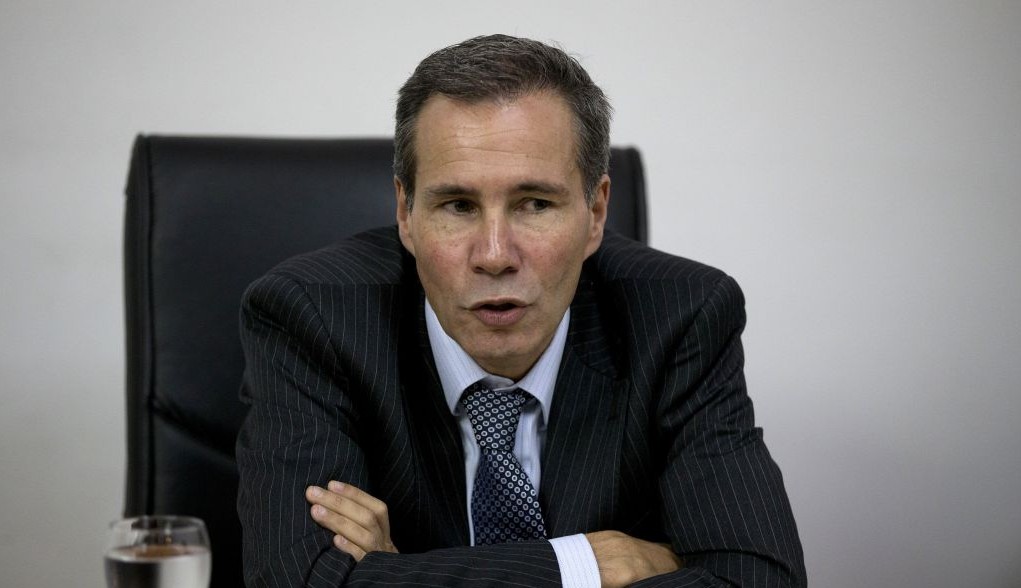
BUENOS AIRES — Amid a public uproar, President Cristina Kirchner’s government pledged full backing Tuesday of a probe into the suspicious death of a prosecutor who had accused her of obstructing his investigation of the 1994 bombing of a Jewish community center.
Alberto Nisman, 51, was found dead at his home Monday from a gun shot to his temple in what authorities have said appeared to be a suicide the day before he was to present evidence against Kirchner at a congressional hearing.
The mystery deepened Tuesday as the prosecutor leading the death investigation disclosed that no residue of gunpowder has been found on Nisman’s hands.
“This does not rule out that he shot himself. Nobody is ruling that out,” Viviana Fein, the prosecutor, told local station Radio Mitre.
She said an autopsy had found no evidence that another person fired the shot, and the negative result of the residue test was “not unexpected.”
Powder residues are often undetectable in .22-caliber handguns of the kind that fired the shot that killed Nisman, she said.
Protests erupted Monday night outside the presidential palace and several other cities, where demonstrators called for an end to “impunity K,” a reference to the president.
Kirchner, meanwhile, broke her silence on the case, posting a letter on Facebook critical of Nisman’s decade-long probe into the bombing, which has blamed Iran for the bombing of the Argentine Jewish Charities Federation, AMIA, that killed 85 people and injured more than 300.
“AMIA. Once again: tragedy, confusion, lies and questions,” Kirchner’s letter was titled.
She said the investigation into an alleged cover-up should not suffer the same fate as the inconclusive probe into the AMIA bombing, the worst attack of its kind in Argentina’s history. In fact, Nisman’s investigation had established the responsibility of Iran and Hezbollah for the 1994 bombing, and Interpol had placed senior Iranian officials on international watch lists.
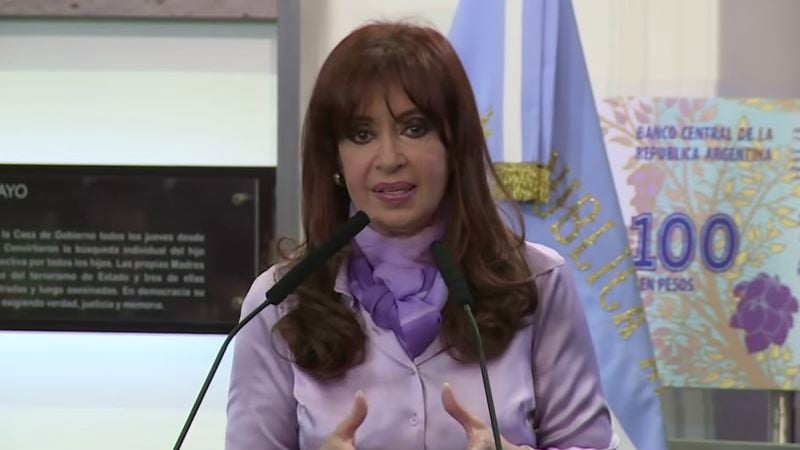
Jorge Capitanich, Kirchner’s cabinet chief, on Tuesday said the Nisman death investigation would be pursued “to its ultimate consequences” and would have “every institutional support.”
Judge Ariel Lijo, who received Nisman’s complaints about the alleged presidential obstruction, took emergency measures to preserve evidence in the case.
They included 300 CDs of conversations recorded from wiretaps on the telephones of an Iranian citizen and men close to the government.
While prosecutors said Nisman appeared to have committed suicide, they have classified the case as a “doubtful death.”
“I do not rule out instigation. We do not say that the case has been solved,” Fein said.
The mystery has fired up the opposition and drawn speculation and questions from all sides, including Kirchner’s supporters.
Ruling party deputy Andres Larroque, who was implicated in the cover-up allegations, said investigators must look at “who pushed the prosecutor” to commit suicide.
Other Kirchner aides questioned why Nisman had abruptly cut short a vacation last week to rush back to Buenos Aires and lodge a 350-page complaint implicating the president.
“Why did he come back 12 days early? Why did he leave is 12-year-daughter alone for three hours at the Barajas airport to wait for her mother? Why the anxiousness to return? I would love to know,” Anibal Fernandez, the secretary general of the presidency, told reporters as he entered the presidential palace Tuesday.
At the heart of Nisman’s obstruction charge is a claim that Kirchner hampered the inquiry to curry favor with Iran and gain access to its oil.
Kirchner cut a deal with Tehran in January 2013 agreeing to establish an international “truth commission” to investigate the bombing and issue recommendations on how to proceed.
The memorandum of understanding was sharply opposed by leaders of the country’s Jewish organizations as unconstitutional.
Since 2006, Argentine courts have demanded the extradition of eight Iranians, including former president Akbar Hashemi Rafsanjani, over the bombing. The memorandum would have allowed Argentine prosecutors to question them in Iran.
Nisman had also accused former president Carlos Menem (1989-99) of helping obstruct the investigation into the bombing, which has never been solved.
Congresswoman Cornelia Schmidt-Liermann said she had planned to pick Nisman up Monday at his residence and accompany him for his testimony.
“Everybody who had contact with him the last 24 hours says he was confident” about his testimony, she told The Associated Press on Monday. “There is no indication, under any circumstances, that he killed himself.”
Schmidt-Liermann said Congress met Monday afternoon despite Nisman’s absence, and many members signed a declaration urging a full investigation into Nisman’s death and insisting that the investigation continue.
Schmidt-Liermann and others who knew Nisman said he lived under constant threats on his life from Iranian agents and pressure from the Argentine government.



The Times of Israel Community.