

As consumers froth over milk shortages, dairies spoil for a fight to halt industry shakeup
Advocacy groups plan campaign against finance minister’s proposed reforms; Agriculture Ministry pushes alternative plan amid concern for dairy farmers and food security

 Add ToI as a Preferred Source on Google
Sharon Wrobel is a tech reporter for The Times of Israel
Not long ago, Israeli consumers were deprived of their bread and butter — or at least the latter. For much of 2019 and 2020, dairy aisle shelves that would normally flow with buttery goodness stood bare; even pricey imports were in short supply.
In response, the government lifted import tariffs and local controls to promote competition, address the chronic shortage, and bring down the cost of the basic good.
Since then, butter has been steadily available, though the price of imported butter has since spiked by 60 percent, and the cost of the locally manufactured product increased by about 6%, according to an analysis by the State Comptroller’s Office in 2024.
Israelis still pay at least 40% more for imported butter than domestic butter, and almost double the price it is sold for in Europe.
Now, amid recurring nationwide shortages of price-controlled milk, Finance Minister Bezalel Smotrich is spearheading a new reform, vowing to end a problem that he says stems from an overregulated, overly concentrated dairy market.
As part of the reform, Smotrich plans to waive Israel’s high tariffs on milk imports to encourage competition, increase the supply, and lower the cost of the most popular basic good bought by consumers.
By now, many in Israeli grocery stores have become accustomed to seeing shelves without price-controlled milk or limits on how many cartons they can buy. Meanwhile, milk products — though not milk — remain in abundance in dairy aisles. Not subject to price controls, these products are often 50% more expensive than the average in OECD member countries, if not higher, according to Finance Ministry data.
Policy-makers say the problem stems from a lack of competition among an oligopoly of major dairies, and the fact that they prefer to keep their production of price-controlled milk to a minimum while focusing instead on products with higher profit margins.
The issue tends to become especially acute around Jewish holidays, when production restrictions are further curtailed from their normal 5.5-day workweek to comply with kashrut laws.
Israel’s NIS 12 billion ($3.7 billion) dairy market is governed by centralized planning and a state-approved quota system. The government controls the volume and sets the price of raw milk that farmers sell to dairy producers. The dairies use the raw milk for the manufacturing of milk, cheese, and other dairy products in a process that is not regulated, and sell it to retail chains and supermarkets, which set the prices of dairy products for consumers.
Local dairy farms and dairies are mostly protected by high tariffs of up to 40%, which have prevented competition from imported goods.
The Finance Ministry now says it will scrap the regulated, centralized quota system and open the dairy market to competition. Dairy prices have long been a flashpoint in Israel, with spikes often touching off public anger and even mass protests over the high cost of living — a theme that has consistently ranked among voters’ top concerns in recent elections.
Buying the cow
But local dairy industry advocates say the proposed reforms will only make things worse.
“The Treasury’s plan is a death blow to the Israeli dairy farmers’ industry and the entire dairy sector, and will seriously harm food security in Israel,” warned Israeli Cattle Breeders’ Association (ICBA) director Dagan Yarel. “Israeli citizens should not have to rely on the import of Polish or Turkish milk — we must keep the Israeli dairy farm and the Israeli dairy industry strong, stable, and safe for the benefit of all citizens of the country.”
“Opening up the market for imports of butter has had the opposite effect and caused a crazy jump in consumer prices. This is not the way to lead to a drop in prices,” Yarel claimed.

Similarly, Itzhak Shnaider, CEO of the Dairy Council Israel, a nonprofit organization charged with planning and coordinating Israel’s dairy production, urged the Finance Ministry to take the reform off the agenda and instead adopt a food security growth plan proposed by the Agriculture Ministry.
“Reality has shown that it is impossible to rely on imports from European countries,” said Shnaider. “Importers will bring what is profitable for them, as they are only motivated by profit.”
“The direct result will be harm to national food security and an increase in prices for consumers,” he cautioned.
The Agriculture Ministry and Israeli Cattle Breeders’ Association have also come out against the plan.
“The current planning system is preventing the more efficient farmers from expanding, because there is a quota system, and farmers can stay in business even if they are not efficient,” said Ayal Kimhi, vice president of the Shoresh Institution for Socioeconomic Research and a professor of agricultural economics at Jerusalem’s Hebrew University. “There is room for reform, but the Finance Ministry’s plan seems to be a little bit too one-sided.”
Dairy groups are gearing up for a protest campaign as Smotrich prepares to pass the reform as part of the Economic Arrangements Law, which is expected to be voted on alongside the 2026 state budget in the coming months.
Smotrich’s attempts over the past two years to avert a milk shortage by temporarily lifting the customs duty during peak consumption and lower production periods have failed to result in more milk on dairy shelves. In August, a six-month customs waiver on milk imports came into effect. However, for most retailers, it didn’t pay off to import regular milk for a limited time period.
There are economic, technical, and logistical obstacles to importing milk due to its short shelf life, alongside the added costs of transportation by sea, kosher supervision and certification, and distribution to local branches.
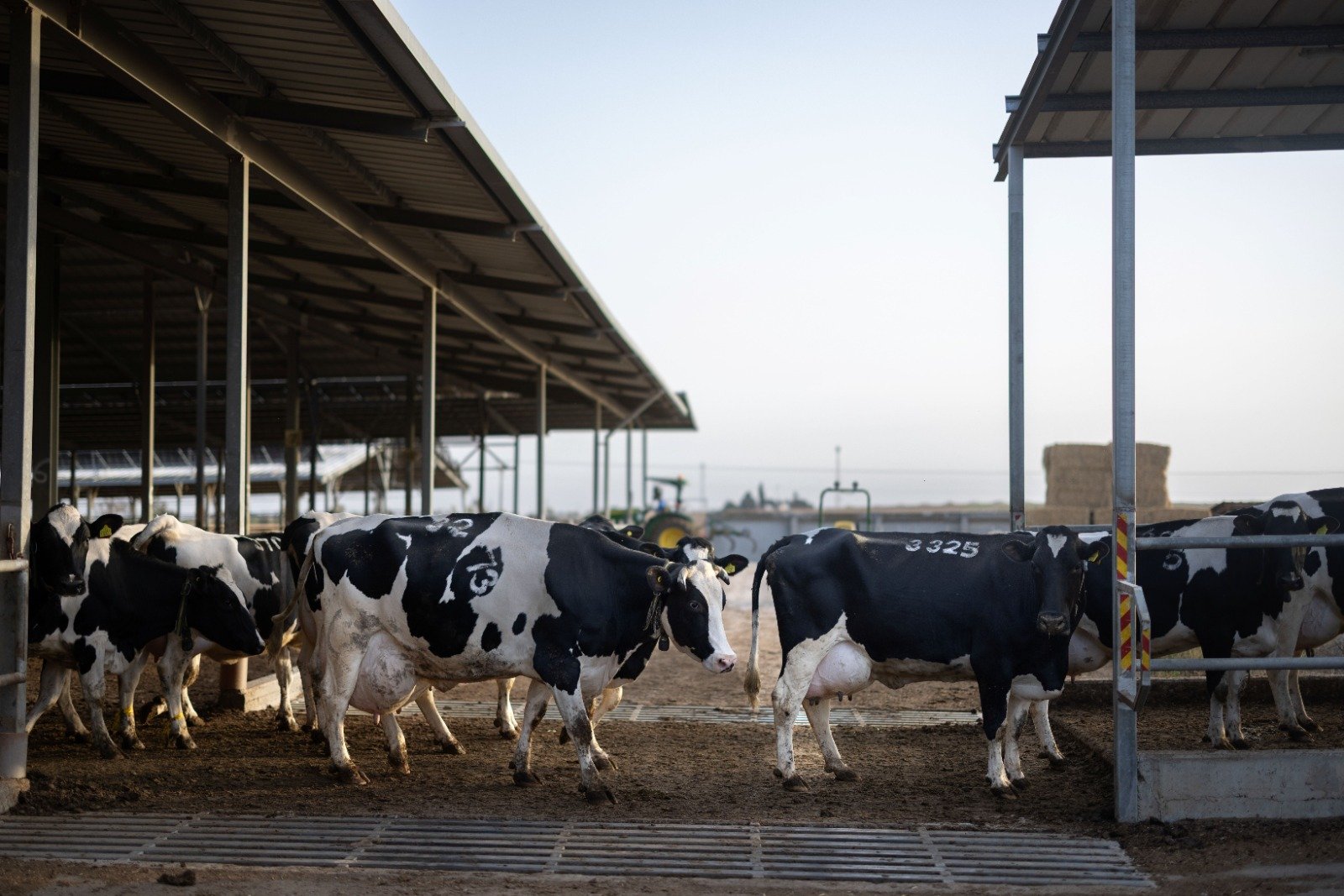
If the reform is passed and implemented, it could lead to the closure of some 200 smaller dairy farms, many of which are located around the northern border and Gaza envelope, as they will struggle to compete, according to estimates by dairy associations. There are about 600 dairy farms in Israel.

One of the main criticisms of Smotrich’s proposed reform is that it targets dairy farms but fails to tackle the problem of overconcentration inherent in the local industry of dairy producers and retail chains, which impacts the supply and cost of dairy products in Israel. Even if the price of raw milk produced by dairy farms comes down, as projected by the Finance Ministry following the reform, it is not clear whether the reduction will be passed on to consumers.
“The Finance Ministry plan is not a reform to lower prices, it’s a reform to shift power to private monopolies,” said Amit Ben-Tzur, CEO of The Arlozorov Forum, a research institute involved in shaping socio-economic policy in Israel. “By dismantling the public planning system, which is what the Treasury wants, they hand control to the three big dairies.”
“I call this the privatization of food security, not a solution to the high cost of living,” Ben-Tzur said.
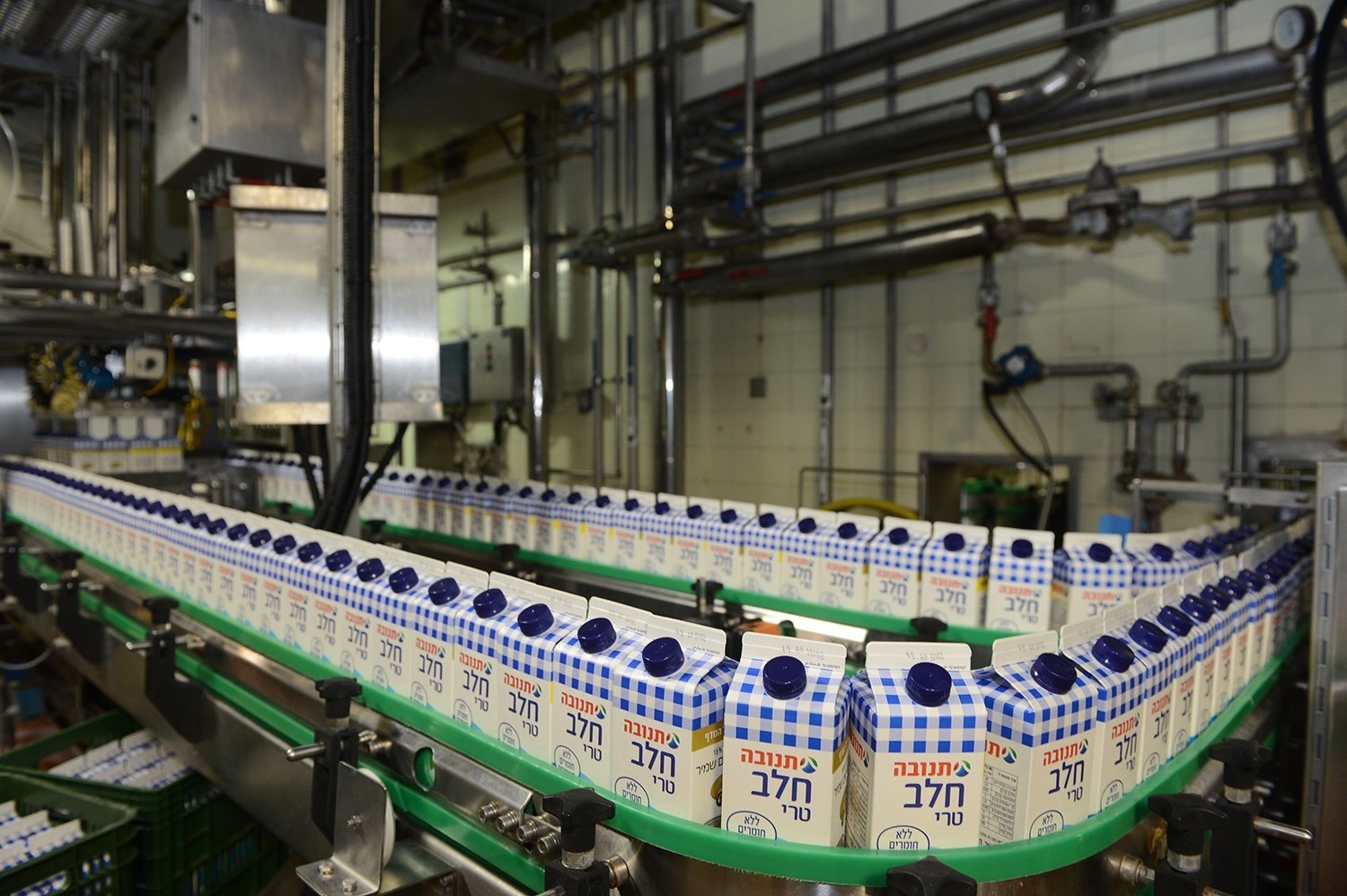
The local sector is dominated by less than a handful of dairy producers, led by Tnuva, the country’s largest food manufacturer; alongside local foodmaker Strauss; Tara Dairy, owned by Israel’s local Coca-Cola licensee Central Bottling Company Ltd.; and Golan Heights Dairies.
Currently, Tnuva controls close to 80% of the production of price-controlled milk.

Since the state sets milk prices, dairies have been reluctant to increase production of it and other government-controlled dairy products. Dairy companies have claimed significant losses from the production and sales of price-controlled milk. Instead, they have focused on the production and sale of more expensive dairy products, such as fortified, low-lactose, or chocolate milk drinks, which are not regulated, leading to shortfalls of regular milk during peak demand periods.
“To encourage dairies to produce regulated milk, we have to give them the right economic incentives, and I don’t see how the removal of price controls and regulation in the dairy sector is going to solve the problem,” said Ben-Tzur.
To counter the Treasury’s dairy reform coup, the Agriculture Ministry has presented a separate NIS 1.4 billion ($428 million) five-year plan. It promises to streamline milk production, ensure a stable supply of regular, price-controlled milk to the public throughout the year — including during holidays and national emergencies — and reduce prices for consumers.
The plan entails R&D and capital investments in advanced technologies and smart management systems of dairy farms, to reduce costs and boost productivity. It also includes investment in upgrading infrastructure and establishing new production lines in dairies to encourage and expand the market for supervised dairy products.
The Agriculture Ministry insists that a central planning system needs to remain in place to regulate and maintain the continuity of the supply of raw milk in Israel.

“Removing the planning system will not make milk cheaper, it will just make dairy producers and retail chains richer,” said Ben-Tzur.
Yarel said that the Israeli Cattle Breeders’ Association supports the Agriculture Ministry’s “transparent and feasible plan,” which he said will “ensure significant and long-term investment in the Israeli dairy industry, after years of neglect by Israeli governments.”
But the Finance Ministry says the proposal demands “investment of huge government budgets without considering the deep-seated problems that exist in the industry, and would keep power in the hands of a small group of vested interests, while milk prices will continue to be tens of percentage points higher than the rest of the world.”
Made from concentration
Critics also say fixing the milk market will be only a drop in the bucket toward fixing the broader problem of Israel’s sky-high cost of living, among the highest among OECD countries.
The issue has been generally attributed to a lack of competition among local importers and manufacturers, who are therefore able to raise prices, alongside import restrictions that keep out international firms.
“If the bottom line is that we care about lowering consumer prices, the first thing we have to worry about is market concentration, and all the reform proposals are not doing anything about that,” Kimhi lamented.
The local food retail sector suffers from overconcentration as the top three supermarket chains account for over half of the Israeli market, limiting competition and putting upward pressure on prices.
“Public planning is the right system that is suited for Israel, because we don’t have so many players that will come in to compete,” said Ben-Tzur. “We need a system to ensure that there will be farms that will produce milk, that there will be dairies that process the raw milk, and that there will be retail players that will sell consumers fresh, healthy milk at an affordable price.”
“If Israel fully opens the market to imports, the same three players could seek to import fresh milk, which in itself is complicated, may not be worthwhile, and not everyone will want to drink milk from Poland,” he added.
Kimhi, too, was skeptical that bolstering imports would solve the problem.
“In the long run, we want to keep dairy production, at least part of it, in Israel,” said Kimhi. “We are relying too much on imports for many other food items, and in recent years, we have seen that it makes us vulnerable to all kinds of boycotts by Turkey and other countries.”










The Times of Israel Community.