

As Pence stands by his man, Indiana Jews give a soulful political reckoning
Some see their governor as a ‘true friend of Israel,’ others as an exemplar of religious intolerance who shouldn’t be anywhere near the White House
 Add ToI as a Preferred Source on Google
Deputy Editor Amanda Borschel-Dan is the host of The Times of Israel's Daily Briefing, What Matters Now and The Reel Schmooze podcasts, and heads up The Times of Israel's features.
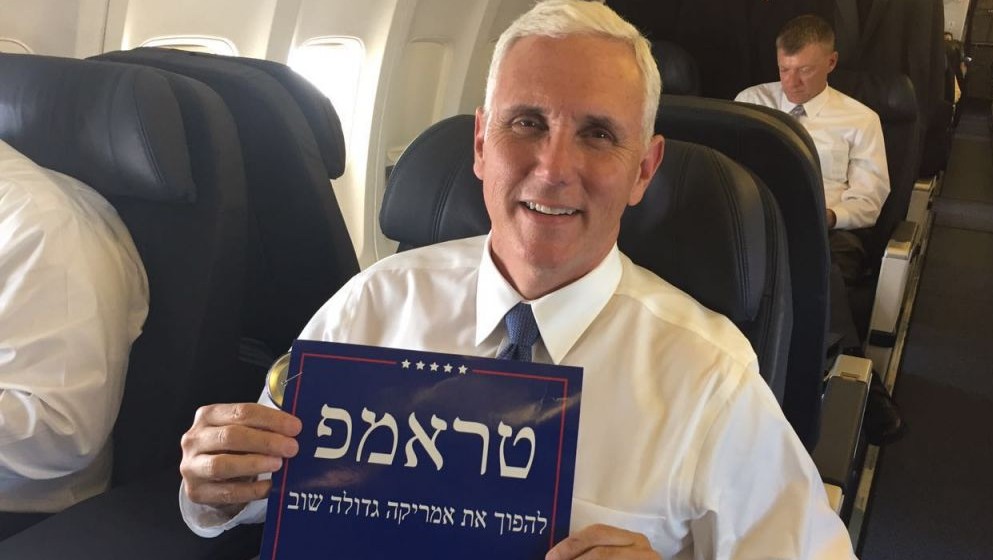
‘I’m a Christian, a Conservative and a Republican. In that order,” Indiana Governor Mike Pence likes to say about himself while stumping on podiums and in television studios. It is this list of priorities that make him so controversial — and so essential — to the 2016 presidential elections.
Supporters hold up Pence, who barely won the gubernatorial race in 2012 with 49.6 percent of the popular vote, as an exemplary politician who lives and works by his values. But his detractors fear these values — Pence is vocally pro-life and against gay marriage — as threats to civil liberties.
Born in Indiana to a Catholic family, Pence is today a devout evangelical Christian. In interviews, Pence has said that he “came to a life in Christ at 18.” He lives clean, reads the Bible daily, worships every Sunday and makes sure he doesn’t put himself into compromising situations with women (for example, only his male aides work late at the office alone with the governor).
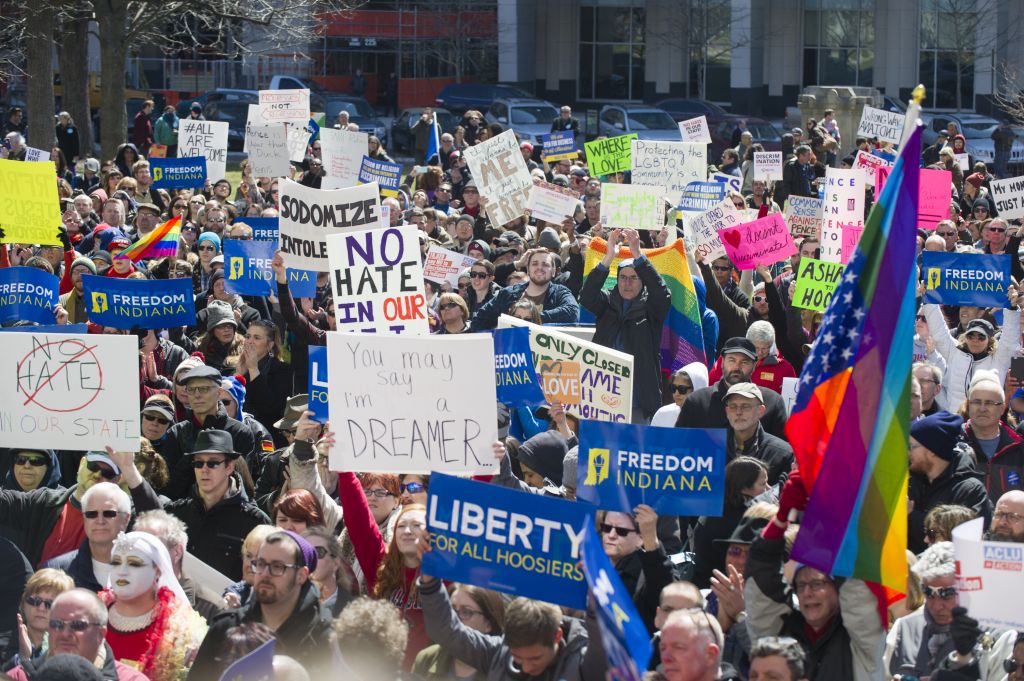
His religion is reflected in his political work as well: He promotes a voucher educational system in which religious schools receive state funding. Most controversially, in 2015, he signed a Religious Freedom Restoration Act which was a lightning rod for national criticism for its perceived potential for anti-gay discrimination.
He also hopes to override Roe v. Wade, the landmark 1973 Supreme Court decision legalizing abortion.
“I hope to live to see the day that we restore the sanctity of life back to the center of American law,” Pence told Fox News’ Bill O’Reilly in late July. “I’m pro-life, and I don’t apologize for it.”
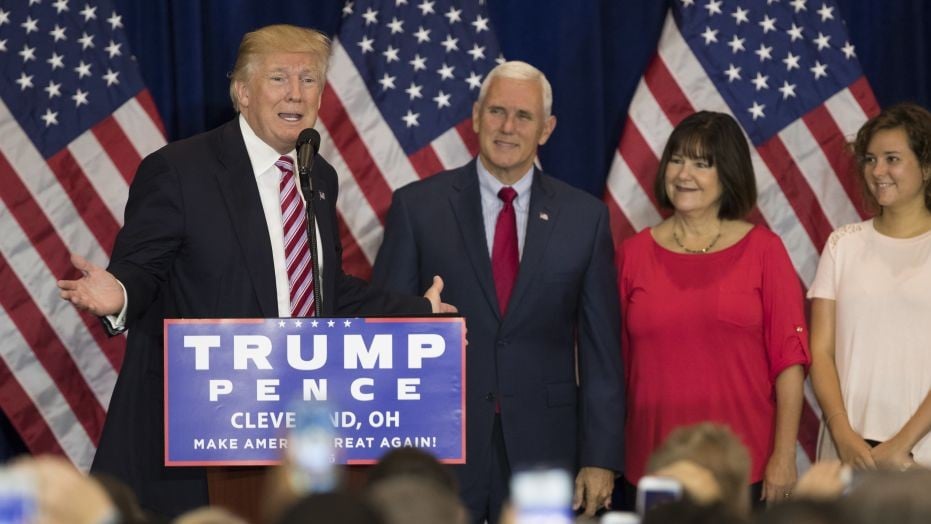
Pence is the ultimate Conservative foil to presidential candidate Donald Trump’s unorthodox campaign.
This weekend saw the well-publicized discovery of a 2005 tape in which critics say presidential candidate Donald Trump promotes the sexual degradation of women. Pence denounced Trump’s statements, but stood by his man.
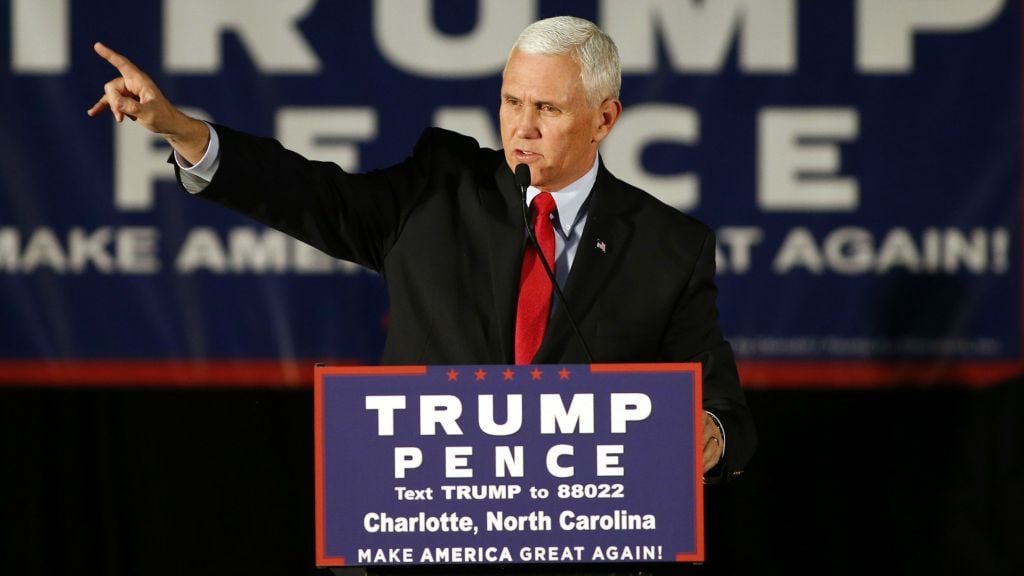
In what some news organizations are calling a “sermon,” on Monday, the “Christian values” Republican vice presidential nominee doubled down at a North Carolina campaign event in his backing of Trump. Pence also, it seems, gave Trump absolution.
With less than a month before the elections, The Times of Israel examined the Indiana electorate and asked a cross section of Jewish residents how they view their governor and his capabilities as a potential vice president.
Indiana is a surprisingly politically maverick state
In the past 100 years, the Indiana electoral college has only voted for three Democrats, most recently in 2008 ahead of President Barack Obama’s first term. Obama carried the state by less than one percent. But many of its long-term governors have been Democrats, including Evan Bayh, who served from 1989 to 1997 and later was a senator from 1999 to 2011.

In 1984, The Cook Political Report developed a numeric scale of Democratic or Republican tendencies in each political race, from state districts to national. In its 2016 presidential race projections, Indiana is marked as “Lean Republican,” only one notch more Republican than “undecided.”
Indiana has a population of 6.6 million, some 80%-86% of which is white. While less than half a percent of Indiana residents are Jewish and only one percent is Muslim, 26% are white Evangelical Protestants, another 17% are white mainline Protestants and 14% are white Catholics, according to the Public Religion Research Institute (PRRI).
According to the PRRI, Indiana residents are largely socially liberal regarding gay rights. Some 52% support same-sex marriage, 70% favor LGBT non-discrimination laws, and 58% oppose religiously based refusals to serve gays.
It is a state of voters — over 75% of residents are registered to vote, but interestingly, the majority, some 39%, consider themselves independent (24% are Republican and 28% Democrat), according to the PRRI. However, regardless of party affiliation, 36%-40% of Indiana voters identify as “conservative,” and a 2015 Gallup poll speaks to a 44.2% “Republican lean.”
Jewish community demographics
Within the small Jewish community — there are reportedly some 17,500 Jews currently living in the state — voting skews liberal and largely Democratic, along the lines of national Jewish voting tendencies. Most of the community lives in Indianapolis and its surrounding bedroom communities, which support half a dozen synagogues of which the largest is the Reform-affiliated Indianapolis Hebrew Congregation founded in 1958.
According to Michael Friedman, an Indianapolis Jewish community insider, the Indianapolis Jewish vote breaks down according to the synagogues’ levels of observance. At IHC, for example, he projects that over 90% of the congregation would vote Democrat. Founded in 1915, Congregation Beth El Zedek affiliates as both Reconstructionist and Conservative. There, the split of Democrats to Republicans, he assumes, would be 85% to 15%.
Indianapolis area’s newest synagogue, Congregation Shaarey Tefilah, was formed in 1992 and currently attracts some 200 families. It is a mainline Conservative congregation where he projected the Democrat to Republican split is 75% to 25%.
This slant shifts in the Orthodox denominations. Founded in 1906, the Sephardic Etz Chaim Congregation, he assumes, would be Republican 60% to 40%.
Congregation B’nai Torah is Indiana’s largest Orthodox synagogue. Its roots stretch back to 1903 and it boasts Indiana’s first day school. Like in most Orthodox communities, its voters tend to lean Republican. Its spiritual leader Rabbi Yisrael Gettinger appeared with Pence in a photo taken at the first private 2015 signing of the Religious Freedom Restoration Act alongside several other Indiana clergymen.
Headed by an Orthodox principal, the city’s only day school, the Hasten Hebrew Academy, does not take a political stance on Pence. Heavily funded by local benefactor and Pence friend Hart Hasten, its website once featured a photo of the pupils’ field trip to the governor’s mansion for a Hanukkah party.
“However, since he has become such a polarizing political figure, we took it off the site. The school does not have an official side of politics since the diversity of Jews and Jewish opinions here are so broad and coexist peacefully,” The Times of Israel was told.
Pence: ‘A true friend of Israel’
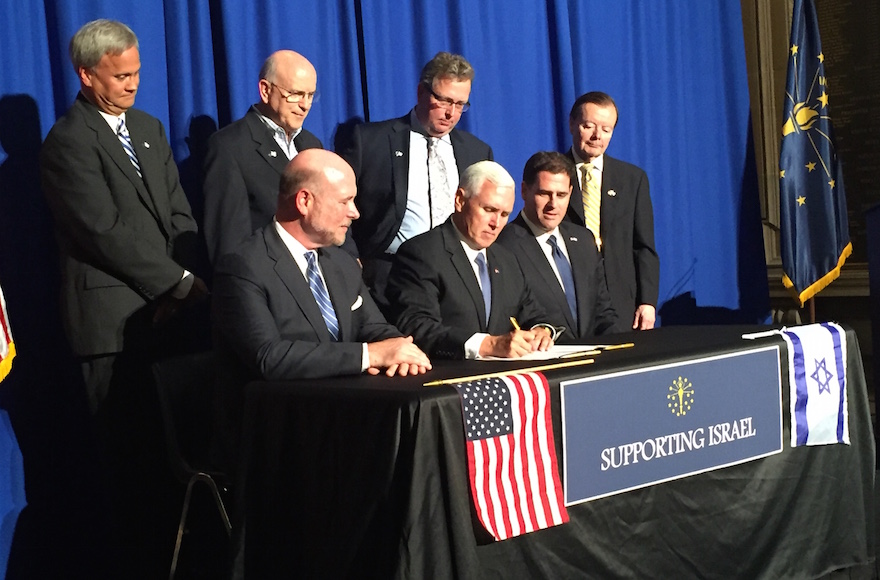
On May 27, 2016, with Ron Dermer, Israel’s ambassador to the United States at his side, Pence signed legislation requiring the state to divest from any business that engages in action to boycott, divest from or sanction (BDS) the State of Israel.
According to Dr. Allon Friedman, a vice president of the Jewish American Affairs Committee of Indiana (JAACI), “Mike Pence is a dream candidate for the Jewish community.”
The JAACI is a grassroots pro-Israel and pro-Jewish volunteer advocacy group, which has support throughout the state, says Friedman.

“He’s had decades-long and intimate ties with Indianapolis Jewry, he respects and honors Judaism as a religion, he deeply understands the existential threats Israel faces on a daily basis, and he would do anything in his power to support and protect the state of Israel,” says Friedman. “In these challenging times Jews would be unwise not to support such an exceptional candidate and friend.”
Bloomington resident Leonard Newman puts it more bluntly: “Gov. Pence is truly a warm friend of Israel as most all of my Christian friends are. That’s more than I can say about many of our Jewish friends.”
Hoosier-born, the 89-year-old has lived all but the seven years of his life when he sought higher education in the state. He was named a Sagamore of the Wabash, the highest honor given to an Indiana citizen (by a Democrat governor), and says he broke from his family’s Democratic voting during the Roosevelt administration.
‘Gov. Pence is truly a warm friend of Israel’
“I am not fond of either candidate running now, but will vote for Trump as the lesser of two evils,” Newman told The Times of Israel.
“I have heard Pence speak to many groups and have good reasons to state my opinions. First of all, most Hoosiers are Republicans and simply believe he is a wonderful governor… Although Pence is a devout Christian, all of his speeches are full of pro-Israel information given with special enthusiasm,” said Newman. He added wryly, “I must say you won’t find Democrats who agree with me.”
Pence as vice president: A ‘nightmarish scenario’
In an August oped in Haaretz, Rabbi Dennis Sasso, the senior rabbi at Indianapolis’s Congregation Beth-El Zedeck since 1977, wrote that while Pence is a “pleasant and amiable person” and a friend of Israel, his stated policies are not in line with those of the Jewish community.
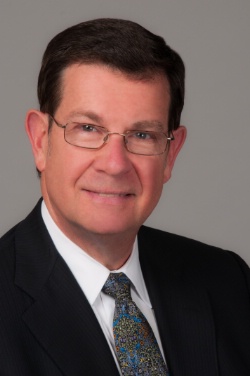
“His social and fiscal conservatism combined with his Christian evangelical aligned stances on domestic policy matters have often distanced him from a large part of Indiana’s Jewish constituency,” wrote Sasso.
Sasso, a native of the Republic of Panama who immigrated to the US, called Pence “anti-immigrant.” (According to the PRRI, some 43% of Indiana residents feel immigrants strengthen the American way of life, whereas 40% feel they do not.)
“After the disastrous consequences of the Religious Freedom Restoration Act became fully clear, Pence continued to adopt positions on immigration and reproductive rights that further alienated him from many in the Jewish community and from progressive religious constituencies across the state,” wrote Sasso.
When it comes to education, Bloomington resident and Indiana University Professor Emeritus for Educational Leadership and Policy Studies Robert F. Arnove, gives Pence a “generous” D- as governor.
Pence, he told The Times of Israel, “has let ideology and religious convictions ‘trump’ – no pun intended – the common weal, the common good… He has systematically set out to promote policies that weaken, if not dismantle, public education by expanding the number of charter schools and vouchers… thereby decreasing the money available for public schools,” said Arnove.
Karen Friedman, the president of Congregation Beth Shalom in Indianapolis suburb Carmel, Indiana, also underlined the influence Pence’s religion has had on his politics.

“As a Christian and a Conservative he has staunchly forced his evangelical extremism onto the matters of state here, to the great chagrin of most,” said Friedman. “Both Mike Pence as governor and Mike Pence as vice president are nightmarish scenarios.” As vice president, a heartbeat away from the presidency, she said, “he would be positioned to inflict his personal intolerant religious thinking upon the entire nation.”
According to Friedman, Pence’s chances of reelection in Indiana were in question prior to his decision to step down and join Trump.
“Throughout his term as Indiana governor, he has become more and more despised for his narrow minded, anti-abortion and anti-immigrant stances than any governor in recent memory,” she said.
Friedman voiced what many in the Jewish community expressed to The Times of Israel, “When he accepted the vice presidential invitation to run with Donald Trump, at least half the state heaved a sigh of relief to see him go.”









The Times of Israel Community.