

As schools and synagogues burn in the Netherlands, its leaders send mixed messages
In the wake of firebombing attacks in Rotterdam and Amsterdam, public figures are condemning antisemitism while simultaneously seeming to use the war in Gaza to justify it

 Add ToI as a Preferred Source on Google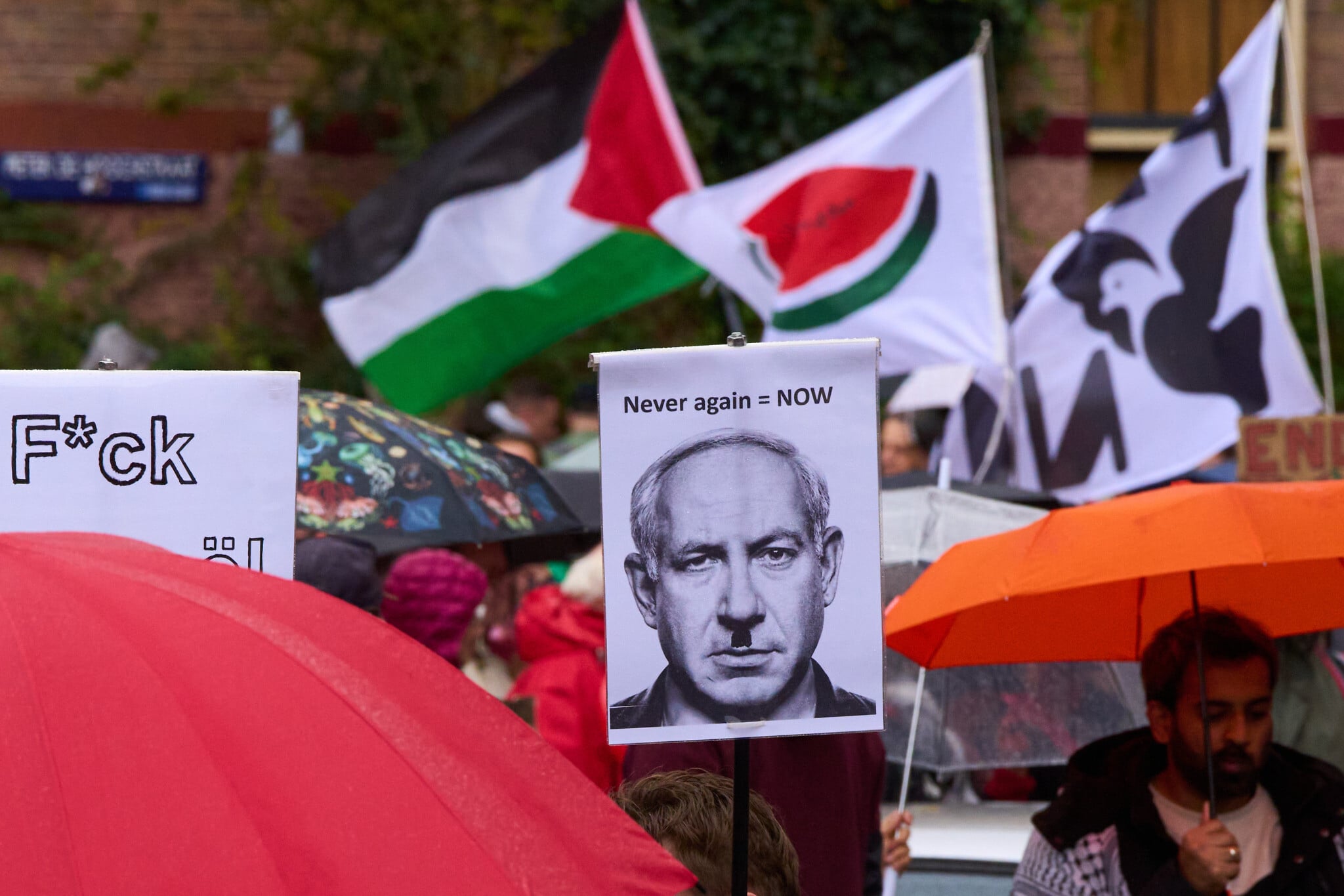
AMSTERDAM — When a television news program for kids on Dutch public broadcaster NOS suggested on social media that the firebombing of an Orthodox Jewish day school in Amsterdam on Friday night may be explained by “the wars Israel wages in the Middle East,” pro-Israel lawmakers and activists were quick to voice their criticisms.
The post by the “Jeugdjournaal” show, which is aimed at children ages 9-12, said of the school bombing: “Most people in Israel are Jewish. And in the Netherlands, there are Jews who support that country. That’s why they receive hateful reactions from people who support the Palestinians in Gaza.”
But neither the post, nor the attempted firebombing of the Cheider school in Amsterdam, can be viewed in isolation.
Less than 24 hours before the firebombing in Amsterdam, an incendiary device exploded outside a synagogue in neighboring Rotterdam. Four men were arrested shortly after the incident, which prosecutors said Monday was “meant to instill fear in the Jewish community.”
Critics point out that the TV show’s statements reflect a wider phenomenon of antisemitism being minimized, or even justified, by politicians, journalists and educators, as Israel is repeatedly referenced together with attacks on the Dutch Jewish community.
The attacks in Amsterdam and Rotterdam appear unrelated to Gaza and instead match the pattern of Iranian-backed networks in Europe, with Israel’s Diaspora Affairs Ministry attributing them to a newly identified Iran-linked terror organization, Harakat Ashab al-Yamin al-Islamia.
According to Naomi Mestrum, director of the Center for Information and Documentation on Israel, the choice of words by “Jeugdjournaal” is just one example of how Dutch media is “filled with journalists who can’t control their activist impulses.”
“Their opinions filter into news reports and poison new generations,” Mestrum said.
The CIDI director sees the post, which was deleted after a wave of outrage, as “an implicit justification” for targeting the Jewish community.

“That’s an excuse for antisemitism and creates a distinction between ‘good’ anti-Zionist Jews and ‘bad’ Jews who feel a connection with Israel,” she said.
Not just the media came under fire in the wake of the attacks in the two largest Dutch cities. Newly elected Prime Minister Rob Jetten stated that “there can’t be any place for antisemitism in the Netherlands.” Yet critics point out that Jetten prominently marched in the so-called Red Line protest last May. That demonstration was organized by several anti-Israeli organizations and featured flags of the Islamic Republic of Iran — which is suspected of having a hand in, or at least inspiring, the attacks in Amsterdam and Rotterdam.
Gidi Markuszower, a Jewish member of parliament who recently broke away from the far-right Freedom Party and now leads his own seven-member faction in the Lower House, called Jetten’s words “gratuitous.” Markuszower alleged that the perpetrators of the attacks have nothing to fear from the Dutch justice system and “political elite.”
Samen trekken we de rode lijn. ????
Kippenvel. Vandaag liepen meer dan 100.000 mensen mee in de protestmars in Den Haag. Mensen van alle leeftijden, achtergronden en overtuigingen verenigd door één dringende boodschap aan het kabinet:Doe alles wat in je macht ligt om Israël te… pic.twitter.com/frStzAkMpS
— Rob Jetten (@RobJetten) May 18, 2025
“The entire left marched with the Red Line,” Markuszower said. “They accuse the Jewish state of genocide daily, and Dutch ministers support Palestinian terrorists with taxpayer money. These attacks did not take place in a vacuum.”
Education Minister Rianne Letschert, a member of Jetten’s center-left Democrats 66 party, called the Cheider attack “a shocking new low of intimidation and antisemitism.” But critics point out that as president of Maastricht University, Letschert did little to combat antisemitism on campus, despite what the largest Dutch newspaper De Telegraaf called “widespread threats, intimidation and humiliation of Jewish students and staff.”
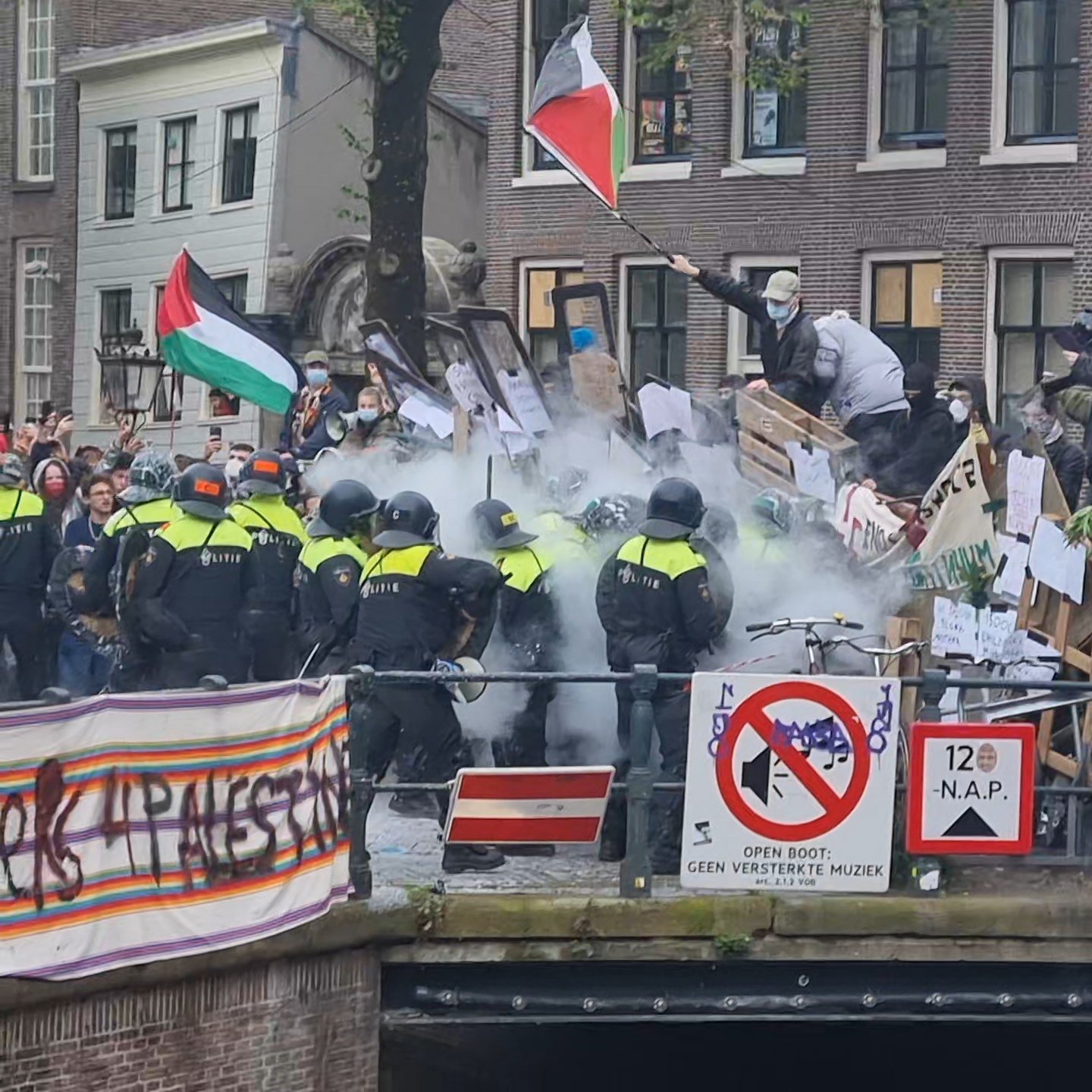
Na De Oorlog, Dutch for “after the war,” is an organization that sends guest speakers — often Holocaust survivors or their descendants — to schools to educate Dutch children on the Shoah. Despite Letschert’s condemnation of antisemitism, said the group, her ministry has decided to stop all funding for the program.
Henri Bontenbal, leader of the Christian-democrat government party CDA, called the attacks “unacceptable and cowardly,” and said that “antisemitism is a poison that we need to keep fighting.”
But Esther Voet, editor of the Jewish weekly Nieuw Israëlietisch Weekblad, reminded readers that during last year’s electoral campaign, Bontenbal said: “We always considered it important to support the Jewish community, but by now we have changed our minds.”
“I almost want to scream: ‘What did you think?!’ That looking away, downplaying (of antisemitism, etc.), and appeasing words on hate speech are without consequences?!” Mona Keijzer, a former Christian-democrat MP who now sits in parliament as an independent, wrote on X.

Amsterdam Mayor Femke Halsema isn’t escaping that same criticism. Although many members of the Jewish community in the city praised her reaction to the attacks, others point out that after initially calling the attacks on Israeli and Jewish soccer fans in her city in November 2024 a “pogrom” and a “Jew hunt,” she has since then refused to use those words and has accepted the narrative by the left-wing majority in Amsterdam’s city council that Maccabi Tel Aviv fans were to blame for the violence.
Pro-Israel activist and CIDI-founder Ronny Naftaniel calls out what he perceives as hypocrisy by progressive local politicians: “[They] yell out how evil the attack on a Jewish school is, but fail to mention their sick plan to organize a referendum on breaking all city ties with Israel. Such a plan lays a foundation for antisemitism and makes it virtually impossible for Jews to live in Amsterdam.”
Left-wing politicians outside the new Dutch center coalition joined the chorus of condemnation of the two attacks. But Green Left-Labour leader Jesse Klaver was widely ridiculed for his words on X that “antisemitism is unacceptable.”
Users of the social media platform pointed out that it was his party that last year introduced a resolution in parliament calling for a ban on exporting parts for the life-saving Israeli missile defense shield known as Iron Dome, which the resolution qualified as an “offensive weapon.”










The Times of Israel Community.