

Bill to make ‘Al Jazeera Law’ permanent passes first Knesset reading
Likud MK’s proposal would enshrine temporary measure that gave government the power to shut down foreign media outlets, while allowing it to do so without judicial oversight
 Add ToI as a Preferred Source on Google
Ariela Karmel is a political correspondent at The Times of Israel. She previously reported for Calcalist and Haaretz. She holds an MA in Middle Eastern and African History from Tel Aviv University and a BA in Political Science from the University of British Columbia.
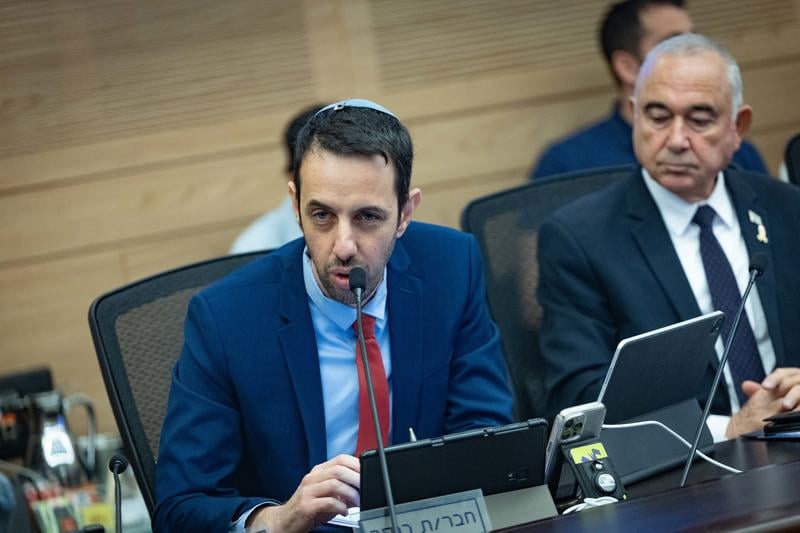
Likud MK Ariel Kallner’s proposal to turn the so-called Al Jazeera Law — which permits the closure of foreign media outlets in Israel under certain conditions — into permanent legislation passed its first reading in the Knesset on Monday, with 50 lawmakers voting in favor and 41 against.
If approved, the government’s temporary authority to shut down foreign media during emergencies would become permanent, allowing it to exercise this power at any time, regardless of the security situation.
Additionally, Kallner’s bill proposes several amendments to the existing legislation, including removing the current requirement for a court to review or approve the communications minister’s decision to shut down a foreign media outlet — eliminating judicial oversight.
It would also significantly broaden the communication minister’s authority, allowing the cabinet member to direct internet platforms and content distributors to block or remove specific materials in Israel and to direct the defense minister to take technical measures — such as disrupting satellite signals — to prevent the reception of broadcasts considered harmful to national security.
The temporary measure now in effect was passed in April 2024 and provided the prime minister and communications minister with the authority to order the closure of foreign networks operating in Israel and to confiscate their equipment if they have grounds to believe they are “doing real harm to state security” during a state of national emergency.
It was used to close down Qatari news network Al Jazeera’s operations in Israel in May 2024. It also led to the temporary seizure of equipment belonging to the Associated Press, as it was providing images to Al Jazeera. The law sparked criticism both within Israel and abroad.
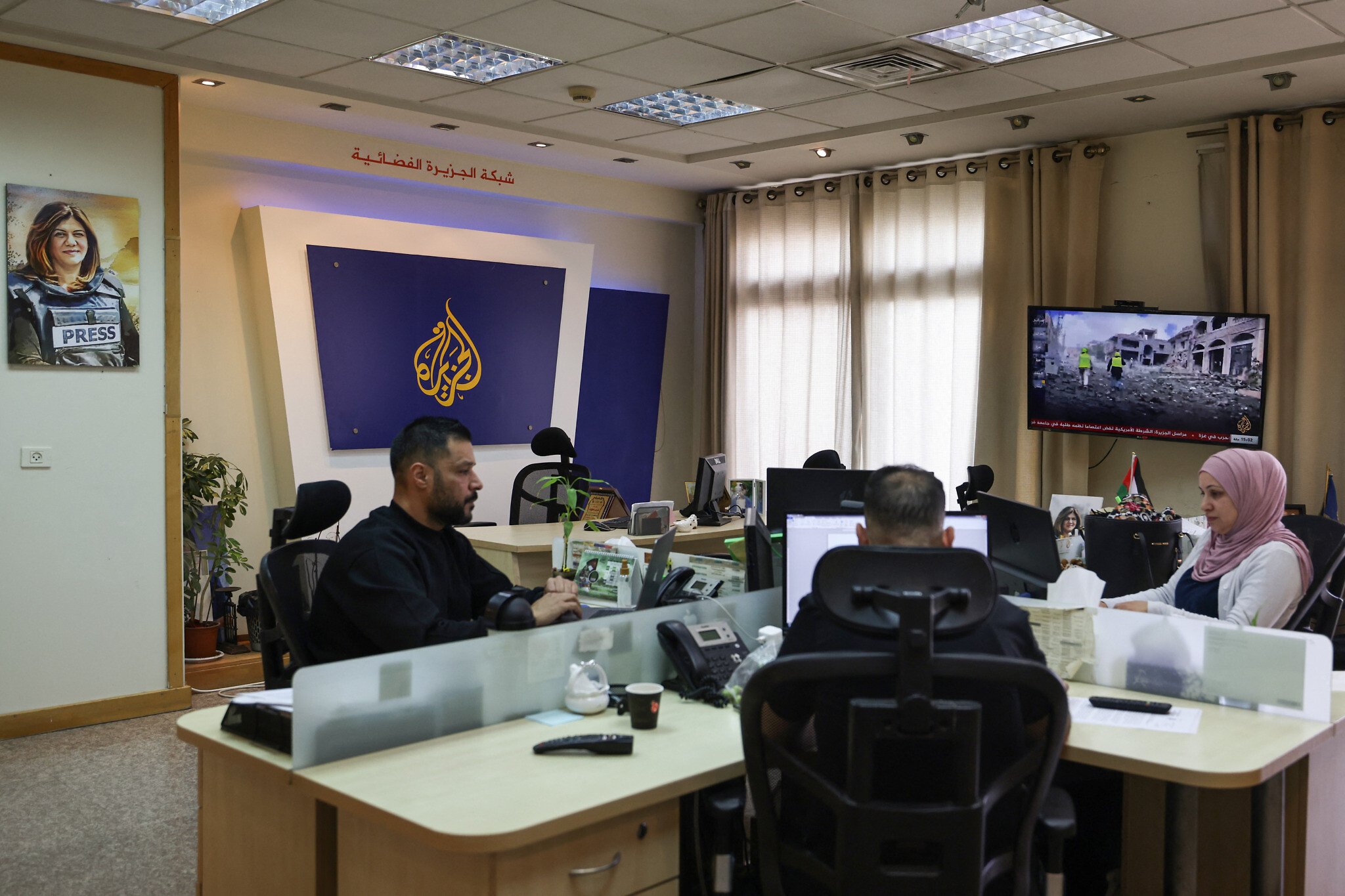
Though Israeli officials have long complained about Al Jazeera’s coverage, which they say is heavily influenced by Hamas and endangers IDF troops in Gaza, in the past, they stopped short of taking action.
The measure has been repeatedly extended and must be regularly renewed until a law is passed to make it permanent. Kallner has been trying to advance the legislation for over a year, after it became stalled in committee. In July, the Knesset National Security Committee voted to prepare the bill for a preliminary reading.
The bill will now return to the Knesset National Security Committee, where it will be prepared for a second and third reading in the Knesset.
The legislation has sparked criticism from the judiciary as well as pro-democracy and press freedom advocates.
During debate on the bill at the National Security Committee in July, the committee’s legal advisor objected to the bill’s advancement, in particular the amendment to eliminate judicial oversight, which she called “unconstitutional.”
Petitions have been filed by Al Jazeera and the Association for Civil Rights in Israel (ACRI) against the measure, who have argued that the legislation was unconstitutional, violates freedom of expression, the right to information, and freedom of the press.
The Tel Aviv District Court approved Communications Minister Shlomo Karhi in 2024 to ban Al Jazeera, in accordance with the temporary law. It found in June that year that there was “a clear and proven causal relationship” between the content of Al Jazeera broadcasts and terror attacks carried out in Israel, and stated that some Al Jazeera reporters in Gaza had become “de facto assistants and partners of the Hamas terror organization.
Attorney Hagar Shachter of the Association for Civil Rights in Israel told The Times of Israel that the bill is “unprecedented in its scope and in the harm it causes to freedom of the press.”
She warned that it is a measure “characteristic of non-democratic regimes and contradicts the basic principle that the public’s right to know is essential to democracy.”
Shachter said that the law is just one “part of the government’s broader judicial and media overhaul and its attempts to bring the free press under its control and silence criticism.”










The Times of Israel Community.