

Canadian FM: Iran has 2-3 months to prove it’s resolving nuclear crisis
‘The diplomatic process is nearing its end,’ John Baird declares. ‘These people don’t deserve the benefit of the doubt’

 Add ToI as a Preferred Source on Google
David Horovitz is the founding editor of The Times of Israel. He is the author of "Still Life with Bombers" (2004) and "A Little Too Close to God" (2000), and co-author of "Shalom Friend: The Life and Legacy of Yitzhak Rabin" (1996). He previously edited The Jerusalem Post (2004-2011) and The Jerusalem Report (1998-2004).
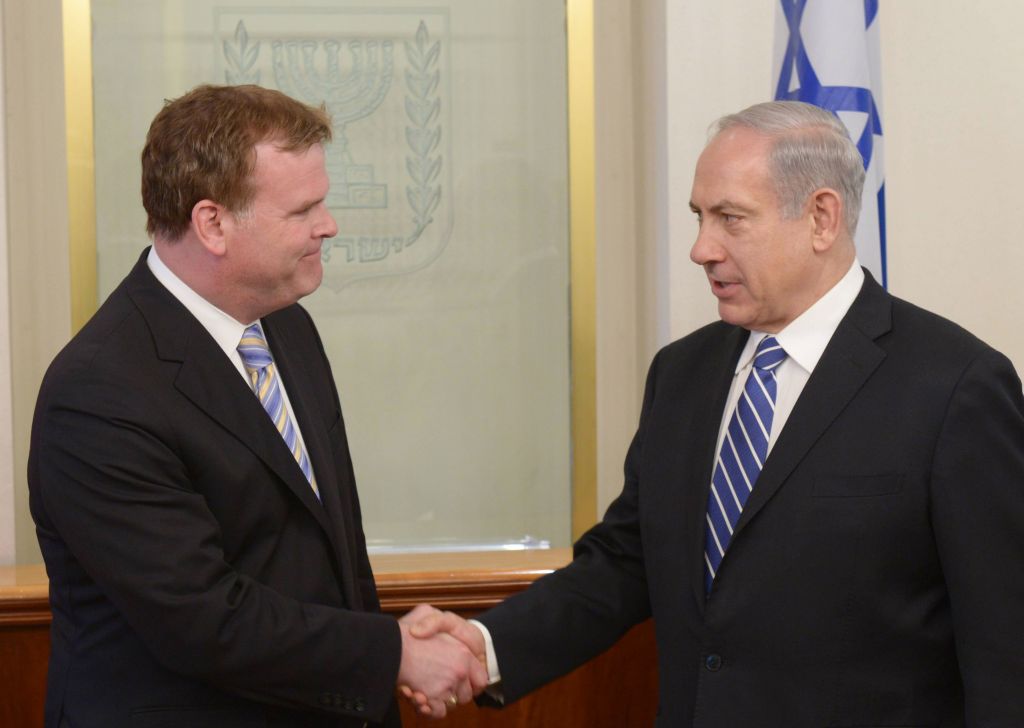
Canada’s foreign minister has warned Iran that it has only two to three months to prove to the West that it seeks a negotiated resolution to the crisis over its rogue nuclear program.
The diplomatic process is “nearing the end,” John Baird said in an interview with The Times of Israel, though he declined to say what consequences that could bring.
He added that the election to the Iranian presidency of Hasan Rouhani, seen by many as a relative moderate, does not justify any further Western patience, since Rouhani, as Iran’s former nuclear negotiator, “doesn’t need to have any time to read up on the files.”
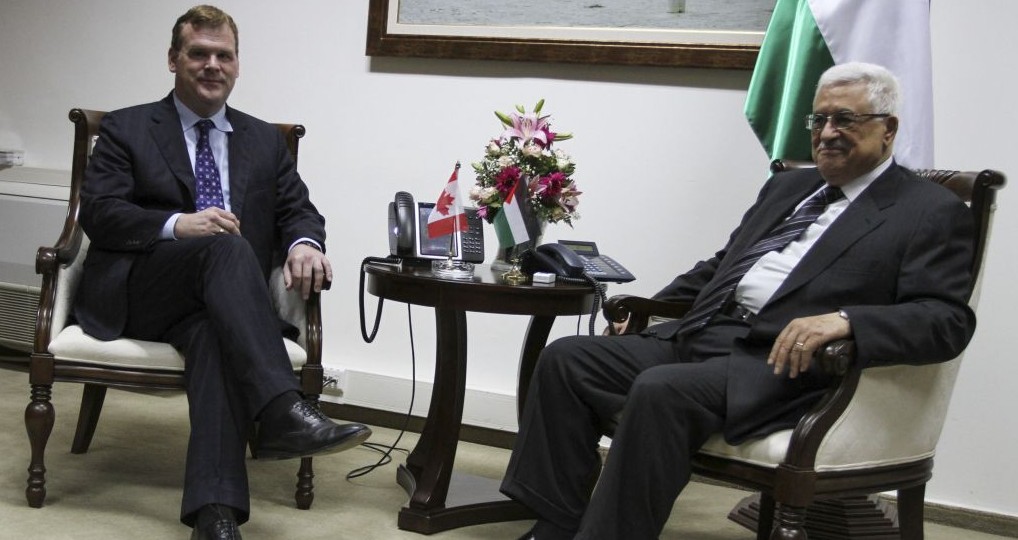
Baird was speaking exclusively to The Times of Israel last week during a visit to Jerusalem, where he represented Canada’s government at Shimon Peres’s Facing Tomorrow presidential conference, and met with Prime Minister Benjamin Netanyahu. He also went to Jordan during the trip, and held talks in Ramallah with the Palestinian Authority President Mahmoud Abbas and other senior PA officials.
He urged Israel and the Palestinians to capitalize on US Secretary of State John Kerry’s “extraordinary effort” to advance peace moves, and said he regarded the appointment by Netanyahu of Justice Minister Tzipi Livni to oversee peace talks as “an olive branch” to the Palestinians, who he hoped would respond with similar goodwill.
Baird waved away criticism of his April meeting with Livni at the Justice Ministry in disputed East Jerusalem, saying, “I met with her in her office — it was coffee, and nothing more. I’ll go with any peace-loving person who wants to talk about peace, I’ll meet them anywhere to discuss that. I think we’ve got to move beyond these petty issues.”
He added that “as long as we’re debating a Canadian minister having coffee on this side of the street or that side of the street… we’re not going to move forward. And we’ve got to stop this pettiness, in my judgment. On both sides.”
Canada, which has been one of Israel’s staunchest friends in the international diplomatic arena, cut ties suddenly with Iran last year, calling the regime in Tehran “the most significant threat to global peace and security in the world today.”

Brisk and bleak in regards to Iran’s intentions in the wake of the presidential elections there, Baird stressed that the nuclear program “is not controlled by the prime minister. It’s controlled by the supreme leader [Ali Khamenei] and those around him.”
If incoming president Rouhani “wants me to say something kind or generous, he’s going to have to solicit that by his actions, not by any perceived notion of being a reformer,” Baird said, adding, “These people don’t deserve the benefit of the doubt.”
Asked whether diplomacy had run its course, Baird said, “There’s always a reason to wait another two or three months… If they want to prove the naysayers wrong, they can make meaningful progress with the P5+1. I’m pessimistic on that but I hope to be proven wrong.”
The diplomatic process, he went on, “is nearing the end, and should have been nearing the end in my judgment. If Iran wants to seek out concrete, meaningful solutions to this, they have the opportunity to demonstrate to the world in the coming weeks that they’ll do that… And you have someone [in Rouhani, a former Iranian nuclear negotiator] who doesn’t need to have any time to read up on the files. This person does not need anytime to be briefed up.”
And if at the end of two or three months there isn’t some kind of concrete progress? Then, said Baird, “I think fair and reasonable people will have shown that they have taken every reasonable measure, every diplomatic measure, to try to successfully bring this to a conclusion.”
And then comes the time for intervention? “I’ll just leave it at that,” the minister said.









The Times of Israel Community.