

Culinary tour samples pomegranates and chickpeas, upgraded Ottoman fare
Tastes of culinary history accompany an Open Restaurants visit to Jerusalem’s Old City market
 Add ToI as a Preferred Source on Google
Jessica Steinberg, The Times of Israel's culture and lifestyles editor, covers the Sabra scene from south to north and back to the center
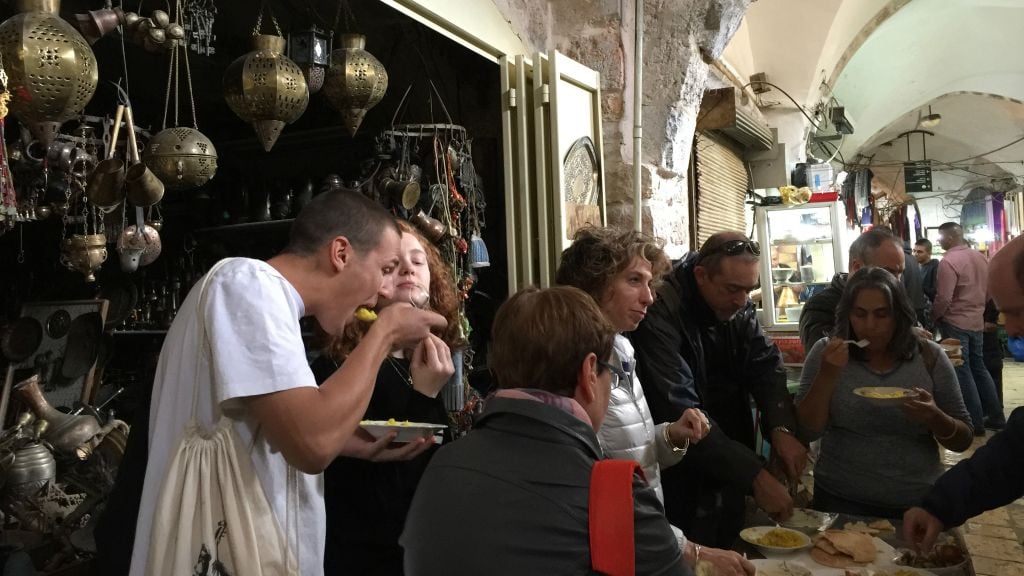
Jerusalem’s Old City market isn’t necessarily a foodie destination.
But when the Open Restaurants culinary festival, which first saw light in Tel Aviv, made its way to Jerusalem this year, it was clear that the hummus dives and pomegranate juice stalls in the Muslim and Christian quarters of the Old City would be included in the five-day event.
“The Old City wasn’t always known for its cuisine,” said Havatzelet Ohayon as she led a group around the market on Wednesday morning, stopping to let the Open Restaurant participants sniff the anise-tinged air emanating from a small bakery lined with trays of hot sesame cookies.
Back in the 1500s, when the Ottoman Empire took control of the ancient city, “food was much simpler,” said Ohayon, who grew up in Jerusalem.
Residents grew their own wheat, chickpeas and some vegetables in the fields just outside the Old City walls.
“The whole wheat bread we pay NIS 18 ($4.60) for today was the most normal thing to eat back then,” she said, laughing.
But culinary influences arrived from the countries conquered by the Ottoman Empire, which included all or parts of Turkey, Greece, Syria, Lebanon, Egypt, Iraq, Yemen and other parts of the Western and Eastern world.
As people came to the Old City from other countries, they brought along their favorites food items, like pomegranates from Iran, which could make a rich, flavorful juice or a syrup to drizzle on top of desserts such as malabi, a creamy milk pudding flavored with rosewater and topped with chopped pistachios.
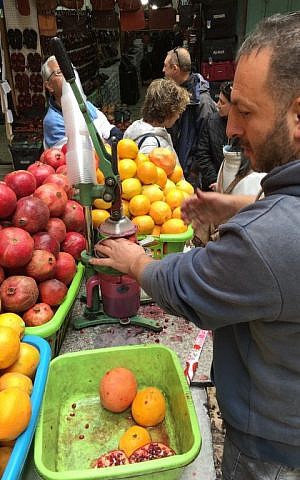
The group stopped at a stall situated on one of the staircases leading down into a main street of the market. Ohayon handed out plastic cups of pomegranate juice, as fast as Ahmed, the stall owner, could squeeze them.
The juice was slightly thickened with pomegranate pith, its sweetness lightened by the sharp, tangy aftertaste.
As we stood drinking our juice, passersby pushed by, as the market was busy on this late Wednesday morning. Shoppers had plastic shopping baskets in hand; one black-robed Greek Orthodox monk looking at the sweets selection in a nearby stall carried a blue Ikea bag.
At a tiny, nameless restaurant deep inside the market, locals lined up for an early lunch of maklouba, a chicken-and-rice dish cooked overnight in a covered dish and flipped over onto a wide platter for serving. The owner set up an empty wagon usually used for selling fresh bread around the market, covered its wooden length with a long piece of tinfoil, and set out plates of fresh maklouba and hummus for the Open Restaurants group.
“It needs more salt,” remarked one of the participants of the maklouba.
But not the hummus. It was thick, flavorful and slightly grainy, served with a scoop of fresh, hot chickpeas and swiped up with torn pieces of pita or sections of raw onion. Slices of sour pickle served as a palate cleanser.
“The argument these days is always about which hummusiya is the best,” said Ohayon, using the Hebrew word for storefronts that specialize in hummus. “But hummus wasn’t always such a culinary staple.”
While chickpeas were grown by the residents of ancient Jerusalem and were a part of their regular diet, the hummus of yore was a far simpler version, cooked in water and served hot for breakfast.
The early Israeli pioneers adapted to eating hummus as well, because it was cheap and filling, said Ohayon. It was thanks to the immigrants from Morocco that the Israeli version of the chickpea dish received a major upgrade with crushed garlic and paprika, as well as dollops of lemony tahini and lashes of olive oil.
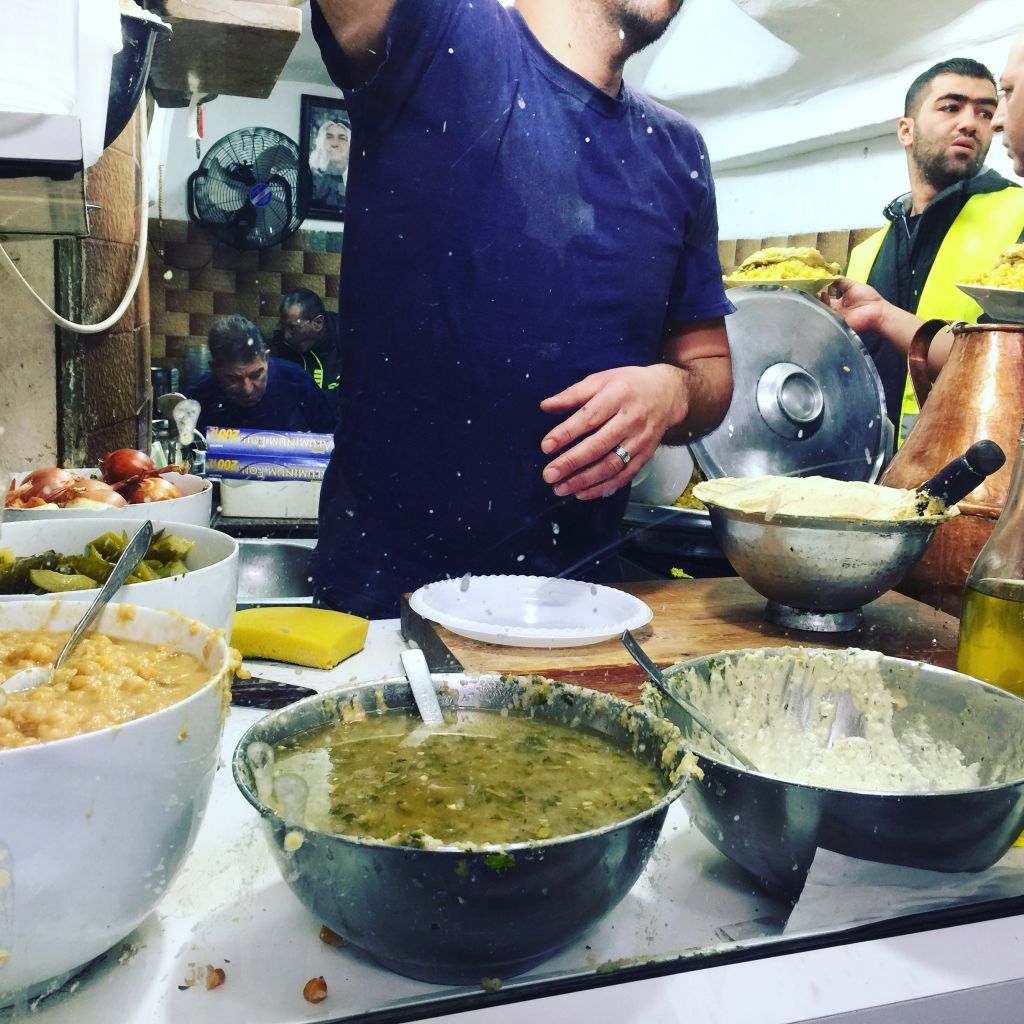
In the Arab market, hummus is often eaten for breakfast, with big vats of the chickpea dip prepared in the morning. When the vat is empty, the restaurant closes for the day.
“But all those other additions, tahini and mushrooms? That’s only in the last twenty years,” said Ohayon, scoffing a little at those newfangled ideas. “We never ate it that way growing up.”
Before dessert, the group stopped at Sea of Herbs, a spice and medicinal herbs shop in the market owned by Jakob Mowakket, whose family has had a stall in the market for generations. Mowakket has upgraded from the traditional mounds of spices sold by his father and grandfathers, although he still carries the richly scented, burnt umber-toned mixes that are great for sprinkling on kebabs, steaks and chicken casseroles.
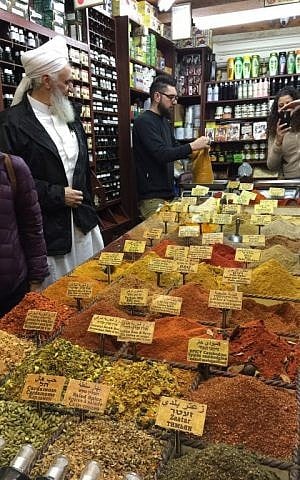
A graduate of the Reidman College programs in medicinal herbs and aromatherapy, Mowakket has shelves of teas to assist in weight loss, control diabetes and strengthen one’s heart. There are hair oils and creams and tubes of natural toothpastes, as well as products with Argan oil, the Moroccan oil that has gained renown for strengthening and thickening one’s hair.
“Put it on your hands, it makes them soft. It has 17 vitamins and it’s good for your hair too,” he said, pointing to his healthy, thick beard and pate of black hair.
“Yeah, he was bald before!” joked a customer.
With baggies of medicinal herbs in hand, the group wandered into a street of sweets, where Ohayon stopped at a halva, handing out chunks of the tahini treat, chocolate-flavored and pistachio-studded, on squares of wax paper.
Down the alley was Abu Aziez Sweets, another venerable bakery where trays of golden awami, perfectly rounded balls of flour fried in syrup, vied for space with basbousa, delicate circles of pinkish fried dough, baklava and namoura, a kind of flaky bourekas stuffed with sweet cheese, dripping in honey and sprinkled with chopped pistachios.
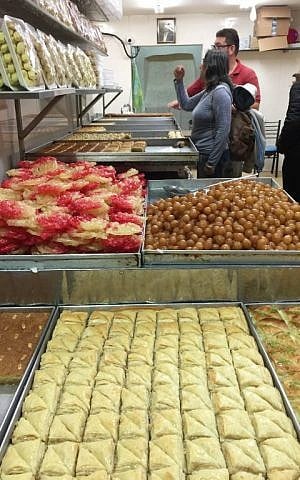
Kanafeh, another sweet cheese pastry made from thin strands of noodles soaked in syrup and originating from the days of the Ottoman Empire, is only available on weekends.
Lunch was over, and as the group made its way back to the pomegranate juice vendor for cups of hot tea and Turkish coffee, kids were running home from school and jumping down staircases from one alley to another, while teenagers rode through the narrow streets on electric bicycles, beeping to clear their paths.
They were heading home, and so were we.
Open Restaurants Jerusalem continues through Saturday, November 26.









The Times of Israel Community.