

Dances with wolves: A Tel Aviv choreographer forces audiences to face Oct. 7’s horrors
Oden Ronen’s ‘The Missings’ looks at the Supernova rave massacre, while a piece by Hillel Kogan dances around the topic altogether to focus on those behind the Batsheva troupe
 Add ToI as a Preferred Source on Google
Jessica Steinberg, The Times of Israel's culture and lifestyles editor, covers the Sabra scene from south to north and back to the center
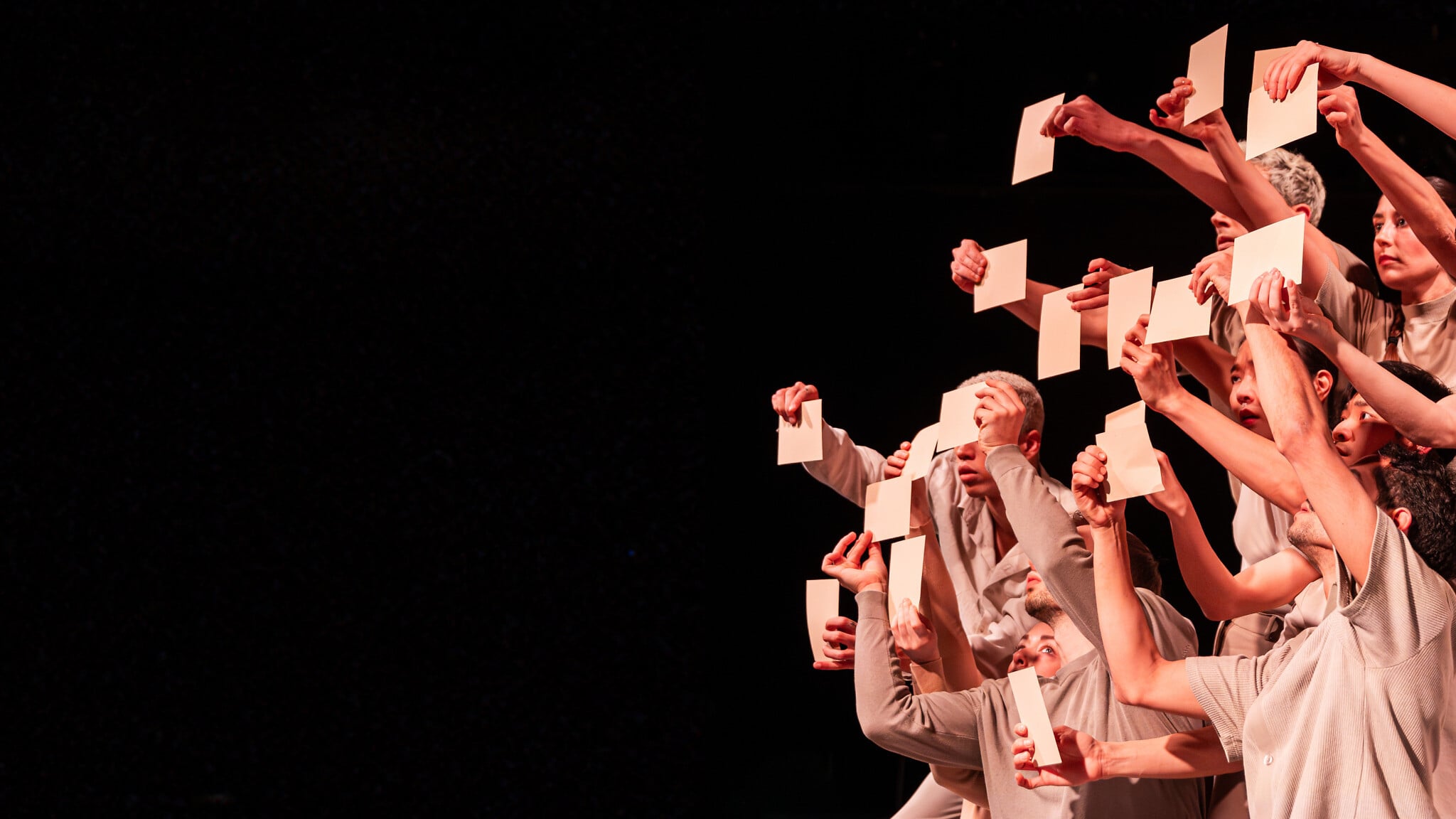
When choreographer Oded Ronen was tasked with creating a new work for the Ulm Theater Ballet Company in Germany, he had no desire to think of anything beyond those killed, taken hostage or in mourning after the brutal Hamas attacks of October 7.
Ronen, a choreographer who trained in Israel and abroad and choreographs both locally and in Europe, felt compelled to create a different kind of dance. The result is “The Missings,” which uses movement to create an emotional connection to the victims of Hamas’s atrocities in southern Israel that day, specifically at the Supernova music festival, where some 360 people were killed and dozens more kidnapped.
Ronen, who is based in Tel Aviv, was active in last year’s anti-judicial overhaul protests. Following the Hamas massacre, he watched as WhatsApp groups that had been dedicated to anti-government activism transitioned to support affected families, survivors, evacuees and bereaved.
He volunteered at a “war room” set up by former demonstrators at the Tel Aviv Expo Center, working with families frantically trying to find information about their missing loved ones. He described his attempts to gather information as something akin to the forensic police procedural “CSI.”
After several weeks, the government stepped in and Ronen turned back to dance, aiming to create a visual piece that would help people understand what happened at the desert rave.
“I wanted something that would create empathy as the support for Israel started decreasing,” he said. “I wanted to show a personal story to show that what happened could happen to anyone at any party.”
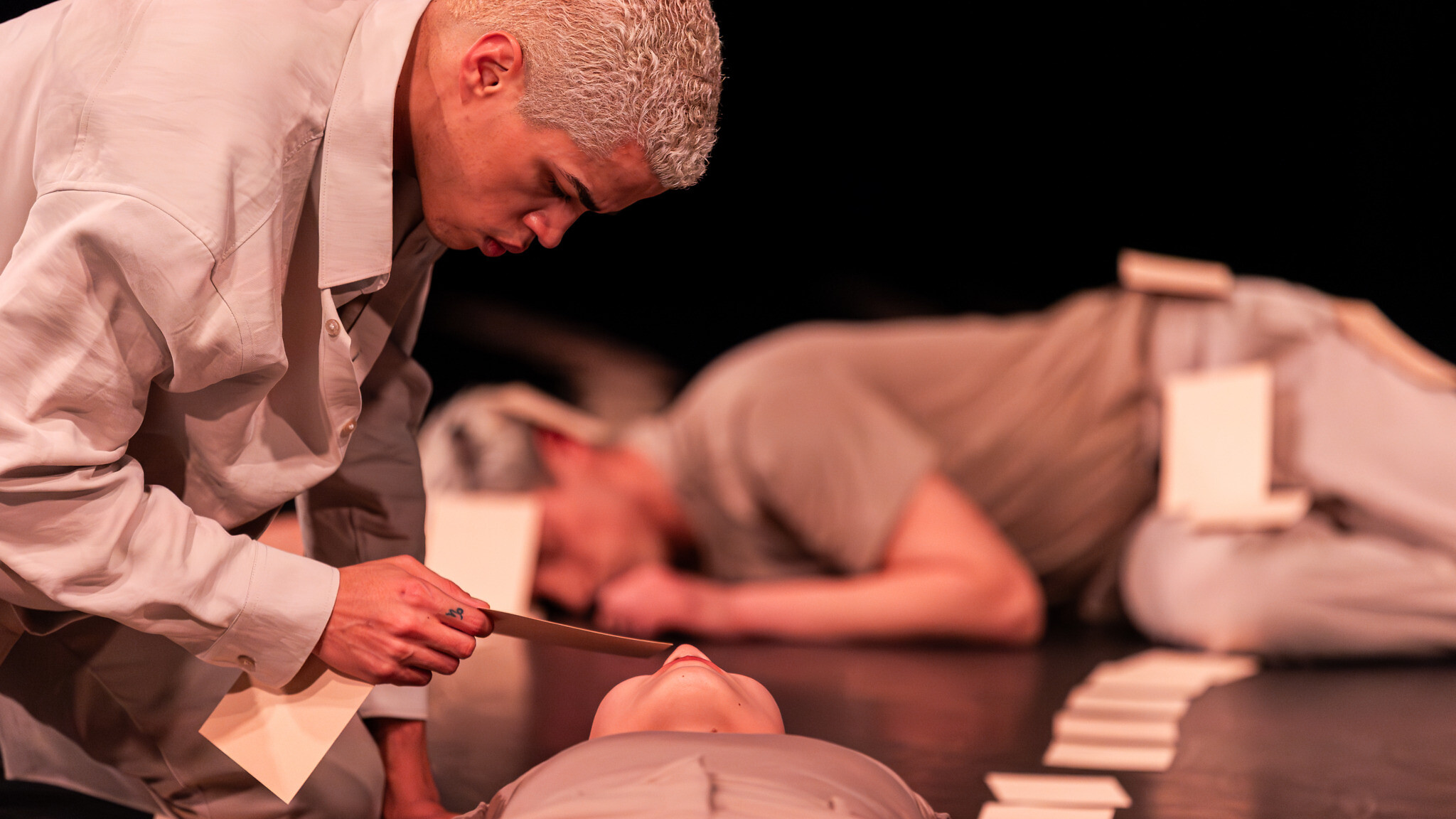
Ronen was already slated to choreograph a work for the German dance troupe about identity, and when he explained his idea, they “took a leap of faith,” he said.
“They really see us, their government really identified with us, and they handled me with silk gloves,” said Ronen. “They understood what I was doing.”
His work begins with an original piece of animation about the party that he created with a local studio and that can be easily translated into other languages — 18, so far, including Arabic — which he has put online.
The dance simulates part of what Ronen saw at the Tel Aviv Expo volunteer effort, with every scene enacting another part of what happened on October 7. There are scenes at the party, at a home in a Gaza border community, as someone is being taken hostage.
Each of the troupe’s 10 dancers changes roles throughout the work. Ronen said that was a strong element in bringing audiences to the idea that this could happen to anyone.
“Before you blame us, realize that it could happen in France, it could happen anywhere,” he said.
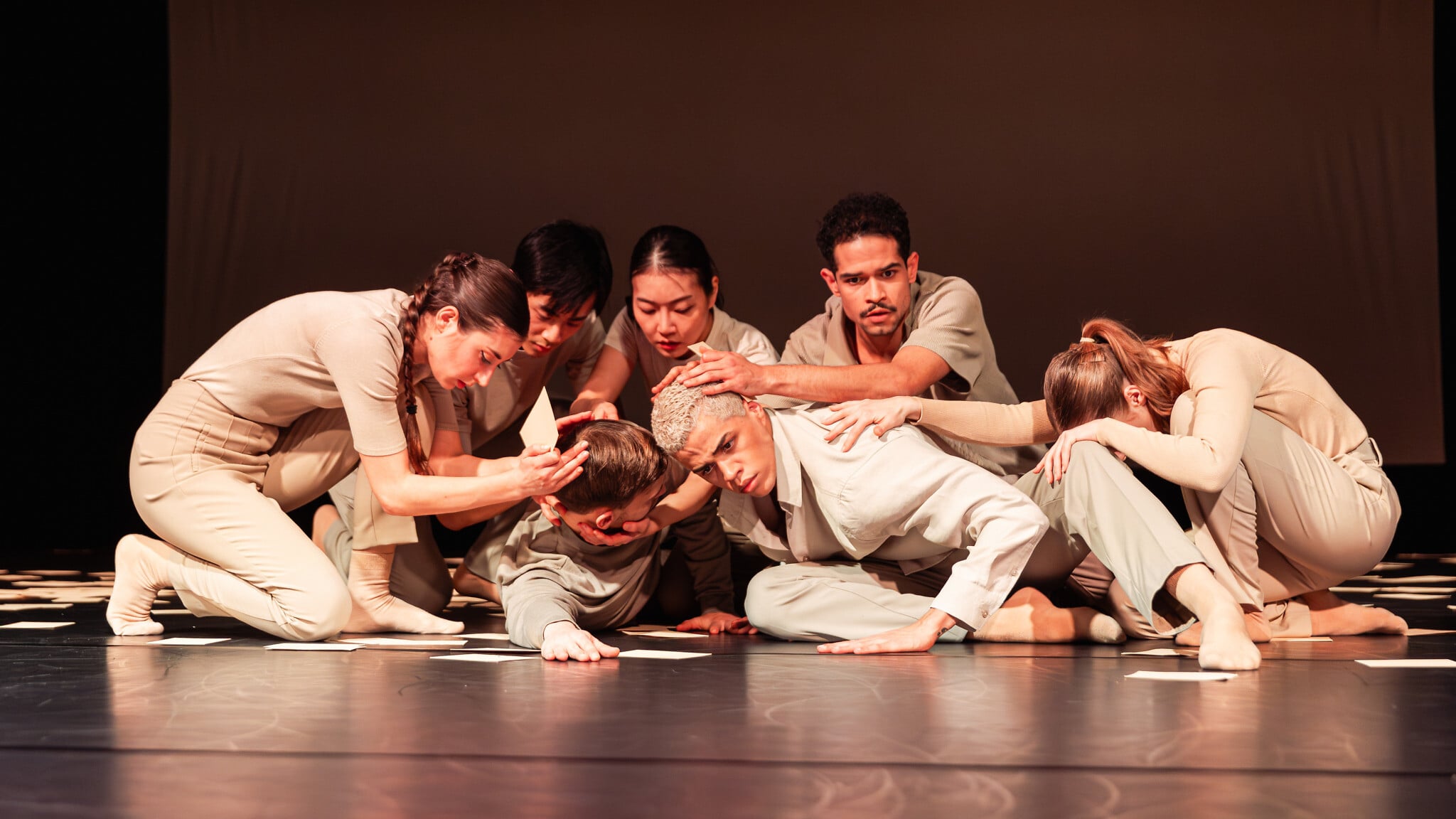
It’s been a complicated learning process for the ensemble, said Ronen, describing a troupe of dancers from all over the globe, including Europe, Asia and South America. They had a steep learning curve to understand everything that happened in Israel on October 7. The piece will be performed in Ulm through April.
“I hope it will travel,” said Ronen. “I hope that the war will end and we’ll bring it elsewhere.”
Parts of a holy whole
Like Ronen, fellow Tel Aviv-based choreographer Hillel Kogan uses dance as a medium to ask questions, find answers and present quandaries to audiences.
But “Appropriation — A Ballet by Hillel Kogan for Batsheva,” which arrives on Tel Aviv’s Suzanne Dellal Center for Dance and Theater stage on March 18, has no obvious relation to the Hamas terror attack of October 7 and the ongoing war.
“For me, it was very important not to speak directly on the situation because that wasn’t the topic,” said Kogan, who once danced with Batsheva and worked with the troupe’s former artistic director and choreographer Ohad Naharin.
“Tel Aviv is back to itself and if you turn your head in one direction there’s the war, but on the other side are the croissants and cakes, so we’ve gotten used to this thing and it’s all mixed up together.”
Instead, Kogan’s piece looks at ideas that emphasize the clash of cultures that take place in the Batsheva troupe.
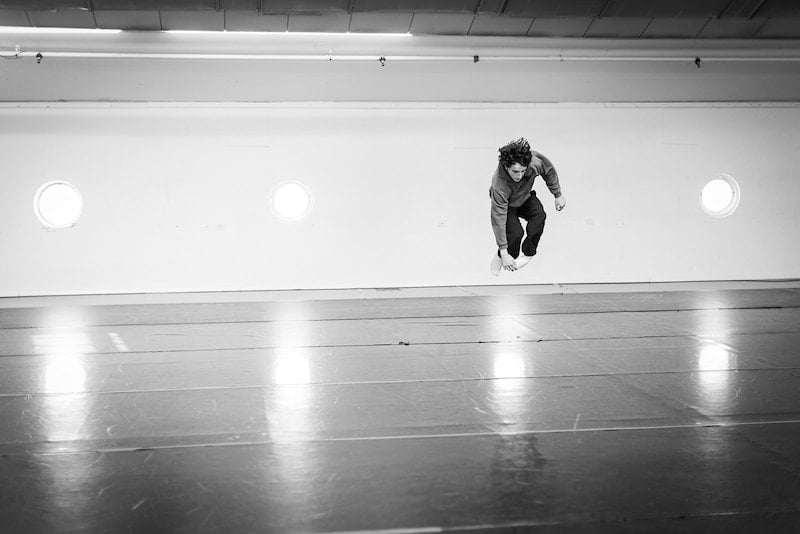
Kogan tends to create works that include several dancers and himself, aiming to include the dancers’ artistic identification as part of the story being told onstage.
He’s worked with an Arab Israeli choreographer to look at the connections between Jews and Arabs in “We Love Arabs,” and with flamenco dancer Michal Natan to understand the relationship between flamenco and modern dance and why flamenco is considered Spanish in origin.
“Ties of power interest me,” said Kogan, “looking at what’s under the rug. And the previous work always influences the next work.”
In “Appropriation” Kogan was invited to examine how each individual brings themselves to the renowned Tel Aviv troupe and what happens to each dancer within the ensemble.
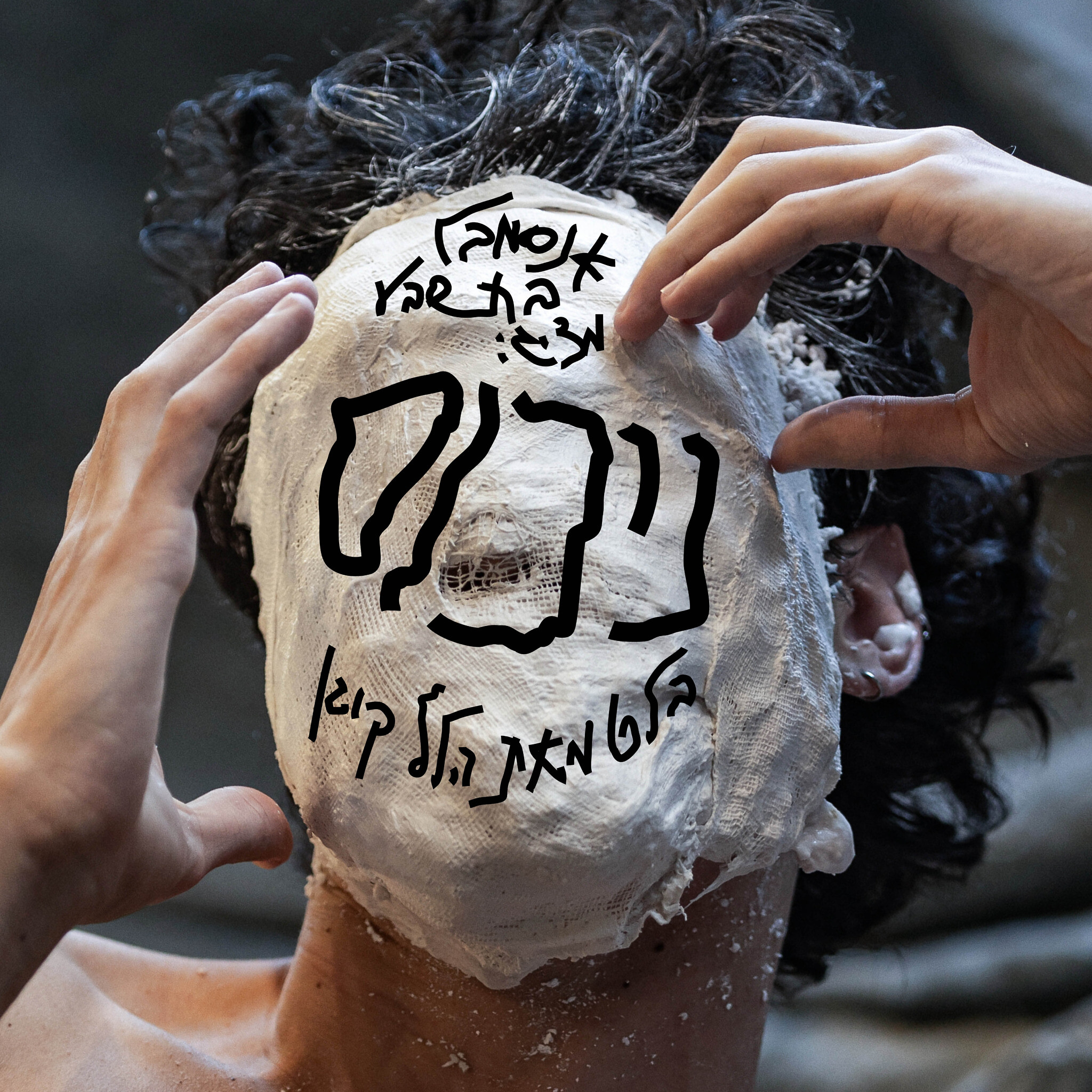
At Batsheva, said Kogan, each dancer has learned the dance language of Gaga, created by Naharin, as well as trained in ballet, but they are dancers gathered from very different places around the globe, bringing their cultures and creating a background that plays with the languages of dance.
“Americans and Canadians do musicals and tap and jazz and Israelis do more folklore and folk dance, and that meets in a carnival of body languages,” said Kogan. “Batsheva is like a kind of Olympus.”
The troupe holds a sacred place in Israeli dance history and in the world of modern dance, said Kogan.
In the ballet, said Kogan, he looks at the question of the historic troupe’s “holiness” and its intrinsic value, with magic and beauty and the sense of a carnival celebration.
“The Missings” has already sold out its first 10 performances, and will be onstage in Ulm through April. Tickets for Kogan’s “Appropriation — A Ballet by Hillel Kogan for Batsheva” are available through the Suzanne Dellal site.




The Times of Israel Community.