Egypt unveils renovated 3,000-year-old ‘Avenue of the Sphinxes’ in Luxor
Ancient walkway connects famous Karnak and Luxor temples, is believed to have been path pilgrims trod to visit holy sites and pay tribute to their deities
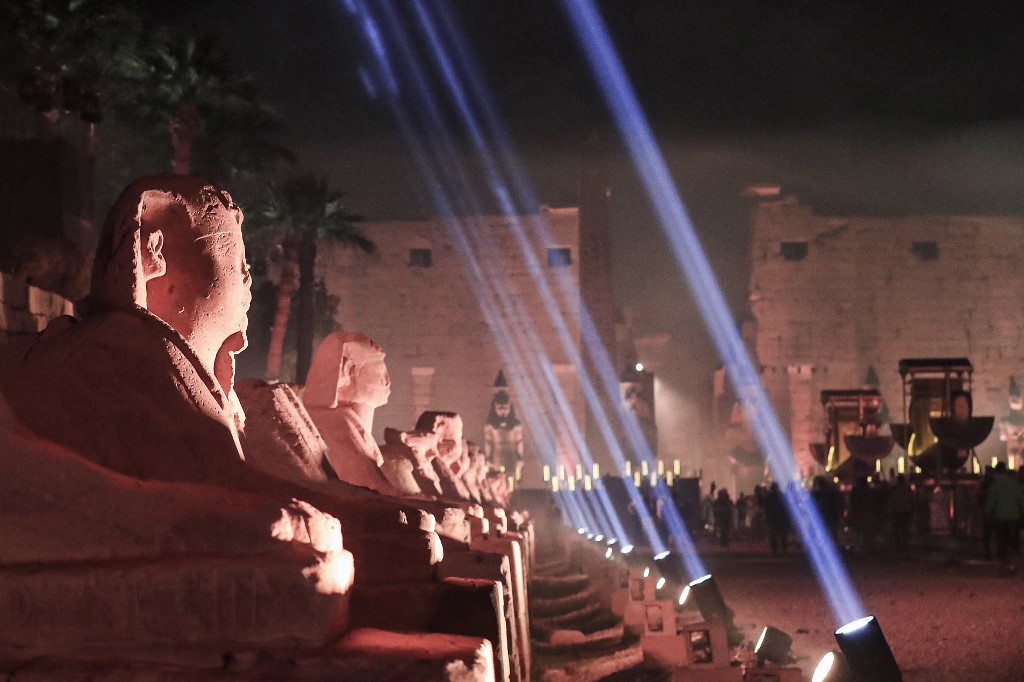
This picture taken on November 25, 2021 shows a view of the human-headed sphinxes along the 2700-meter-long 'Rams Road' leading from the Temple of Luxor (background) to the Karnak Temple (unseen) further north, in Egypt's southern city of the same name (Khaled DESOUKI / AFP)
LUXOR, Egypt (AP) — Egyptian authorities unveiled Thursday a renovated ancient promenade in the city of Luxor dating back 3,000 years, the latest government project undertaken to highlight the country’s archaeological treasures.
Egypt has struggled to revive its tourism industry, battered by years of political turmoil following the 2011 popular uprising that toppled longtime autocrat Hosni Mubarak, and more lately, the coronavirus pandemic.
The ancient walkway — known as the Avenue of the Sphinxes, but also dubbed the Way of the Rams and the Path of the Gods — connects the famous Karnak and Luxor temples in what was the city of Thebes, which used to be Egypt’s capital in antiquity. It is believed to have been the path that pilgrims trod to visit the temples and pay tribute to their deities.
Lined with statues of rams and sphinxes on pedestals, the ancient road in Luxor, which sits on the banks of the Nile River and is located about 650 kilometers (400 miles) south of Cairo, stretches for several miles and had been under excavation for more than 50 years.
President Abdel Fatah el-Sissi attended the made-for-TV event, a late evening ceremony that nodded to an ancient fall holiday, along with other senior officials.
Get The Times of Israel's Daily Editionby email and never miss our top stories
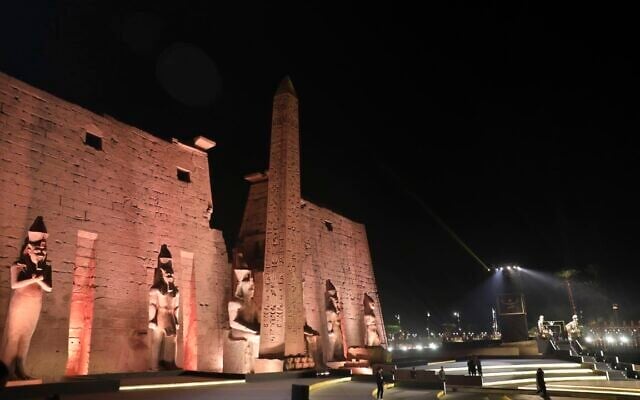
Fireworks light the sky during the official ceremony opening the ‘Rams Road’ outside the pylon and remaining obelisk at the entrance of the Temple of Luxor (built around 1400 BC) in Egypt’s southern city of the same name on November 25, 2021 (Khaled DESOUKI / AFP)
Mohamed Abd el-Badei, a top Egyptian archeology official, said the oldest ruins along the pathway are six structures built by Queen Hatshepsut, Egypt’s only woman pharaoh, that date to 1400 BCE.
People visit the Luxor Temple in Egypt, Saturday, Sept. 9, 2017 (AP Photo/Nariman El-Mofty, File)
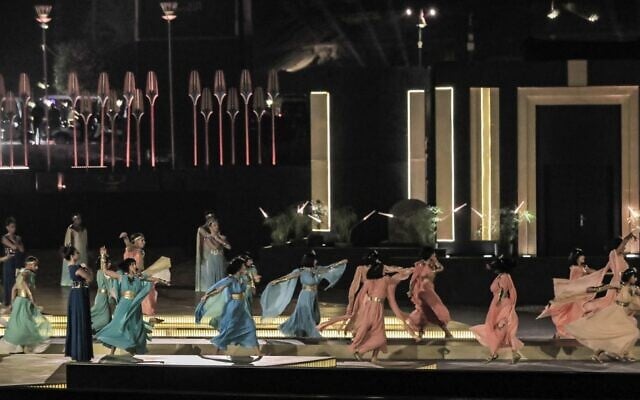
He said that according to hieroglyphics on the walls of one of the temples, the ancient holiday was known as “Opet” and was marked by parades and dancers in celebration of the bounty that the Nile’s annual flooding brought to the fields. There was also a flotilla of sacred boats that made their way to the temple, according to the transcriptions.
Thursday’s event is the second glitzy ceremony this year to honor Egypt’s heritage. In April, the government hosted a procession to mark the transfer of some of the famous mummies from the Egyptian Museum in downtown Cairo to the newly built museum south of the Egyptian capital.
Advertisement
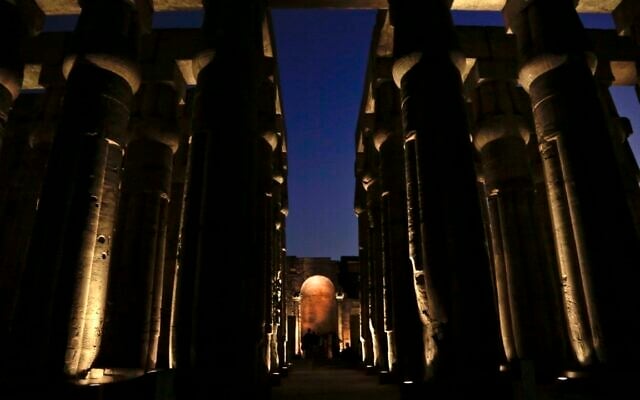
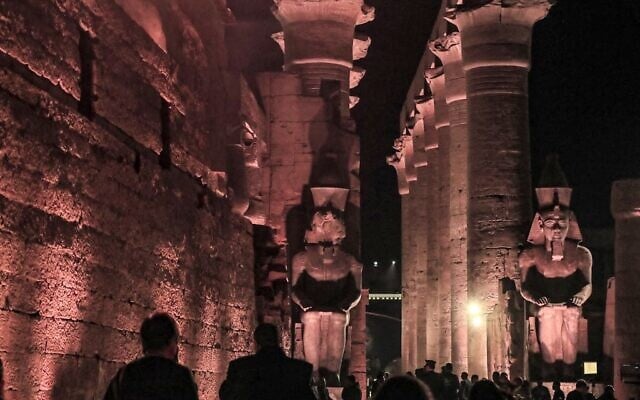
Egypt’s President Abdel Fattah al-Sisi attends the official ceremony of the opening of the Avenue of Sphinxes commonly known as the ‘Rams Road’ on Thursday, Nov. 25, 2021 in Luxor, Egypt (AP Photo/Mohamed El-Shahed)Performers dance during the official ceremony opening the ‘Rams Road’ outside the Temple of Luxor in Egypt’s southern city of the same name on November 25, 2021 (Khaled DESOUKI / AFP)Visitors walk about at night at the Temple of Luxor in Egypt’s southern city of the same name on November 25, 2021 (Khaled DESOUKI / AFP)A view of the entrance of the Temple of Luxor ahead of the reopening ceremony of the Avenue of Sphinxes commonly known as the ‘Rams Road’ on Thursday, Nov. 25, 2021 in Luxor, Egypt (AP Photo/Mohamed El-Shahed)
Help us report truthfully on social media
As a multimedia journalist, my job is to take the quality, fact-based journalism produced by The Times of Israel newsroom and make it accessible across every platform — from Instagram posts to podcasts to short-form videos.
This is how many, especially young people, consume news these days. But misinformation is rampant on social media. Our team at ToI produces accurate, responsible short-form reporting on Israel and the Jewish world.
If you believe in the importance of factual social media journalism, please consider joining our reader support group, The Times of Israel Community. Your financial support is essential to sustain responsible multimedia reporting.
We’re really pleased that you’ve read X Times of Israel articles in the past month.
That’s why we started the Times of Israel - to provide discerning readers like you with must-read coverage of Israel and the Jewish world.
So now we have a request. Unlike other news outlets, we haven’t put up a paywall. But as the journalism we do is costly, we invite readers for whom The Times of Israel has become important to help support our work by joining The Times of Israel Community.
For as little as $6 a month you can help support our quality journalism while enjoying The Times of Israel AD-FREE, as well as accessing exclusive content available only to Times of Israel Community members.
Thank you, David Horovitz, Founding Editor of The Times of Israel


 Add ToI as a Preferred Source on Google