

Ethiopia declares immediate, unilateral ceasefire in Tigray
Eritrean forces withdraw from key towns a day after fighting ceases following eight months of deadly conflict
 Add ToI as a Preferred Source on Google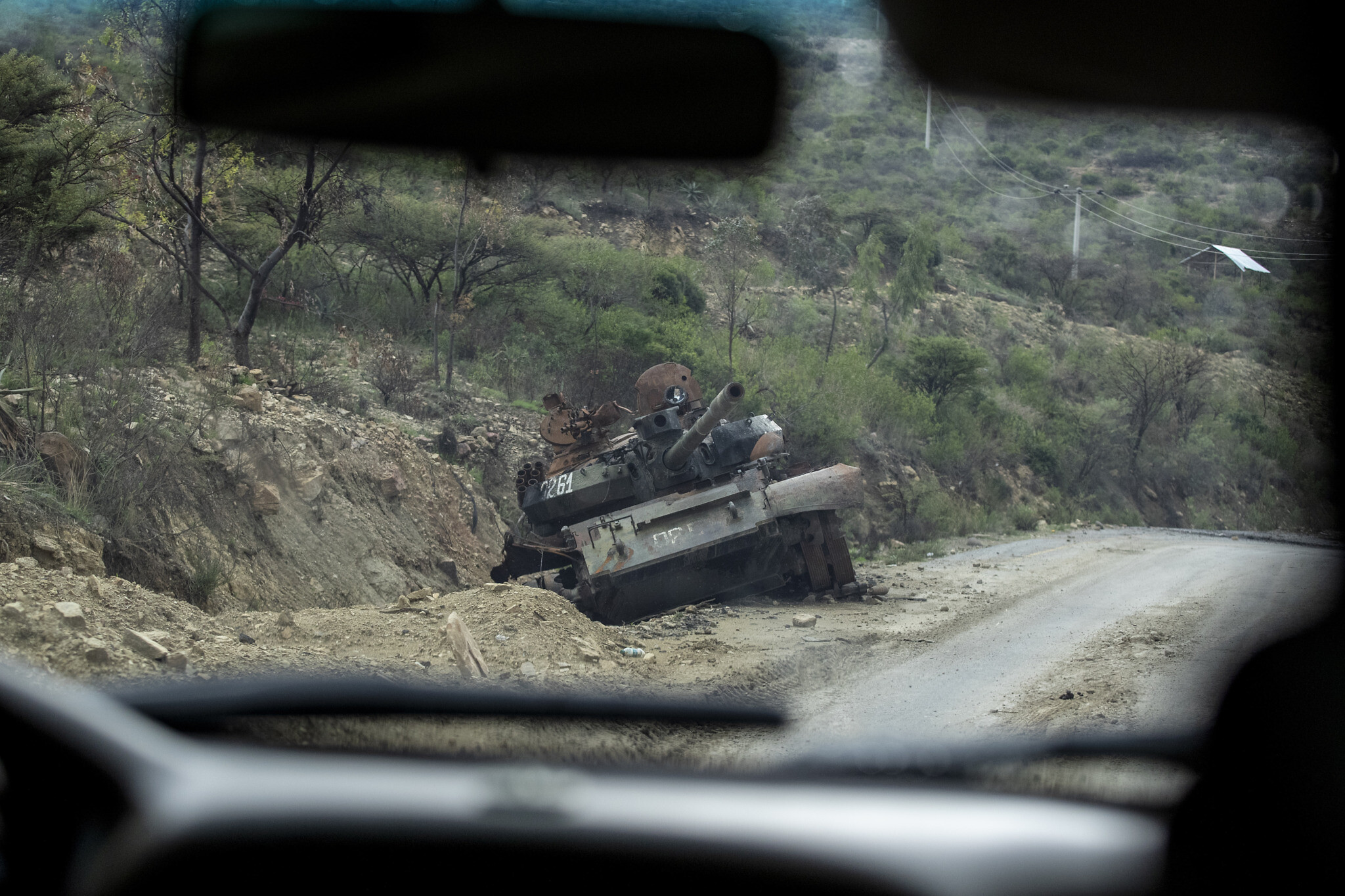
NAIROBI, Kenya (AP) — Ethiopia’s government declared an immediate, unilateral ceasefire on Monday in its Tigray region after nearly eight months of deadly conflict as Tigray fighters occupied the regional capital and government soldiers retreated in a region where hundreds of thousands are suffering in the world’s worst famine crisis.
On Tuesday, soldiers from Eritrea withdrew from three key towns in the Tigray region. The swift turn in the nearly eight-month war has left people scrambling to understand what exactly is going on in the region of 6 million people as communications links are largely down. The people in close contact with witnesses who confirmed the withdrawal spoke on condition of anonymity for their safety.
Eritrean soldiers, accused by witnesses of some of the war’s worst atrocities, left the towns of Shire, Axum and Adwa but it was not immediately clear whether they had left other communities, where they were going, or whether the retreat was temporary. Neighboring Eritrea’s information ministry did not immediately respond to questions.
Tigray’s former leaders say they are now in control of the regional capital, Mekele. The Tigray leaders, who have waged a guerrilla war since November after a political falling-out with the government of Prime Minister Abiy Ahmed, in a statement issued overnight called on supporters to “intensify their struggle until our enemies completely leave Tigray.”
The arrival of Tigray forces in Mekele was met with cheers after the interim regional administration, appointed by Ethiopia’s government, fled.
Tigray fighters were reportedly moving into Shire on Tuesday, their latest gain after some of the most intense fighting of the war. They were now in control of much of the region after a major counteroffensive with mass popular support, International Crisis Group analyst William Davison said in a statement.
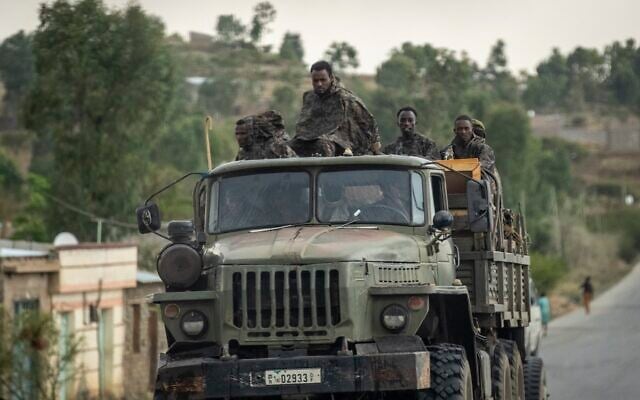
The ceasefire could calm a war that has destabilized Africa’s second most populous country and threatened to do the same in the wider Horn of Africa, where Ethiopia has been seen as a key security ally for the West. It comes as the country awaits the results of national elections that Prime Minister Abiy Ahmed promoted as the centerpiece of reforms that won him the 2019 Nobel Peace Prize.
Abiy’s transformation from making peace to waging war has appalled many observers since the fighting in Tigray erupted in November. Since then, the world has struggled to access much of the region and investigate growing allegations of atrocities including gang rapes and forced starvation. Thousands of people in the region of 6 million have been killed.
Ethiopia’s ceasefire statement was carried by state media shortly after the Tigray interim administration, appointed by the federal government, fled the regional capital, Mekele, and called for a ceasefire on humanitarian grounds so that desperately needed aid can be delivered.
UN Secretary-General Antonio Guterres said in a statement that he had spoken with the prime minister and “I am hopeful that an effective cessation of hostilities will take place.”
As Tigray forces occupied the airport and other key positions in Mekele and broadcast a message telling residents to stop celebrating and go home, retreating Ethiopian soldiers shot at students at Mekele University, killing two and wounding three, said a nurse at Ayder hospital, who spoke on condition of anonymity out of fear of retaliation.
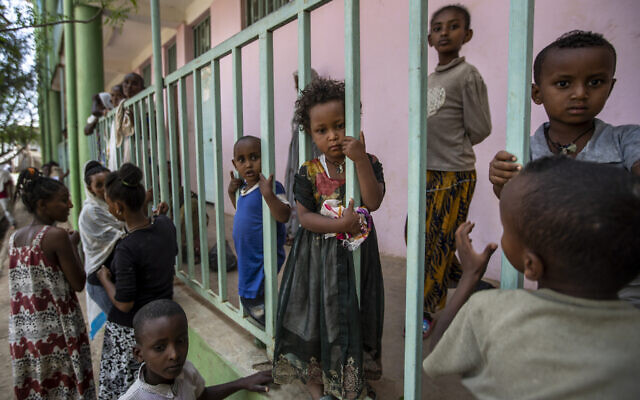
Ethnic Tigrayans, even those who didn’t support the former ruling Tigray People’s Liberation Front before the war, say they have been targeted harshly for suspected links with the Tigray fighters. Ethiopia has denied it.
But Abiy in an interview aired last week alarmed observers by recalling that aid to Tigray during Ethiopia’s devastating 1980s famine had bolstered the Tigray fighters who eventually overthrew the ruling regime. Such a thing will “never happen” now, he said.
Monday’s ceasefire declaration signaled a new approach, at least for a while.
The ceasefire “will enable farmers to till their land, aid groups to operate without any military movement around and engage with remnants [of Tigray’s former ruling party] who seek peace,” Ethiopia’s statement said, adding that efforts to bring Tigray’s former leaders “to justice” continue.
Ethiopia said the ceasefire will last until the end of the crucial planting season in Tigray. The season’s end comes in September. The government ordered all federal and regional authorities to respect the ceasefire — crucial as authorities and fighters from the neighboring Amhara region have been accused of atrocities in western Tigray.
“The government has the responsibility to find a political solution to the problem,” the head of the interim administration, Abraham Belay, said in calling for the ceasefire, adding that some elements within Tigray’s former ruling party are willing to engage with the federal government.
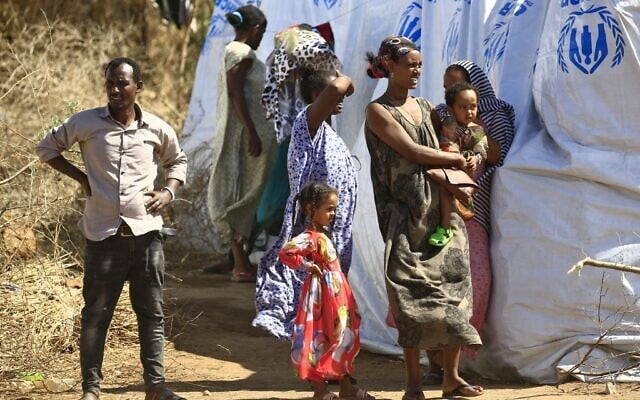
There was no immediate comment from the Tigray fighters, with whom Ethiopia had rejected talks. And there was no immediate comment from neighboring Eritrea, whose soldiers have been accused by Tigray residents of some of the worst atrocities in the war.
“If Abiy has a genuine desire to find a political solution, first he has to undo the terrorist label against the elected government of Tigray,” said Desta Haileselassie Hagos, who leads efforts to compile a list of those killed in the war. Abiy also needs to order the Eritrean soldiers to leave, he said.
Tigray in recent days has seen some of the fiercest fighting of the conflict. International pressure on Ethiopia spiked again last week after a military airstrike on a busy market killed more than 60 people, and after Doctors Without Borders said three staffers had been murdered in a separate incident.
Amid the upheaval on Monday, the United Nations children’s agency said Ethiopian soldiers entered its office in Mekele and dismantled satellite communications equipment, an act it said violated the world body’s immunity. UNICEF last week warned that at least 33,000 severely malnourished children face “imminent risk of death” without more aid reaching Tigray’s people.
At UN headquarters in New York, the US, UK and Ireland called for an emergency open meeting of the Security Council. The UN’s most powerful body has discussed Tigray behind closed doors but not in an open session. They need support from nine of the 15 council members to hold an open meeting.






The Times of Israel Community.